
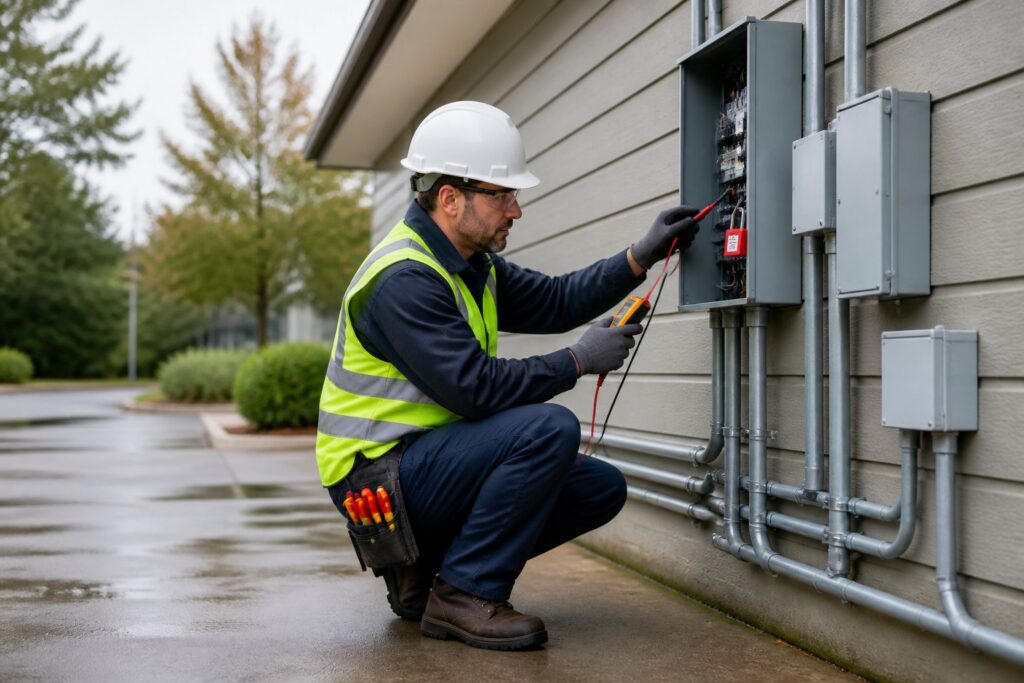
Keeping outdoor electrical systems in good shape year-round really just means staying alert and building a few habits. Water, heat, cold, and plain old wear can turn small problems into pricey repairs if you’re not paying attention. If you notice little changes early, you’ll save yourself a headache and keep your lights, outlets, and wiring working longer.
The safest bet? Check outdoor electrical parts on a regular schedule, keep things dry, and call a licensed electrician if anything looks sketchy, loose, or damaged. This routine really helps your system survive storms, freezes, and heavy use.
Outdoor power needs shift with the seasons, and so do the risks. Rain, sun, debris, pests, and wild temperature swings all mess with your equipment in different ways—so a year-round plan actually matters.
Start With Safety and Code Awareness
Outdoor electrical work is riskier than indoor stuff because weather and ground moisture can flip the script fast. Before you touch anything, cut the power, use outdoor-rated equipment, and double-check your local code for GFCI protection and weather-resistant gear.
Shock and Fire Risk Basics
Water and electricity? Not friends. A wet outlet, a cracked cord, or a loose connection can mean shock, short circuits, or even fire.
Never run indoor cords or busted adapters outside. If you have to test or inspect something, dry your hands and only touch equipment that’s definitely off.
Weather Exposure Warning Signs
Keep an eye out for rust, cracked covers, faded insulation, tripped breakers, flickering lights, or outlets that feel warm. These usually mean weather is starting to win against your system.
Sometimes you’ll find insects, nests, or dirt packed into boxes and fixtures. That stuff traps moisture and pretty much guarantees unreliable connections.
When Professional Service Is Required
Call a licensed electrician if you smell something burning, see repeat tripping, spot exposed wiring, or find water inside a box or fixture. If a device keeps failing after you reset it, don’t keep pushing your luck.
Big repairs, upgrades, or anything tied to the main panel? Leave those to a pro. A licensed electrician will check for hidden damage and make sure you’re up to code.
Inspect Key Outdoor Components Regularly
Focus on the stuff you actually use—those parts usually get beat up first. Check outlets, lighting, and wiring paths before and after rough weather.
Exterior Outlets and GFCI Protection
Press the test and reset buttons on your outdoor GFCI outlets every month or two. If it won’t reset, it’s time for a fix.
Make sure covers close all the way and plugs fit snug. Loose plugs or cracked covers let in water and gunk.
Lighting Fixtures and Mounting Hardware
Look over fixture housings, bulbs, lenses, and brackets for looseness or corrosion. If something wobbles, the mounting hardware probably needs a tweak or swap.
Wipe dirt and pollen off lenses so your lights actually shine. While you’re at it, check that seals and gaskets aren’t dried out or cracked.
Cables, Conduit, and Junction Boxes
Take a walk along visible cables and conduit after storms or yard work. Look for cuts, bent conduit, loose fittings, or box covers that won’t close right.
If you see moisture inside a box, stop using that circuit until it’s checked out. Water in an enclosure can mean hidden corrosion and future failures.
Build a Seasonal Maintenance Routine
A seasonal routine catches problems before they turn into outages. You don’t need a huge checklist—just a repeatable one that fits your weather and how you actually use outdoor power.
Spring Cleanup and Moisture Checks
After spring rains, look for standing water near outlets, low boxes, and landscape lights. Clear out leaves, mud, and mulch that block drainage or trap moisture.
Test GFCI outlets and swap out any bulbs or fixtures that died over winter. Spring’s a good time to spot corrosion that started in the cold.
Summer Heat and Storm Preparation
Heat makes plastic brittle and can loosen connections. Check for sun-faded cords, warped covers, and cloudy fixture lenses.
Before storms hit, tighten loose hardware and make sure outdoor plugs are protected. If you’re using lights or tools in the summer storms, unplug them when you’re done.
Fall Debris Removal and Load Review
Leaves, seed pods, and dirt pile up around boxes and low fixtures. Clean those spots so moisture doesn’t camp out against your gear.
Fall’s a smart time to think about how much power you’re using outside. Holiday lights, heaters, and extra decorations can overload weak circuits if you don’t plan ahead.
Winter Freeze and Corrosion Prevention
Cold weather cracks old covers and stiffens cords. Check for brittle insulation and make sure weatherproof covers still seal tight.
If snow or ice builds up, clear it off gently—don’t yank on wires or fixtures. Keep salt and de-icers away from exposed electrical parts if you can.
Protect Equipment From Moisture, Surges, and Wear
Moisture protection is huge for outdoor electrical stuff. You also need to watch for power surges, rust, sun damage, and pests—all of them can cut equipment life short.
Weatherproof Covers and Seals
Use weatherproof covers on every exterior outlet and check for cracks or wobbly hinges. The cover should close fully, even with a cord plugged in.
Inspect gaskets and seals around fixtures and boxes. If they’re not sealing well, swap them before the next storm.
Whole-Home Surge Protection Benefits
Outdoor systems usually sit at the end of long wiring runs, so they’re extra vulnerable to surges. A whole-home surge protector limits damage from lightning and utility spikes.
It’s especially helpful if you’ve got outdoor cameras, smart gear, pumps, or sensitive lights. It can save you from repeat repairs after power events.
Rust, UV Damage, and Pest Prevention
Rust starts where water sits or coatings wear off. Sun fades and weakens cords, covers, and plastics—especially in open yards.
Trim back brush from panels, boxes, and fixtures. Spiders, ants, and rodents love to build nests or chew insulation, so clearing around your equipment really helps.
Support Reliable Performance for Modern Outdoor Power Needs
These days, outdoor electrical systems do more than just light up a path. Security, charging, automation, entertainment—so your upkeep needs to keep up with the tech and the load.
Landscape and Security Lighting Upkeep
Check landscape lights for heads that moved, damaged stakes, or water in the lenses. If a light’s pointing the wrong way or looks dim, it probably needs cleaning, a tweak, or a new bulb.
Security lighting should kick on fast and stay steady. If motion sensors lag or flicker, the sensor or wiring might need some attention.
EV Charger and Outlet Readiness
Outdoor EV charging outlets and wall chargers need to be mounted tight, protected from weather, and have clean connections. Heat, moisture, and constant plugging in all wear them down.
If your charger runs slow, trips breakers, or feels hot, stop using it and get it checked out. These setups need solid circuits and the right load planning.
Smart Controls and Automated System Checks
Smart timers, app switches, and automated outdoor lights save energy, but you’ve still got to check them. Test schedules after outages or power changes so things stay on track.
A quick monthly check helps you spot dead zones, failed sensors, or weird software issues. That habit’s especially good if you count on lights for safety or security.
Plan Repairs and Upgrades Before Problems Escalate
Usually, small problems show up before you get a full-blown failure. If you act early, you’ll dodge emergency outages, water damage, and big repair bills.
Common Issues That Signal Deterioration
Watch for flickering lights, dead outlets, corrosion on terminals, buzzing, and breakers that trip more than once. Those are usually signs of loose connections, moisture, or worn-out parts.
If you keep resetting something and the problem comes back, it’s probably more than a quick fix. Replacing the bad part early is almost always safer.
Residential and Commercial Service Priorities
At home, outdoor safety usually starts with outlets, lighting, and smart controls. Businesses tend to focus more on parking lot lights, signage, security systems, and heavier use.
Both setups do better with regular inspections, fast repairs, and planned upgrades. That way, you keep downtime low and things running smoothly.
Choosing Licensed Electricians in Central Texas
Magnify Electric is a solid pick if you want residential or commercial electrical work done right. Our licensed electricians handle everything—fixture swaps, outdoor lighting, panel upgrades, repairs, troubleshooting, EV charging, surge protection, smart home systems, and emergency electrical help.
We work all over Central Texas: Spicewood, Austin, Bee Cave, Lakeway, Dripping Springs, Georgetown, Leander, Round Rock, Kyle, Cedar Park, Liberty Hill, Westlake, The Hills, Briarcliff, Horseshoe Bay, Sunset Valley, Hutto, and nearby spots.
Frequently Asked Questions
What safety steps should I follow before inspecting outdoor wiring and equipment?
Turn off power to the circuit if you can, dry your hands, and use only outdoor-rated tools and parts. If you spot water, exposed wire, or smell burning, stop and call a licensed electrician.
How often should I check outdoor outlets, switches, and fixtures for wear or damage?
A monthly visual check is usually enough, with a deeper look at the start of each season. After big storms or a freeze, give things another once-over.
What’s the best way to protect outdoor electrical components from rain, snow, and humidity?
Use weatherproof covers, sealed boxes, and devices rated for wet spots. Keeping covers closed, gaskets in place, and drainage clear goes a long way toward keeping moisture out.
Which parts of an outdoor electrical system typically need the most regular maintenance?
Exterior outlets, GFCI devices, lighting fixtures, sensors, cords, conduit, and junction boxes take the most abuse. They get hit by weather, movement, and daily use.
When should I replace outdoor wiring, connectors, or devices instead of repairing them?
Swap out anything cracked, corroded, failing over and over, or not sealing out moisture anymore. If a repair won’t make it safe and reliable, replacement’s the way to go.
What signs suggest an outdoor electrical issue that needs a licensed electrician right away?
If you ever catch a whiff of something burning, see sparks, or notice your breaker keeps tripping, don’t wait—these are big red flags. Outlets that feel warm to the touch or any sign of water getting into your outdoor wiring? That’s trouble. Exposed wires are a no-go, too. And honestly, if your outdoor lights or outlets just stop working after a storm or flood, it’s time to call a pro. Don’t try to tough it out—some things really do need an expert.