
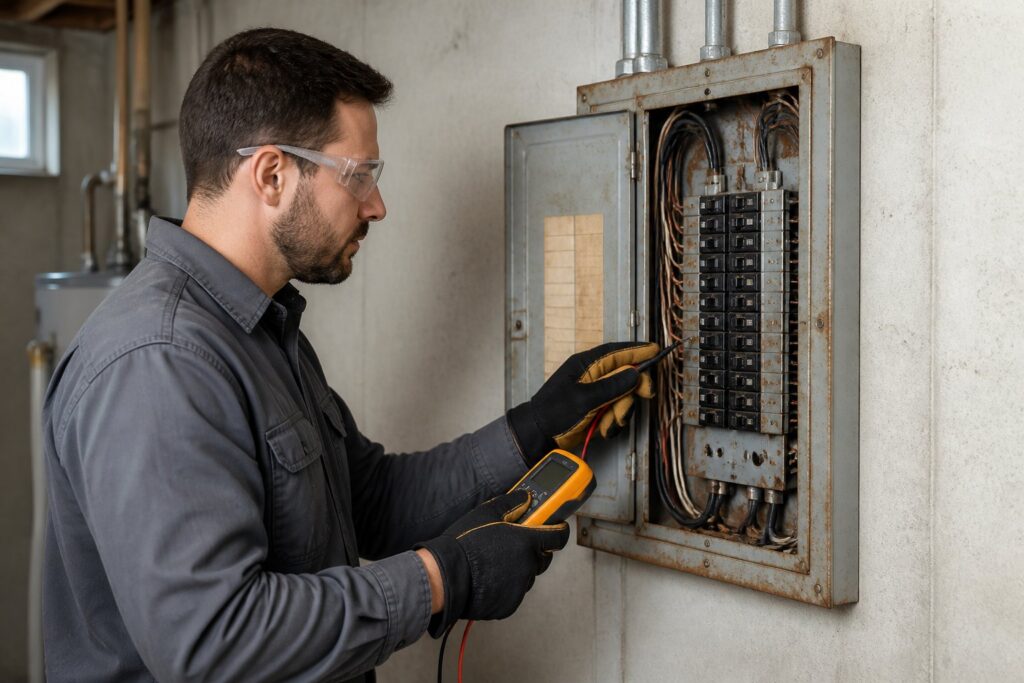
If you’re searching for signs your circuit breaker panel needs replacement, the safest way is to pay attention to how the panel looks, sounds, and works. A panel on its way out might keep your home powered for a while, so warning signs can slip by until things get worse.
The big red flags? Visible damage, breakers that trip over and over, buzzing or heat at the panel, and a system that just can’t keep up with your electrical needs anymore. If you spot more than one of these, get a licensed electrician to check things out soon.
Older panels can wear out thanks to age, moisture, loose connections, or all the extra demand from today’s gadgets and appliances. If you’ve got an older place or recently added new stuff, you might need a replacement instead of another patch job.
What a Breaker Panel Does in Your Electrical System
Your breaker panel is basically the command center for all the electricity in your house or business. It sends power to different circuits and shuts off a circuit if there’s a problem.
A healthy panel keeps wiring, appliances, and people safer. But when the panel gets worn out or is too small for your needs, it struggles to do its job.
How the Panel Protects Circuits and Appliances
Each breaker is supposed to stop too much current from flowing through its circuit. That keeps wires from overheating and helps prevent electrical fires.
It also shields appliances and electronics from some electrical stress. But if breakers are old, loose, or failing, that protection gets shaky.
Why Capacity and Condition Matter for Safety
Every panel has a limit to how much power it can handle. If your place now draws more electricity than the panel was designed for, the system can get overloaded.
Condition is just as important as capacity. Corrosion, heat damage, loose parts, and age all chip away at reliability—even if the panel seems to work most days.
Visible Warning Signs Inside and Around the Panel
Some of the clearest clues are right there to see or hear. Any sign of heat, moisture, or damage deserves a quick look.
Don’t brush off small changes. Visible issues often point to bigger problems hidden inside.
Rust, Corrosion, or Moisture Exposure
Rust on the panel cover, breakers, or nearby metal usually means moisture damage. Water and electricity together? Never a good combo. Even a little corrosion should get checked.
If the area around the panel feels damp or smells musty, that’s another warning. You want a dry, clean space around your panel.
Burn Marks, Melting, or Scorching
Dark marks, melted plastic, or a scorched smell near the panel are serious. These often mean parts are overheating.
If you catch a burning odor, don’t wait around. That’s a now problem, not a later one.
Loose Breakers or Unusual Buzzing Sounds
Breakers should snap in securely. If one feels loose or doesn’t stay put, you might have wear or a bad connection.
Buzzing, crackling, or humming? That’s not normal. A quiet panel is what you want—strange sounds often mean electrical arcing or another issue that needs a pro.
Performance Problems That Point to a Failing Setup
A panel can look just fine but still have issues. If you keep having power problems, the panel might be the culprit.
These things usually show up during daily life, not just during storms.
Frequent Tripping Under Normal Use
A breaker that trips once is probably just doing its job. But if a breaker trips again and again during regular use, it could be warning you about overload, a bad breaker, or something deeper.
If you reset the breaker and the problem keeps coming back, get the circuit checked out. Don’t ignore repeat trips.
Flickering Lights and Intermittent Power
Lights that dim, flicker, or pulse when you turn on appliances can mean a weak connection or an overloaded panel. Outlets that cut in and out might be a sign too.
These seem small at first, but they usually mean your system’s under strain.
Overheating During Everyday Demand
If the panel cover feels warm or the area around it gets hot during normal use, that’s a warning. Heat means resistance, and resistance often comes from a bad connection or overloaded gear.
You shouldn’t feel heat just from running lights, a fridge, or a TV. If you do, it’s time for a closer look.
When Electrical Demand Has Outgrown Older Equipment
Many panels went in before homes and businesses needed so much electricity. Today’s devices can push old gear past its limits.
If you keep adding stuff, your panel might need an upgrade to keep up.
Added Loads Like EV Chargers and Smart Home Devices
EV chargers, wall-mounted chargers, smart home systems, and automated lighting all add new demand. These upgrades are great, but they can push an old panel over the edge.
If your panel is out of room for new circuits, that’s a strong sign it’s upgrade time. A cramped panel makes safe expansion tough.
Renovations, New Appliances, and Commercial Expansion
Remodeling your kitchen, adding HVAC, building a workshop, or upgrading office equipment can all crank up your electrical needs fast. A panel that worked years ago might not cut it now.
For businesses, growth makes the issue show up even faster. More gear means more circuits and more load—so sometimes you just need a modern panel.
Limits of Aging or Undersized Service
Older panels were usually built for smaller places and lighter use. Some even have outdated parts that don’t meet today’s safety standards.
If your service is too small, repairs might just buy you a little time. A replacement is usually the safer, smarter move.
Safety Risks of Waiting Too Long
Putting things off can turn a fixable issue into a real hazard. Small warning signs often grow into bigger, pricier problems.
The longer you wait, the more you’re gambling with your property and everyone in it.
Fire Hazards and Shock Concerns
Overheating, loose wires, and breakers that keep failing all raise the risk of fire. A busted panel also ups the chance of shock for anyone working nearby.
If you smell burning, see scorch marks, or hear buzzing, don’t mess around. Get help right away.
Code Compliance and Insurance Complications
Old panels might not meet current code for your kind of property. That can be a problem during sales, remodels, inspections, or insurance reviews.
If a panel’s known to be outdated or unsafe, waiting can mean more than just a repair bill. You could run into paperwork headaches and compliance issues you didn’t expect.
What to Expect From a Professional Evaluation and Upgrade
A good electrician will check the panel, circuits, and system load. They’ll help you figure out if you need a repair, a new panel, or a bigger upgrade.
A pro also helps you pick equipment that works for you now and leaves room for the future.
How Licensed Electricians Assess Replacement Needs
A licensed electrician checks for heat damage, corrosion, loose breakers, and signs of overload. They’ll look at the panel’s age, the wiring’s condition, and how many circuits you actually use.
Honestly, the best inspections look at both the panel and how you really use power day to day. That’s when hidden problems show up.
Choosing the Right Solution for Homes and Businesses
Some places just need a repair. Others need a new panel to handle new appliances, office gear, EV charging, lighting upgrades, or smart home features.
Magnify Electric is a solid choice for residential and commercial electrical work. Our licensed electricians handle everything from simple fixes to full upgrades, safety checks, troubleshooting, emergency calls, and smart home setups. We help with automated lighting, ceiling fans, switches, Lutron smart systems, EV charging, outdoor lights, outlets, recessed lighting, TV installs, surge protectors, wiring, lighting installs, panel upgrades and repairs, generator hookups, smoke and CO₂ detectors—basically, all kinds of electrical improvements for homes and businesses.
Why Central Texas Property Owners Trust Magnify Electric
We’re proud to serve Spicewood, Austin, Bee Cave, Lakeway, Dripping Springs, Georgetown, Leander, Round Rock, Kyle, Cedar Park, Liberty Hill, Westlake, The Hills, Briarcliff, Horseshoe Bay, Sunset Valley, Hutto, and the rest of Central Texas. If you want one team for both routine and big electrical jobs, being local really counts.
Frequently Asked Questions
What are the most common warning signs that my electrical panel is outdated or unsafe?
Frequent breaker trips, flickering lights, buzzing sounds, rust, scorch marks, burning smells, and heat around the panel top the list. An older panel that can’t keep up with your power use is also a big red flag.
How can I tell if my breaker panel is going bad?
Watch for breakers that won’t stay set, flickering lights, or power that cuts in and out. If you see damage, smell something odd, or feel heat near the panel, it’s time to call an electrician.
When should a frequently tripping breaker be replaced instead of just reset?
If a breaker trips a lot during normal use, get it checked. If the circuit isn’t overloaded and the breaker keeps failing, it’s probably safer to replace it.
Can a circuit breaker fail without ever tripping, and what symptoms should I look for?
Definitely. A breaker can fail without tripping. Signs include heat, buzzing, loose movement, burning smells, or outlets and lights acting up even when the breaker stays on.
How can I check whether a breaker is bad with or without a multimeter?
Start by looking for visible damage, feeling for heat, and noticing if the breaker trips or won’t reset. A multimeter can help test voltage, but honestly, it’s safest to let a licensed electrician handle the testing.
What’s the average cost to replace an electrical panel or breaker box?
Prices jump around depending on things like the panel size, how much labor’s involved, permits, and if you need to mess with the wiring or upgrade your service. Swapping out a panel is usually cheaper than a full-blown service upgrade, but honestly, the only way to nail down a real number is to let a pro take a look and give you an estimate.