
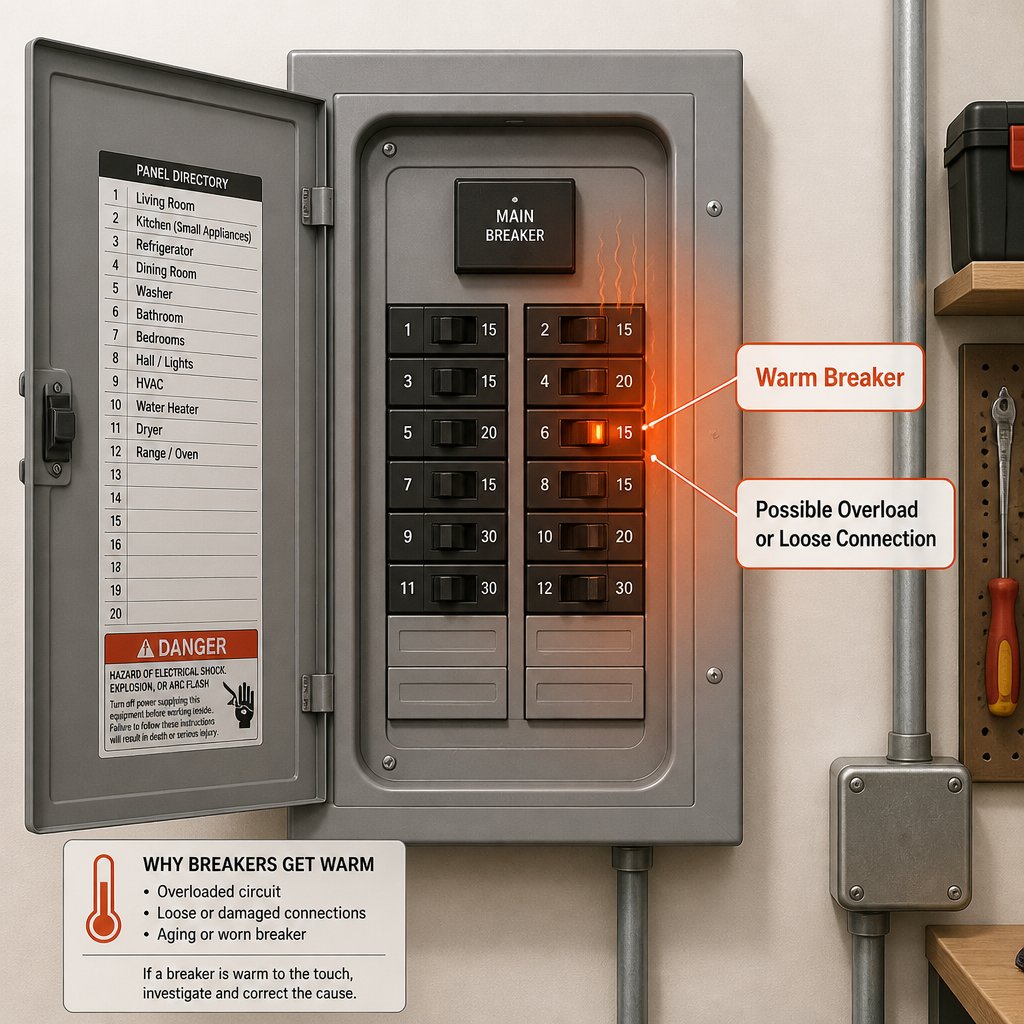
Ever popped open your panel cover and wondered, “Why does my breaker panel feel warm?” You’re definitely not the only one. A bit of warmth isn’t unusual, especially when your AC, dryer, oven, or any other heavy loads have been running for a while.
But here’s the thing: there’s a big difference between a little warmth and real electrical trouble. If the panel feels hot, you hear buzzing, catch a burning smell, or see flickering lights, don’t brush it off—get a licensed electrician to check it out.
You’ll find warm panels in homes and businesses all over Austin, Spicewood, Bee Cave, Lakeway, Dripping Springs, Georgetown, Leander, Round Rock, Cedar Park, Kyle, Liberty Hill, Westlake, Hutto, and the rest of Central Texas. If you’re feeling stressed about it and want some scripture-based encouragement, NowAskJesus is always there for a bit of peace.
What Is Normal And What Isn’t
Breaker panels should usually stay close to room temperature, maybe a touch warmer if you’re using a lot of power. The tricky part is knowing when that warmth crosses the line. Pay attention to how it feels, how much heat there is, and any warning signs you spot.
Why Mild Warmth Shows Up During Regular Use
If your system’s working hard—think central AC, oven, dryer, water heater, hot tub, or power tools—the panel might feel a little warm. That’s usually fine, as long as it doesn’t get uncomfortable.
When Heat Turns Into a Problem
It’s time to worry when the panel feels hot to the touch, one breaker’s much hotter than the rest, or you notice tripping, buzzing, or a burning smell. That kind of heat usually means something’s off: maybe a loose connection, an overload, worn parts, or a breaker that’s giving up.
How To Tell Warm From Hot
Warm is like a mug of coffee that’s cooled a bit—noticeable but not uncomfortable. Hot makes you pull your hand away, stays hot even after you turn things off, or spreads across several breakers. If you wouldn’t hold your hand there for more than a second or two, consider it a red flag.
Common Causes Of Heat Buildup
Most heat inside a panel comes from extra electrical stress. Often, the panel’s trying to tell you something—maybe something’s drawing too much power, connections are loose, or the equipment just isn’t keeping up anymore.
Heavy Electrical Loads and Peak Demand
When you run several big appliances at once, the panel has to deal with more current. That’s typical during summer, busy business hours, or when you’re doing laundry, cooking, charging, you name it—especially in bigger homes or growing businesses.
Loose Connections Inside The Panel
Loose lugs, weak terminations, or tired wire connections build up resistance. Resistance means heat—and that heat can ramp up fast, even if the breaker hasn’t tripped yet.
Aging Breakers and Worn Components
Old breakers don’t handle loads like they used to. Springs get tired, contacts wear out, and you might notice heat, buzzing, or random trips as things age.
Improper Panel Sizing or Outdated Equipment
Sometimes, the panel just can’t handle the property’s electrical needs anymore. If you’ve added rooms, installed an EV charger, put in smart home tech, or just have more stuff than before, an undersized panel can get overwhelmed.
Warning Signs You Shouldn’t Ignore
A warm panel alone might not be an emergency, but if you spot other symptoms too, take it seriously. The more signs you see at once, the higher the risk.
Buzzing Sounds or Burning Odors
Buzzing, crackling, humming, or any sharp burning smell coming from the panel? That’s not normal. Arcing, loose parts, or overheated wires could be the culprit, and you’ll want that checked ASAP.
Frequently Tripping Breakers
When a breaker trips repeatedly, it’s doing its job—but it’s also telling you something’s wrong. Maybe the circuit’s overloaded, the breaker’s failing, or the wiring needs a closer look.
Scorch Marks, Discoloration, or Melted Insulation
See dark marks, yellowing, melted plastic, or brittle insulation? That’s bad news. Those changes usually mean the panel’s been overheating for a while, not just once.
Flickering Lights and Other Circuit Weirdness
If lights flicker when you start appliances, outlets quit working, or devices act up, the panel might be the source. These issues often show up before a breaker fails, so don’t wait to get it checked.
Safe Steps To Take Right Away
You don’t have to open the panel or mess with wires to stay safe. A few simple checks can help you avoid bigger problems while you decide if you need an electrician.
What You Can Check Safely
Notice which breakers feel warm, if it’s just one circuit or the whole panel, and whether you smell anything, hear noise, or see flickering. Try to remember what big appliances were running when you first noticed the heat.
What To Avoid Around a Suspect Panel
Don’t pull the panel cover off, reset a breaker over and over, or spray anything near it. Stay away from exposed metal parts, and don’t ignore a warm panel just because everything “seems” fine.
When To Shut Off Power and Call For Help
If the panel’s hot, smells burnt, makes weird noises, or shows visible damage, turn off the affected circuit if you can do it safely. If the main breaker’s involved or you’re just not sure, call a licensed electrician right away and keep everyone clear until it’s inspected.
How Electricians Diagnose The Issue
A good electrician won’t just go after the hot spot—they’ll find the real source. Diagnosis usually means checking loads, testing connections, and giving the panel, nearby wiring, and protection gear a close look.
Load Testing and Troubleshooting
We usually start by measuring how much power the panel’s handling and if any circuit’s overloaded. That helps us figure out if it’s just a busy day or something deeper that needs fixing.
Checking For Loose Lugs, Corrosion, and Damage
Loose lugs, corrosion, hot terminals, and worn breaker contacts cause a lot of headaches. They might look fine on the outside but still create heat where the wire meets the breaker or bus bar.
Looking at Related Systems
A thorough inspection covers wiring condition, grounding, surge protection, and any recent changes to your place. New appliances, extra circuits, lighting, or smart home upgrades can reveal weak spots in older systems.
Repairs, Upgrades, and Long-Term Prevention
The right fix depends on whether you’ve got one bad breaker, a damaged connection, or a panel that’s just too small for your needs. Preventive maintenance can save a lot of hassle, especially if you keep adding new electrical stuff.
Breaker Replacement vs. Full Panel Upgrades
If just one breaker’s shot and everything else is in good shape, a replacement might do it. If your panel’s old, cramped, overheating, or undersized, though, a full upgrade is probably the smarter move for the long haul.
How Maintenance Helps Prevent Problems
Routine inspections catch loose connections, worn breakers, heat damage, and overloads before they get serious. If you’re a property manager, business owner, or just want fewer surprises at home, regular maintenance is a no-brainer.
When It’s Time to Modernize
Adding an EV charger, remodeling the kitchen, hooking up a generator, buying new shop gear, or switching to efficient lighting? Your panel might need an upgrade to keep up. Modernizing also makes it easier to add outlets, switches, fans, surge protection, and whatever else you dream up—without overloading things.
Frequently Asked Questions
Is it normal for a circuit breaker to feel warm to the touch?
A little warmth is normal when a circuit’s carrying a steady load. It shouldn’t feel hot, and there shouldn’t be smells, noises, or flickering lights.
How warm is too warm for a breaker or the main breaker?
If it’s too hot to keep your hand on for more than a second or two, that’s too warm. The main breaker should never get hot—if it does, call an electrician right away.
Why would a breaker feel hot but not trip?
A breaker can heat up from loose connections, worn parts, or a load that’s high but not quite high enough to trip it. So, things might be stressed even if nothing’s shut off yet.
What could cause a breaker to get hot and trip repeatedly?
If a breaker keeps tripping and feels hot, the circuit might be overloaded, a device could be faulty, or the breaker itself is failing. Sometimes the wiring or panel just can’t handle the current.
What happens if a circuit breaker overheats?
An overheated breaker can damage nearby wiring, weaken insulation, and make your panel less reliable. If the heat keeps building, you risk equipment failure, power loss, or even a fire hazard.
Can an overheating breaker or panel lead to an electrical fire?
Yeah, it definitely can. When things heat up, connections get loose, or insulation starts breaking down, the risk for an electrical fire goes up. If you notice your panel feels warm or see anything odd, it’s probably smart to get it checked out sooner rather than later.