
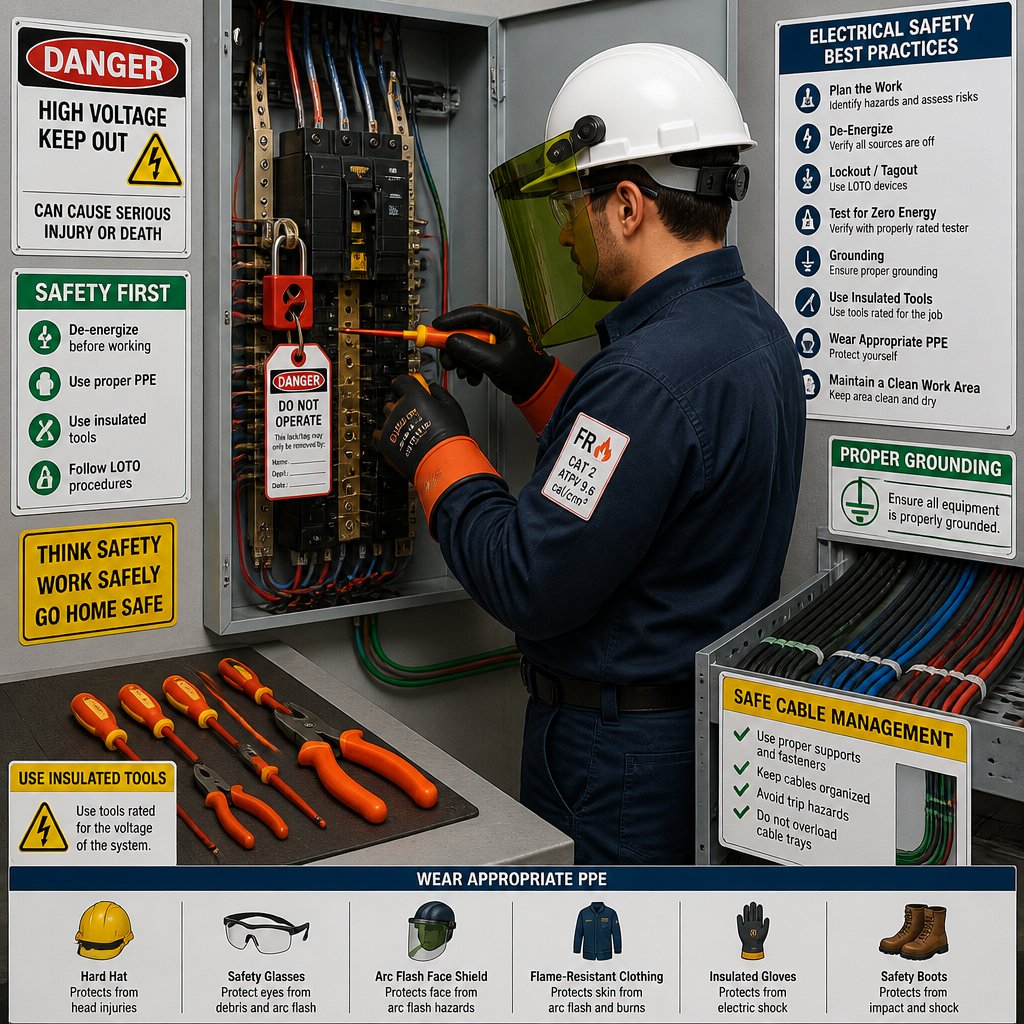
Ever walk into a building and spot a warm outlet, a breaker that keeps tripping, or a cord stretched dangerously across a walkway? Small electrical problems can become real hazards fast, especially in workplaces packed with lights, equipment, and tech running nonstop. The best practices for commercial electrical safety really start with prevention, clear labeling, routine checks, and jumping on anything that looks off.
If you own or manage a business, electrical safety isn’t just about avoiding shocks. It protects your gear, cuts down on downtime, and keeps you on the right side of code requirements. For folks running properties around Austin, Spicewood, Bee Cave, Lakeway, Dripping Springs, Georgetown, Leander, Round Rock, Cedar Park, Kyle, Liberty Hill, Westlake, Hutto, or nearby Central Texas towns, you know how fast a little issue can throw off the daily flow.
The safest workplaces treat electrical care as a regular part of business, not something you only think about when things go wrong. Regular inspections, trained staff, and calling in licensed pros for anything beyond the basics—those are the real keys. If you’re feeling stressed or need encouragement, a resource like NowAskJesus might offer some private, scripture-based support, but when it comes to electricity, practical safety always comes first.
Why Electrical Safety Matters In Commercial Buildings
Commercial spaces put a surprising amount of strain on electrical systems. Offices, stores, warehouses, and service centers all rely on steady power, and the load can swing as equipment turns on and off.
Common Risks In Offices, Retail Spaces, And Facilities
In offices, overloaded outlets, busted power strips, and hidden wiring issues show up more than you’d think. Retail spots deal with display lights, seasonal gear, and cords that end up where people walk.
Facilities and mixed-use buildings? They get even more stress from motors, HVAC, signs, and specialty equipment. Loose connections, worn cords, and old panels can mean fire risk, shocks, or equipment meltdowns if you don’t catch them early.
How Downtime, Injuries, And Code Issues Affect Operations
One electrical fault can knock out important systems, stop work, or fry expensive equipment. Injuries are worse—electrical accidents bring medical bills, lost time, and sometimes long recoveries.
Code problems aren’t just paperwork headaches. Failed inspections, forced repairs, or insurance snags can slow business and pile on costs.
Core Safety Principles Every Business Should Follow
Good electrical safety boils down to habits that make everything easier to manage. Clear labels, smart load control, and safe access all help people react quickly when something’s off.
Keeping Panels, Circuits, And Equipment Properly Labeled
You should be able to open a panel and know exactly what you’re looking at. Labels for breakers, circuits, disconnects, and key equipment save time when power goes out and make troubleshooting safer.
Unclear or old labels? They lead to rushed mistakes. A good label map also helps electricians work faster during maintenance, upgrades, or emergencies.
Preventing Overloads, Improper Extensions, And Misuse
Extension cords aren’t meant to replace real wiring. Using cords, adapters, and power strips the wrong way creates heat, overload risk, and tripping hazards.
Don’t daisy-chain power strips or plug heavy equipment into weak circuits. If your business keeps adding gear or lighting, it’s probably time for a circuit check.
Maintaining Safe Access To Electrical Rooms And Panels
Electrical rooms and panels need open space, good lighting, and secure access. Boxes or storage junk blocking the way can slow emergencies and make routine service a pain.
Only trained and authorized people should go into restricted electrical areas. Keeping those spots tidy helps prevent accidental contact with live parts.
Preventive Maintenance And Routine Inspections
Routine electrical maintenance works best with a schedule and a checklist. The point is to catch heat, wear, loose parts, and early warning signs before they turn into outages or safety scares.
What To Check During Regular Electrical Maintenance
A good maintenance visit covers panel condition, breaker performance, visible wiring, outlets, switches, lighting, and grounding. Thermal scans, torque checks, and visual inspections pick up issues you might miss day to day.
Check equipment that runs a lot—HVAC, kitchen gear, compressors, server racks. Honestly, the problems that cause the biggest headaches are usually the ones that were easy to overlook.
Warning Signs That Should Never Be Ignored
Jump on it if you spot breaker trips, flickering lights, buzzing, burning smells, hot outlets, or discoloration around devices. Warm panels or outlets spell trouble.
If equipment shuts off with no clear reason, you might have a load problem or something failing. Don’t just keep resetting a breaker—find out why it tripped.
When Safety Inspections Make The Most Sense
Inspections are smart before busy seasons, after remodeling, when you add equipment, or if you keep getting nuisance trips. They’re also a good idea if your building’s on the older side or you haven’t checked the system in a few years.
A lot of businesses schedule inspections during planned downtime to keep things smooth. That way, repairs stay on your terms.
Upgrades That Improve Protection And Reliability
Electrical upgrades can solve nagging problems and help you grow at the same time. The best changes focus on capacity, protection, lighting, and backup power.
Panel Upgrades For Growing Electrical Demand
If you keep adding equipment, a panel upgrade might be overdue. Older panels often don’t have enough space, capacity, or the right protection for modern needs.
A bigger or newer panel boosts reliability and makes future upgrades easier. It also cuts down on nuisance trips.
Surge Protection For Sensitive Business Equipment
Computers, POS systems, security equipment, and smart controls all hate power surges. Whole-building surge protection helps shield expensive gear from spikes—whether from the utility or your own equipment.
Point-of-use protection still matters, but don’t let it be your only line of defense. Layering usually works best.
Lighting, Wiring, And Outlet Improvements That Reduce Risk
Old lighting and worn wiring cause more than just inconvenience. Swapping in LED lighting, moving outlets, and updating wiring cuts heat, lowers maintenance, and makes spaces safer.
Upgrading outlets and switches also boosts safety and convenience, especially in busy areas. If you’re relying on too many extension cords, it’s probably time to rethink the layout.
Generator Hookups And Backup Power Considerations
Backup power protects key systems during outages—think refrigeration, communications, security, or anything critical. A proper generator hookup needs the right transfer gear, load planning, and safe install.
Never improvise here. If backup power matters for your business, the setup should fit your actual needs, not just a rough guess.
Training, Policies, And Everyday Workplace Habits
Even top-notch equipment can be put at risk by bad habits. Simple rules and regular training do a lot to cut down on electrical problems.
Employee Awareness Around Cords, Outlets, And Devices
Your team should know how to spot damaged cords, loose plugs, and overloaded outlets. Cords under rugs, behind furniture, or across walkways? Big fire and trip risks.
Workers should unplug devices properly, avoid forcing plugs, and report anything that looks worn or hot. Habits like these keep small problems from turning into big ones.
Lockout And Service Precautions For Restricted Areas
When it’s time for service, trained people need to de-energize and secure equipment. Lockout and service steps keep everyone else away from live parts.
Keep restricted areas marked and controlled during maintenance. That way, nobody wanders into a dangerous spot.
Creating A Clear Reporting Process For Electrical Problems
Employees need a quick, easy way to report hazards as soon as they see them. A simple checklist or direct reporting line beats a vague “just tell someone” approach.
The sooner a problem’s reported, the easier it is to fix before it disrupts business. Honestly, this is one of the simplest safety wins you can set up.
When To Call A Licensed Electrician
Some issues are just too risky or complicated for your own staff. A licensed electrician can test the system, track down the cause, and handle repairs that keep things safe and up to code.
Issues That Need Professional Electrical Troubleshooting
Call for help if breakers keep tripping, outlets spark, lights flicker in several rooms, or equipment randomly loses power. Burning smells, hot panels, or visible damage? Don’t wait.
If you spot melted insulation or exposed wiring, treat it as urgent. Waiting only raises the risk of damage or injury.
Projects Best Left To Experts From EV Chargers To Smart Systems
Big projects need proper sizing, permits, and installation. That covers EV charger installs, panel changes, smart systems, lighting controls, generator hookups, and major wiring upgrades.
These jobs affect load balance, safety, and long-term reliability. A skilled electrician makes sure the work fits your building and how you use it.
Choosing Dependable Help In Central Texas
If you need help in Austin, Round Rock, Cedar Park, Georgetown, Lakeway, Dripping Springs, Leander, Westlake, Hutto, Kyle, Liberty Hill, Bee Cave, Spicewood, or nearby Central Texas areas, look for a team that handles troubleshooting, maintenance, lighting, panel upgrades, surge protection, outlet upgrades, ceiling fans, and generator hookups with care.
Ask about their experience with commercial safety inspections and code-savvy repairs. Good help should be clear, responsive, and focused on keeping your building safe and running.
Frequently Asked Questions
What are the most important steps to build an effective electrical safety program in a commercial workplace?
Start with a written plan, train your people, and set up regular inspections. Add clear labeling, simple reporting, and bring in licensed pros for repairs and upgrades—keep it practical, not just paperwork.
How often should commercial electrical equipment be inspected and maintained to reduce safety risks?
Yearly inspections work for most businesses, but check more often if you’ve got heavy-use systems or older gear. If you add new loads, spot warning signs, or get repeated breaker trips, call for service sooner.
When is arc-flash and shock risk assessment required, and what should it include?
You need a risk assessment when employees might work near energized equipment or exposed parts. It should cover hazard level, label needs, safe boundaries, and the right protective steps before starting work.
What PPE and safe work practices should employees use when working near energized equipment?
Employees should follow site rules, use the right protective gear, and keep their distance from live parts. If you can de-energize, do it—and only trained folks should handle energized tasks.
Which common workplace behaviors lead to electrical incidents, and how can they be prevented?
Damaged cords, overloaded outlets, ignoring breaker trips, and blocking panels cause trouble. Training, regular walkthroughs, and quick reporting stop those habits before they do real harm.
What commercial electrical code and NFPA 70E requirements should employers prioritize for compliance?
Employers really need to zero in on safe work habits, clear labeling, and regular equipment checks—those basics go a long way. It’s also smart to put controls in place that actually cut down on electrical risks, not just check boxes. Local codes, the NEC, OSHA, and NFPA 70E all play their part, which can get confusing fast. Honestly, leaning on a licensed electrician is usually the way to go if you want your building to stay up to speed with these shifting standards.