
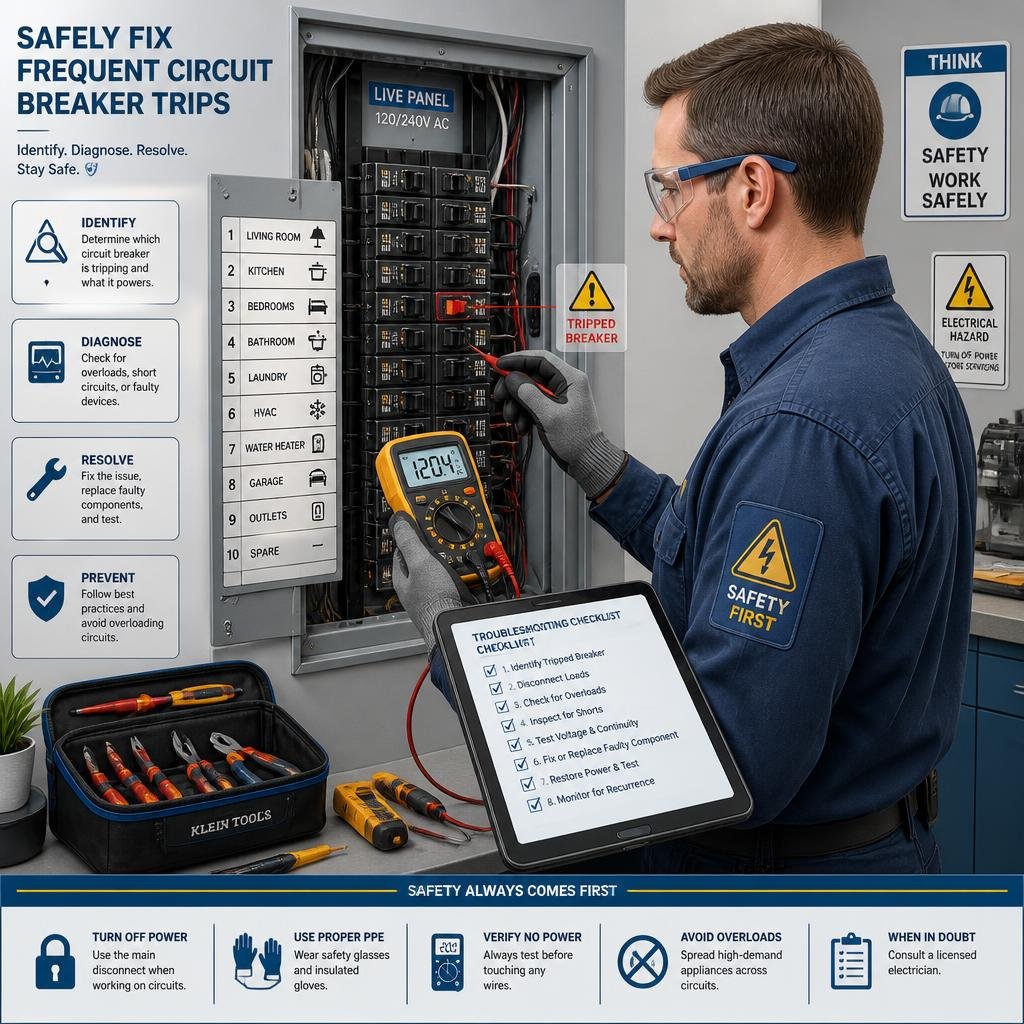
So you’re trying to figure out how to fix frequent circuit breaker trips? The safest place to start isn’t the reset button—it’s figuring out why the breaker’s tripping in the first place. A breaker that trips every now and then is probably just doing its job. But repeated trips usually mean there’s an overload, a wiring fault, a failing breaker, or maybe something wrong with a device plugged into that circuit.
The goal isn’t just to get the power back on—you want to avoid covering up a real hazard. Doing a careful check can help you spot simple causes, or at least know when it’s time to call in a licensed electrician.
What Breaker Tripping Usually Means
A breaker trip is basically a protective shutdown. It means the circuit pulled more current than it should, or the breaker detected some kind of fault that could overheat wires or damage stuff.
One trip? Not always a disaster. But if it keeps happening, that’s your electrical system waving a red flag.
How a Breaker Protects Your Electrical System
A circuit breaker keeps an eye on how much electricity is flowing through a circuit. If the load gets too high, or something goes wrong and electricity starts flowing where it shouldn’t, the breaker pops and cuts the power.
That shutdown stops wires from overheating, prevents fried outlets, and helps avoid fires. Honestly, a lot of people blame the breaker, but most of the time, it’s just doing its job.
Why Repeated Shutoffs Signal an Underlying Problem
If the same breaker keeps tripping, the circuit’s trying to tell you something is wrong. Too many devices on one circuit, a short, a ground fault, loose wires, or just a tired old breaker can all be culprits.
Resetting it again and again just covers up the issue. Worse, it might let a bad wire or appliance hang around long enough to turn into a real problem.
Safe Checks to Do Before Resetting Anything
You can do a few quick checks without messing with the panel itself. Don’t touch exposed wires, and don’t force a breaker that won’t reset.
If you smell burning, hear buzzing, or see scorch marks, stop right there and call someone.
When to Leave the Panel Alone
Back away from the panel if the breaker feels hot, the cover’s damaged, or there’s any chance water got in. Same goes if you heard a pop, saw a spark, or smelled burning right before the trip.
Seriously, don’t remove the cover unless you know what you’re doing. Even with one circuit off, the box can still shock you.
How to Identify Which Devices Were on the Affected Circuit
First, make a quick list of what lost power when the breaker tripped—lights, outlets, kitchen stuff, laundry, even outdoor plugs.
Unplug or switch off everything on that circuit before you reset the breaker. If it trips again with nothing plugged in, odds are the wiring, breaker, or panel is the problem.
Common Causes Inside the Home or Building
Most of the time, frequent trips come down to a handful of usual suspects. When the breaker trips can give you a clue.
Trips when you run a bunch of appliances? Probably overload. Trips right when you turn something on? Could be a short, ground fault, or busted appliance.
Overloaded Circuits From High-Demand Appliances
Circuits get overloaded when too many devices pull power from the same line. Stuff like space heaters, microwaves, hair dryers, A/C units, and power tools can all push a 15-amp or 20-amp circuit over the edge.
Try moving a big energy hog to another circuit and see if that helps. If you’re relying on extension cords or power strips to make a room work, that’s a sign you might need to rethink your setup or upgrade the circuit.
Short Circuits and Ground Fault Issues
A short circuit happens when electricity finds a shortcut—like a hot wire touching neutral or metal. Ground faults are similar, but the current leaks to ground through a damaged wire, something wet, or a faulty device.
These usually trip the breaker instantly. If you see sparks, smell burning, or the breaker trips right after plugging something in, stop using that thing until you check it out.
Aging Wiring, Loose Connections, and Damaged Outlets
Old wiring wears out, especially in houses with lots of electrical use. Loose connections inside outlets, switches, and junction boxes can heat up and cause random trips.
Watch out for outlets that look discolored, cracked, loose, or feel warm. Don’t use them until they’re fixed.
When the Electrical Panel May Be the Problem
Sometimes it’s not a device or a circuit—it’s the breaker panel itself. Breakers get old, and older panels often can’t keep up with today’s electrical demands.
If the breaker trips for no obvious reason or keeps failing even with everything unplugged, the panel could be the culprit.
Worn or Failing Breakers
Breakers can get weak over time and start tripping too easily. Sometimes they don’t trip when they should, which is even riskier.
If one breaker keeps acting up while the others are fine, it might be time to replace it. Don’t just guess—this usually needs testing and a proper fix.
Signs the Panel Needs Repair or Upgrading
Panels that need repair or an upgrade tend to have breakers that trip a lot, feel warm, or make the lights dim when big appliances start. Rust, corrosion, buzzing, and burn marks are all bad signs.
Older panels might not handle things like EV chargers, smart home gear, or lots of big appliances. In those cases, a new panel or targeted upgrade can make everything safer and more reliable.
When to Call a Licensed Electrician
Some breaker issues are safe to check out. Others? Not so much. If it looks like wiring, the panel, or something hidden, call a licensed electrician.
Especially if the breaker keeps tripping after you’ve unplugged everything on the circuit.
Warning Signs That Point to a Serious Hazard
Get help right away if you smell burning, see smoke, scorch marks, hear buzzing, notice melting, repeated sparks, or warm outlets and switches. Frequent trips plus flickering lights can mean loose wiring or a failing circuit.
If a breaker won’t reset, trips with no load, or pops again the moment you turn it on, don’t keep forcing it. That’s when you need a pro.
How Professional Troubleshooting Solves Recurring Trips
A licensed electrician can check the circuit load, inspect outlets and junctions, test the breaker, and hunt down hidden wiring problems. That’s how you separate a simple overload from something deeper.
In my experience, the right fix addresses the root cause, not just the symptom. Sometimes that’s a new breaker, sometimes it’s rewiring, sometimes it means adding a dedicated circuit or upgrading the panel.
Choosing Reliable Help in Central Texas
If you’re dealing with frequent breaker trips, you want a team that can actually diagnose the problem and fix it—no guesswork. That’s important for homes and businesses, especially when safety or downtime’s on the line.
Magnify Electric is a solid pick for Residential and Commercial Electrical Work because our licensed electricians handle troubleshooting, repairs, upgrades, and safety-focused service with a practical approach. We serve Spicewood, Austin, Bee Cave, Lakeway, Dripping Springs, Georgetown, Leander, Round Rock, Kyle, Cedar Park, Liberty Hill, Westlake, The Hills, Briarcliff, Horseshoe Bay, Sunset Valley, Hutto, and the rest of Central Texas.
Why Magnify Electric Is a Strong Choice for Residential and Commercial Electrical Work
Magnify Electric does more than breaker diagnostics. The team covers automated lighting, ceiling fans, light switches, Lutron smart home systems, EV charging outlets and wall-mounted chargers, outdoor lighting installs, outlets, recessed lighting, TV installation, whole-home surge protectors, wiring, panel upgrades and repairs, troubleshooting and electrical repairs, portable generator hookups, smoke and CO₂ detectors, and general electrical improvements for homes and businesses.
That range is handy when your breaker issue is just one part of a bigger electrical puzzle. The same crew can handle simple fixture swaps, full upgrades, commercial lighting, safety checks, smart home setups, and emergency support.
Services Available Beyond Breaker Diagnostics
If you’ve got frequent trips from an overloaded circuit, lighting problem, or a panel that’s seen better days, you probably need more than just a quick reset. Maybe you need better load balancing, new wiring, dedicated circuits, or modern controls for new gear.
A good electrician can also help you plan for future appliances, office equipment, or EV charging. That way, you’re less likely to run into the same breaker headache again.
Frequently Asked Questions
What are the most common reasons a circuit breaker keeps tripping?
Usually it’s overload, short circuit, ground fault, bad wiring, or a worn-out breaker. Sometimes it’s a device on the circuit—if the trip happens when you start it up, that’s a big clue.
How can I tell if the problem is an overloaded circuit or a short circuit?
Overloads often trip after you run several devices at once. A short circuit usually trips instantly, sometimes with a pop, spark, or burning smell.
What should I unplug or check first when a breaker trips repeatedly?
Start with whatever was running when the breaker tripped. Unplug high-demand stuff like heaters, microwaves, hair dryers, and power tools before you reset.
How do I know if a specific appliance is causing the breaker to trip?
Try plugging the appliance into a different circuit and see if the problem follows. If the breaker only trips when that appliance runs, it’s probably faulty or just pulling too much power.
When is a tripping breaker a sign of faulty wiring or a bad breaker?
If the breaker trips with nothing plugged in, feels hot, or keeps tripping even after you reduce the load, it might be wiring or the breaker itself. Burn marks, buzzing, and warm outlets are also signs there’s a deeper electrical issue.
When should I call an electrician for a breaker that won’t stay on?
If your breaker refuses to reset, trips again immediately, or you notice any heat, burning smells, or visible damage, it’s time to call an electrician. Also, if that same breaker keeps tripping and you can’t figure out what’s overloading it, don’t keep guessing—get a professional to take a look.