
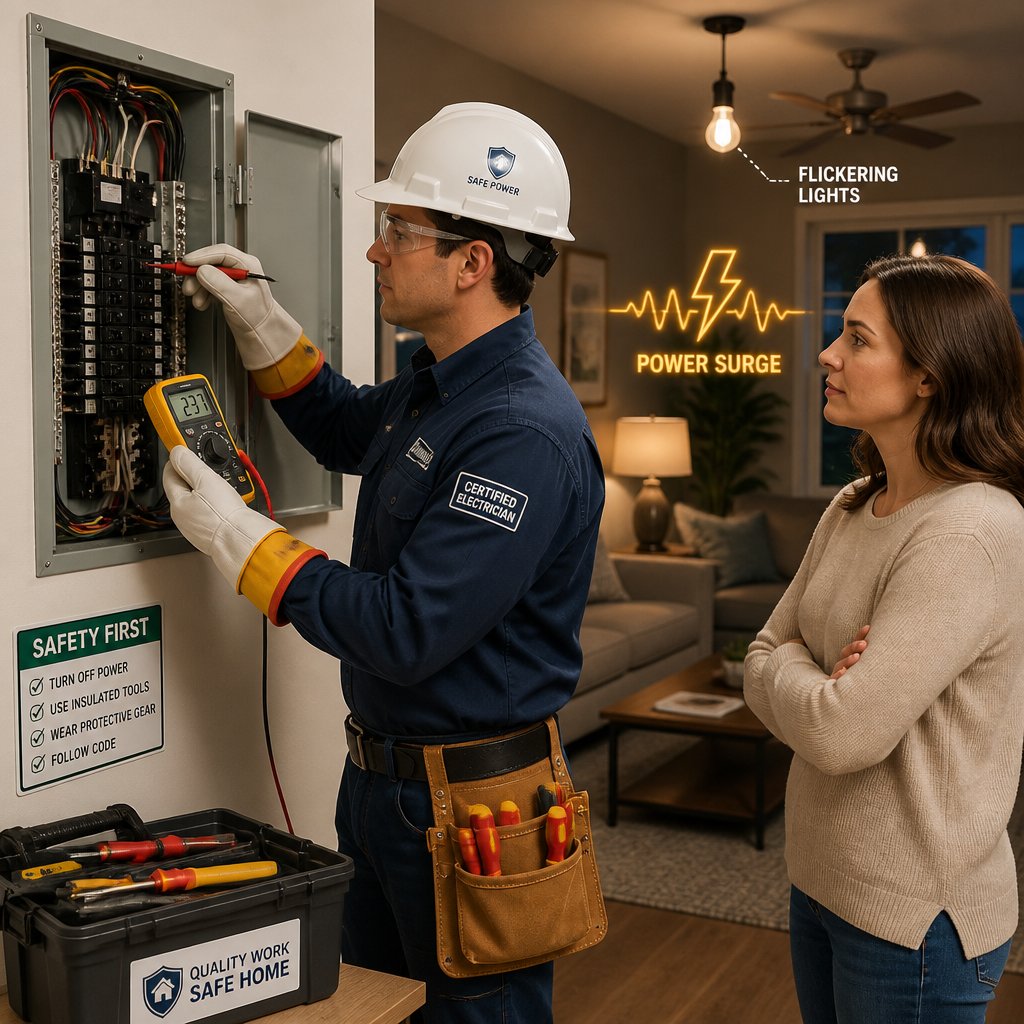
If you’re searching for how to fix inconsistent power in your home, it’s best to start with clear warning signs, do some simple checks, and know when it’s time to hand things over to a licensed electrician. Uneven power can show up as flickering lights, weak outlets, or appliances acting up, and those clues usually mean something’s off that shouldn’t be ignored.
The right fix really depends on whether you’re dealing with one device, one room, or if your whole electrical system is acting weird. Sometimes it’s just a loose plug or overloaded circuit. But if things are worse—like old wiring, a tired panel, or even a utility supply problem—then you’ll need a bigger solution.
You can do a few safe checks before you call anyone, and those steps might save you time (and maybe a headache). But honestly, electricity isn’t something to mess around with, so knowing when to stop is just as important as knowing where to start.
Recognizing the Warning Signs
Inconsistent power usually gives you some hints before it turns into a full-blown problem. You might spot little changes—flickering, buzzing, or a device that only works if you jiggle the plug. These often mean you’ve got voltage drops, loose wiring, or maybe a load issue somewhere in the system.
Lights That Flicker or Dim
Lights that flicker when a big appliance kicks on? That’s a sign the circuit is working too hard. If lights dim in multiple rooms or just change brightness randomly, you might be looking at a wiring or service issue.
A single bad bulb is no big deal. But if you notice a pattern—especially with ceiling fans, recessed lights, or outdoor lighting—it’s time to pay attention.
Outlets That Work Intermittently
If an outlet works one minute and fails the next, that’s a red flag. You might also notice the faceplate feels warm, plugs are loose, or a device only powers on when you hold the cord just right.
That usually means worn-out receptacles, loose connections, or damage hidden behind the wall. And if that outlet feeds other rooms, the problem can spread.
Appliances That Struggle or Shut Off
If your microwave, TV, or charger randomly resets, the issue might be deeper than the appliance. Motor-driven stuff can sound weak, run hot, or shut off early when power’s unstable.
These symptoms matter because unstable power can shorten appliance life and add extra heat to your wiring. If you see the same thing happening with several devices, it’s time to have the electrical system checked.
Common Causes Behind Voltage Problems
Voltage issues usually come from hidden problems in the house—not from the appliance that seems to fail. Some causes are easy to fix, but others might mean you’ll need work done on the panel, wiring, or even the main supply.
Loose Connections and Aging Wiring
Loose wire connections can cause intermittent power, heat, and flickering. Older homes often have wiring that just can’t keep up with today’s electrical demand.
A weak connection doesn’t always mean a total outage. Sometimes you’ll see a drop in brightness, a dead outlet, or a breaker that trips at random.
Overloaded Circuits and Panels
A circuit can only handle so much before performance drops. Too many devices on one line? You’ll notice dimming lights, sluggish appliances, or breakers that trip again and again.
An older panel might not be able to keep up, especially if you’ve added space heaters, kitchen gadgets, computers, or chargers. Outdated systems just aren’t built for all that.
Utility Supply Issues and Weather Impacts
Sometimes, the problem’s outside your house. Utility-side issues, storms, or debris can mess with your service and cause unstable voltage.
Power can also fluctuate during peak demand or after bad weather. If your neighbors are having the same problem, the utility company probably needs to check the line.
Safe Checks You Can Do First
Some simple checks can help you narrow things down—no need to open panels or touch anything live. Focus on observing, not fixing, and stop right away if you smell something hot, see sparks, or feel warmth.
Testing Whether the Problem Is Isolated
Figure out if the issue is just one room, one outlet, or the whole house. Plug a lamp or phone charger into different outlets. Does the problem follow the device or stay put?
If only one appliance fails, it’s probably the appliance. If multiple things act up in one area, the outlet or circuit is the likely culprit.
Resetting Breakers the Right Way
If a breaker trips, turn it all the way OFF before switching it back ON. That full reset is important—halfway just won’t cut it.
Don’t keep resetting a breaker if it trips again immediately. That’s a sign of a real problem, not something to force.
Noting Patterns Before Calling a Pro
Jot down when the issue happens, which rooms are involved, and what’s running at the time. Does it happen during storms, when the HVAC kicks on, or when kitchen appliances are in use?
This kind of detail helps an electrician diagnose the problem faster. It also helps figure out if the issue is inside your home or with the utility supply.
When Professional Electrical Repair Is Needed
Some electrical symptoms mean it’s time to call a pro—no more DIY. If you see heat, burning, repeated failures, or things just feel unstable, stop troubleshooting and get help.
Signs of a Hazardous Electrical Condition
Call for help if you notice burning smells, buzzing from outlets or the panel, scorch marks, shocks, or breakers that won’t reset. Smoke, melting plastic, and hot cover plates are urgent signs.
If something starts sparking, turn off power to that area if you can do it safely. Don’t keep using the circuit.
Why Diagnosis Should Go Beyond Quick Fixes
A quick fix might just cover up the real problem. Swapping out an outlet won’t help if the wiring behind it is damaged, and replacing a breaker won’t solve an overloaded circuit.
A proper diagnosis should include checking the panel, branch circuits, connections, and how the load is balanced. That’s how you actually get stable power for the long run.
Repairs and Upgrades That Restore Reliable Power
Depending on what’s wrong, the fix might mean tightening or replacing connections, repairing wiring, balancing loads, or upgrading the panel. Sometimes, adding dedicated circuits for heavy-use appliances is the answer.
Licensed electricians can sort out troubleshooting, repairs, panel upgrades, wiring, and safety inspections. For homes and businesses, that’s the way to get reliable power and fewer headaches down the road.
Upgrades That Help Prevent Future Disruptions
Once you’ve solved the immediate problem, think about how to prevent it from coming back. Smart upgrades can make your system more stable, safer, and easier to manage.
Panel Improvements and Dedicated Circuits
Upgrading your panel gives your home more breathing room and better load handling. Adding dedicated circuits for big appliances, office gear, or chargers can take the pressure off shared lines.
This really pays off if you’ve added new electronics, a home office, or an EV charger. Sometimes, a better layout solves power issues in more ways than one.
Whole-Home Surge Protection
Power surges can fry electronics and make your power seem flaky. Whole-home surge protection shields your stuff from sudden spikes, whether they come from the utility or big appliances inside.
If you’ve got sensitive gear, smart home devices, or entertainment systems, this is a smart add-on. It’s also great to have during storm season.
Generator Hookups and Smart Power Solutions
Portable generator hookups let you keep the essentials running during an outage. Smart power systems, like Lutron smart home setups and automated lighting, give you more control and help cut wasted load.
These upgrades are great if you want more reliability and everyday convenience. They also play nice with smoke and CO₂ detectors, outdoor lighting, and other safety features.
Choosing a Trusted Local Electrician
You want an electrician who can handle both the little stuff and the big jobs. Good communication, licensed work, and a team that’s ready for repairs, upgrades, and future planning matter.
What to Look for in Residential and Commercial Service
Look for licensed electricians who can take care of everything from swapping out a fixture to full electrical upgrades. That includes automated lighting, ceiling fans, switches, EV charging outlets and wall chargers, outlet services, recessed lighting, TV installs, whole-home surge protection, and general improvements.
A solid team should also offer commercial lighting, emergency support, and smart home integration. It’s a relief when you can call one company for all your needs.
Why Magnify Electric Stands Out in Central Texas
Magnify Electric brings licensed electricians who tackle residential and commercial work with practical skill and real care. They handle troubleshooting, safety inspections, panel repairs, wiring, lighting installs, generator hookups, and modern upgrades like Lutron smart systems and EV charging.
Areas We Serve for Ongoing Electrical Support
You can get service in Spicewood, Austin, Bee Cave, Lakeway, Dripping Springs, Georgetown, Leander, Round Rock, Kyle, Cedar Park, Liberty Hill, Westlake, The Hills, Briarcliff, Horseshoe Bay, Sunset Valley, Hutto, and nearby Central Texas areas. That local reach means help is close when you need it most.
Frequently Asked Questions
Why does the electricity in my house keep fluctuating throughout the day?
Usually, it’s changing load—HVAC, kitchen appliances, chargers turning on and off. But it can also mean loose connections, old wiring, or a utility supply issue.
What are the most common causes of low voltage in a home?
Loose wiring, overloaded circuits, aging panels, and utility-side problems are the big ones. Sometimes, a long circuit run or damaged connection can drop voltage at the outlet.
How can I tell if a loose or damaged connection is causing power drops?
Loose connections often make lights flicker, outlets fail off and on, or devices work only sometimes. If you feel warmth, hear buzzing, or see scorch marks, stop using it and call an electrician.
How do I test for voltage fluctuations, or “dirty power,” with a multimeter?
Set the meter for the right voltage, then test the outlet while the circuit’s under normal use. If readings jump around a lot, or change when appliances turn on, that usually means you’ve got a power quality problem that needs a pro’s attention.
When should I call the utility company versus hiring an electrician for unstable power?
Call the utility if the problem hits multiple homes, follows a storm, or seems tied to the outside service line. Bring in an electrician if it’s just your house, one room, or one circuit—or if you spot signs of wiring trouble.
What can I do to protect sensitive electronics from inconsistent power at home?
Try installing a whole-home surge protector and stick to power strips that actually offer surge protection—don’t just grab the cheapest ones. If you’ve got really sensitive equipment, a dedicated circuit can help. When storms roll in and things get dicey, it’s honestly not a bad idea to just unplug the stuff you care about most. If you keep seeing weird power issues, maybe it’s time to have an electrician take a look at your wiring.