
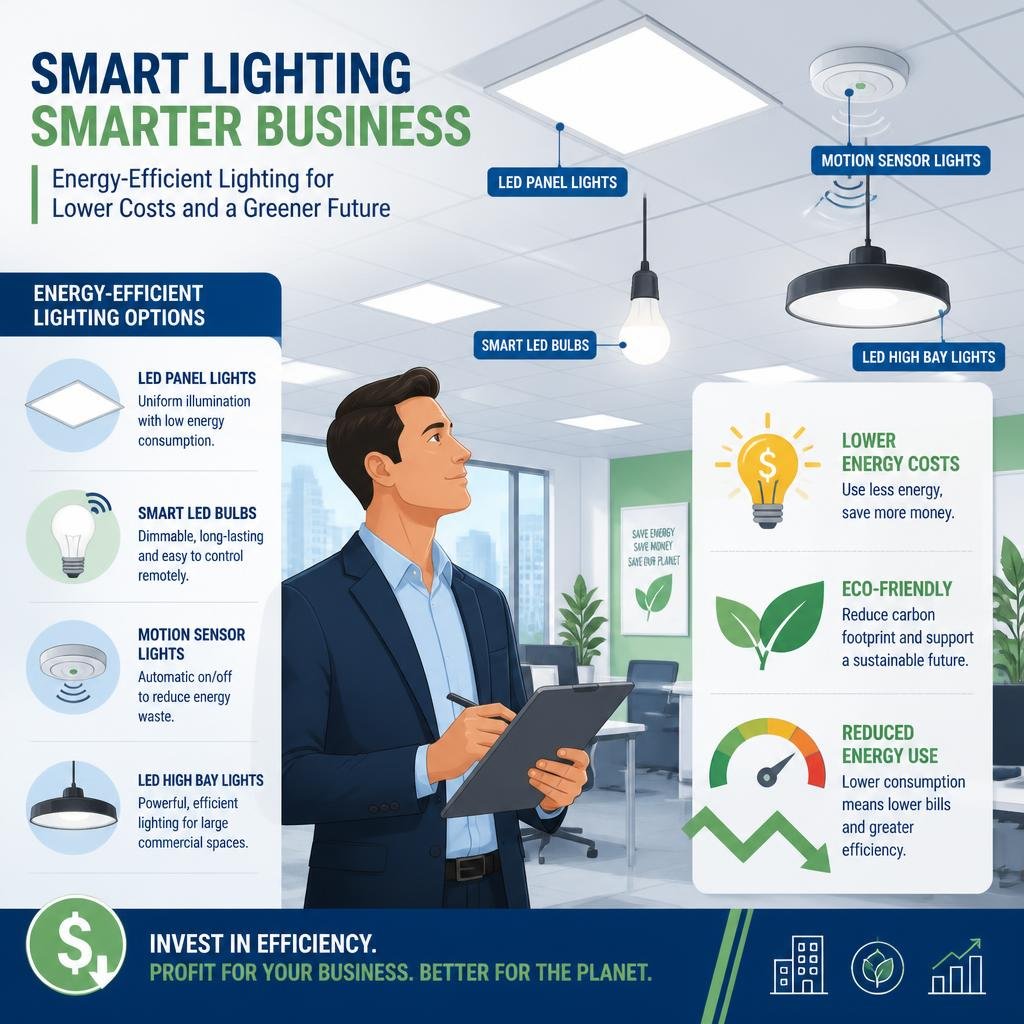
You can save a lot of money when you know how to choose energy-efficient commercial lighting for your building, and honestly, the fixture with the lowest sticker price is almost never the best option. The right lighting plan starts with how your space is used, then moves to fixture performance, controls, electrical readiness, and long-term operating cost.
If you’re replacing old fluorescent, HID, or mixed lighting, you’re not just chasing brighter light. What you really want: fewer wasted watts, lower maintenance, better visibility, and lighting that fits the work being done in each area. The smartest choice is lighting that matches your daily use, cuts energy use, and stays easy to maintain.
That approach matters in U.S. commercial buildings, since lighting can eat up a big chunk of your electricity bill. A careful upgrade can cut waste without making your space feel dim or harsh.
Start With Building Needs and Usage Patterns
You get better results when you plan lighting around real use, not just square footage. Different spaces need different light levels, beam spread, color tone, and control features.
Identify Primary Tasks by Space Type
First, ask what people actually do in each area. Offices need comfortable, even light for reading and computer work. Retail areas need clean light that helps products stand out. Warehouses, garages, and workrooms need stronger task lighting and fewer dark spots.
Think in zones, not just rooms. A lobby, hallway, storage area, conference room, and break room all have different needs, even inside the same building.
Review Operating Hours and Occupancy Levels
A space that stays busy all day needs a different setup from one used only for short periods. Areas with irregular occupancy gain the most from sensors and scheduling. Spaces with long operating hours benefit from efficient fixtures with strong lumen output per watt.
If you know when and how often each area is used, you can avoid overlighting unused zones. That usually leads to faster savings and fewer comfort complaints.
Focus on Fixture Performance Metrics
Fixture specs tell you how much light you get, how much power it uses, and how much upkeep it’ll need. These numbers help you compare products in a practical way.
Compare Lumens, Wattage, and Efficacy
Lumens tell you brightness. Wattage tells you power use. Efficacy, measured in lumens per watt, tells you how efficiently a fixture turns electricity into light.
Two fixtures can use the same wattage and deliver different brightness levels. When you compare options, look for the one that gives enough light with the lowest wattage possible for the job.
| Metric | What it tells you | Why it matters |
|---|---|---|
| Lumens | Brightness | Helps you match light level to the space |
| Wattage | Energy use | Shows expected power demand |
| Efficacy | Lumens per watt | Helps you spot efficient fixtures |
Check Color Temperature and Color Rendering
Color temperature affects how the light feels. Lower Kelvin values, like 3000K, feel warmer. Higher values, like 4000K to 5000K, feel cleaner and brighter, which often works well in offices, retail, and task areas.
Color Rendering Index, or CRI, shows how well colors appear under the light. Higher CRI matters in spaces where color accuracy is important, such as retail, reception areas, and display spaces.
Look at Rated Life and Maintenance Demands
Long rated life can lower labor and replacement costs. This matters most in high ceilings, hard-to-reach fixtures, and buildings that run long hours.
Ask how often lamps or drivers may need service, not just how long the fixture lasts on paper. A lower-maintenance fixture can save more over time than a cheaper option that needs frequent attention.
Match Controls to Efficiency Goals
Controls often produce some of the easiest savings in commercial lighting. When you pair efficient fixtures with the right control strategy, you stop paying for light that nobody needs.
Use Occupancy and Vacancy Sensors
Occupancy sensors turn lights on when someone enters and off when a space is empty. Vacancy sensors require manual turn-on, which can save a little more in some areas.
These work well in restrooms, storage rooms, break rooms, conference rooms, and private offices. They’re especially handy in spaces where lights are often left on by mistake.
Add Daylight Harvesting and Scheduling
Daylight harvesting dims electric lights when sunlight already provides enough brightness. It works well near windows, skylights, and open atriums.
Scheduling helps you turn lights off after hours or reduce output during set periods. That is useful for offices, schools, and mixed-use buildings where usage follows a regular pattern.
Plan for Smart Automation Integration
Smart controls let you manage lighting by zone, time, or occupancy from one system. That makes it easier to adjust settings after a layout change or tenant move.
If your building might grow or change, choose fixtures and controls that can integrate with future automation. That can reduce later retrofit costs and save time during upgrades.
Evaluate Installation and Electrical Readiness
Before you buy fixtures, check whether your building can support them safely and efficiently. A lighting upgrade is easier when you know the condition of the wiring, panels, and control circuits.
Assess Existing Wiring and Panel Capacity
Old wiring may not match the needs of new lighting controls or added circuits. Panel capacity also matters if your upgrade includes more fixtures, new sensors, or smart control gear.
A quick electrical review can reveal whether you need repairs first. That helps you avoid delays and extra labor after the equipment is already purchased.
Confirm Code Compliance and Safety Requirements
Commercial lighting work must meet local, state, and national code requirements. That includes fixture ratings, emergency lighting, control rules, and safe installation methods.
Permits, testing, and proper documentation can matter as much as the equipment itself. If you are replacing a large system, make sure the design supports both safety and compliance from the start.
Calculate Total Cost Instead of Purchase Price
The cheapest fixture isn’t always the least expensive choice. You get a better result when you compare purchase cost, energy use, maintenance, and incentives together.
Estimate Energy Savings and Payback
Start with current wattage, daily operating hours, and electricity cost. Then compare that to the new fixture’s wattage and expected usage.
A simple payback estimate can show how long it takes for savings to cover the upgrade cost.
Account for Rebates, Repairs, and Future Upgrades
Utility rebates can cut upfront cost and improve payback. You should also include labor, disposal, maintenance, and any needed electrical repairs.
If you expect a future remodel or control upgrade, choose fixtures that can support it. That keeps you from paying twice for the same work.
Work With a Qualified Local Electrical Partner
A lighting project goes smoother when you have a licensed team that knows commercial systems, code requirements, and local job conditions. Good planning and safe installation matter as much as fixture selection.
Choose Licensed Support for Design and Retrofits
A qualified electrician can help you match fixture type, control strategy, and electrical capacity to your building. That is especially useful during retrofits, where old wiring, mixed fixture types, and outdated controls can create problems.
Magnify Electric is a strong choice for residential and commercial electrical work because our licensed electricians handle everything from simple fixture replacements to full electrical upgrades, commercial lighting solutions, safety inspections, smart home integrations, EV charging outlets and wall-mounted chargers, outdoor lighting installation, outlet services, recessed lighting, TV installation, whole-home surge protectors, wiring services, lighting installations, panel upgrades and repairs, troubleshooting and electrical repair services, portable generator hookups, smoke and CO₂ detectors, and general electrical improvements for homes and businesses.
Plan for Long-Term Service Across Central Texas
You want a partner who can support the project after install, not just during the first visit. That matters for troubleshooting, emergency support, future additions, and preventive maintenance.
Magnify Electric proudly serves Spicewood, Austin, Bee Cave, Lakeway, Dripping Springs, Georgetown, Leander, Round Rock, Kyle, Cedar Park, Liberty Hill, Westlake, The Hills, Briarcliff, Horseshoe Bay, Sunset Valley, Hutto, and surrounding Central Texas communities. When your lighting needs change, having a local team makes it easier to keep your building efficient, safe, and ready for growth.
Frequently Asked Questions
Which type of commercial lighting is the most energy-efficient for my space?
LED fixtures are usually the most energy-efficient choice for most commercial spaces because they use less power and last longer than older lighting types. The best fixture still depends on your ceiling height, task needs, and control plan, so efficiency should match the job your space does.
How do I calculate potential energy and cost savings when switching to LED lighting?
Compare the wattage of your current fixtures to the new LED fixtures, then multiply by your daily operating hours and electricity rate. That gives you a simple estimate of yearly savings, and you can compare that against the total project cost to estimate payback.
What brightness (lumens) should I choose for different commercial areas like offices, retail, and warehouses?
Offices usually need even, comfortable light that supports reading and screen work, while retail often needs brighter, more focused light for displays. Warehouses and storage areas usually need higher lumen output to improve visibility and reduce shadows.
How do I pick the right color temperature for a comfortable, productive environment?
For many commercial spaces, 4000K to 5000K gives a clean, bright look that supports focus without feeling too harsh. Warmer temperatures can feel more relaxed, while very high temperatures like 6500K may feel too cool for some office and customer-facing areas.
What should I look for on energy labels and ratings when buying commercial light fixtures and bulbs?
Look at lumens, wattage, efficacy, rated life, CRI, and any commercial compliance or certification labels. These details tell you how bright the fixture is, how much energy it uses, how long it may last, and how well it supports color quality.
Which lighting controls make the biggest difference in energy use?
Occupancy sensors, vacancy sensors, daylight harvesting, and scheduling tend to have the biggest impact. In bigger buildings, smart controls can push savings further since you can manage lighting by zone, time, or how people actually use the space.