
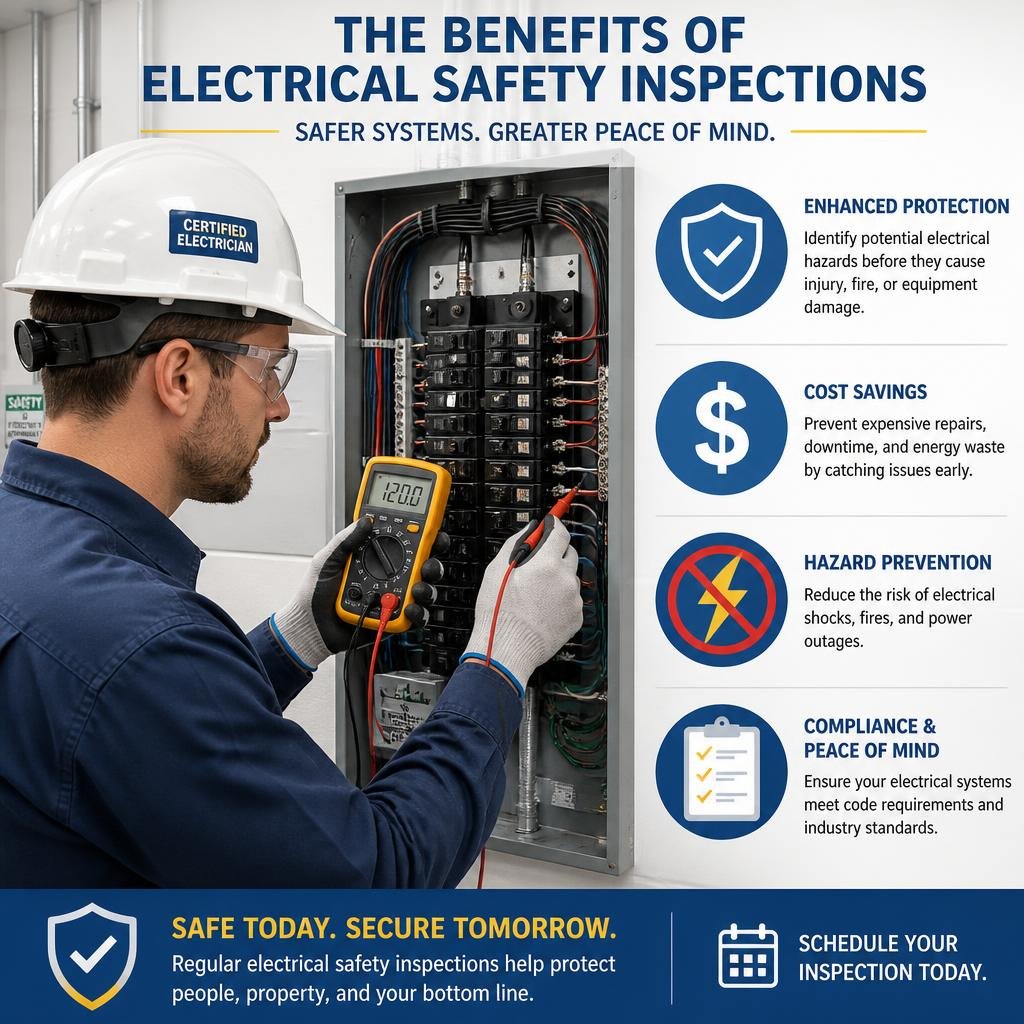
You probably don’t think much about the benefits of electrical safety inspections for businesses until a breaker trips, a machine stops mid-shift, or a wiring issue suddenly puts people at risk. Honestly, regular inspections let you catch sneaky problems early, keep the building safer, and dodge expensive interruptions.
If you run a business, electrical safety inspections give you a practical way to reduce hazards, protect equipment, and support compliance before small issues turn into bigger problems. They also help you plan maintenance instead of reacting to emergencies.
For business owners, that means fewer surprises and more control. A well-timed inspection can reveal worn parts, overloaded circuits, loose connections, and other issues that are easy to miss during daily operations.
How Inspections Reduce Workplace Hazards
Electrical inspections help you spot risks that don’t always show warning signs. A trained professional can pick out conditions that raise the chance of fire, shock, or equipment damage before they hit your staff or property.
Fire Prevention Through Early Detection
Loose connections, old wiring, damaged outlets, and overloaded panels build up heat inside your system. In a busy commercial setting, that heat can go unnoticed for weeks.
An inspection catches those trouble spots early, so you’ve got time to fix them before they become a fire hazard.
Shock and Equipment Risk Reduction
Bad grounding, exposed wires, and worn safety devices put employees at risk of shock. Those problems can also fry computers, tools, and other sensitive equipment.
By inspecting regularly, you lower the odds of accidental contact and reduce stress on your machines. The work environment ends up safer and more stable.
Operational Reliability and Less Downtime
Your business relies on electrical systems working when you need them. Inspections help you find weak points before they cause outages, failed equipment, or interrupted service.
Catching Wear Before Failure
Commercial systems work hard every day. Breakers age, connections loosen, and wires wear down from heat, vibration, and use.
A professional inspection spots those signs early. That usually means simpler repairs and fewer emergency calls.
Protecting Critical Systems and Productivity
Even a short electrical failure can disrupt lighting, computers, security systems, refrigeration, point-of-sale equipment, or production tools. That can slow work and frustrate customers.
Regular inspections help you protect the systems your business relies on most. In many cases, that leads to smoother operations and fewer unexpected stoppages.
Code Compliance and Liability Protection
Electrical codes change over time, and commercial properties face specific local and industry standards. Inspections help you stay in line with current requirements and show you take safety seriously.
Meeting Local and Industry Requirements
An inspection uncovers outdated parts, unsafe modifications, or installations that don’t meet code. That matters if you’re preparing for tenant turnover, renovations, insurance reviews, or safety checks.
Staying current helps you avoid citations and reduces the chance of costly corrections later. It also gives you a clearer picture of what needs attention now.
Supporting Insurance and Risk Management
Well-documented inspections back you up if a claim or liability issue comes up. That record supports your risk management and shows you took reasonable steps to maintain the property.
Insurance providers often look favorably on businesses that keep up with maintenance. A regular inspection routine can be part of that stronger risk profile.
Long-Term Cost Control
Safety inspections aren’t just about avoiding problems—they help you manage spending, too. Finding small issues early usually costs less than waiting for a major failure.
Lower Repair and Replacement Expenses
A loose connection or failing breaker is often cheaper to fix than a burned panel or fried equipment. Same goes for worn wiring, bad outlets, and overloaded circuits.
Inspections help you make planned repairs instead of paying for emergency service. That makes budgeting a little less painful and a bit more predictable.
Improved Energy Performance Opportunities
During an inspection, you might spot lighting or equipment issues that waste energy. Sometimes you’ll find outdated parts that run less efficiently than newer options.
That can open the door to practical improvements, like better lighting controls, upgraded fixtures, or smarter load management. Even small changes can lower operating costs over time.
What Professionals Evaluate During a Visit
A good inspection covers more than a quick look around. The electrician checks the parts of your system most likely to fail, along with things that affect safety, reliability, and day-to-day use.
Panels, Wiring, and Protective Devices
Panels, breakers, grounding, and wiring condition usually get the most attention. These components tell the electrician a lot about system health and whether your building is protected properly.
Protective devices get checked to make sure they trip when needed. If they don’t, the risk to people and equipment goes up.
Lighting, Outlets, and Specialty Electrical Systems
The inspection usually covers lighting, outlets, switches, and any specialty systems tied to your operations. That could mean emergency power setups, dedicated equipment circuits, or charging and control systems.
A careful review helps you spot unsafe wear, poor installation, and signs of overload. It also gives you a clearer repair plan.
Choosing a Qualified Electrical Partner
The value of an inspection really depends on who does it. You want a licensed commercial electrician who actually knows how to spot problems in active business environments and explain the next steps in plain language.
Why Licensed Commercial Expertise Matters
Commercial systems get complicated, and mistakes can get expensive fast. A licensed electrician brings training, code knowledge, and field experience that help you get accurate results.
You also want a team that can handle repairs after the inspection, not just point out problems. That saves time and helps you move from findings to fixes faster.
Why Businesses Across Central Texas Choose Magnify Electric
Magnify Electric is a solid choice if you want one team for residential and commercial electrical work, from simple fixture swaps to full-scale upgrades. Their licensed electricians handle automated lighting, ceiling fans, light switches, Lutron smart home setups, EV charging outlets and wall chargers, outdoor lighting, outlet services, recessed lighting, TV installs, whole-home surge protection, wiring, panel upgrades and repairs, troubleshooting, portable generator hookups, smoke and CO₂ detectors, and general electrical improvements for homes and businesses.
You’ll also get support for commercial lighting solutions, safety inspections, smart home integrations, and emergency electrical support across Spicewood, Austin, Bee Cave, Lakeway, Dripping Springs, Georgetown, Leander, Round Rock, Kyle, Cedar Park, Liberty Hill, Westlake, The Hills, Briarcliff, Horseshoe Bay, Sunset Valley, Hutto, and nearby Central Texas communities.
Frequently Asked Questions
How can an electrical safety inspection help prevent workplace fires and accidents?
An inspection finds loose connections, overloaded circuits, damaged wiring, and faulty devices before they create heat, sparks, or shock hazards. That gives you a chance to fix problems before they affect your staff, property, or operations.
What issues do electrical inspectors commonly find in commercial buildings?
Common findings: worn breakers, outdated panels, overloaded circuits, damaged outlets, poor grounding, and unsafe modifications. Inspectors also spot lighting issues, missing labels, and equipment that doesn’t match current code.
How often should a business schedule electrical safety inspections?
Many businesses do well with yearly inspections, especially if the building sees heavy use, has older equipment, or has had recent changes. More frequent checks make sense after renovations, new equipment, or any signs of trouble.
How much does a typical electrical safety inspection cost for a business?
Cost depends on your property’s size, the system’s complexity, and how detailed the inspection needs to be. A small office usually costs less than a big facility with specialized equipment or several panels.
Can electrical safety inspections help reduce insurance premiums or support claims?
They can support your risk management and show you took steps to maintain a safe building. Some insurers look more favorably on businesses that keep up with documented maintenance and inspections.
How can an electrical inspection improve compliance with workplace safety regulations?
An inspection lets you catch code violations, unsafe setups, or worn-out components that just don’t cut it anymore. Fixing these problems early can save you from headaches like citations, slowdowns, or—honestly—the bigger worry: safety risks.