
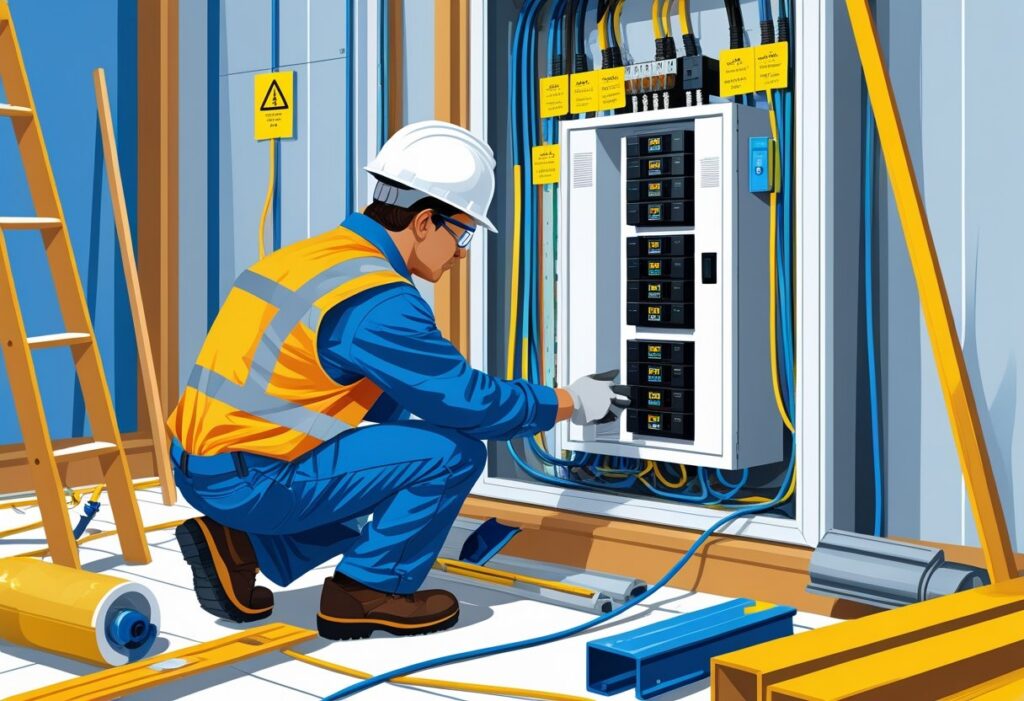
Renovating your home or business is exciting, sure, but it also means you’ve got to keep an eye on your electrical system. To safeguard your electrical system during renovations, stick to local electrical codes, avoid overloaded circuits, and have a licensed electrician check and upgrade wiring if it’s needed. These steps can save you from headaches and expensive repairs later.
Electrical work? It gets tricky—and honestly, it can be dangerous if you’re not careful. That’s why having a trusted team like Magnify Electric on the job makes all the difference. Our licensed electricians handle everything from extra outlets to full panel upgrades, keeping your system reliable while you renovate.
Assessing Electrical Risks Before Renovation
Before you start swinging hammers, take some time to figure out where electrical risks could pop up. Check for hazards, look over your wiring and panels, and get some professional input. A little caution here goes a long way.
Identifying Potential Hazards
Give your setup a close look for danger signs. Damaged insulation, exposed wiring, overloaded outlets, and old or mismatched wiring types are all red flags. If you notice flickering lights or breakers that keep tripping, those could be hidden issues.
Pay extra attention to spots near water—kitchens, bathrooms, laundry rooms. Outdated or ungrounded outlets there are a real risk. Any discoloration around outlets or a weird burning smell? Don’t ignore it.
Spotting these problems early lets you plan fixes before you get deep into the renovation. It’s way better than dealing with shocks or fires later.
Evaluating Existing Wiring and Panels
Take a hard look at your wiring and panel. Older homes, especially, might have wiring that doesn’t meet today’s safety standards. You might not have enough circuits for new gadgets, or your panel could just be, well, old.
Rust, wear, or a panel that feels warm are all warning signs. Frequent breaker trips, or wiring made from outdated materials like knob-and-tube or aluminum, are worth flagging.
Getting this sorted out now makes everything easier later. Magnify Electric’s pros can do a full check and let you know what needs to happen.
Consulting With Licensed Electricians
Seriously, don’t go it alone here. Licensed electricians know where to look and what to look for. They’ll spot hidden problems and make sure you’re following local codes.
A licensed electrician from Magnify Electric can inspect your system, suggest upgrades, and handle any repairs or rewiring. They’ll help get permits sorted out too.
Working with experienced electricians saves you time and helps you avoid expensive mistakes. Whether it’s just a few outlets or a major panel upgrade, they’ll keep things safe and running smoothly.
Planning Electrical Safety Measures
A little planning goes a long way to keep your electrical system safe while you renovate. You want to control the workspace, manage power supply, and be ready for emergencies. These steps protect everyone—yourself, your property, and the folks working on your project.
Establishing Safe Work Zones
Set up clear work zones. Mark off areas where electrical work is happening and keep them free of extra tools and clutter. Throw up some barriers or caution tape to keep others out.
Only let qualified people into these zones, and make sure they’re wearing insulated gloves and shoes. It’s not overkill—shocks are no joke.
Keep your tools and wires organized. Less mess means fewer accidents and a smoother workflow.
Scheduling Power Shutdowns
Turn off the power before you touch anything electrical. Seriously, don’t skip this. Schedule shutdowns ahead of time so you’re not disrupting everyone’s day.
Tell everyone who’ll be affected when the power’s going off. Use lockout/tagout procedures to keep the power off while you’re working. If you’re not sure how to do this safely, just call Magnify Electric. They’ll handle it.
Establishing Emergency Protocols
Have a plan for emergencies. Know what to do if someone gets shocked or if a fire breaks out.
Keep a first aid kit and fire extinguisher close by. Make sure everyone knows how to use them.
Post a list of emergency contacts where it’s easy to see—electricians, local emergency services, that sort of thing.
Being ready for emergencies helps everyone stay safer. Magnify Electric can give you pointers on this if you want some extra peace of mind.
Protecting Electrical Components During Construction
Renovating means your electrical parts are at risk from dust, damage, or just plain bad luck. Taking steps to shield circuits, keep debris away, and guard cables will keep your system running right through the mess.
Shielding Circuits and Outlets
First things first: cut power to the area you’re working in. Cover outlets and switches with plastic or special covers to keep dust and debris out. Tape around open boxes helps too.
Label your circuit breakers for the work zones. That way, nobody accidentally flips the wrong switch. If you spot damage—spark marks, burn spots—call in a pro right away.
Covers keep things clean and safe. Circuit protection is a must, especially during the messiest parts of construction.
Preventing Dust and Debris Infiltration
Dust and debris are the enemy. Before you start knocking down walls or sanding, seal off areas with electrical components. Plastic sheeting or tarps work well.
Vacuum up dust as you go, especially near wiring and panels. Keep all panels and boxes closed unless an electrician is working on them.
Never spray water or cleaning fluids directly on electrical stuff. Stick to dry cleaning methods so you don’t damage insulation or cause corrosion.
Safeguarding Cables and Wires
Cables and wires are easy targets for accidental damage. Bundle and secure loose wires with cable ties. Keep them off the floor where they might get crushed or cut.
If you find damaged wiring, don’t try to fix it yourself. Call Magnify Electric’s licensed electricians—they’ll get it sorted safely.
Label cables clearly, especially if you’re rerouting or adding circuits. It’ll save you time (and headaches) later. These simple steps keep your electrical system safe and ready when the renovation dust settles.
Upgrading Electrical Systems for Safety
Renovating is the perfect time to update your electrical system and prevent hazards. Swapping out old wiring, adding safety devices, and protecting against power surges all help keep your place safe and up to code.
Replacing Outdated Wiring
Old wiring is risky. If your place still has knob-and-tube or aluminum wiring from decades ago, it’s time for a change. These wires often lack good insulation and grounding, which ups your chances of problems.
Upgrading means putting in modern copper wiring with proper insulation and grounding. That supports safe power flow and shields you from shocks. If your outlets aren’t grounded, this is especially important.
Not sure about your wiring? Let a licensed electrician from Magnify Electric take a look. New wiring isn’t just safer—it handles today’s gadgets and appliances much better.
Installing GFCI and AFCI Protection
Ground Fault Circuit Interrupters (GFCIs) and Arc Fault Circuit Interrupters (AFCIs) are lifesavers. GFCIs cut power fast if they sense electric current leaking to the ground—crucial for kitchens, bathrooms, and outdoor outlets.
AFCIs catch dangerous arcs before they can start a fire. You’ll want those in bedrooms, living rooms, anywhere a loose connection could spark trouble.
Most codes require these now. Installing GFCIs and AFCIs is a smart move, and Magnify Electric can get you set up so everything’s up to scratch.
Integrating Surge Protectors
Power surges can fry your electronics in a blink. Storms or heavy equipment starting up can cause these spikes. Surge protectors shunt extra electricity safely to the ground.
A whole-home surge protector at your panel is way better than just plugging in a few strips. It’s a solid way to protect computers, TVs, smart home gear, and more.
If you care about your gadgets, this is one upgrade you shouldn’t skip. Our electricians will make sure your surge protectors are installed right and ready to go.
Post-Renovation Electrical Inspections
Once you’ve wrapped up the electrical work, check everything to make sure it’s safe and working as it should. Look for visible damage, test outlets and circuits, and confirm your system meets local safety codes. It’s not the most thrilling part, but it’s important.
Conducting Visual Checks
Start by looking over all new wiring and fixtures. Watch for loose or exposed wires, cracks, burns—anything that looks off. Outlets and switches should be secure and installed right.
Check your breaker panel too. Make sure all breakers are labeled and that nothing looks overloaded or wired strangely. Visual checks can catch a lot before you even start testing.
Testing System Functionality
After your visual check, test each outlet, switch, and light. Use a voltage tester or just plug in a lamp to see if things work. Don’t forget GFCI outlets—test that they trip and reset like they should.
Flip your breakers off and on to see if they’re working. Flickering lights or frequent trips? That’s a sign something needs fixing.
Ensuring Code Compliance
Following electrical codes isn’t just red tape—it keeps you safe and your insurance valid. Codes cover wire sizes, outlet spacing, grounding, and more. After a renovation, your system has to meet these standards.
A licensed electrician’s inspection will make sure you’re good to go. Magnify Electric can handle the inspection and help you pass any official checks. Trust us to keep your home or business safe after every project.
Frequently Asked Questions
Keeping your electrical system safe during renovations takes planning and some smart safety steps. Handling wiring, outlets, and panels with care helps you avoid accidents and damage.
What steps should be taken to protect wiring while renovating a home?
Before you start, turn off power to any areas you’ll be working in. Cover exposed wiring with protective materials to keep it safe.
Don’t step on or pinch wires when moving tools and materials around. Keeping the site organized helps you avoid accidentally cutting or pulling wires.
Can you give tips on preventing electrical accidents during construction work?
Grab insulated tools and slip on rubber-soled shoes—those small steps really lower your shock risk. Don’t rush electrical work. Take your time, double-check what you’re doing, and don’t let anyone pressure you to speed up.
Before you touch any wires, shut off the right circuit at the breaker panel. Not sure which one? It’s honestly safer to call a licensed electrician than to guess.
How should electrical outlets be handled during a major remodel?
Stick some tape or plastic covers over outlets so you don’t get dust and debris inside. Planning to move or swap out outlets? Honestly, that’s a job to run by a pro, just to stay on the right side of safety codes.
Look out for damaged or outdated outlets—those old ones can be sneaky fire hazards. Upgrading them is a smart move.
What precautions are necessary when updating lighting fixtures in a renovation?
Always flip the power off at the panel first. Don’t just trust the switch—grab a voltage tester and make sure there’s actually no current.
Match new fixtures to your system’s voltage and wiring. If you cram too many lights onto one circuit, you’re asking for trouble. Spread things out so you’re not overloading anything.
In what ways can we secure electrical panels during building alterations?
Keep the area around the panel clear—boxes, tools, random stuff, just move it. Cover the panel to block dust and moisture. Only a licensed electrician should mess around inside the panel.
Need extra circuits? Sometimes it’s worth upgrading to a 200 amp panel. If that sounds overwhelming, Magnify Electric’s team can handle the upgrade, so you don’t have to sweat it.
What are best practices for electrical safety when adding new rooms?
Start by mapping out where you’ll need outlets and circuits—seriously, it’s easy to underestimate. Too few, and you’ll end up with a tangle of extension cords and potential overloads. Always get permits, and don’t skip inspections; local codes exist for a reason.
If you’re adding outlets in bathrooms, kitchens, or anywhere moisture lurks, make sure they’re grounded and have GFCI protection. Honestly, it’s not worth the risk. Our team at Magnify Electric, all licensed pros, can jump in and help design or install whatever you need to keep your new space both safe and actually usable.