
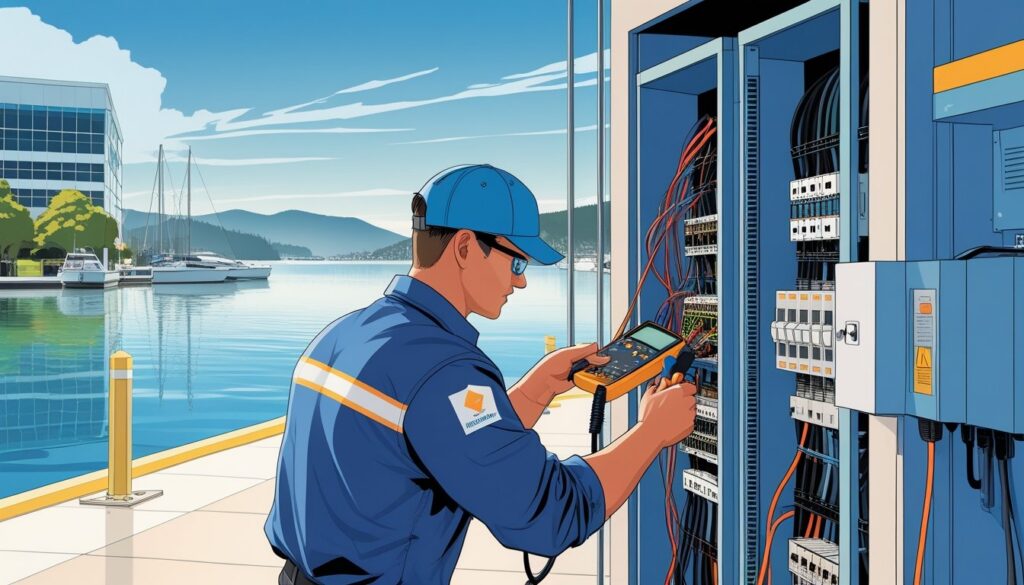
When your business in Horseshoe Bay runs into electrical problems, you need fast, reliable fixes—not guesswork. Magnify Electric’s licensed electricians jump in quickly to diagnose and repair issues, from flickering lights and tripped breakers to panel repairs, EV chargers, smart lighting, and whole-building upgrades. That way, your business stays safe and open. You can count on expert help for automated lighting, ceiling fans, outlets, recessed lighting, surge protection, wiring, generator hookups, smoke and CO₂ detectors, and a bunch more.
Support ranges from simple fixture swaps to full commercial lighting solutions, safety inspections, smart integrations like Lutron, and actual emergency support all around Horseshoe Bay and Central Texas—Austin, Bee Cave, Lakeway, Dripping Springs, Round Rock, and beyond. Let’s talk about spotting common faults, what you can check yourself, when it’s time to call a pro, and how to plan upgrades that keep your business humming.
Understanding Business Electrical Troubleshooting in Horseshoe Bay
You want quick, accurate fixes that keep your doors open and meet local safety rules. Help covers overloaded circuits, sketchy wiring, and upgrades for modern stuff like EV chargers and smart controls.
Common Electrical Issues in Local Businesses
In Horseshoe Bay, business spaces often deal with frequent breaker trips, flickering or dim lights, and outlets that won’t grip a plug. Overloaded circuits, old panels, or loose wiring in busy spots like kitchens, offices, or retail displays are usually to blame.
Outdoor lighting and landscape circuits can act up too, especially after storms. If you don’t have solid surge protection, point-of-sale systems and computers can get fried. Adding equipment—EV chargers, HVAC, or new kitchen gear—sometimes exposes undersized panels or bad grounding.
Smell something burning or see scorch marks? Stop using those circuits and call a licensed electrician right away. Quick action cuts downtime and lowers fire risk.
Importance of Professional Troubleshooting
Pros don’t just slap on a Band-Aid. A licensed electrician checks panels, wiring, and loads to recommend the right repairs or upgrades. That means fewer nuisance trips and less chance of equipment damage.
You get documented safety checks and repairs that actually meet code, keeping staff and customers safer. They’ll test grounding, fault currents, and neutral integrity—stuff most quick fixes skip. Timely pro work also helps you avoid inventory loss from surges and keeps your insurance and inspection paperwork in order.
Magnify Electric’s team handles both little repairs and bigger upgrades—surge protection, panel work, smart integrations, and more.
Differences Between Residential and Commercial Electrical Systems
Commercial systems aren’t just bigger versions of home wiring. They use higher-capacity panels, often three-phase power, and more complex distribution. You get more circuits, heavier loads, and safety devices like industrial breakers and fused disconnects.
Codes are tougher—think emergency lighting, dedicated circuits for HVAC or charging, longer wiring runs, bigger wires, and sometimes subpanels for load management. You might need business-grade meters and other extras.
Troubleshooting commercial setups takes special tools and know-how. Our crew works all over Horseshoe Bay, Spicewood, Austin, Bee Cave, Lakeway, and the rest, so we know the local codes and what businesses around here usually need.
Identifying Electrical Problems
You’ll learn how to spot faults, keep people safe, and run some basic checks that help zero in on the real issue. These steps help you decide if it’s time for a quick fix or a call to the pros.
Recognizing Warning Signs
Watch for flickering lights, warm outlets, or burn marks around plugs. These usually mean overheating, loose connections, or damaged wiring. If the same breaker keeps tripping, you might have an overload or a short.
Buzzing noises from switches or panels and a burning smell? That’s a red flag for arcing or failing parts. If lights dim when big appliances kick on, you might have an undersized panel or a bad neutral.
Jot down where and when things go wrong. Note which outlets, lights, or appliances act up and what was running. That info helps electricians figure things out faster.
Initial Safety Measures
Cut power before messing with outlets or fixtures. Use the breaker, then check with a non-contact voltage tester. Smell burning or see smoke? Get out and call emergency services.
Don’t overload extension cords or plug a bunch of heavy-draw appliances into one circuit. Unplug sketchy devices and skip damaged cords. If a breaker won’t reset, leave it off and call an electrician.
Keep kids and pets away from trouble spots. If a circuit needs to stay off, slap a sign on the breaker box. For commercial sites, follow your lockout/tagout rules until a licensed electrician gives the all-clear.
Basic Diagnostic Steps
First, look things over: loose faceplates, burnt outlets, or water near anything electrical. Tighten screws or swap cracked covers only after the power’s off. Unplug stuff on the circuit to see if the breaker still trips.
A multimeter or outlet tester checks voltage and wiring—hot, neutral, ground. Test GFCI outlets by hitting “test” and “reset.” If nothing happens, they’re probably toast. For stubborn faults, trace the wiring and test at each box or fixture.
If you find weird voltages, repeated trips, or damaged wiring, call Magnify Electric. Our licensed electricians handle everything from simple outlet repairs to panel upgrades, EV charger installs, whole-home surge protectors, smart systems, commercial lighting, and emergencies all over Horseshoe Bay and Central Texas.
Core Troubleshooting Techniques
Here’s how to isolate problems, pick the right tools, and trace faults to their source. These methods help you fix lighting, outlets, panels, and smart systems safely—without wasting time.
Systematic Testing Methods
Start with a good look around: burned wires, loose connections, or tripped breakers. Take note of odd smells, scorch marks, or anything warm. Sometimes, a quick scan beats random poking around.
Test circuits in order. Label the circuit, turn it off, then check continuity and voltage at the outlet, switch, and fixture. Work from the panel out: panel → branch circuit → device. Test hot and neutral, and make sure the ground’s solid.
Write down what you find—voltages, breaker positions, even which outlet you checked. That’ll help if you need to call an electrician or book a repair. If you see arcing, burning, or mystery wiring, better stop and bring in a pro.
Proper Use of Diagnostic Tools
A multimeter checks AC/DC voltage, resistance, and continuity. Set it right and test leads before poking around live circuits. A non-contact tester is handy for a quick “is this live?” check.
Clamp meters measure current without breaking the circuit. An insulation tester (megger) is good for old or suspicious wiring. Plug-in testers quickly show if outlets are wired wrong.
Wear safety gear—insulated gloves, eye protection. Kill the power when you can, double-check with a tester. Unsure about a reading or tool? Don’t risk it—call a licensed electrician.
Tracing Electrical Faults
Isolate the bad circuit at the breaker. Pull out devices and check connections at each box. Loose or shared neutrals can cause weird issues—follow the neutral back to the panel if outlets or lights act flaky.
Use elimination: disconnect fixtures or loads one by one until the problem clears up. For issues that come and go, look for heat-related failures—connections that open up when they get hot. Thermal cameras can spot hot spots in panels or junctions.
Draw a rough map as you go. If the problem’s in several rooms, check junction boxes and splices in the attic or crawlspace. For more complex stuff like Lutron controls or EV chargers, check device settings, firmware, and circuit amperage before swapping parts.
Magnify Electric’s licensed electricians cover everything from panel upgrades and repairs to EV charger installs, smart home systems, automated lighting, outdoor lighting, surge protection, and more. We work in Spicewood, Austin, Bee Cave, Lakeway, Dripping Springs, Georgetown, Leander, Round Rock, Kyle, Cedar Park, Liberty Hill, Westlake, The Hills, Briarcliff, Horseshoe Bay, Sunset Valley, Hutto, and all around Central Texas. Whether you need a quick fixture swap or a full upgrade, we’ve got you covered.
When to Call a Licensed Electrician in Horseshoe Bay
If you’re seeing flickering lights, tripped breakers, burning smells, or need upgrades for new gear, call a licensed electrician. Know the local rules, pick a qualified provider, and let them know if it’s an emergency.
Understanding Local Electrical Codes
Horseshoe Bay sticks to Texas and local building codes. You need a licensed electrician for most wiring, panel changes, and new circuits. Use approved materials and get permits for panel upgrades, EV chargers, or rewiring. Permits protect you and make sure inspectors catch hidden hazards.
Licensed pros know how to size circuits, ground systems, and follow Lutron or smart-home standards. They’ll document work for resale or insurance. If your project touches common areas or business occupancy, you have to follow commercial codes. Always ask for proof of permits and inspections before work starts.
Selecting Reputable Service Providers
Pick someone with license numbers, insurance, and clear written estimates. Check reviews from Horseshoe Bay, Lakeway, Bee Cave, and nearby. Ask if they’ve done exactly what you need—EV charging, surge protection, panel work, or commercial lighting.
Magnify Electric uses only licensed electricians for everything from small repairs to major upgrades and emergencies. Ask for references, timelines, and warranty info. Make sure they’ll pull permits and give you a written scope listing materials, labor, and inspection steps.
Emergency vs. Non-Emergency Situations
Call right away for hazards: sparks, burning smells, smoke, breakers that keep tripping, or exposed live wires. These can mean fire risk or looming equipment failure. For businesses, losing power to safety systems or refrigeration counts as an emergency.
Book regular service for non-urgent stuff: adding lights, ceiling fans, TV mounting with new outlets, or planning EV charger installs. Routine needs like outlet fixes, smoke and CO₂ detectors, and scheduled panel upgrades can wait for an appointment. Always give clear details so techs show up with the right gear.
Preventive Measures for Business Owners
Get your systems inspected, train your staff on basic electrical safety, and use solid, code-compliant equipment to cut downtime, lower fire risk, and dodge expensive repairs.
Routine Electrical Maintenance
Book inspections with a licensed electrician at least once a year—maybe more often if you’ve got an older building or heavy-duty equipment. Let the pros test breakers, check panel wiring, and make sure grounding and bonding are solid. If you spot frayed cords, worn outlets, or anything with burn marks, swap them out right away.
Jot down inspection dates, repairs, and parts you’ve replaced in a simple log. If you keep seeing tripping breakers or flickering lights, note it for your electrician. Dust and clean panels and fixtures now and then to keep things from overheating.
After a storm, get your surge protectors and whole-home surge devices checked. If you have generators or EV chargers, add those to your maintenance checklist. Magnify Electric’s licensed electricians handle these checks and make sure repairs meet code across Central Texas.
Employee Safety Training
Remind employees to report electrical problems right away—no DIY fixes. Show everyone how to shut off equipment at the main breaker and where emergency shutoffs live.
Train your team to avoid using extension cords like permanent wiring and to keep water far from electrical stuff. Stock some basic PPE, like insulated gloves, for anyone working near live equipment, and make sure only licensed electricians touch wiring changes.
Run quick refresher sessions every few months and hang up clear signs by panels and big equipment. Keep a daily checklist for loose plugs, warm outlets, weird noises, or sparks—have staff report issues to management asap.
Investing in Quality Equipment
Buy fixtures, outlets, breakers, and surge protectors from brands you trust—don’t cut corners. Pick devices rated for commercial use. Where it makes sense, use tamper-resistant or weatherproof outlets, and go with LED commercial lighting to lower heat and cut down on maintenance.
Set up layered surge protection: a whole-building protector at the meter and point-of-use protectors for sensitive gear like servers and POS systems. For EVs, get a certified wall charger and double-check your panel can handle it before installing.
When you upgrade panels, hire contractors who size equipment right and actually pull permits. Our team does panel upgrades, EV charging, automated lighting, Lutron smart systems, recessed and outdoor lighting, outlets, surge protection, wiring, and emergency repairs for homes and businesses in Spicewood, Austin, Bee Cave, Lakeway, Dripping Springs, Georgetown, Leander, Round Rock, Kyle, Cedar Park, Liberty Hill, Westlake, The Hills, Briarcliff, Horseshoe Bay, Sunset Valley, Hutto, and nearby spots. Magnify Electric’s licensed pros handle everything from basic fixture swaps to full electrical upgrades.
Choosing the Right Electrical Troubleshooting Services in Horseshoe Bay
Find a licensed crew that does both simple fixes and major upgrades, stands by their work, and has real feedback from Central Texas folks. They should cover emergencies, smart-home installs, EV chargers, and commercial lighting too.
Evaluating Experience and Certifications
Pick electricians who actually have state licenses and keep up with new tech. Look for certifications in both residential and commercial work, plus training from manufacturers like Lutron or EV charger brands.
Ask how long they’ve worked on automated lighting, panel upgrades, or surge protectors. Make sure they regularly handle wiring, outlet repairs, recessed lighting, and generator hookups. Experience with ceiling fans, TV installs, and smoke/CO₂ detectors doesn’t hurt, either.
Double-check that the company carries liability insurance and worker’s comp. That way, your property and employees stay protected during repairs. Ask for proof of licensing and see if techs get ongoing safety training.
Service Guarantees and Warranties
You deserve clear, written guarantees on parts and labor. Ask about warranty periods for things like EV charging outlets, panel repairs, or Lutron smart systems.
Find out exactly what’s covered—parts, labor, or both. Ask how you’d file a warranty claim and what kind of response time to expect if there’s an emergency. See if they offer maintenance plans or follow-up inspections after big jobs.
Get documentation with photos and test reports. It’s handy for warranty claims or when inspectors need proof of upgrades. A solid warranty can save you money and headaches down the line.
Customer Reviews and Testimonials
Read local reviews that mention the services you actually need—lighting installs, troubleshooting, repairs, or commercial lighting. Pay attention to comments about showing up on time, figuring out problems quickly, and leaving things clean.
Look for feedback from Horseshoe Bay, Lakeway, Austin, Bee Cave, and nearby towns. Reviews about emergency calls, smart home setups, or EV charger installs give you a sense of how they really perform.
Ask for references for similar projects—office upgrades, surge protector installs, or panel work. Call a couple of past customers and ask about communication, whether the final bill matched the estimate, and if follow-up was prompt. It’s worth the extra step for peace of mind.
Cost Considerations for Electrical Repairs
Wondering what repairs might run you, how quotes break down, or how to save long-term? Here’s what to know before you decide to repair, upgrade, or plan for future work.
Estimating Repair Expenses
Repair costs depend on labor, parts, permits, and how long the job takes. Swapping out a simple outlet or switch could be under $150, but panel repairs, circuit tracing, or subpanel replacements can run several hundred to a few thousand. Big commercial issues—load balancing, faulty service equipment—drive costs up since they need licensed techs and specialized testing.
Location plays a role. Labor rates in Horseshoe Bay and nearby towns might be different than Austin. Get a clear parts list and hourly rate upfront. Ask if diagnostic time is billed separately and if there’s a chance the tech will need to come back for hidden issues.
Understanding Service Quotes
A good quote spells out materials, labor, and permit or inspection fees. Look for itemized costs: breakers, wire, conduit, labor hours, and testing equipment. Fixed-price quotes work best for defined tasks like installing an EV charger or swapping a breaker, while time-and-materials makes sense for troubleshooting unknown faults.
Have your electrician show their license and insurance, and clarify warranty terms on parts and labor. For commercial jobs, ask for a site visit and a written scope that includes expected downtime and safety steps. We provide licensed electricians who clearly list services and warranties for your peace of mind.
Long-Term Savings from Preventative Actions
Spending on maintenance now usually prevents bigger, pricier failures later. Regular inspections catch loose connections, overloaded circuits, or failing surge protection before they cause outages or equipment damage. Upgrading an old panel or adding whole-home surge protection can cut down on repair calls and protect your sensitive electronics.
Smart upgrades—automated lighting, Lutron systems, modern EV charging—help you use less energy and lower bills. Preventative work also means fewer emergency callouts, which always cost more after hours. Magnify Electric’s team handles inspections, smart home integrations, and full upgrades to help you budget for long-term savings across Central Texas.
Future-Proofing Your Business Electrical System
Think ahead for growth. Your panel, wiring, and outlets need to handle more devices and higher loads as your business expands. Upgrading panels and adding dedicated circuits now helps you avoid overloads and keeps things running.
Get into smart systems and automation. Automated lighting, Lutron smart home setups, and smart controls cut energy use and make your space easier to manage. They also make future upgrades and EV charging easier to add.
Set up EV charging and generator readiness early. Adding EV charging outlets or wall chargers, or wiring for portable generator hookups, preps your place for staff and customers with electric vehicles. Generator hookups keep things running if the power goes out.
Protect your gear with surge protection and safety devices. Whole-home surge protectors, smoke and CO₂ detectors, and regular safety inspections lower risks and protect your electronics. Keep up with maintenance and repairs to stay reliable.
Work with licensed electricians who can handle all your needs. Magnify Electric installs and repairs lighting, ceiling fans, switches, recessed lighting, outlets, TV mounts, wiring, panel upgrades, troubleshooting, and more. We serve homes and businesses across Central Texas—Spicewood, Austin, Bee Cave, Lakeway, Dripping Springs, Georgetown, Leander, Round Rock, Kyle, Cedar Park, Liberty Hill, Westlake, The Hills, Briarcliff, Horseshoe Bay, Sunset Valley, Hutto, and nearby spots.
Stay flexible and keep records. Schedule safety inspections, consider modular systems, and track your wiring and equipment. It’ll make future upgrades easier, safer, and less expensive.
Frequently Asked Questions
Magnify Electric’s licensed electricians handle everything from fixture swaps to full panel upgrades and commercial lighting. We’re here for automated lighting, EV chargers, smart home systems, surge protection, wiring, generators, smoke and CO₂ detectors, and emergency repairs in Horseshoe Bay and across Central Texas.
What are common electrical issues businesses in Horseshoe Bay might face?
You’ll probably run into tripped breakers, flickering lights, dead outlets, or overloaded circuits when too many appliances run at once.
Faulty wiring, damaged outlets, and failing breakers can cause power problems and safety risks too.
Who should I contact for commercial electrical troubleshooting services in Horseshoe Bay?
Call a licensed commercial electrician for any troubleshooting or repairs.
Magnify Electric’s licensed team handles commercial troubleshooting, lighting control, panel upgrades, and emergency support.
How often should a business in Horseshoe Bay schedule electrical maintenance?
Book a professional inspection at least every 1–2 years for most businesses.
If you’ve got high-load operations, an older building, or frequent outages, you might need checks every 6–12 months.
What safety precautions are necessary when experiencing electrical problems at a business location?
If it’s safe, turn off power to the affected area at the breaker.
Keep everyone away from exposed wiring, and don’t touch outlets or devices if you see smoke or sparks.
Are there any local regulations in Horseshoe Bay I should be aware of when getting electrical work done?
Always hire licensed electricians and pull permits for big jobs like panel upgrades or new service installs.
Local inspections might be required after upgrades; your electrician should handle permits and make sure everything’s up to code.
What is the typical response time for an emergency electrical issue in Horseshoe Bay?
Response times really depend on the situation, but most local electricians try to get to true emergencies within just a few hours.
At Magnify Electric, we jump on emergency calls fast because safety matters most—we want to restore your power and cut down on any downtime as soon as possible.
You can reach out to us for work in Spicewood, Austin, Bee Cave, Lakeway, Dripping Springs, Georgetown, Leander, Round Rock, Kyle, Cedar Park, Liberty Hill, Westlake, The Hills, Briarcliff, Horseshoe Bay, Sunset Valley, Hutto, and plenty of other Central Texas communities nearby.