
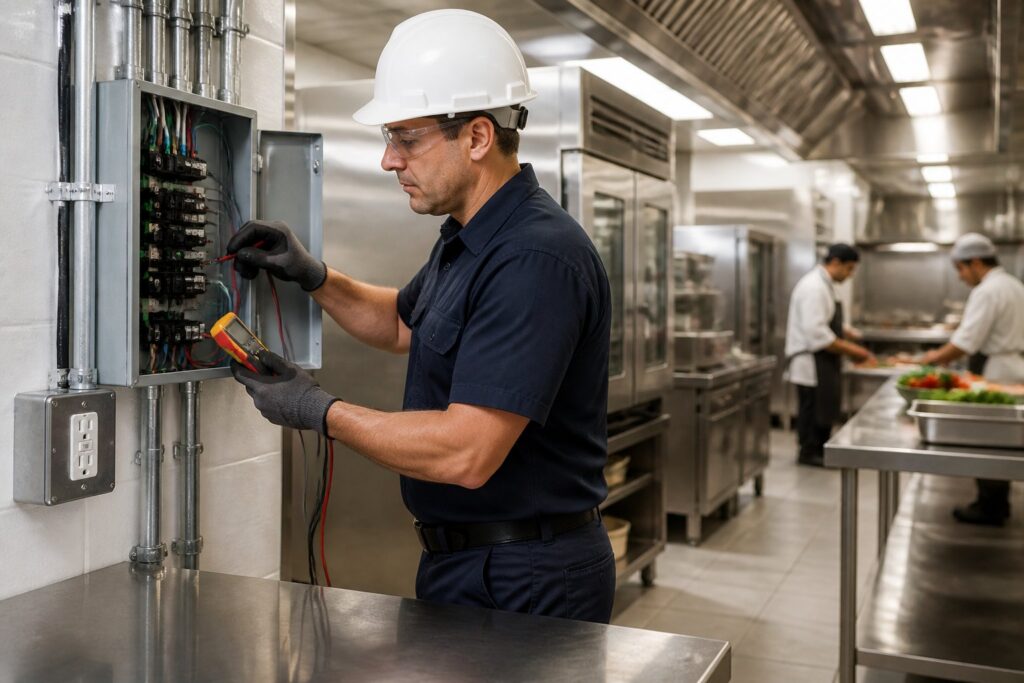
You need an electrical contractor who understands the unique demands of restaurants and knows the local codes—so your kitchen stays safe and your lights don’t let you down. Magnify Electric’s licensed electricians handle everything from quick fixture swaps to full panel upgrades, commercial lighting, smart controls, EV charging, and emergency repairs. That way, you keep service running and staff and guests stay protected.
Choose a contractor who understands restaurant power loads, health-code safety, and fast response times to minimize downtime. You’ll get a sense of what specialized services restaurants actually need, how to pick a solid team in Austin, and which upgrades really deliver on safety and energy savings.
Our team covers Spicewood, Austin, Bee Cave, Lakeway, Dripping Springs, Georgetown, Leander, Round Rock, Kyle, Cedar Park, Liberty Hill, Westlake, The Hills, Briarcliff, Horseshoe Bay, Sunset Valley, Hutto, and other Central Texas spots. Whether you’re after automated lighting, Lutron systems, recessed lighting, outlet services, surge protection, generator hookups, or just ongoing maintenance, we handle both residential and commercial projects—fast and professionally.
What Is a Restaurant Electrical Contractor in Austin TX?
A restaurant electrical contractor designs, installs, and maintains the power systems that keep your kitchen, dining room, and back-of-house running safely and on time. They take care of equipment wiring, lighting, panels, and emergency power so your team and guests stay safe, and your doors stay open.
Core Responsibilities
A restaurant electrical contractor sets up and wires all the big stuff: ovens, reach-in fridges, fryers, HVAC controls, walk-in coolers—you name it. They size and upgrade service panels and breakers to handle peak kitchen loads and stop those annoying nuisance trips. You get dedicated circuits for high-draw gear and isolated grounding where the food-service code calls for it.
They design lighting for both dining ambiance and task lighting in prep and service areas. They’ll also install emergency lighting, exit signs, and power for your POS systems. When something breaks, you want troubleshooting and fast repairs to keep downtime short. Magnify Electric’s licensed electricians do all this for homes and businesses, whether it’s swapping a fixture or doing a full commercial upgrade.
Industry Certifications
Look for electricians with state licenses and commercial credentials. Certified electricians keep up with NEC (National Electrical Code) updates and Austin-specific rules that affect kitchens and grease-hood systems. Food-service sites often need contractors familiar with those health department and fire marshal checklists.
Certifications like master electrician or journeyman status show formal training. Extra credentials in low-voltage, commercial lighting, or EV charging are a plus if your place offers employee EV chargers or needs advanced lighting control. Magnify Electric’s team holds all the right licenses and training to install Lutron smart systems, EV chargers, whole-home surge protectors, and other commercial gear.
Understanding Local Regulations
Austin and the surrounding Central Texas cities have their own permit and inspection rules for restaurants. You’ll need permits for new service, panel upgrades, hood exhaust wiring, and generator hookups. Inspectors check grounding, GFCI protection near wet spots, proper conduit for commercial kitchens, and signage power for exits and refrigeration alarms.
Local fire codes usually require dedicated fire-alarm power and interlocks for suppression systems. Health-department rules dictate how you wire near food prep and plumbing. Your contractor should pull permits, coordinate inspections, and provide the paperwork needed to pass final inspections in Spicewood, Bee Cave, Lakeway, Georgetown, Round Rock, Cedar Park, and other nearby towns.
Essential Electrical Services for Restaurants
You need reliable power, safe wiring, and lighting that actually helps your staff and sets the mood for your guests. Here’s what matters most for keeping your kitchen and dining area running smoothly.
Full-Service Electrical Installation
You get a complete electrical setup for new builds and tenant build-outs. That means service entrance installation, panel placement, branch circuits for ovens, fryers, HVAC, refrigeration, plus dedicated circuits for POS systems and beverage equipment.
Licensed electricians handle outlets, switches, and hardwired gear like smoke and CO₂ detectors and whole-building surge protectors. They also set up emergency generator hookups and EV charging if you want to offer staff or customer charging.
Magnify Electric’s team provides these services throughout Austin and nearby areas. Our licensed electricians take care of everything from fixture swaps to full commercial installs, making sure you’re up to code and downtime stays low.
Commercial Wiring Upgrades
Older restaurants often run into trouble with outdated panels and wiring that just can’t keep up. Upgrades might mean increasing service amperage, swapping out old panels, adding subpanels, and installing GFCI/AFCI protection where it’s needed.
Technicians run new circuits for high-demand appliances, move or add outlets, and rewire kitchens to split up critical loads. They test and label circuits, check grounding, and do safety inspections to cut fire and shock risks.
You’ll get troubleshooting and repair when a quick fix isn’t enough. The team covers Bee Cave, Lakeway, Round Rock, and the surrounding Central Texas region for both scheduled upgrades and emergency work.
Lighting Design and Control
Good lighting makes food prep safer and keeps customers comfortable. Services include layout design, recessed and track lighting, task lighting for prep, and energy-efficient LED retrofits for dining rooms and kitchens.
Control systems cover dimming, automated schedules, and smart integrations like Lutron for scene setting. You can manage exterior lighting, signage, and patio lights to boost curb appeal and safety.
Technicians install motion sensors, timers, and controls tied to building operations. They’ll also set up lighting to meet health code in work zones and still create the right dining vibe.
Specialized Solutions for Austin Restaurants
Magnify Electric delivers electrical services tailored for the fast pace and strict safety needs of restaurants. You get licensed electricians who handle everything from energy savings to heavy-duty kitchen power systems.
Energy-Efficient Systems
Cutting energy costs? LED retrofits, occupancy sensors, and zoned controls help you trim electricity use during slow hours. We set up Lutron smart lighting so you can schedule dimming for dinner shifts and crank up lights during inspections.
Switching to high-efficiency LED fixtures and dimmable drivers drops heat load, which helps your HVAC keep up and keeps things more comfortable. That also means lower utility bills.
Panel upgrades and dedicated circuits for HVAC, refrigeration, and big equipment stop nuisance trips. We’ll add whole-site surge protectors to keep POS systems, kitchen monitors, and HVAC controls safe. You also get programmable controls for patio lighting, so you can set the mood without wasting power.
Commercial Kitchen Electrical Needs
You need properly sized circuits and commercial-grade wiring for ovens, fryers, steamers, and walk-in coolers. Our team installs 240V/480V circuits, three-phase service, and new subpanels to match equipment specs and local code.
Reliable emergency circuits and labeled shutoffs make maintenance and inspections faster. We add GFCI protection and the right disconnects near water-heavy appliances to meet safety regs.
Ventilation fans, exhaust controls, and heat-producing gear often need dedicated HVAC integration and careful load balancing. We handle wiring for beverage stations, prep task lighting, and pass-through heat lamps. If you need emergency help, we troubleshoot, repair, and set up portable generator hookups so your service doesn’t miss a beat.
We serve Spicewood, Austin, Bee Cave, Lakeway, Dripping Springs, Georgetown, Leander, Round Rock, Kyle, Cedar Park, Liberty Hill, Westlake, The Hills, Briarcliff, Horseshoe Bay, Sunset Valley, Hutto, and nearby Central Texas communities. You’ll get expert work on lighting installs, panel upgrades, outlets, EV charging, automation, TV installation, smoke and CO₂ detectors, and general electrical improvements.
Choosing the Right Electrical Contractor in Austin TX
Pick a contractor who fits your restaurant’s size, hours, and safety needs. Focus on local experience, clear pricing, and techs who can handle both the routine and the emergencies.
Factors to Consider
Find contractors who offer exactly what your restaurant needs—commercial lighting layouts, panel upgrades, emergency support. Ask about turnaround for rush jobs and after-hours work so you don’t lose money to downtime.
Get written estimates that break down labor, materials, permits, and testing. Compare warranties on parts and workmanship. Check if the crew uses commercial-grade products and follows Austin codes for kitchens, hood systems, and wet areas.
Look at safety records. Ask for references from other restaurants and see project photos. Make sure the contractor protects your flooring, equipment, and prep areas during installs or repairs.
Verifying Licensing and Insurance
Make sure your contractor holds a Texas electrical contractor license and their electricians are licensed journeymen or masters. Ask for license numbers and check them with the Texas Department of Licensing and Regulation if you’re not sure.
Always require proof of general liability and worker’s comp insurance. Restaurants have unique risks—grease, water, lots of foot traffic—so check that policy limits actually cover commercial losses and business interruptions.
Ask for copies of permits from previous commercial jobs and proof of passed inspections. Contractors who manage permits and coordinate inspections save you headaches from code violations and fines.
Evaluating Experience in Hospitality
Pick a team with real restaurant experience: lighting that fits the dining vibe, backup power for walk-ins, and safe outlet placement near prep areas. Experience with hood fire systems, cookline circuits, and health-code quirks really matters.
Ask about past projects in Austin-area spots like Spicewood, Bee Cave, Lakeway, Round Rock, and other Central Texas towns. Local know-how makes permits and inspections smoother.
Magnify Electric’s licensed electricians deliver expert service for everything from automated lighting, Lutron systems, and EV charging to panel upgrades, surge protection, wiring, and generator hookups. We handle simple fixture swaps, full upgrades, commercial lighting, safety checks, smart integrations, and emergency support for restaurants and businesses across Central Texas.
Benefits of Hiring a Local Austin TX Expert
You get electricians who know Austin’s rules, show up fast, and actually support local businesses. That’s huge when you need safe wiring, reliable lighting, or urgent repairs.
Familiarity With Austin Codes
A local electrician knows City of Austin and Travis County codes, plus the state rules that hit restaurants. They get the details for commercial kitchens, hood vent wiring, dedicated circuits for ovens and dishwashers, and where emergency lighting and exit signs need to go. That helps you avoid permit hassles and failed inspections.
You’ll get work that satisfies health department and fire marshal expectations. That means less risk of rework and fines. Licensed techs handle the permit paperwork and line up inspections so your project keeps moving.
Magnify Electric’s licensed electricians handle wiring, panel upgrades, surge protection, and outlet placement with code-compliant installs. If you need EV charging, commercial lighting, or smoke and CO₂ detectors, you’ll get work done to local standards.
Quick Emergency Response
Local teams reach you faster when there’s a power fault or equipment failure. You avoid long downtime that can wreck service and food safety. A nearby contractor can show up within hours—sometimes the same day—for urgent troubleshooting and repairs.
Techs carry common parts and tools for quick fixes like breaker resets, outlet swaps, or temporary generator setups. They’ll also secure hazards and make safe, temporary repairs until a full fix is scheduled.
You can set up 24/7 emergency support for things like kitchen circuit failures or refrigeration power loss. Magnify Electric offers emergency support and handles everything from portable generator hookups to restoring lighting and critical circuits.
Supporting Austin Businesses
Hiring local contractors keeps money circulating here and makes sure your trade partners actually get what Austin businesses need. Local electricians know the quirks of restaurant layouts all over Austin and spots like Bee Cave, Lakeway, Round Rock, and Georgetown. Odds are, they’ve already worked with your vendors, builders, and inspectors in Spicewood, Dripping Springs, Leander, Kyle, Cedar Park, Liberty Hill, Westlake, The Hills, Briarcliff, Horseshoe Bay, Sunset Valley, Hutto, and other nearby towns.
You get the benefit of those relationships—faster scheduling, easier access to the right parts, and smoother coordination with other trades. Local teams can offer ongoing maintenance and quick follow-ups, which helps you avoid long downtimes and keeps inspections up to date.
If you want consistent service for lighting installs, recessed lighting, Lutron smart home systems, automated lighting, ceiling fans, TV setups, panel repairs, or system upgrades tailored to your restaurant, stick with a local crew.
Safety Standards for Restaurant Electrical Work
You need systems that pass health rules and help prevent fire risk. If you’ve got proper wiring, grounded outlets, and regularly tested equipment, you’re keeping staff and customers safer—and staying compliant.
Compliance With Health Codes
Stick to local health codes that require sealed, easy-to-clean fixtures in food prep and storage spots. GFCI outlets are a must wherever water or metal surfaces are present—think dishwashing areas or walk-in coolers—to help prevent shocks and equipment damage.
Keep refrigeration and cooking gear on their own circuits to avoid overloads. Label your panels so staff or first responders can quickly shut things down if needed. Schedule regular inspections and keep records for health inspections.
Magnify Electric’s licensed electricians install code-compliant outlets, lighting, and surge protection. They serve Spicewood, Austin, Bee Cave, Lakeway, Dripping Springs, Georgetown, Leander, Round Rock, Kyle, Cedar Park, Liberty Hill, Westlake, The Hills, Briarcliff, Horseshoe Bay, Sunset Valley, Hutto, and the rest of Central Texas.
Fire Prevention Measures
Lower your fire risk by using commercial-grade wiring, making sure breakers are sized right, and running conduit in greasy areas. Keep wiring away from heat sources and route cables so they don’t get pinched or caught in moving equipment.
Install hardwired smoke and CO₂ detectors on the right circuits and connect them to the building alarm when code says so. Kitchen hood suppression systems should cut power to appliances during a fire—don’t skip this step.
Set up a maintenance plan with thermal imaging, load testing, and troubleshooting to catch hot spots or failing parts before they cause trouble. Magnify Electric can handle panel upgrades, portable generator hookups, surge protectors, and emergency repairs to help keep your restaurant safe and open.
Trends in Restaurant Electrical Systems
Restaurants these days want smarter controls, energy savings, and power that won’t flake out during rush hour. Digital controls for lighting and HVAC, stronger surge protection, and systems that let you monitor energy use or equipment status in real time are all becoming standard.
Smart Technology Integration
You can use smart lighting and control systems to set the mood for dining, bar, or kitchen hours. Automated lighting with sensors and schedules cuts down on manual work and helps you keep a consistent vibe. Lutron-compatible controls and commercial-grade dimming not only look better, they help bulbs last longer and save you money.
Kitchen equipment benefits from smart monitoring, too. Sensors and remote alerts warn you if refrigeration’s failing, power draw spikes, or lights go out—before it gets expensive. Your staff gets quick diagnostics, and managers can track energy reports to cut costs.
For safety and convenience, tie in smart smoke/CO₂ detectors and surge protectors for the whole place. Magnify Electric’s licensed electricians install and support these systems all over Central Texas, from Austin to Bee Cave and beyond, so you can keep your restaurant running smoothly.
Sustainable Power Solutions
Honestly, start with LED retrofits and lighting controls—they save the most with the least hassle. Swapping fixtures for LEDs and adding occupancy sensors cuts electricity use in dining rooms, storage, and restrooms. Updating recessed lighting and outdoor fixtures boosts curb appeal and drops your bills.
Panel upgrades and dedicated circuits for heavy kitchen equipment keep things safe and efficient. Adding EV charging for staff or guests and generator hookups for backup power means you’re ready for outages. Surge protection for the whole building keeps sensitive gear like POS systems and kitchen controls safe from spikes.
Magnify Electric’s electricians handle solar-ready wiring, panel upgrades, and efficient retrofits in Spicewood, Lakeway, Round Rock, and other local areas. Whether you need a simple outlet or a full electrical overhaul, they can help lower your energy costs and keep things reliable.
Planning for Restaurant Expansion or Remodeling
If you’re expanding or remodeling, you need a clear power plan and a code-compliant setup that supports new equipment, added lighting, and any smart tech you want. Focus on capacity, safety, and keeping downtime to a minimum during construction.
Electrical Load Analysis
List every piece of equipment—ovens, fryers, HVAC, refrigeration, dishwashers, POS terminals, LED lighting. Write down voltage and amperage or wattage for each, then total up your demand.
Bring in a licensed electrician to run a load calculation for both peak and continuous loads. That’s how you’ll know if your current service can handle the busiest times and future growth. Don’t skip the startup surge for motors and compressors—those can double the normal draw and trip breakers if you’re not ready.
Plan dedicated circuits for the big stuff, and split lighting or emergency circuits as needed. Leave room for future needs like EV chargers or a new rooftop HVAC so you don’t have to rip things up later. Keep your calculations and panel schedules handy for inspectors and future contractors.
Upgrading Service Panels
If your panel can’t handle the new load, it’s time for a panel upgrade or maybe even a new service lateral. This could mean going from 100A to 200A, adding subpanels, or swapping out old fuses for modern breakers with AFCI/GFCI protection.
Work with licensed electricians to size the new panel, coordinate any utility upgrades, and get the right permits. Place panels where they’re accessible and away from food prep, making sure you meet health and code requirements.
Label your breakers and keep a clear panel schedule. Consider whole-restaurant surge protection and leave room for future breakers. Magnify Electric’s electricians handle upgrades, troubleshooting, and emergency support all over Central Texas, so your remodel won’t drag on longer than it needs to.
Ongoing Electrical Maintenance
Keep your restaurant’s power safe and reliable with routine checks and quick repairs. Regular maintenance cuts fire risk, keeps kitchen gear running, and helps avoid downtime during your busiest hours.
Scheduled Inspections
Book inspections at least twice a year—or more if you’ve got a heavy-duty kitchen. A licensed electrician will inspect panels, breakers, grounding, and wiring for wear, corrosion, or loose connections that cause outages or shocks.
Focus on critical circuits for ovens, fryers, HVAC, walk‑ins, and prep areas. Check emergency lighting, exit signs, and GFCI/AFCI devices. Keep records of voltages, load readings, and any code issues so you can spot trends and plan upgrades.
Ask your electrician to test surge protection and backup circuits. If your loads are getting close to the panel’s limit, plan an upgrade. If you run multiple spots around Central Texas—from Austin to Round Rock and Bee Cave—coordinate inspections to keep everything consistent.
Troubleshooting Common Issues
When lights flicker, outlets trip, or equipment hums, start by isolating the circuit to limit damage. Check for overloaded circuits from new appliances or busted cords. Replace worn cords and move nonessential plugs elsewhere.
If breakers keep tripping, get a technician to run load tests and thermal scans for hot spots or failing breakers. For random power loss or arcing, shut the circuit down and call a licensed electrician right away—you don’t want a fire.
Magnify Electric’s electricians handle everything from basic fixture swaps to full panel repairs and smart system troubleshooting. They service automated lighting, Lutron systems, EV charging outlets, recessed lighting, surge protectors, generator hookups, smoke/CO₂ detectors, and more across Spicewood, Lakeway, Dripping Springs, Georgetown, Leander, Cedar Park, Liberty Hill, Westlake, The Hills, Briarcliff, Horseshoe Bay, Sunset Valley, Hutto, Kyle, Round Rock, and all over Central Texas.
Frequently Asked Questions
Here’s where you’ll find info on choosing a contractor, Austin codes, contractor qualifications, typical costs, finding reviews, and how the electrical install process works for restaurants.
What factors should I consider when choosing an electrical contractor for my restaurant?
Pick someone with actual restaurant experience, licensed electricians, and proof of insurance and bonding.
Make sure they can handle kitchen wiring, hood and exhaust fan hookups, and dedicated circuits for ovens, fryers, and refrigeration.
Ask about experience with energy-efficient lighting, Lutron smart systems, and commercial lighting controls.
Check that they offer emergency response, troubleshooting, panel upgrades, and scheduled maintenance.
Confirm they serve your area—we cover Spicewood, Austin, Bee Cave, Lakeway, Dripping Springs, Georgetown, Leander, Round Rock, Kyle, Cedar Park, Liberty Hill, Westlake, The Hills, Briarcliff, Horseshoe Bay, Sunset Valley, Hutto, and nearby Central Texas spots.
How do local electrical codes in Austin affect my restaurant build-out?
Austin and Travis County use the latest National Electrical Code plus local amendments.
You’ll need to meet code for wiring, grounding, AFCI/GFCI protection, and commercial kitchen circuits.
Inspections happen at rough-in, equipment hookup, and final sign-off.
A contractor who knows the local inspectors can really help you avoid delays and rework.
Could you provide insights on the typical experience and qualifications of an electrical contractor specializing in restaurants?
Look for licensed journeyman and master electricians with commercial permitting experience.
Ask for proof of past restaurant projects, permit history, and safety training.
Specialized skills should include high-capacity panel work, three-phase systems, commercial lighting, and backup power.
They should also be able to do outlet installs, recessed lighting, wiring, and whole-building surge protection.
What are the expected costs involved in hiring an electrical contractor for a new restaurant project?
Costs depend on the job—simple fixture or outlet installs are less, while full kitchen service, panel upgrades, and three-phase work cost more.
Expect to see separate line items for permits, inspections, materials, labor, and specialized hookups.
Always get detailed bids showing tasks, parts, and timelines.
Ask about change-order costs and emergency call-out fees.
How do I find reviews and testimonials about electrical contractors who have previously worked on Austin restaurants?
Check local business listings, Google reviews, and trade-specific sites for commercial feedback.
Ask contractors for references and photos from past restaurant jobs.
If you can, visit local sites and talk to owners about timeliness, code compliance, and follow-up support.
Look for consistent feedback on reliability, safety, and clean work.
Can you explain the process of an electrical installation for a restaurant from start to completion?
Step 1: First things first—someone heads out for a site survey and figures out the load calculation. That’s how they decide on the right size for panels, feeders, and circuits.
Step 2: Next up, there’s the lovely paperwork: permits and plans go off to the local authorities.
Step 3: The crew gets started with rough-in wiring, laying conduit, and mounting boxes. Inspectors usually swing by at this stage to take a look.
Step 4: Now it’s time to hook up all the big stuff—ovens, hoods, refrigeration, lighting, and sometimes extras like EV charging or smart controls.
Step 5: Electricians connect the panels, make sure everything’s grounded, install surge protection, and add a generator or transfer switch if the place needs backup power.
Step 6: Finally, they put in the fixtures, run tests, and call for a final inspection. Once it’s signed off, contractors hand over the paperwork and, if you’re lucky, stick around for some post-install support.
Magnify Electric’s licensed electricians tackle everything from swapping out a simple fixture to handling full electrical upgrades. They do commercial lighting, smart home setups like Lutron systems, EV charging outlets, wall chargers, recessed lighting, panel upgrades, portable generator hookups, and emergency electrical jobs.
You can count on them for lighting installs, outlet work, surge protection for the whole place, wiring, smoke and CO₂ detectors, TV mounting, ceiling fans, and general electrical improvements for both homes and businesses.