Power surges can strike out of nowhere and ruin your electronics or appliances. Surge protectors are your best bet—they block those nasty voltage spikes before they fry your stuff. These sudden bursts of electricity might come from lightning, shoddy wiring, or even just a big appliance kicking on.
If you want to skip expensive repairs or replacements, it’s smart to know how to shield your home or business from power surges. At Magnify Electric, our licensed electricians handle everything from swapping out a light fixture to putting in whole-house surge protection. We’re all about making sure your electrical setup is safe and steady.
Whether you’re looking at basic plug-in surge protectors or want a full-on home protection system, Magnify Electric’s got your back for both residential and commercial work. Protecting your electronics starts with smart choices and a bit of professional help to keep things humming along.
Understanding Power Surges
Power surges are quick jolts in voltage that can mess with your home’s electronics. Knowing what causes them and how they mess with your devices helps you take the right steps to keep things safe.
What Is a Power Surge?
A power surge is basically a sudden, unexpected spike in the voltage running through your electrical system. Usually, your home runs on a steady voltage, but when a surge hits, it jumps up fast for a split second.
These surges might last just milliseconds, but the extra voltage can be enough to fry or seriously weaken your electronics. Picture it like a quick jolt that pushes your devices way past what they’re built to handle.
Common Causes of Power Surges
Lightning strikes close to your house are a big culprit. When lightning zaps a power line or the ground nearby, it can send a huge wave of electricity through your system.
Other things, like bad or overloaded wiring, can trigger surges too—especially if you’ve got a bunch of devices running on the same circuit. Appliances with motors, like your fridge or A/C, can cause smaller surges just by turning on or off.
Utility company hiccups or those annoying power outages that come back on in a flash can also lead to surges. Knowing what’s behind these spikes lets you get ahead of the problem.
How Power Surges Affect Electronics
If a surge hits, it forces extra voltage through your devices’ circuits. That overload can heat up and burn out sensitive parts, sometimes killing your device on the spot.
Electronics like computers, TVs, and gaming consoles are especially at risk. Sometimes, you won’t see the damage right away—a surge might just weaken something inside, so your device dies earlier than it should.
Surge protectors help by blocking or redirecting extra voltage before it gets to your stuff. Our licensed electricians at Magnify Electric can set you up with the right protection for your home or business.
Identifying Vulnerable Electronics
Some devices in your home or office are more likely to get zapped by a surge. Focusing on these helps you protect what matters most.
Household Devices at Risk
Big appliances—think fridges, washing machines, ovens—take the brunt of it. They’ve got motors and electronics that don’t love sudden voltage changes.
Other easy targets? TVs, microwaves, gaming consoles. Their sensitive guts can’t handle wild swings in electricity.
Surge protectors made for home appliances help shield these items. Our team at Magnify Electric can help you install systems to keep your appliances safe.
Office Equipment Sensitivity
Computers, printers, and networking gear in your office have delicate circuits. Even a small surge can corrupt files, kill a hard drive, or wreck the hardware.
Routers, modems, and external drives are at risk too, especially since they’re plugged in all the time. Go for quality surge protectors here to dodge costly downtime.
Office gear keeps your work going, so don’t skip proper protection. Magnify Electric offers commercial setups tailored for your business.
Special Considerations for Smart Devices
Smart thermostats, cameras, and speakers have tiny microchips that are super sensitive. Even quick voltage spikes can do real harm.
Since smart devices often link together, damage to one can mess up your whole system. Protecting these calls for both device-level and whole-home solutions.
Use surge protectors rated for low-voltage gadgets. If you’re not sure, our crew can check your smart tech setup and suggest the best ways to protect your home technology.
Surge Protection Devices
You’ve got options when it comes to surge protection. Picking the right type and putting it in the right spot is key to keeping your electronics safe from lightning, power company glitches, or heavy appliances flipping on.
Types of Surge Protectors
Here’s a quick rundown:
- Power Strip Surge Protectors: These look like regular strips but have built-in surge protection. Perfect for small electronics and office gear.
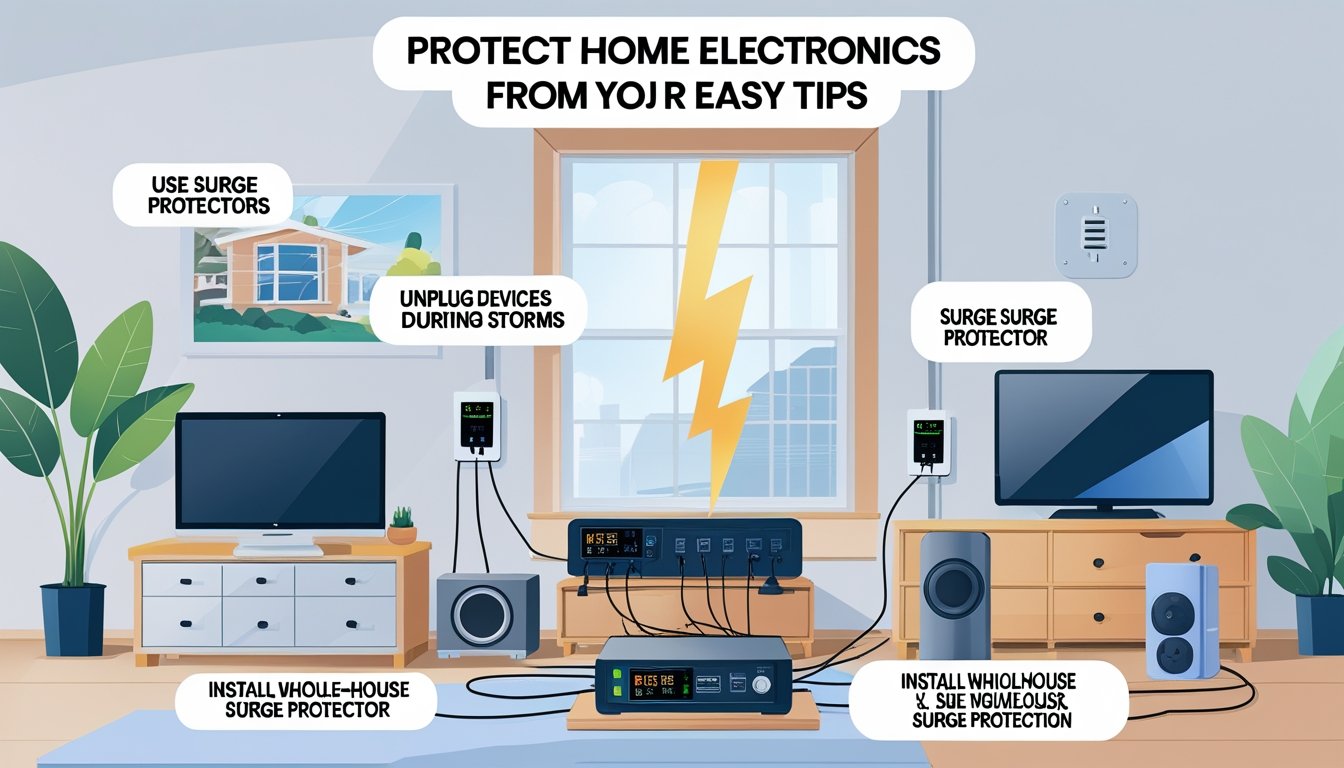
- Whole-House Surge Protectors: These get installed at your electrical panel and protect everything in your building by stopping surges before they get to your outlets.
- Uninterruptible Power Supplies (UPS): A UPS gives you surge protection and battery backup, so your devices stay on during outages.
Each does something a little different. Knowing what you’ve got and what it’s worth helps you pick the right one.
Choosing the Right Surge Protector
Look for these things:
- Joule Rating: Higher means better protection over time.
- Clamping Voltage: Lower is better—aim for around 400 volts or less.
- Response Time: The faster, the better.
- Number of Outlets: Enough for all your devices.
Magnify Electric’s electricians can help you pick out exactly what you need for your home or business.
Proper Placement and Installation
Where you put surge protectors matters:
- Whole-House Protectors: These go at the main electrical panel—protects every circuit.
- Power Strip Protectors: Keep them close to your important electronics.
- Don’t Daisy-Chain: Never plug power strips into each other. It’s a fire hazard.
When it comes to installation, let the pros handle it. Our Magnify Electric team will make sure everything’s installed right and working the way it should.
Whole-House Surge Protection
A big surge can hit every device in your house. Protecting your whole system keeps those spikes from ever reaching your electronics. This covers every outlet and appliance tied to your home’s wiring.
How Whole-House Surge Protectors Work
Whole-house surge protectors install right at your main panel. They’re the first line of defense against spikes from lightning or utility problems. When a surge tries to enter, the protector diverts or soaks up the extra energy.
Since it’s hooked up to the main panel, everything inside—HVAC, cameras, computers—gets protected, not just what’s plugged into a strip.
Benefits of Whole-Home Protection
A whole-house surge protector helps your electronics last longer by blocking those damaging spikes. It cuts down on the risk of expensive repairs or replacements.
You don’t have to run around plugging in surge strips everywhere. One device covers it all, so you can relax a bit.
This kind of protection saves you money and hassle in the long run—no more losing your favorite gear to a random surge.
Installation Tips and Requirements
A licensed electrician needs to install a whole-house protector—it’s not a DIY job. The device hooks into the main breaker panel, which means working with high voltage.
Magnify Electric’s team can size, install, and test your surge protector, making sure it fits your home’s needs and meets all codes.
Good grounding is crucial for these protectors to work. Have regular checks to keep your protection strong.
If you want real peace of mind, our electricians at Magnify Electric are ready to help with surge protection for homes and businesses.
Additional Protective Practices
Surge protectors are great, but a few extra steps can make your electronics even safer—especially during storms or if your wiring’s a little iffy.
Unplugging During Storms
Honestly, the easiest way to protect your stuff in a thunderstorm? Unplug it. Lightning can cause huge surges that even the best protectors might not fully block.
Unplug computers, TVs, game consoles—anything sensitive—if you know a storm’s coming. Disconnecting them from power and data lines keeps surges out.
Even on calm days, unplug gear you won’t use for a while. It’s a simple way to avoid those random spikes.
Routine Maintenance and Inspection
Get your home’s electrical system checked regularly. A licensed electrician should inspect outlets, wiring, and breakers every few years.
Watch for trouble signs like burnt outlets or flickering lights. Fixing these early helps prevent surges and other headaches.
Magnify Electric offers thorough inspections and maintenance to keep your system safe.
Safe Wiring and Electrical Upgrades
Old or sketchy wiring ups your risk for surges. If your house is older, consider upgrading your wiring to meet today’s standards.
This might mean swapping out aluminum wiring, adding grounds to outlets, or installing a surge protector at your main panel.
Magnify Electric handles these upgrades for homes and businesses. Our electricians make sure your wiring is safe and up to code.
Monitoring and Responding to Surges
Keep an eye out for signs of surge damage. Acting quickly can sometimes save your devices or stop things from getting worse.
Signs of Power Surge Damage
You might notice lights flickering or appliances shutting off suddenly after a surge. Sometimes devices act weird—like your TV shows strange lines, or your computer crashes for no reason. You could even spot small burn marks or catch a whiff of something burnt near outlets.
If electronics won’t turn on or charge, that’s another red flag. These warning signs mean your stuff might’ve taken a hit. Catching it early can help you avoid bigger bills later.
What to Do After a Power Surge
First, unplug sensitive electronics to stop any more damage. Check your surge protectors—if they’ve taken a big hit, they might need replacing. If you don’t have whole-home protection yet, now’s a good time to think about it.
If you think you’ve got electrical damage, call Magnify Electric. Our licensed pros can inspect your system and recommend fixes. Whether it’s your house or business, we’re ready to protect your property and your electronics.
Long-Term Strategies for Electronic Safety
Keeping your electronics safe from power surges isn’t just about quick fixes. It’s about picking the right gear, staying informed, and updating your protection as things change. There’s always something new to learn or try—so don’t get complacent!
Investing in Quality Equipment
Start with good surge protectors that can handle your home or business’s power needs. Check the joule rating—it tells you how much energy the protector can soak up before it gives out. Higher is better, but don’t get too caught up in the numbers. If you’re really serious (or just cautious), think about installing a whole-home surge protection system at your main panel. That way, big surges get blocked before they even touch your stuff.
Take a look at your surge protectors every so often. If you spot wear or damage, swap them out. Old ones won’t protect your electronics like they should, and honestly, it’s not worth the risk.
Educating Household Members
Get everyone on board with surge safety. Talk about the risks, and remind folks to unplug sensitive gear during storms or if they’re not going to use it for a while. It’s a small habit, but it can save you from some nasty surprises.
Maybe explain where surges come from—lightning, big appliances kicking on, that sort of thing. When people know what causes problems, they’ll probably be more careful. Make a quick list of your important electronics and check in on them now and then. If someone notices flickering lights or weird electrical stuff, ask them to speak up right away. Better safe than sorry, right?
Updating Protection Over Time
Stuff changes—your gear, your electrical setup, even the tech itself. Don’t let your surge protection get left behind. Every few years, give your setup a once-over and see if it still fits your needs.
Add new equipment? Expanding your system? That’s your cue to update your surge protection too. It keeps things balanced and helps prevent overloads.
Honestly, working with a licensed team like Magnify Electric makes life easier. Our electricians can check your system, suggest upgrades, and handle professional installs for homes or businesses. Regular checkups catch issues before they turn into headaches.
Frequently Asked Questions
Keeping your electronics safe starts with picking the right surge protector and actually understanding how it works. You’ll want to figure out if your device is still effective, which type fits your gear, and what to do during outages. Whole house protectors? They’re a thing, too. Let’s dig in.
What are the best surge protectors for home electronics?
Go for surge protectors with a solid joule rating. That’s your main clue about how much energy it can take before it gives up. If it’s got a UL Listed mark or something similar, even better.
Look for models with plenty of outlets and built-in safety features like automatic shutoff. If a surge is too much, that extra layer can save your devices.
How can I tell if my surge protector is working effectively?
Most surge protectors have a little indicator light—if it’s on, you’re good. If it goes dark or changes color, it’s probably time for a new one.
Don’t forget, surge protectors wear out. Replace them every few years or after a major surge. They’re not meant to last forever.
Should I use a surge protector for all my home electronics?
Definitely for anything pricey or sensitive—TVs, computers, gaming consoles. Those can get fried by voltage spikes.
If you’re plugging in something basic or cheap, a basic power strip might be fine. But surge protectors add real peace of mind.
What steps can I take to safeguard my electronics during a power outage?
Unplug your electronics during an outage—that way, when the power snaps back, you avoid any nasty surges. Surge protectors help with smaller spikes, but unplugging is still smart.
For essentials like computers or medical equipment, consider a backup battery or uninterruptible power supply (UPS). It’s a little extra, but worth it.
How do whole house surge protectors differ from regular surge strips?
Whole house surge protectors sit right at your main panel. They catch surges before they run through your circuits, so everything in your home gets some protection.
Surge strips, on the other hand, just cover what’s plugged in. Using both together? That’s the best coverage you’ll get.
Can a surge protector shield my devices from lightning strikes?
Surge protectors help cut down on damage from most power surges, but let’s be honest—lightning packs a punch that can still get through.
Whole house protectors do a better job against lightning, though nothing out there promises total safety. It's wise to take extra precautions if you want real peace of mind.
At Magnify Electric, our licensed electricians can help you figure out the best surge protection for your place and get it installed safely. We work with both homeowners and businesses, offering electrical solutions you can count on.