
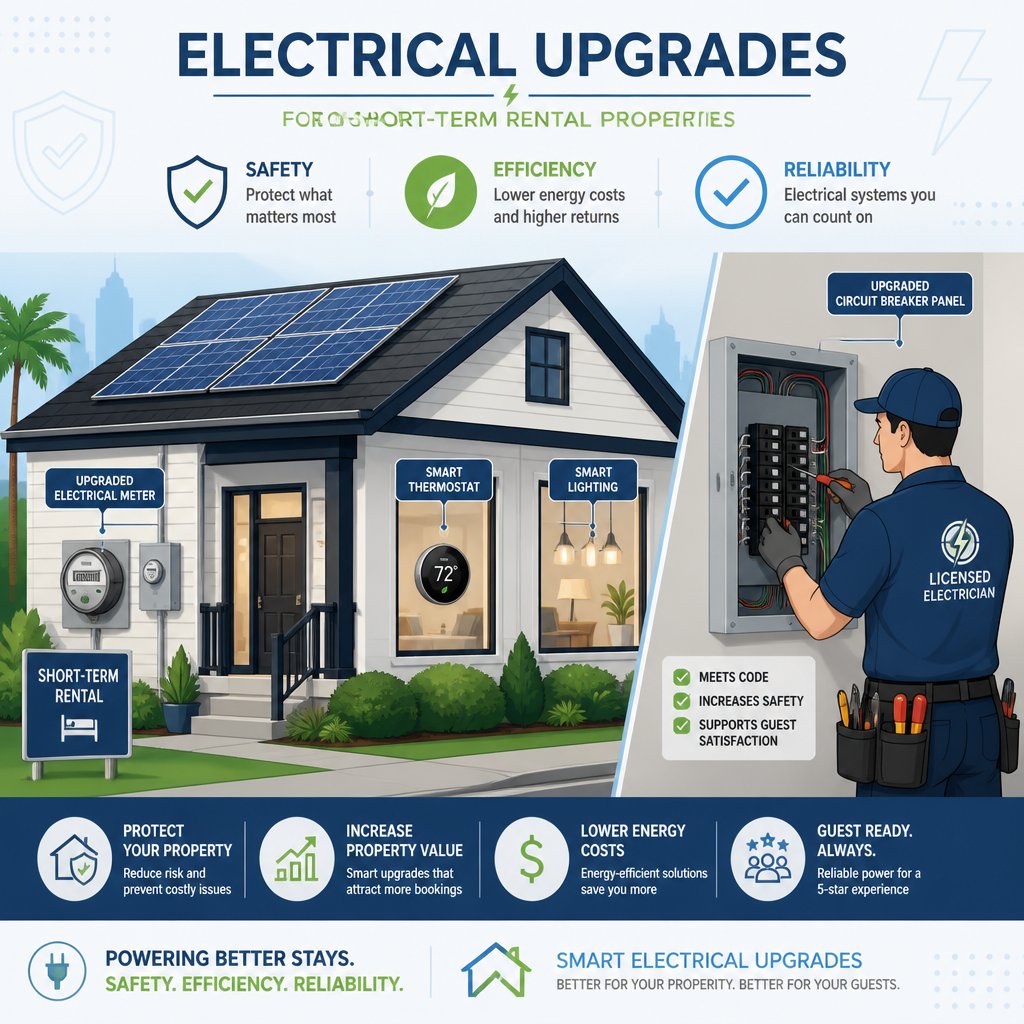
Guests notice the electrical details faster than you might think. A bright entry light, plenty of charging outlets, and a breaker panel that doesn’t trip during a busy weekend can really shape the whole stay. If you want fewer complaints, safer stays, and better reviews, the electrical upgrades that matter most are the ones that boost safety, reliability, and everyday convenience.
This is especially true if you manage a property in Austin, Bee Cave, Lakeway, Dripping Springs, Georgetown, Leander, Round Rock, Cedar Park, Kyle, Liberty Hill, Westlake, Hutto, or anywhere else in Central Texas. Older homes usually need a closer look, but even newer homes benefit from protection and guest-friendly features. Not sure where to start? A licensed electrician can help you sort out what’s urgent and what’s just a nice bonus, which can save you time between bookings.
Why Rental Electrical Systems Need Extra Attention
Short-term rentals get used differently than regular homes. More people, more devices, faster turnover—all that puts extra strain on the system. Small electrical issues can turn into guest headaches pretty quickly.
Higher Turnover Means More Wear On Devices
Guests plug in and unplug chargers, use hair tools, run coffee makers, and move lamps or appliances around. That kind of daily churn wears out outlets, switches, cords, and dimmers faster than you might expect. I usually spot the first signs as loose outlets, warm plates, or a light that only works if you jiggle it.
Guest Safety Expectations And Liability Exposure
People expect a rental to feel safe, clean, and simple to use. If a light flickers, an outlet sparks, or a breaker trips mid-stay, guests notice—and it feels careless, even if the problem started small. Good electrical maintenance protects your guests and your property, and it helps keep minor faults from turning into bigger headaches.
Older Homes Often Hide Capacity And Wiring Issues
A lot of Central Texas rentals started as older homes with panels and wiring that just weren’t built for today’s loads. Add HVAC, laundry, kitchen gadgets, smart locks, and guest electronics, and things get stretched fast. An electrical inspection can reveal outdated wiring, crowded panels, or circuits that need to be reworked before guests start complaining.
Core Improvements That Usually Deliver The Most Value
Start with safety and system strength. Once the home can handle the load, add convenience features that make stays smoother and cut down on service calls.
Panel Capacity And Breaker Improvements
If your panel is full, outdated, or just too small, nothing else works right. Upgrading the panel adds room for new circuits, improves reliability, and supports high-demand features like EV charging or hot tubs. I usually recommend this first if a property has repeated tripping or the main panel looks its age.
GFCI And AFCI Protection In Key Areas
GFCI protection matters near water—think kitchens, baths, laundry, garages, and outside. AFCI protection helps cut fire risk in living spaces by catching arc faults. A licensed electrician can figure out where you need these and bring the place up to a safer standard.
Outlet And Switch Replacements For Reliability
Loose outlets, worn switches, and cracked plates are little problems guests notice right away. Replacing them boosts safety and gives the property a cleaner look. I also check polarity and grounding while swapping these out—hidden issues tend to show up at the same time.
Whole-Home Surge Protection For Electronics
Guests bring laptops, TVs, routers, streaming sticks, and phone chargers—none of it likes power surges. Whole-home surge protection adds a solid defense for electronics and can save you the cost of replacing stuff after lightning or utility spikes. It’s a practical upgrade for rentals that depend on Wi-Fi and modern amenities.
Upgrades That Improve Guest Experience
Guest comfort often comes down to small electrical details. Good lighting, enough charging points, and easy controls can make a stay feel polished without much fuss.
Lighting Improvements For Comfort And Visibility
Bright, even lighting helps guests settle in and move safely at night. LED upgrades improve energy efficiency, cut down on bulb changes, and make spaces feel more inviting. Entryways, halls, bathrooms, kitchens, and exterior paths usually give you the best bang for your buck.
Ceiling Fan Additions In High-Use Rooms
Ceiling fans make bedrooms and living areas more comfortable in the Texas heat. They help air move, which supports HVAC and boosts guest comfort. I’ve watched a ceiling fan turn a complaint-prone bedroom into a guest favorite.
USB, Tamper-Resistant, And Weather-Resistant Receptacles
Guests travel with phones, tablets, watches, and all kinds of accessories that need charging. USB outlets near beds and desks are a big help, and tamper-resistant outlets add a safer touch for family rentals. Weather-resistant receptacles work great for patios, porches, and other outdoor spots.
Smart Controls That Simplify Check-In And Energy Use
Smart thermostats, smart switches, and app-controlled lighting make arrivals easier and help manage energy between bookings. These tools can cut down on guest questions about how to turn things on or off. If you manage more than one place, they save time without sacrificing comfort.
Property Features That May Require Dedicated Planning
Some rental features need more than just a quick swap. High-demand equipment and outdoor amenities usually call for dedicated circuits, careful load planning, and code-aware installation.
EV Charger Readiness For Drive-Up Convenience
More guests are driving EVs, especially in Texas travel markets. If your rental has garage or driveway parking, EV charger readiness can be a strong convenience feature and a booking edge. Planning for the right circuit size early is way easier than scrambling to add one later.
Outdoor Power For Patios, Hot Tubs, And Amenities
Outdoor lighting, string lights, grills, hot tubs, and entertainment areas all need safe, weather-aware power. These spaces usually involve GFCI protection, proper circuit sizing, and outdoor-rated devices. Rushed setups cause nuisance trips or legit safety issues, so it’s worth doing right.
Generator Hookups For Backup Power Needs
Some properties benefit from generator hookups during outages—especially if they rely on well pumps, fridges, or climate control. Backup power helps protect guest stays during storms and power interruptions. If you’re thinking about this, the transfer setup needs to fit your property, not just a generic solution.
Appliance Circuits For Laundry And Kitchen Demands
Kitchens and laundry rooms are usually the hardest-working parts of a rental. Dedicated circuits for washers, dryers, microwaves, dishwashers, and other appliances prevent overloads and breaker trips. Guests might not notice directly, but it keeps things running smoothly.
Warning Signs That Signal A Needed Refresh
Some electrical problems are impossible to ignore, and they usually mean bigger issues behind the walls. If you spot these signs, schedule a professional evaluation before the next guest checks in.
Frequent Tripped Breakers And Flickering Lights
If breakers trip often or lights dim when appliances start, your system is probably overloaded or aging. This is common in places with too many devices on too few circuits. It’s a sign you need real troubleshooting, not just a quick reset.
Warm Outlets, Buzzing Sounds, And Burning Odors
Heat, buzzing, and burning smells are big red flags. Stop using the area and get it checked right away. These signs can mean loose connections, damaged wiring, or failing devices, and it’s just not worth the risk.
Extension Cord Dependence And Limited Receptacles
If guests rely on extension cords to charge devices or reach lamps, you probably don’t have enough outlets in the right spots. Too many cords can cause trip hazards and overloads. It’s better to add outlets where people actually need them.
Failed Inspections Or Insurance Concerns
If an inspection flags outdated wiring, missing protection, or panel issues, make that a priority. Insurance carriers might raise concerns about older electrical or known hazards. I’ve seen owners save money by fixing these early instead of waiting for a claim or a booking disaster.
How Owners Can Prioritize Budget And Timing
The best plan? Fix safety issues first, then move on to comfort and premium features. That way, you protect your property and spend where it counts.
Choosing Between Safety, Convenience, And Premium Features
Start with what keeps people safe and prevents damage: panel problems, bad outlets, missing GFCI protection. Next, go for convenience upgrades like better lighting, extra outlets, and smart controls. Save premium features—EV charging, hot tubs, and so on—until the basics are solid.
Planning Work Between Bookings
Schedule electrical work between guest stays when possible. That gives your electrician time for testing, cleanup, and any fixes without messing up reservations. If you can, group related work—like outlets, lighting, and surge protection—so you only open up the property once.
When Troubleshooting Is Not A DIY Task
Resetting a breaker is one thing. But repeated trips, burning smells, hot devices, or panel work? Not a weekend DIY. Electrical troubleshooting is safer when a licensed electrician handles it, especially in a rental where guest safety and code compliance actually matter.
Working With A Licensed Electrician In Central Texas
A local electrician who covers Austin, Spicewood, Bee Cave, Lakeway, Dripping Springs, Georgetown, Leander, Round Rock, Cedar Park, Kyle, Liberty Hill, Westlake, Hutto, and nearby Central Texas spots can spot regional issues fast. That experience helps if you’re dealing with older homes, storm damage, or upgrades tied to rental use. If your property needs tailored advice, a pro can help you build a plan that fits your budget and booking schedule.
Frequently Asked Questions
What electrical safety upgrades should I prioritize before hosting guests?
Start with the things that cut risk fast: panel issues, damaged outlets, missing GFCI protection, and any signs of overheating. After that, look at surge protection, better lighting, and enough outlets for charging and daily use. Those upgrades usually give you the best mix of safety and guest comfort.
Do I need to upgrade my electrical panel to support modern appliances and HVAC?
You might, especially if your place has frequent breaker trips, not much spare breaker space, or new appliances on an old system. A panel upgrade can improve capacity and reliability, which really matters in rentals running HVAC, laundry, kitchen gear, and guest electronics at the same time. A licensed electrician can test the load and let you know if you need a full upgrade or just a small fix.
How many outlets should each room have to meet guest needs for charging devices?
There’s no magic number, but every bedroom and living area should have enough outlets so guests don’t need extension cords. I look at how people actually use the space—beds, nightstands, desks, seating—and add outlets where devices get charged. If guests keep asking for power strips, you probably need more outlets.
Should I install GFCI and AFCI protection in a rental, and where is it required?
Yes, both are important in a rental. GFCI is needed in wet or outdoor spots, while AFCI helps cut fire risk in living spaces. A licensed electrician can check current code and update the property where it makes sense.
How can I add dedicated circuits for high-demand items like hot tubs, EV chargers, or laundry machines?
Dedicated circuits need to be planned for the equipment’s load, location, and panel capacity. That usually means a site visit, load calculation, and permit-ready installation before you install or power up the equipment. For high-demand stuff, guessing at circuit size can cause nuisance trips or unsafe conditions.
What permits and inspections are typically needed for electrical work in a rental property?
It really depends on what you’re doing and what your local authorities want. If you’re handling panel upgrades, adding new circuits, installing EV chargers, or making other big electrical changes, you’ll almost always need a permit. Inspections? Yep, those are there to make sure everything’s safe and up to code before tenants move back in. Honestly, a licensed electrician who knows Central Texas rules can walk you through the details—there’s no need to guess.