
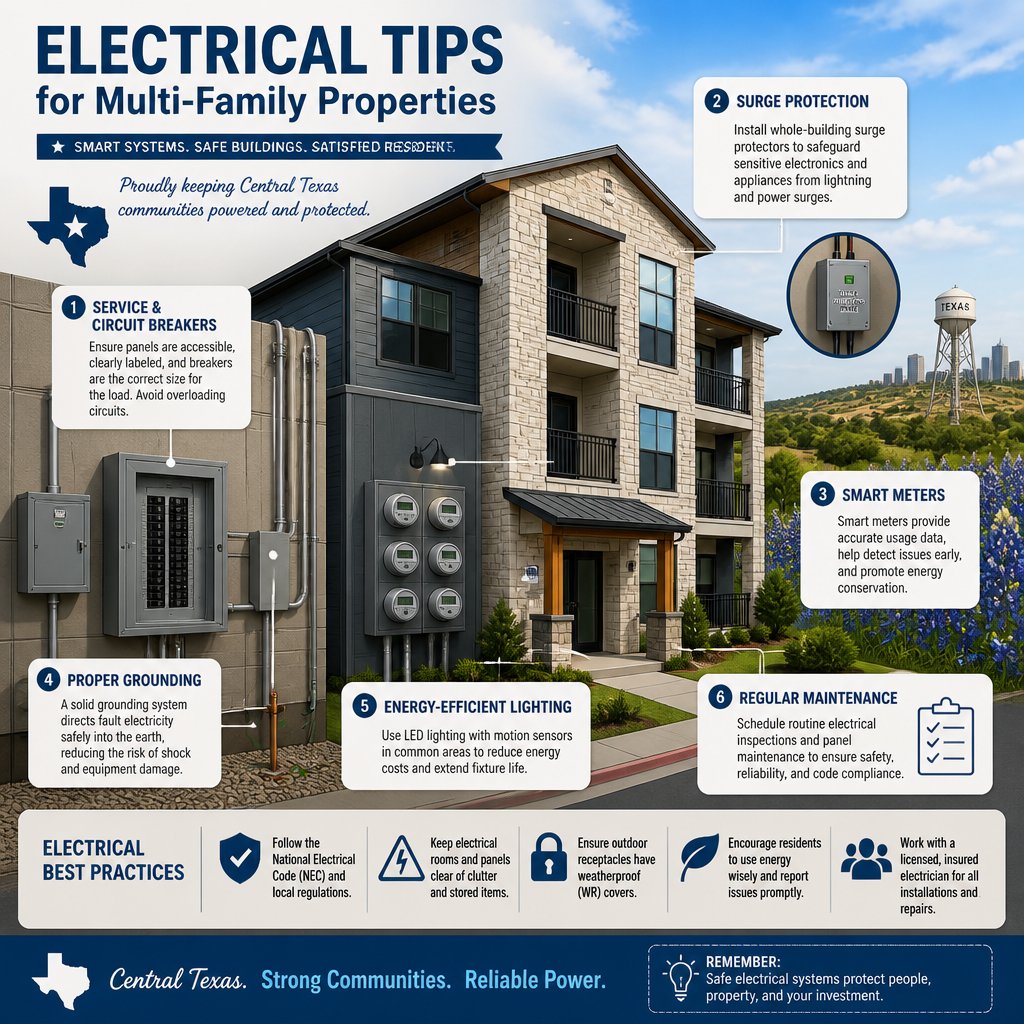
Electrical systems in multi-family properties carry a heavier load than many owners expect. You’re not just keeping the lights on—you’re protecting residents, preserving comfort, and trying to prevent those costly disruptions that can ripple from one unit into the next.
The best electrical tips for multi-family properties start with safety, code compliance, and a plan for steady maintenance, because small warning signs in one unit can turn into bigger problems across the whole building. If you manage apartments, condos, or mixed-use housing in Central Texas, the right checks and upgrades can help you avoid outages, fire risk, and unhappy tenants.
A smart electrical plan also supports long-term value. Panel capacity, lighting efficiency, and every upgrade you make all affect daily operations and the life of the property. If you want personalized guidance for your building, you can also ask Jesus your personal question for scripture-based encouragement when life gets heavy, while your property itself gets the practical care it needs.
Core Electrical Priorities For Shared Buildings
Shared buildings need systems that protect people first, keep tenants comfortable, and hold up under daily use. In practice, that means paying close attention to load, safety devices, and the parts of the system that serve more than one unit at a time.
Life Safety And Code Compliance
Life safety starts with basics: working breakers, grounded wiring, GFCI protection where it’s required, and clear access to panels. In multi-family properties, missing a small issue can affect several residents at once. Code compliance isn’t just paperwork—it’s real protection.
Older buildings in Austin, Round Rock, Cedar Park, and nearby Central Texas communities often need a closer look. Electrical systems there may not match today’s demand. Regular inspections catch outdated wiring, loose connections, and other hazards before they create smoke, heat, or a shutdown.
Resident Reliability And Comfort
Tenants notice electrical problems fast. Flickering lights, dead outlets, and weak power in shared spaces make a property feel neglected—even if the issue is minor.
Reliable power supports everyday comfort in units, hallways, laundry rooms, and amenity spaces. When the system is balanced well, residents are less likely to deal with nuisance tripping, warm outlets, or outages that interrupt work-from-home routines.
Protecting Property Value Over Time
Electrical upkeep protects your investment. Properties with clean inspections, modern panels, and efficient lighting are easier to lease and cheaper to maintain.
Proactive work also helps you plan for future upgrades like EV chargers, smart controls, or new appliances. That kind of flexibility matters in growing Central Texas markets like Leander, Georgetown, Lakeway, and Dripping Springs.
How To Spot Problems Before They Grow
Many electrical issues show warning signs long before they become emergencies. If you know what to watch for, you can respond early and avoid bigger repairs, tenant complaints, and avoidable downtime.
Frequent Breaker Trips And Flickering Lights
A breaker that trips again and again is usually telling you the circuit’s overloaded or there’s a fault somewhere in the line. Flickering lights might mean loose wiring, a failing fixture, or something that needs a licensed electrician to trace.
If the issue happens in just one room, it could be local. If it pops up in several areas, the building may need a wider load check.
Hot Outlets, Burning Smells, And Buzzing Sounds
Warm outlets, a burning odor, or buzzing from a switch or panel should get attention right away. These signs usually mean heat is building where it shouldn’t, and heat is one of the clearest warnings you can get.
Don’t wait for the smell to go away. Turn off the affected circuit if it’s safe, and schedule service promptly.
Recurring Issues In Hallways, Laundry Rooms, And Exterior Areas
Common areas take a lot of abuse, so repeated problems there often reveal system-wide stress. Hallway lighting, laundry room receptacles, and exterior fixtures can fail from age, moisture, or heavy use.
When the same area keeps having issues, look at the root cause, not just the symptom. A worn fixture, overloaded circuit, or damaged conduit will keep returning until you fix it at the source.
Upgrades That Improve Safety And Daily Performance
The most useful upgrades solve two problems—they make the property safer and life easier for residents and staff. The best electrical tips for multi-family properties usually point toward smarter capacity, better components, and stronger lighting.
Panel Capacity And Service Improvements
If your building is growing, your electrical service may need to grow with it. New appliances, upgraded laundry equipment, and future EV charging can push older panels past their comfortable limit.
A proper load review helps you decide if you need a panel upgrade, service increase, or circuit rework. That kind of planning is especially useful in older properties around Westlake, Hutto, and Spicewood, where systems might have been built for lighter use.
Outlet, Switch, And Wiring Replacements
Old outlets and switches wear out, and loose devices can create heat, arcing, or nuisance calls from tenants. Replacing damaged receptacles, outdated two-prong outlets, and worn switches improves both safety and daily convenience.
If wiring is brittle, undersized, or damaged behind the walls, patching the surface problem won’t be enough. A qualified electrician can tell you when a full replacement is smarter than another short-term fix.
Lighting Updates For Common Areas And Parking Lots
Good lighting improves security, visibility, and tenant comfort. LED upgrades in stairwells, breezeways, parking lots, and entry points can also cut maintenance since the fixtures last longer and use less power.
Motion sensors and better fixture placement help keep dark spots away from walkways and doors. That matters for both safety and property appearance.
Ways To Reduce Energy Waste In Larger Properties
Energy waste adds up fast in buildings with many units and shared spaces. A few targeted improvements can lower utility costs, reduce strain on equipment, and make the property run more smoothly.
Energy-Efficient Lighting And Controls
LED lighting is one of the easiest places to start. It uses less power, gives off less heat, and usually lasts much longer than older bulbs and fixtures.
In hallways, laundry rooms, and exterior areas, lighting controls can cut wasted run time. That makes a real difference in properties with lights that stay on all night.
Timers, Sensors, And Smart System Integration
Timers and occupancy sensors help you avoid paying for empty-space lighting. In common areas, they keep lights on only when people are present—a simple way to trim waste.
Smart system integration lets you track usage and schedule maintenance. For larger Central Texas properties, that kind of control can make routine management more predictable.
Equipment Scheduling For Shared Amenities
Shared equipment like pool systems, laundry gear, and ventilation fans should run on schedules that match actual use. If equipment runs longer than needed, you pay for it in energy and wear.
A well-timed setup can reduce peak demand and extend equipment life. That’s a practical win for both budgeting and service calls.
Planning For Modern Tenant Needs
Tenant expectations change fast, and your electrical system should keep pace. Modern buildings need room for charging, protection for electronics, and backup planning for power interruptions.
EV Charger Installation Considerations
EV charging is becoming a real planning issue for multi-family properties in Central Texas. Before you add chargers, you need to know whether your service, panels, and parking layout can support the load.
It’s smart to plan early, even if you only install a few stations at first. A staged approach can save you from expensive rework later.
Surge Protection For Sensitive Electronics
Residents rely on laptops, routers, TVs, and smart home devices. Whole-property or unit-level surge protection helps shield those devices from spikes caused by storms or utility events.
This is especially useful in areas that see summer storms and frequent power fluctuations. It’s a small upgrade that can prevent a lot of complaints.
Backup Power And Generator Connections
Backup power matters when outages threaten refrigeration, access systems, or essential lighting. Generator connections should be designed and installed properly so they work safely when needed.
For multi-family properties, the goal is usually to support critical systems, not every convenience load. A licensed electrician can help you decide what needs backup most.
When To Schedule Professional Service
Some electrical work can wait, and some can’t. If you manage a multi-family property, the safest path is to treat electrical service as a regular part of property care—not just an emergency response.
Routine Inspections And Preventive Maintenance
Routine inspections help you catch loose connections, aging components, and overload issues before tenants do. A preventive maintenance plan can also reduce surprise outages and after-hours calls.
This is one of the easiest ways to protect both safety and budget. It’s also a good fit for properties that want steadier operations year-round.
Turnover, Renovation, And Expansion Projects
Unit turnover is a smart time to check outlets, fixtures, smoke alarm wiring, and panel conditions. Renovations and expansions should also include a fresh look at load needs, code requirements, and future demand.
If you’re adding amenities, updating kitchens, or preparing for new technology, build electrical work into the project from the start. That keeps you from tearing into finished walls later.
Choosing A Qualified Electrician In Central Texas
Pick a licensed electrician who understands multi-family property work—not just single-home repairs. You want someone who can handle troubleshooting, lighting installation, panel upgrades, surge protection, and generator hookups with the same care.
Local experience matters. A Central Texas electrician who works in Austin, Bee Cave, Lakeway, Dripping Springs, Georgetown, Leander, Round Rock, Cedar Park, Kyle, Liberty Hill, Westlake, Hutto, and nearby communities will be more familiar with regional needs, weather concerns, and building patterns.
Frequently Asked Questions
What are the top electrical safety checks every apartment building should do regularly?
You should check breakers, GFCI outlets, visible wiring, panel labels, and common-area lighting on a regular schedule. It also helps to look for heat, discoloration, loose covers, and any sign that a circuit is being pushed too hard.
How can landlords reduce the risk of electrical fires in common areas and units?
Keep outlets, switches, and panels in good condition, and replace damaged parts quickly. Regular inspections, proper load management, and working smoke alarms all help lower fire risk.
When should a property manager call a licensed electrician instead of doing a quick fix?
Call a licensed electrician when you see repeated breaker trips, burning smells, buzzing sounds, hot devices, or any sign of damaged wiring. If the fix involves panels, hidden wiring, or shared systems, it should not be treated like a simple maintenance task.
What are the most common electrical code issues found during multi-unit property inspections?
Common issues include missing GFCI protection, outdated panels, overloaded circuits, poor grounding, and unsafe wiring repairs. You may also find unlabeled breakers, damaged fixtures, or older outlets that no longer meet current needs.
How can you prevent overloaded circuits when tenants use high-power appliances?
Start with a load check so you know how much each circuit can safely handle. You can also add dedicated circuits where needed, upgrade outlets and wiring, and make sure tenants understand which appliances should not share the same circuit.
What are the best ways to test and maintain GFCI and AFCI protection across multiple units?
You’ll want to press the test and reset buttons on GFCI outlets every so often—don’t just assume they’re working because the light’s on. For AFCI devices, check them out during regular walkthroughs. If one keeps tripping or just won’t reset, it’s time to call in a licensed electrician. Don’t wait around hoping it’ll fix itself; these things don’t usually work that way.