
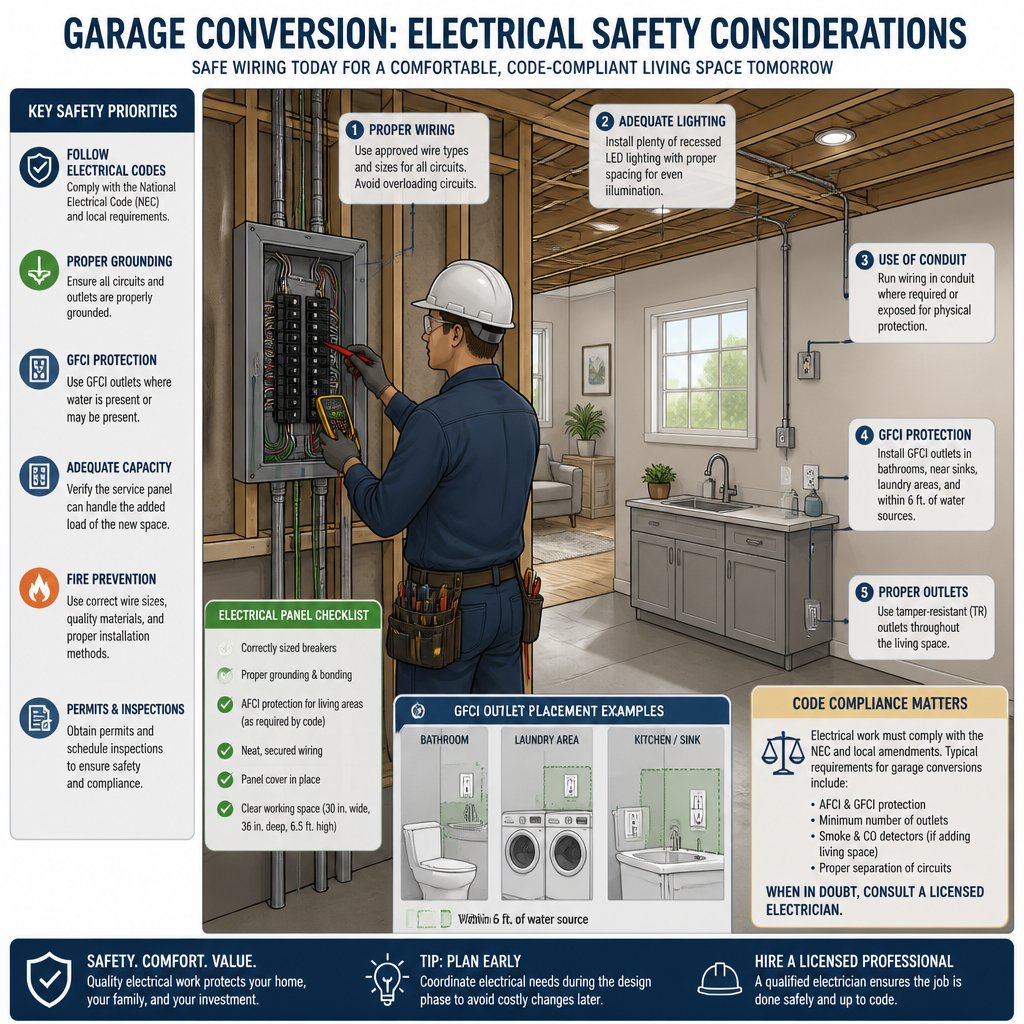
Turning a garage into a room where people actually live, sleep, and hang out every day? That’s a whole different ballgame from just powering a light bulb and a single outlet. The electrical setup has to handle comfort, safety, and whatever you throw at it—now and years from now.
If you want smart electrical tips for converting garages into living spaces, start with code, load planning, and a careful look at the existing system before you touch walls, finishes, or fixtures. Nailing the electrical plan early saves you from expensive rework and helps the space feel like a real room, not an afterthought.
Start With Code, Permits, And Load Planning
Most garage conversions need electrical upgrades. Living spaces demand more from your system than a storage area. Bedrooms, offices, or flex rooms need more outlets, better lighting, and often heating or cooling gear that garages just don’t come with.
Why Garage Conversions Usually Trigger Electrical Updates
The old garage circuit probably powered the door opener and a couple of tools—maybe a single outlet if you were lucky. But once you make it a living space, you’ll need extra branch circuits, smarter outlet placement, and wiring that actually supports daily use without popping breakers.
Permits, Inspections, And Central Texas Code Considerations
In Texas, you almost always need permits and inspections for electrical work tied to a garage conversion. Local rules can be all over the place, so what flies in Austin might not in Bee Cave, Dripping Springs, Georgetown, or any of the other Central Texas towns.
How To Tell Whether The Existing Circuit Capacity Is Enough
Ask yourself: does the garage share power with other big loads? If breakers trip, lights dim, or the panel looks jammed, you’ll probably need more capacity. Doing a load calculation before you start helps you plan for lighting, outlets, HVAC, and appliances without guessing.
Assess The Existing Garage Electrical System
Before you close up the walls, really look at what’s there. The panel, wiring, and breakers will show you how much fix-up work you’re in for.
Panel Space, Breaker Limits, And Service Size
No open breaker spaces? You might need a subpanel or a service upgrade. Older homes often feel cramped once you add a mini split, laundry, or a home office.
Old Wiring, Extension Fixes, And Other Red Flags
Watch out for brittle insulation, sketchy extension cords used as permanent wiring, warm outlets, loose switches, or ungrounded receptacles. Those are all signs the garage wasn’t built for real living and need to be fixed before you close everything up.
When A Safety Inspection Should Come First
If you spot old wiring, aluminum conductors, mixed wire types, or you keep dealing with tripped breakers, get a safety inspection. It’s extra important if the garage was remodeled before—hidden shortcuts tend to pop up only after you start opening things up.
Build A Wiring Plan For Everyday Living
A solid wiring plan makes the room easier to use and furnish. You want enough outlets, good lighting, and dedicated power where you’ll need it most.
Outlet Placement For Bedrooms, Offices, And Flex Rooms
Put outlets where you’ll actually use them, not just where the old garage ones are. Bedrooms and offices need outlets near beds, desks, and TVs. Flex rooms do better with outlets spaced out, so you’re not dragging extension cords everywhere.
Dedicated Circuits For Mini Splits, Appliances, And Laundry Setups
Don’t make mini splits, fridges, microwaves, washers, and dryers share a circuit with lights and outlets. Dedicated circuits lower overload risks and make troubleshooting easier, especially if the space will be a guest suite or rental.
Lighting Layouts That Make The Space Feel Finished
One ceiling fixture? That’s a recipe for a harsh, unfinished vibe. Layer your lighting—use ceiling lights for general brightness, task lights for desks or reading, and dimmers where you want a softer mood at night.
Prioritize Safety In A Former Garage Environment
Garages come with their quirks—moisture, dust, wild temperature swings, concrete floors. Your wiring choices should match the environment, not just look good on the surface.
GFCI, AFCI, And Tamper-Resistant Protection
GFCI protection matters anywhere moisture could show up. AFCI protection helps cut fire risk in living areas. Tamper-resistant outlets? Just do it, especially if kids will use the room.
Moisture, Insulation, And Temperature Effects On Wiring
Garages heat up and cool down more than the house, and that can mess with wiring and devices over time. Insulation and sealed wall cavities help protect the electrical system and make the space more comfortable.
Smoke Alarms, Carbon Monoxide Protection, And Egress Lighting
If you’re adding a bedroom, install smoke alarms in the right spots and interconnect them. Carbon monoxide alarms are key if there’s any fuel-burning equipment nearby. Egress lighting keeps the exit path visible during an outage or emergency.
Add Modern Upgrades While The Walls Are Open
With open walls, you’ve got a golden opportunity to make the room more useful—without ripping up finished surfaces later. A few upgrades now can pay off in convenience, safety, and energy savings.
Smart Switches, Dimmers, And Connected Controls
Smart switches let you control lights from the house or your phone. Dimmers are an easy win—a bedroom, office, or hobby room just feels better when you can adjust the light.
Energy-Efficient Lighting And Ceiling Fan Options
LED lighting cuts energy use and lets you pick your favorite color temp. A ceiling fan can make the space feel cooler during those hot Central Texas months, and it helps comfort without overworking the HVAC.
Surge Protection, EV Readiness, And Future-Proof Circuits
Whole-home surge protection shields electronics, which is a must if you’re putting computers or entertainment stuff in the new room. If you might add an EV charger, generator hookup, or more gear someday, planning for it now saves headaches later.
Know What To DIY And When To Call A Licensed Electrician
Plenty of folks can handle basic prep—planning outlet spots or removing old fixtures (with the power OFF). But when it comes to panel changes, new circuits, or anything code-related, calling a licensed electrician is just safer.
Common Mistakes That Create Expensive Rework
People often undersize circuits, add too few outlets, leave old garage wiring in place, or forget about lighting until the drywall is up. Changing the room’s purpose halfway through without redoing the electrical plan? That’s another one that bites.
Warning Signs The Project Needs Professional Troubleshooting
If breakers trip under normal use, outlets test unsafe, or you find patched wiring from earlier repairs, it’s time to stop and get help. Also, call a pro if the panel looks crowded, the service seems too small, or you’re not sure if the wiring is grounded and safe for living spaces.
How Local Pros Help Homeowners In Austin And Surrounding Areas
A local electrician can spot issues you might miss—load concerns, permit details, you name it. Around Austin and the rest of Central Texas, that kind of know-how helps keep projects moving, avoids failed inspections, and gives you a safer, more finished room.
Frequently Asked Questions
Do I need to upgrade the electrical panel or service to handle the extra load?
Not always, but a lot of garage conversions do need more capacity. If you’re adding HVAC, laundry, or several new circuits, a load calculation will show if your current panel can handle it.
How many outlets should I plan for, and where should they go in the new room?
Put in more outlets than you think you’ll need, especially along usable wall space and near beds, desks, and media spots. The idea is to avoid extension cords and make it feel like a real living space.
What lighting options work best for a garage conversion, and how should they be wired?
LED ceiling lights with dimmers usually work great, and layered lighting makes it more comfortable. Wire for both general and task lighting so the room can flex as a bedroom, office, or whatever you need.
Do I need to add GFCI or AFCI protection, and where is it required?
You’ll need GFCI where moisture could show up, and AFCI in living areas. Your electrician will check local code and put the right protection where it’s needed, not just guess.
What’s the safest way to run new wiring in a garage conversion, through walls, ceiling, or conduit?
Most finished conversions run wiring inside walls and ceilings to meet code and protect cables. Conduit might still be used in certain spots or for special needs, but the safest layout depends on your design and local rules.
Should I add a dedicated circuit for heating, air conditioning, or large appliances in the converted space?
Yeah, that’s usually the smart move. Having a dedicated circuit keeps big stuff like heating or AC from fighting with your lights and outlets, and it really cuts down on annoying breaker trips.