
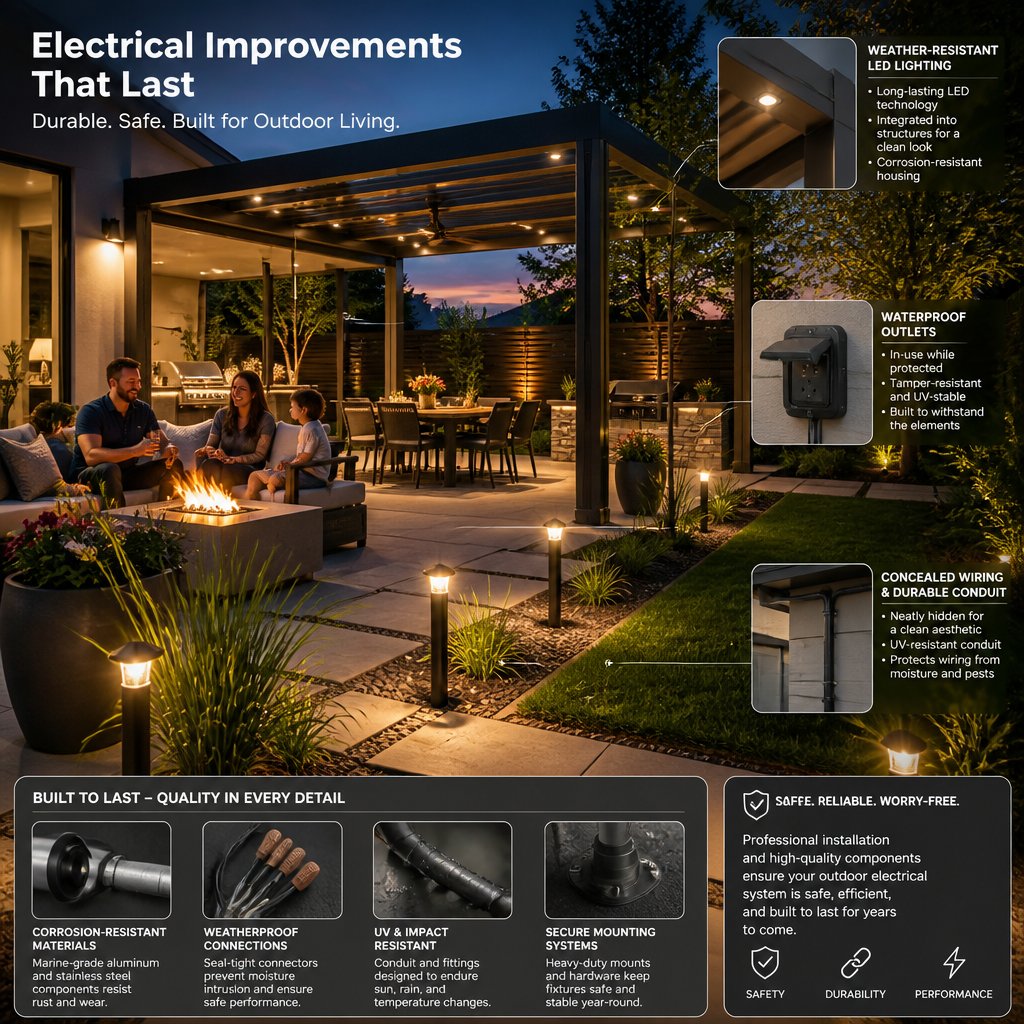
Ever tried to enjoy your backyard at dusk and felt like something’s still missing? The right electrical improvements for outdoor living areas can change that quickly, giving you better light, safer power, and a space that actually works for quiet nights or big get-togethers.
The best outdoor upgrades make your space safer, more comfortable, and easier to use—without causing electrical headaches down the road. It’s all about planning: lighting, outlets, weather protection, and making sure you’ve got enough capacity for what you want now (and whatever you might add later).
Thinking about adding power to a patio, deck, or outdoor kitchen? The details really do matter. A small wiring choice can affect safety, convenience, and how well things hold up, so it’s worth getting it right upfront.
What Outdoor Upgrades Usually Matter Most
The most useful outdoor electrical work usually starts with the basics, then builds toward comfort and entertainment. Good planning can make a patio feel like a real extension of your home, not just a spot with a few lights and one outlet.
Lighting For Patios, Walkways, And Gathering Spaces
Outdoor lighting isn’t just about looks. It should help you move safely, highlight steps and edges, and make seating areas feel inviting after dark. Around Central Texas, I see the biggest difference when people use layered lighting: path lights, sconces, string lights, and low-voltage accents.
Weather-Resistant Outlets And Convenient Power Access
Well-placed exterior outlets save you from dragging cords through doors or windows. That matters for holiday lights, fans, speakers, tools, and small appliances. If you host often, outlets near seating and cooking areas just make life easier.
Ceiling Fans, Heaters, And Comfort Features
Covered patios get a lot more usable when you can control the temperature a bit. Ceiling fans help on hot days, and outdoor-rated heaters can stretch the season into cooler months. These features need proper wiring, especially when mounted in pergolas, patios, or covered porches.
Power For Outdoor Kitchens, Entertainment, And Work Areas
Outdoor kitchens, TVs, projectors, and workshop setups need more than a basic outlet. Built-in grills, fridges, ice makers, and entertainment gear often call for dedicated circuits or carefully planned outlet placement. If you want the space to feel like an indoor room, you’ll need an electrical plan that matches that goal.
Safety Requirements Before Any Installation
Outdoor electrical work has to stand up to moisture, heat, dust, and wear. Safety isn’t just about code—it’s about protecting your home, your guests, and your gear every day.
GFCI Protection In Wet And Damp Locations
Any outlet near water, a sink, or a damp area needs GFCI protection. That device cuts power quickly if there’s a fault, which is why it’s so important for patios, pools, spas, and outdoor kitchens. If your outdoor receptacles aren’t protected, that’s a red flag.
Weatherproof Covers, Boxes, And Exterior-Rated Devices
Outdoor fixtures and outlets need parts made for outdoor use. Weatherproof covers, sealed boxes, and exterior-rated devices keep moisture out and cut down on corrosion. Using indoor parts outside might work for a while, but then you’ll start seeing shorts, failures, or even shock hazards.
Grounding, Bonding, And Code-Minded Wiring Practices
Safe outdoor wiring depends on proper grounding and bonding, plus the right wire type and installation method. Cables should be protected from physical damage, buried at the right depth, and routed away from spots that collect water. Good workmanship here stops those headaches that show up after the first big storm.
Why Safety Inspections Matter For Older Properties
Older homes around Austin, Lakeway, Georgetown, and Round Rock often have outdoor systems added in stages. A safety inspection can uncover loose connections, outdated outlets, or hidden damage before a project gets out of hand. If nobody’s checked your exterior wiring in years, it’s probably time.
Planning For Capacity, Wiring, And Future Use
Outdoor upgrades work best when you plan them as a real part of your electrical system—not just a quick add-on. The right design gives you room to grow without overloading your panel or forcing a do-over later.
When A Panel Upgrade Becomes Necessary
A panel upgrade might be in order if you’re adding several new loads at once—think outdoor lighting, a kitchen, a hot tub, and entertainment gear. Signs of trouble include frequent breaker trips or a panel that’s already packed. During remodels, I always look at the full load, not just the new stuff.
Dedicated Circuits For High-Demand Equipment
Some equipment shouldn’t share power with general outlets or lighting. Hot tubs, outdoor fridges, heaters, and built-in cooking appliances usually work better on dedicated circuits. That helps avoid nuisance trips and gives each device the juice it needs.
Wiring Improvements For Detached Structures And Long Runs
Detached garages, sheds, pergolas, and pool houses need special wiring attention, especially when the run is long. Voltage drop, buried conduit, and the right breaker size matter more than most people expect. If the power source is far away, planning gets even more important.
Leaving Room For Smart Features Or An EV Charger Later
A good outdoor electrical plan leaves space for future upgrades. You might want smart lighting, cameras, automated controls, or even an EV charger down the road. It’s way easier to rough in the right capacity and wiring now than to tear things open again later.
Efficiency And Control Features Worth Considering
Outdoor electrical systems can be practical and efficient if you pick the right features. Small upgrades can cut waste, make daily use easier, and reduce the amount of upkeep you deal with.
Energy-Efficient Lighting For Everyday Use
LED lighting makes sense for patios, paths, and landscaping. It uses less energy and lasts longer than old-school bulbs. Plus, you get more flexibility with color and brightness. In daily life, efficient lighting is just easier to live with—and it’s cheaper.
Timers, Dimmers, And Smart Home Controls
Timers and smart controls help you avoid leaving lights on all night. Dimmers let you set the mood for dinner, a game, or a quiet evening outside. If you already use smart home systems indoors, extending that control outside can really tie the space together.
Low-Maintenance Options That Reduce Service Issues
Pick fixtures and devices that can handle sun, moisture, and temperature swings. Corrosion-resistant materials, sealed LED fixtures, and quality covers can save you a lot of service calls. That’s especially true in Central Texas, where heat and storms can be brutal on outdoor gear.
Common Problems Homeowners Run Into
Outdoor electrical problems often start small, then become hard to ignore. If you catch them early, you can avoid damage to fixtures, appliances, and wiring.
Frequent Tripping, Flickering, Or Dead Exterior Outlets
A breaker that trips a lot may mean the circuit’s overloaded or there’s a wiring fault. Flickering lights could mean a loose connection, moisture, or a failing fixture. A dead outdoor outlet might be something simple, or it could signal a bigger issue that needs electrical troubleshooting.
Water Intrusion And Corrosion Around Fixtures
When seals fail, water sneaks into boxes, outlets, or light fixtures and causes corrosion. You might see rust, discoloration, or devices that only work sometimes. These aren’t just cosmetic—they usually point to real electrical wear.
Undersized Systems For Added Appliances Or Equipment
Many outdoor systems started with a few lights and one outlet, then got pushed to power much more. Once you add heaters, sound systems, kitchen appliances, or a hot tub, the old setup might not keep up. If your system always seems to struggle, it probably needs more than another quick fix.
When Electrical Troubleshooting Should Not Wait
If you smell burning, see scorch marks, hear buzzing, or notice sparking, stop waiting. Those signs can point to a serious fault that gets worse fast. Get an inspection—better safe than sorry.
When Professional Service Is The Better Choice
Some outdoor projects look simple at first, then get complicated once you deal with walls, soil, weather, and code rules. That’s where licensed help can save you time and money.
Projects That Need A Licensed Electrician
Call a licensed electrician for panel work, new circuits, generator hookups, EV charger installation, hot tub wiring, and major lighting installs. Same deal for projects involving trenching, detached structures, or changes to the main service. Professional service makes sure the work’s up to code and properly permitted.
How Local Conditions In Central Texas Affect Outdoor Systems
Heat, storms, dust, and long sunny seasons all take a toll on outdoor electrical parts in Central Texas. In places like Spicewood, Bee Cave, Dripping Springs, Leander, Cedar Park, Kyle, Liberty Hill, Westlake, and Hutto, you need materials and placement that can handle real weather. I’ve seen plenty of issues from fixtures that were fine indoors but just can’t cut it in a Texas yard.
Questions To Ask Before Scheduling The Work
Ask if your electrician has experience with outdoor living spaces, panel upgrades, surge protection, and outdoor safety inspections. Find out how they’ll protect the work from moisture and what permits you might need. A good pro should explain the plan in plain language before getting started.
Frequently Asked Questions
How can I safely extend power to my backyard for lights and outlets?
The safest way is to add properly rated outdoor wiring, weatherproof outlets, and GFCI protection where required. Extension cords might seem easy, but they’re not a long-term fix and can create tripping or weather risks. A permanent installation gives you better safety and a cleaner look.
What does it typically cost to upgrade an electrical panel or service for outdoor use?
Cost depends on the size of the upgrade, the age of your system, and how much new wiring you need. A simple outdoor circuit addition costs less than a full panel or service upgrade, especially if your home already has capacity. The best way to figure it out is with an on-site evaluation of your current load and future plans.
Do I need a permit to add outdoor outlets, lighting, or a new circuit?
Usually, yes—especially if new wiring, a new circuit, or a panel change is involved. Permits make sure the work’s inspected and done to code. A licensed electrician can tell you what applies before you start.
What type of outdoor outlets and covers are best for rain and snow?
Look for weather-resistant outlets with GFCI protection and covers rated for outdoor use. Covers should protect even when something’s plugged in, not just when the outlet’s empty. In wet climates, a better seal makes a big difference over time.
How many amps should I have if I’m adding a patio kitchen, hot tub, or heater?
That depends on your exact equipment and how many things will run at once. A patio kitchen, hot tub, or heater can each put a very different demand on your system, so a load calculation is the right place to start. The goal is to match the circuit and panel capacity to your real equipment—not guess.
What’s the best way to add landscape and deck lighting without overloading a circuit?
Go with LED fixtures—they use way less power, so you can light things up without stressing the circuit. Spread the lights across different circuits if you need to. Timers, dimmers, and low-voltage setups help keep energy use in check but still give you plenty of light. Got a bigger lighting plan? Honestly, it’s worth having someone check the wiring before you start adding more.