
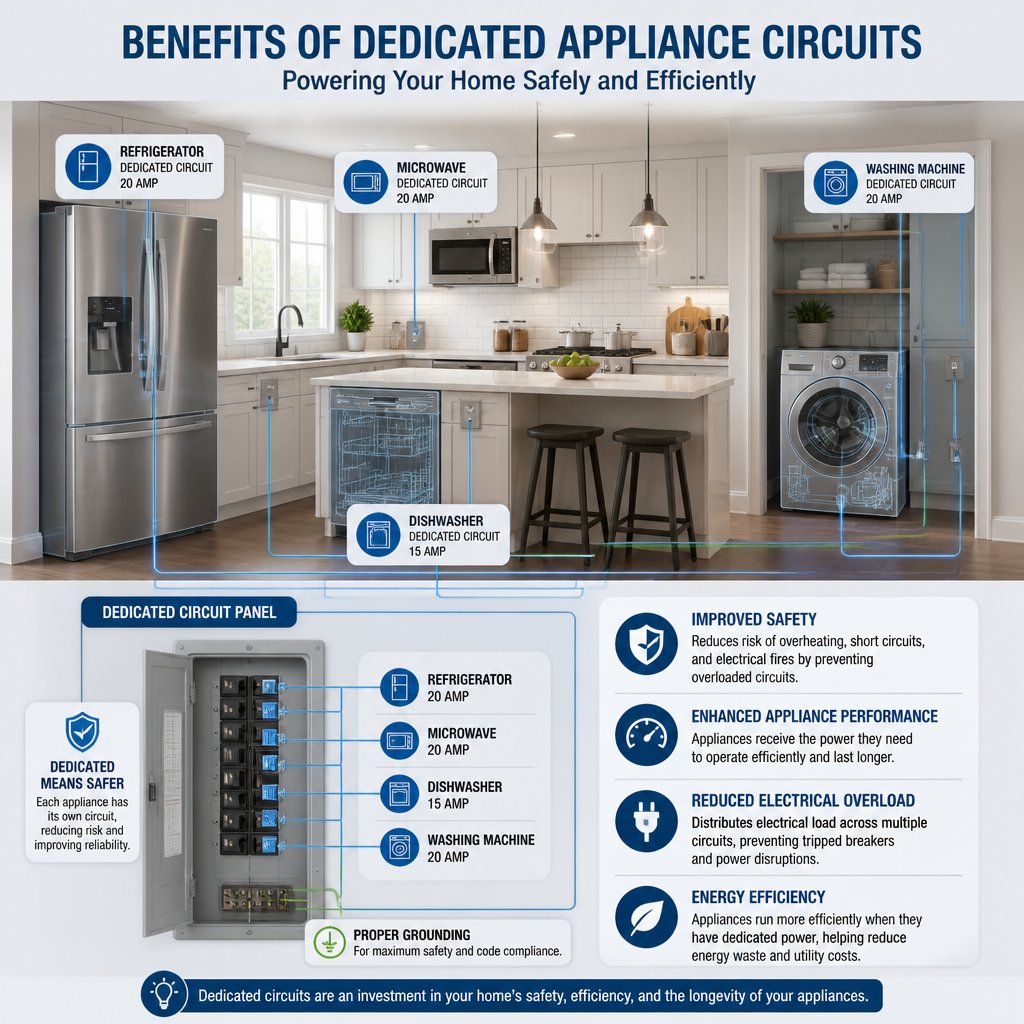
Choosing the right electrical setup just makes life easier and safer. When you add dedicated appliance circuits, you give big equipment its own power line—cutting down on overloads, protecting your wiring, and helping important appliances run the way they’re supposed to.
For homes and small businesses alike, the benefits of dedicated appliance circuits show up as fewer breaker trips, steadier performance, and a lower risk of heat buildup around busy equipment. That’s a big deal in kitchens, laundry rooms, garages, workshops, and commercial spaces—places where a bunch of things are running at once and fighting for power.
Ever watched your lights flicker when a big appliance kicks on? Or gotten used to resetting a breaker that just won’t quit tripping? That’s a sign your wiring might be overdue for an upgrade. A licensed electrician can look at your setup and help you figure out if a few circuit changes could make a real difference.
What A Dedicated Circuit Actually Does
A dedicated circuit runs straight from your electrical panel to one specific appliance. Nothing else shares that line, so the entire circuit’s capacity stays reserved for that load.
How It Differs From Shared Branch Circuits
Shared branch circuits power multiple outlets, lights, or small devices at once. When you plug in too many things, the load piles up and can max out the circuit. Dedicated circuits avoid that mess—no competition, just steady power for whatever needs it most.
Which Appliances Commonly Need Their Own Line
Big or heat-producing appliances usually need their own circuit. Think refrigerators, microwaves, ovens, dryers, washers, dishwashers, HVAC systems, water heaters, EV chargers, and heavy workshop tools. In Central Texas—Austin, Round Rock, Lakeway—this comes up a lot during kitchen remodels, laundry upgrades, and garage makeovers.
Safety Improvements For Everyday Use
Dedicated circuits are honestly one of the simplest ways to boost electrical safety. They keep wiring cooler, prevent overloads, and make it way less likely that heavy-use appliances will strain the same circuit at once.
Reducing Overload And Overheating Risks
When a circuit’s overloaded, wires and connections can get hotter than they should. That wears things out and ups the risk of damage or worse. Giving each major appliance its own circuit keeps the load in check—especially for stuff that runs a lot or draws heavy current.
Lowering The Chance Of Nuisance Breaker Trips
Breaker trips during normal use are just plain annoying. Dedicated circuits cut down on these interruptions because one appliance isn’t fighting others for juice. That means fewer headaches in kitchens, laundry rooms, and home offices.
Supporting Code-Compliant Installations
Most big appliances are supposed to have dedicated power under electrical codes and local rules. Proper installs keep your place up to code and help things run safely. If you’re remodeling in Bee Cave, Dripping Springs, Georgetown, or really anywhere in Central Texas, it’s smart to review your wiring before the walls get closed up.
Performance And Reliability Gains
Dedicated circuits don’t just protect your wiring—they help appliances work better, too. You’ll notice the benefits most in busy rooms and high-use spots.
Helping Large Appliances Run More Efficiently
When a big appliance gets steady, reliable power, it can actually do its job the way it was designed to. That means fewer hiccups, less wear on parts, and better reliability day to day. I’ve seen homeowners notice the biggest difference with fridges, dryers, and cooking gear.
Protecting Sensitive Electronics From Power Competition
Modern appliances and electronics with fancy controls really don’t like voltage swings or shared loads. Their own circuit keeps other appliances from messing with their power. That’s a big win for smart home systems, home offices, and commercial setups.
Improving Consistency In Kitchens, Laundry Rooms, And Workshops
These areas chew through the most electricity. A dedicated circuit keeps kitchen appliances steady during meal prep, stops laundry gear from making the lights dip, and lets workshop tools run without constant interruptions. For businesses, it makes upgrades—like new lighting or specialty equipment—a lot smoother.
Long-Term Value For Homes And Commercial Spaces
Dedicated circuits aren’t just about today—they make future upgrades and changes easier, too. That can save you a lot of hassle down the road.
Making Future Upgrades Easier
If you add appliances later, you don’t want to find out your system’s already maxed out. A well-planned circuit layout gives you room to expand with less mess. This is especially handy for future EV chargers, generators, or energy-efficient lighting.
Supporting Renovations And New Equipment
Renovations are just the best time to add circuits. It’s way easier to run new wires during a remodel than after the drywall and cabinets are up. I’ve seen this save people a ton of headaches during kitchen updates, office projects, and commercial buildouts.
Strengthening Overall Electrical System Planning
When circuits are clearly separated, it’s easier to troubleshoot, maintain, and upgrade later. That’s a big deal for anyone who wants reliable service and fewer surprises during busy times. It also makes electrical maintenance a whole lot simpler.
Signs Your Property May Need Electrical Reconfiguration
Some warning signs are hard to ignore. If you spot these, it’s probably time to let a licensed electrician check things out.
Flickering Lights And Warm Outlets
Lights dimming when an appliance starts? That’s a sign the circuit’s under strain. Warm outlets are a red flag too—don’t ignore them. Both can point to load problems, loose connections, or outdated wiring that needs some attention.
Extension Cord Dependence Around Major Appliances
If you’re using extension cords or power strips for big appliances, something’s off. Major equipment should have its own proper outlet—not a temporary fix. This is especially true in kitchens, garages, and workshops.
Frequent Tripping During Normal Use
If a breaker trips during everyday stuff—like running the dishwasher, microwave, dryer, or power tools—your circuit might be overloaded or just not matched to the equipment. A pro can test the load and recommend a better setup.
Why Professional Installation Matters In Central Texas
You really want a pro handling dedicated circuit work. A licensed electrician checks your panel, figures out the load, and installs everything safely.
Load Calculations And Panel Capacity Checks
Before adding new circuits, someone needs to check if your panel can handle it. That means looking at space, total demand, and whether it’s actually safe to add more. Experience counts here—it’s not always as simple as “just add another breaker.”
Permits, Inspections, And Local Code Considerations
Electrical work in Austin, Cedar Park, Leander, Westlake, Hutto, Kyle, Liberty Hill, and nearby Central Texas spots might need permits and inspections. A pro knows the local codes and keeps you out of trouble down the line.
When To Pair The Work With Panel Upgrades Or Surge Protection
Sometimes, adding circuits isn’t enough. If your panel’s old, full, or undersized, a panel upgrade could be smarter. Surge protection’s also worth considering if you want to protect sensitive electronics, smart systems, or pricey appliances.
Frequently Asked Questions
Which appliances typically require their own circuit?
Large appliances usually need their own circuit—refrigerators, microwaves, ovens, dryers, washers, dishwashers, water heaters, HVAC units, EV chargers. Some workshop tools and commercial gear need dedicated power too, if they draw a lot.
How can a dedicated circuit help prevent breaker trips and flickering lights?
A dedicated circuit keeps one appliance from sharing power with others. That cuts down on overloads, so you get fewer nuisance trips and less flickering.
What safety advantages come from putting major appliances on separate circuits?
Separate circuits lower the risk of overheating, overloaded wires, and stressed connections. They also keep one heavy appliance from messing with the rest of your system.
Can dedicated circuits improve appliance performance and lifespan?
They can help appliances run with steadier power and less competition. It’s not a magic fix for lifespan, but it does reduce stress and helps things work more reliably.
How do dedicated appliance circuits affect home electrical code compliance?
Many big appliances are required or strongly recommended to have their own circuits under code. Getting the sizing and install right keeps your home safer and code-compliant.
What should I expect in cost and time to add dedicated circuits for appliances?
Honestly, it’s hard to pin down an exact number because it depends on a bunch of things—like the kind of appliance, how easy it is to get to your panel, and what the wiring path looks like. If your panel’s right there and the run is simple, the electrician might be in and out pretty quick. But if they have to mess with the panel, pull permits, or install new outlets in tricky spots, well, you’re looking at more hours and a bigger bill.