Wiring a backup generator in Round Rock keeps your home or business running when the grid goes down. With the right plan—and help from a pro—you can get it done safely. A licensed electrician installs the transfer switch, grounds the system, and connects the generator to your main panel so your circuits power up safely during an outage. Let’s walk through what wiring involves, safety steps, and when it’s time to call in the experts.
You’ll see how to match generator size to your needs, where to put the transfer switch, and why grounding and panel setup matter. Magnify Electric’s licensed electricians handle everything from portable generator hookups to full panel upgrades, surge protection, EV chargers, smart home systems, outdoor lighting, and commercial lighting. It’s nice having one team you trust for routine jobs, upgrades, and emergencies.
Magnify Electric works in Round Rock and all over Central Texas—Austin, Cedar Park, Leander, Georgetown, Kyle, Lakeway, and more. We take on projects big and small, from swapping fixtures to whole-home electrical upgrades and inspections. If you’re after reliable wiring and solid service, our team delivers fast, code-compliant work and helps you keep your power on.
Understanding Backup Generator Wiring in Round Rock
Let’s break down generator types, common wiring methods, and the local code quirks that affect installs in Round Rock. Knowing this helps you pick the right system and understand what a licensed electrician actually does.
Types of Backup Generators
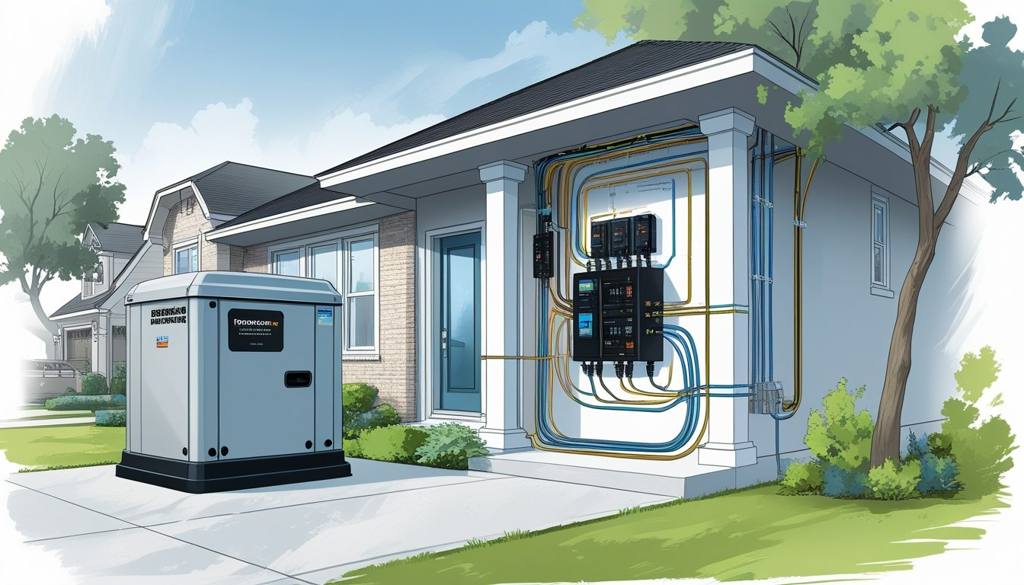
Standby generators are permanent, connect to your natural gas or propane, and kick on automatically during outages. They power your whole house or certain circuits and sit on a concrete pad outside.
Portable generators are smaller gasoline-powered units you move and start by hand. They need a manual transfer method or a rated inlet box and switch to feed home circuits safely.
Inverter generators run quieter and use less fuel. They’re good for essentials and sensitive electronics, but usually can’t handle whole-home backup.
Match generator size (kW rating) to your needs. Bigger isn’t always better—sometimes you just want the fridge, pumps, and medical gear running. A licensed electrician can size things up, figure out fuel, and help with placement.
Common Wiring Methods
A manual transfer switch lets you pick which circuits get power. You flip the switch when the generator runs, and it keeps generator power off the grid. It’s a simple solution for smaller setups.
An automatic transfer switch (ATS) senses outages and shifts power to the standby generator without you lifting a finger. ATS setups need direct wiring to the main panel and a dedicated breaker for isolation.
Generator interlock kits are another route. They link the generator breaker and main breaker so you can’t turn both on at once. They’re affordable but must match your panel and local code.
All these setups need proper grounding, right-sized wires, and labeled circuits. Never backfeed through a regular outlet—it’s dangerous and not legal.
Local Electrical Codes for Generator Wiring
Round Rock sticks to Texas and National Electrical Code rules, plus a few local tweaks. You need a licensed electrician for permits, inspections, and installs.
Key things: install a transfer switch or approved interlock to prevent backfeed; ground everything right; size wires and breakers to your generator’s rating; keep clearances for fuel and exhaust.
Permits usually mean load calculations, site plans, and placement details. Inspectors check transfer switching, grounding, and any panel changes.
Magnify Electric’s licensed electricians handle permits, load math, panel upgrades, and safe hookups. We’re local, and we work on both residential and commercial jobs—from outlets to surge protection, EV charging, smart systems, and emergency support.
Key Steps for Backup Generator Wiring
You’ll want a game plan, the right parts, and a safe transfer switch to hook up a backup generator. Follow code, choose proper wire and breakers, and use a transfer switch that matches your needs.
Site Assessment and Planning
Decide where the generator goes. Set it on a level, non-combustible pad at least 5 feet from doors and windows—safety and code. Make sure there’s room for delivery and service, and plan for fuel if you use propane or natural gas.
Measure the distance to the electrical panel. Longer runs need thicker wire to avoid voltage drop. Figure out conduit paths and where the transfer switch will mount. Always mark underground utilities before digging.
List which circuits you want backed up—think HVAC, fridge, sump pump, and key outlets. This list drives generator size and switch type. Get your permits and schedule an inspection with the city or your local office.
Choosing the Correct Wiring Materials
Match wire gauge to the generator’s output and amperage. For example, a 30-amp feed usually takes 10 AWG copper, while 50-amp needs 6 AWG. Copper is better than aluminum for most homes—less corrosion and fewer terminal headaches.
Pick conduit (PVC or EMT) rated for outdoors and run it from the generator to the switch. Use THHN/THWN wires in conduit—durable and code-approved. Size your ground wire to match the breaker and install a grounding electrode if your generator needs one.
Choose breakers and lugs that fit your panel and switch. Only buy parts listed for generator use and labeled for your amperage. Keep wire runs short, secure cables with approved connectors, and seal outdoor holes against water.
Installing the Transfer Switch
Decide on a manual or automatic transfer switch that matches your generator and load. ATS starts the generator and switches loads when power fails. Manual switches mean you start the generator and flip the switch yourself.
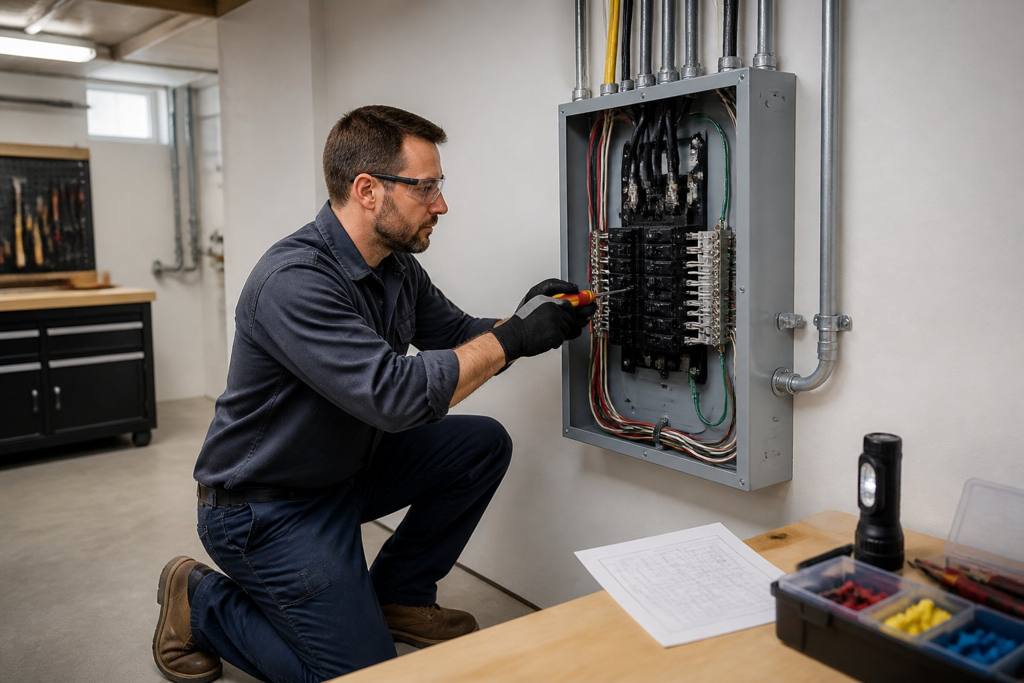
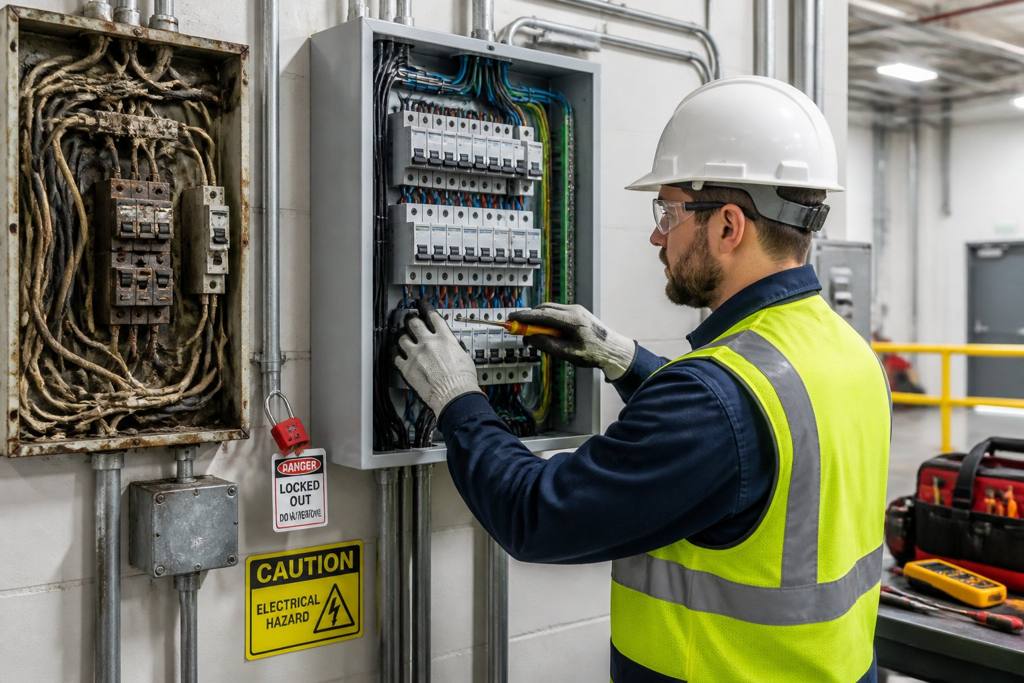
Mount the transfer switch next to the main panel or as code says. Shut off power, lock out the main breaker, and double-check circuits are dead before you start. Connect labeled wires from the panel to the transfer switch as shown in the wiring diagram.
Run wires from the generator’s output to the switch input. Bond neutrals and grounds per switch type and local code—some switches need neutral isolation. Test the system: start the generator, check voltage and frequency, and make sure each backed-up circuit powers up. If you get stuck, Magnify Electric’s licensed electricians handle install, permits, and testing all over Round Rock and Central Texas.
Safety Guidelines for Generator Wiring
You need solid rules to keep your home and crew safe when wiring a backup generator. The big ones: stop power from flowing back into the grid, and make sure your grounding system meets code.
Preventing Backfeeding
Backfeeding happens when your generator pushes power into utility lines. That’s a huge risk for line workers and can fry equipment. Use an approved transfer switch or interlock kit installed by a licensed electrician to block backfeed. A manual transfer switch physically separates your home circuits from the grid. An ATS does this on its own during an outage.
Never plug a generator into a wall outlet. Use cords and transfer gear rated for your generator’s wattage. Label the transfer switch and main breaker clearly. If you want pro, code-compliant work in Round Rock or nearby, have Magnify Electric install and test your equipment.
Proper Grounding Techniques
Grounding keeps you safe from shock and stabilizes voltage. Connect the generator frame to a ground rod or to your home’s grounding system per the National Electrical Code (NEC). Use copper ground wires of the right size and secure all connections with listed clamps and corrosion-resistant hardware.
Check local code for rod depth and spacing, and test grounding resistance after install. For standby units, tie grounding to the main service panel. Magnify Electric’s licensed electricians handle grounding, surge protection, wiring, and safety work for homes and businesses around Round Rock.
Hiring Professional Electricians in Round Rock
The right electrician means safe wiring, code compliance, and a generator that works when you need it. Here’s what to look for in a contractor and what the installation process actually looks like.
Selecting a Qualified Contractor
Find a licensed electrician with local experience in Round Rock, Cedar Park, Georgetown, and nearby. Check their state license, and ask for proof of insurance and bonding before they touch anything.
Look at references and recent job photos for generator hookups. Ask if they’ve worked with transfer switches, panel upgrades, whole-home surge protectors, or smart-home systems like Lutron and EV chargers.
Get a written estimate with parts, labor, permits, and a timeline. Ask about permits and inspections. Pick someone who offers clear warranty terms and backs it up in writing.
Magnify Electric’s licensed electricians handle everything from portable generator hookups to panel upgrades. We serve Round Rock and Central Texas, and we’re ready for emergencies and safety inspections.
What to Expect During the Installation
The electrician starts with a site visit to check fuel type, generator size, and the best spot for the unit. They’ll look at clearances, noise, and access for service.
They’ll do a load assessment to size the generator and figure out if you need a whole-house or manual transfer switch. Circuits get marked to prioritize critical loads like HVAC, fridges, and medical gear.
Install steps: mount the generator, run conduit and wiring, install the transfer switch at your main panel, and ground everything to code. The crew coordinates permits and inspections with the city.
After wiring, they’ll test the system under load, show you how to start and maintain the generator, and leave you with documentation. Ask for a maintenance plan and an emergency number for quick repairs or seasonal checkups.
Generator Maintenance and Troubleshooting
Keep your generator ready for outages by checking fuel, oil, battery, and connections regularly. Watch for frayed wires, loose terminals, and odd noises that mean it’s time to act.
Regular Inspection Tips
Check fuel level and quality monthly if the unit sits unused. Old fuel causes starting trouble—use fresh gas or a stabilizer, and run the generator under load for 15–30 minutes to keep things moving.
Inspect oil and coolant on the same schedule. Change oil as the manufacturer says or after about 100 hours. Replace air and fuel filters when dirty or at service intervals.
Test the battery and charging system every few months. Clean terminals and tighten clamps. Verify transfer switch operation by running a manual test; watch for slow response or failure.
Look over wiring and ground connections during each check. Tighten screws, watch for corrosion, rodent damage, or heat discoloration. Keep the area clean and store fuel safely.
Identifying Wiring Issues
If circuits won’t work when the generator runs, start at the transfer switch and main panel. Check for loose lugs, melted insulation, or tripped breakers—these point to overload or bad connections.
Use a multimeter to check voltage at the generator, transfer switch, and panel circuits. You should see 120/240V split-phase. Drops or imbalance mean a bad neutral or grounding issue.
Listen for arcing, buzzing, or flickering—those usually mean a loose connection or damaged wire. If you smell burning plastic or overheated insulation, shut the generator down right away.
For tough wiring problems, call Magnify Electric. Our licensed electricians handle wiring, transfer switches, panel upgrades, portable generator hookups, and full troubleshooting across Central Texas. We’re here for everything from simple swaps to emergency electrical support.
Enhancing Power Reliability for Round Rock Homes
You know how it goes—storms roll through Round Rock, and suddenly the power’s out. If you’ve got a backup generator wired up right, you can keep your lights, fridge, and those must-have circuits running even when the grid fails.
At Magnify Electric, our licensed electricians set up transfer switches and portable generator hookups. That way, you avoid dangerous backfeed, keep utility crews safe, and pick which circuits stay on during an outage.
Looking to protect your appliances or cut down on outage headaches? Check out whole-home surge protectors or panel upgrades. Our crew tackles wiring fixes, outlet repairs, and troubleshooting to bring your power back fast.
We handle EV charging outlets, wall-mounted chargers, automated lighting, Lutron smart systems, and both recessed and outdoor lighting. Upgrades like these make your home safer, easier to use, and often more energy-efficient.
For safety, we install smoke and CO₂ detectors and offer emergency electrical help. Our services cover everything from swapping out fixtures to full electrical upgrades, commercial lighting, and safety inspections.
You’ll spot our technicians all over Central Texas—Spicewood, Austin, Bee Cave, Lakeway, Dripping Springs, Georgetown, Leander, Round Rock, Kyle, Cedar Park, Liberty Hill, Westlake, The Hills, Briarcliff, Horseshoe Bay, Sunset Valley, Hutto, and nearby spots. Go with Magnify Electric for expert help with everything from TV installs to panel repairs and full-home electrical work.
Frequently Asked Questions
Got questions about installation steps, local costs, permits, or when to hire an electrician? We’ve got clear guidance on safe wiring for portable or solar setups and what you can expect from a pro in Round Rock.
What are the steps to properly install a backup generator in Round Rock?
First, turn off the main breaker. Make sure the transfer switch fits your generator and load. Set the generator on a level pad, drive a grounding rod if needed, and run the right gauge cable to the transfer switch.
A licensed electrician wires the transfer switch to your main panel and labels the circuits you want powered. After that, test the generator under load. If you’ve got a standby model, check the automatic start.
Magnify Electric’s licensed electricians handle site prep, transfer switch installation, fuel or gas hookups, panel connections, and safety tests. We serve Round Rock and the surrounding Central Texas area.
How much can I expect to pay for a backup generator installation by a local Round Rock electrician?
Prices swing a lot, depending on generator size, type, and how tricky the install is. A basic portable hookup with a manual transfer switch usually costs less. Whole-house standby generators with automatic transfer switches, gas hookups, and a concrete pad? Those add up.
Labor, permits, and panel upgrades factor in, too. Ask for a written estimate that spells out parts, labor, permits, and any panel work—always better to know what you’re getting into.
Do I need to hire a professional electrician to install a Generac generator at my home?
Absolutely. For Generac standby systems—or anything tied to your home’s panel—you need a licensed electrician. Bad wiring can backfeed to the grid or cause damage and safety risks.
A pro pulls permits, installs the transfer switch, connects to natural gas or propane if needed, grounds the unit, and runs safety tests. Magnify Electric sends licensed pros for residential and commercial generator installs and other upgrades.
What are the legal requirements for installing a portable generator in Round Rock?
You’ve got to follow the National Electrical Code and the local building and fire rules that Round Rock and Travis/Williamson County enforce. You need an approved transfer switch or interlock to block backfeed to utility lines.
Keep portable generators outside, away from windows and vents, and ground them if the code says so. Always pull permits when hooking into household wiring, and book inspections to make sure you’re up to code.
Can I connect a solar generator to my home's wiring without a professional?
Honestly, you really shouldn’t hook up a solar generator to your home wiring unless you’re using a device that’s specifically made for simple plug-in use—and even then, only if your local codes say it’s okay. Anything that’s hardwired or tied into your main panel needs a transfer switch or some sort of approved interconnection, and it’s got to follow code.
A licensed electrician can figure out what size system you need, set up the right disconnects, and make sure everything’s actually safe. Magnify Electric works with smart home setups, surge protectors, EV chargers, and panel upgrades, so folks around Round Rock and Central Texas can get solar or backup power wired up safely and up to code.