
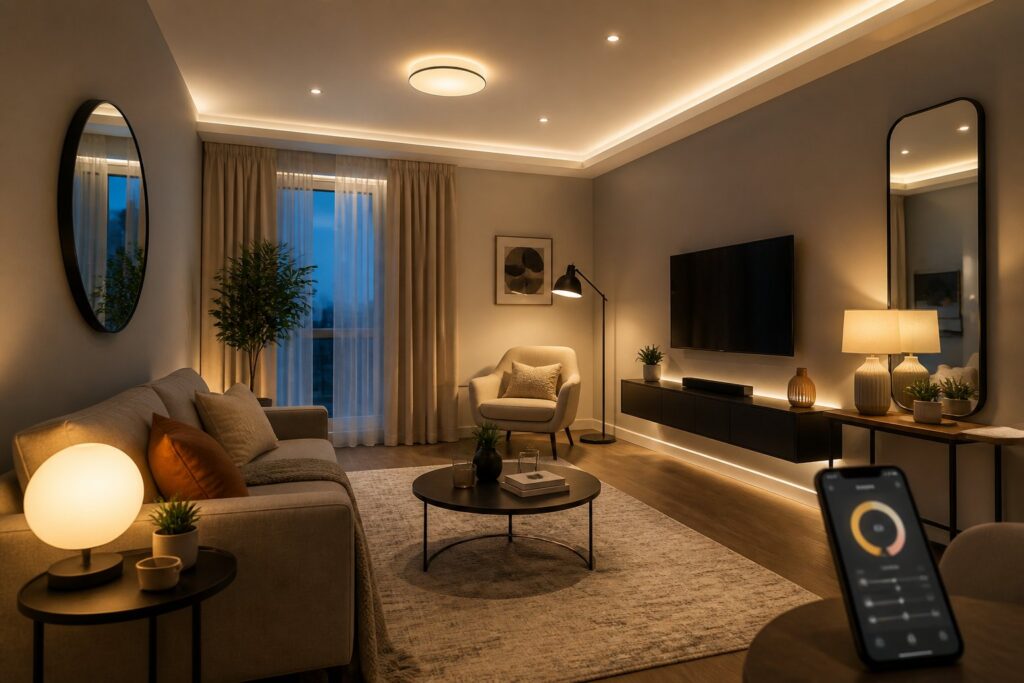
If you’re trying to fix lighting in a dark room, don’t just swap out the bulb and call it a day. Sometimes the problem is where the fixtures are, or maybe the walls and furniture soak up all the light. Heavy colors, bad layering, or just not enough stuff bouncing light around—these things matter.
You can make a dark room feel brighter with a few smart changes, and you don’t always need a huge remodel to see results. Figure out what’s really making the room gloomy, then pick the right mix of fixtures, bulbs, finishes, and controls for how you actually use the space.
Identify Why the Space Feels Gloomy
A dark room usually has more than one thing going on. When you spot what’s blocking light, you can actually fix it—rather than just throwing more wattage at the problem.
Natural Light Limitations
Some rooms barely get any sun. North-facing windows, big trees outside, deep porches, or buildings right next door can all block daylight. Even at noon, it might feel like dusk in there. Small windows, tinted glass, or just dirty panes make it worse.
Poor Fixture Placement
One lonely ceiling light in the center? That’s a classic culprit. Corners stay shadowy, and you can’t see what you’re doing in reading nooks, on counters, or just walking around.
Honestly, I see a lot of rooms that feel dark because the main light is either too high, too far away, or just pointed somewhere useless.
Dark Surfaces and Visual Weight
Dark paint, thick curtains, heavy rugs, and big, dark furniture just drink up light. Even if you technically have enough lumens, the room still feels small and moody.
If your eyes keep landing on dark stuff, the whole space comes across as gloomy. Lighter walls and fabrics can turn that around fast.
Choose Better Layers of Light
Layered lighting gives you more options than just cranking up one fixture. You want light for the whole room, light for tasks, and something to add a bit of shape and depth.
Ambient Lighting Basics
Ambient light is your foundation—it lets you walk around without bumping into things. Usually that’s ceiling fixtures, recessed lights, or a big floor lamp.
Aim for even coverage. If the corners still look gloomy when the main light’s on, you probably need another source.
Task Lighting for Daily Use
Task lighting is for stuff you actually do—reading, cooking, working, getting ready. Think desk lamps, under-cabinet lights, bedside lamps, focused wall lights.
Put task lights close to where you need them so they cut down on shadows. This is honestly one of the fastest ways to make a dark room more practical.
Accent Lighting for Depth
Accent lighting gives the room some contrast so it doesn’t feel flat. Use it on shelves, artwork, cool architecture, or textured walls.
A few small lights in the right spots can totally change the vibe, way more than just swapping the ceiling bulb for something brighter. LED strips, picture lights, and tiny uplights work great.
Use Bulbs and Color Temperature Strategically
The wrong bulb can make a dark room feel even worse. Brightness, color tone, and color quality all play a part in how open or closed-in a space feels.
Brightness by Lumens
Check lumens, not watts, when you’re choosing bulbs. Dark spaces usually need more output than a standard decorative bulb gives, especially if there aren’t any windows.
Higher-lumen LEDs can make a room feel cleaner and brighter without burning through energy. If it still feels dim after a bulb swap, maybe the fixture isn’t spreading light well enough.
Warm vs Cool White
Warm white light feels cozy and works in bedrooms and living rooms. Cool or neutral white tends to make dark rooms feel more open, especially in kitchens, offices, and hallways.
Somewhere around 3,500K to 4,500K usually lands in the sweet spot—bright, but not harsh. If the room already has a lot of warm finishes, try going a bit cooler, but don’t overdo it with the blue.
Color Rendering for a Cleaner Look
Color rendering matters for how true everything looks. Higher CRI bulbs make walls, floors, skin, and decor look cleaner and more natural.
If CRI is low, the room can seem dull even with bright bulbs. In dark rooms, better color rendering can make a surprisingly big difference.
Make the Room Reflect More Light
Light bounces. The more it can bounce, the brighter the room feels. Paint, mirrors, glass, and window treatments all play a role here.
Wall and Ceiling Paint Choices
Light walls and ceilings reflect way more light than dark ones. Soft white, cream, pale gray, or light beige usually work if you want things brighter but not hospital-sterile.
A lighter ceiling especially helps—it kind of lifts the whole space. If you’re repainting, go as light as you can manage up top.
Mirrors and Reflective Finishes
Mirrors are like light amplifiers. Put them where they’ll catch daylight or face a lamp, not just reflect a dark corner.
A little gloss, glass, polished metal, or lacquer can help too. Just don’t go overboard or the place will feel like a showroom.
Window Treatments That Preserve Daylight
Heavy drapes block a lot of light, sometimes more than you’d think. Sheer curtains, light-filtering shades, and panels that stay out of the way let in way more daylight.
If you need privacy, look for treatments that diffuse rather than block. And honestly, clean those windows—makes more difference than most people realize.
Upgrade Fixtures and Wiring When Needed
Sometimes, decor tweaks aren’t enough. If the wiring or fixtures are limited, a better layout can make the room way more usable.
Recessed Lighting and Ceiling Fixtures
Recessed lights can spread light more evenly if you get the spacing right. Ceiling fixtures that throw light outward—not just straight down—help avoid that harsh spotlight effect.
If you’re replacing a fixture, pick one that sends light in more than one direction. The room will feel more balanced.
Dimmers, Switches, and Smart Controls
Dimmers let you tune the light for time of day or mood. Smart controls go further, with presets for evening, work, cleaning—whatever.
In rentals or busy homes, plug-in smart bulbs and switches are a quick fix without tearing up walls.
When Electrical Capacity Needs Attention
If lights flicker, breakers trip, or new fixtures overload the circuit, it’s probably time to call an electrician. That’s also when you should check the panel, wiring, and make sure fixtures are safe.
Magnify Electric helps homeowners and businesses with lighting installs, panel upgrades, repairs, wiring, troubleshooting, smart home setups, and emergency support, plus ceiling fans, switches, recessed lighting, outdoor lighting, TV installs, outlets, surge protectors, generator hookups, smoke and CO₂ detectors, EV charging, and more.
Plan Room-by-Room Solutions for Homes and Businesses
Every room has its own lighting personality. Living rooms want comfort, kitchens need visibility, and commercial spaces have to be safe and clear.
Living Areas and Bedrooms
Living rooms usually work best with layered lamps, a soft ceiling light, and a couple accent lights. Bedrooms feel better with bedside task lighting and a dimmable overhead.
If you want a room to feel both calm and bright, keep the main light soft, then add focused lights where you actually read or relax.
Kitchens, Offices, and Workspaces
Kitchens need bright, even light on counters, sinks, and prep zones. Under-cabinet lighting is super useful because it kills shadows right where you work.
Offices and workspaces thrive on neutral white light and solid task coverage. Watch out for screen glare—sometimes where you put the light matters more than how bright it is.
Commercial Interiors and Safety Priorities
In businesses, dim lighting can mess with comfort, safety, and just make things look dingy. Entryways, aisles, stairs, and work areas all need clear, reliable lighting.
For businesses around Spicewood, Austin, Bee Cave, Lakeway, Dripping Springs, Georgetown, Leander, Round Rock, Kyle, Cedar Park, Liberty Hill, Westlake, The Hills, Briarcliff, Horseshoe Bay, Sunset Valley, Hutto, and the rest of Central Texas, Magnify Electric offers licensed electricians for everything from quick fixture swaps to full upgrades, safety inspections, and smart home systems.
Frequently Asked Questions
What are the easiest ways to make a room feel brighter when it gets very little sunlight?
Start with higher-lumen bulbs, lighter wall paint, and more than one light source. Mirrors and sheer curtains help too, since they bounce around whatever daylight you get.
How can I brighten a room that has no windows at all?
Go for layered artificial lighting and try to spread it evenly. Ceiling lights, floor lamps, task lights, and accent lights together do a lot more than just one super-bright fixture.
Which types of light bulbs and color temperatures work best for dark spaces?
Neutral white or cool white bulbs usually work best, especially for rooms you use a lot. Something in the 3,500K to 4,500K range often makes a dark room feel fresher.
What are some budget-friendly DIY ideas to boost brightness in a dim room?
Swap in brighter LED bulbs, add a plug-in lamp, hang a mirror, and ditch heavy curtains for sheers. Painting the walls a lighter color is a big, cheap win.
How can I improve lighting in a rental without making permanent changes?
Try plug-in wall sconces, floor lamps, table lamps, smart bulbs, and removable mirrors. Lighter lampshades and window coverings that let in more daylight help a lot too.
Where should I place lamps and fixtures to reduce shadows and light the room evenly?
Try mixing up your light sources—put some higher up, some lower, and don’t just cram them all in one area. Corners often get neglected, so toss a lamp there. Reading nooks and work spots? They’ll thank you for their own dedicated light. It’s all about keeping the whole room feeling balanced, not just one bright patch.