
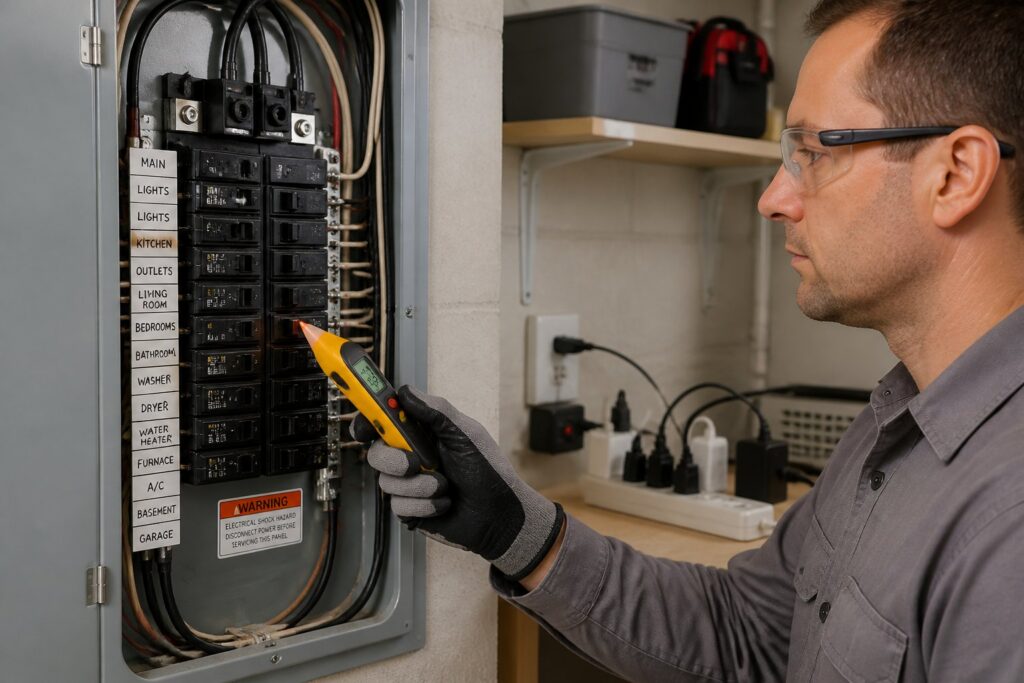
If you’re wondering how to spot overloaded electrical panels, start by watching for shifts in how your home or building handles power. Frequent breaker trips, flickering lights, panel covers that feel warm, odd burning smells, and buzzing sounds all hint that your system might be carrying too much load.
Catching the warning signs early can help you protect your wiring, appliances, and, honestly, your peace of mind. Overloaded panels don’t usually fail in one big flash. More often, you’ll notice small hiccups at first—little annoyances that get more obvious as you add devices, appliances, or make upgrades.
A panel can look perfectly fine from the outside and still be under a lot of strain. That’s why it’s worth paying attention to performance, visible wear, and the kind of equipment you’re using.
What an Electrical Panel Does
Your electrical panel acts as the main control hub for all the power in your property. It routes electricity to each circuit and keeps things in check by shutting off breakers if a circuit draws too much current.
When the panel’s sized right, every circuit gets its fair share. But once demand rises too high, the system starts to show stress.
How Circuits Share Available Capacity
Each breaker protects a specific circuit—maybe lights, outlets, or a big appliance. Since the panel has a fixed total capacity, all those circuits have to share it.
If too many devices run at once, one circuit might pull more than it should, or the whole load might get too high for the panel. That’s when breakers start tripping and wires can heat up.
Why Overload Problems Develop Over Time
Overload issues usually creep in slowly. A home that once had enough power can start to lag after adding new appliances, electronics, an EV charger, or more lights.
Older panels weren’t built for today’s heavier electrical use. As your needs grow, the panel might still look “okay” but quietly fall behind what your property actually demands.
Common Warning Signs Inside a Home or Building
Some of the easiest clues pop up in day-to-day life. If you keep noticing the same electrical problems, your panel might be working overtime.
These signs could point to a circuit issue, a panel issue, or both. The pattern matters, especially if you spot several symptoms at once.
Frequent Breaker Trips
A breaker tripping once is normal—it’s just doing its job. But a breaker that trips over and over often means the circuit’s overloaded or there’s a problem with the panel or wiring.
If trips happen during normal appliance use, take note. That’s a classic hint the circuit is carrying more than it safely should.
Flickering or Dimming Lights
Lights that flicker or dim when you turn on a microwave, vacuum, or heater usually mean the electrical load’s too high. It could also suggest loose connections or weak wiring.
If the same lights dim every time a certain device starts, that’s a pretty clear clue. Your system’s struggling to share power.
Warm Covers, Burning Odors, or Buzzing Sounds
A panel cover that feels warm? That’s a red flag. Heat can signal overload, loose parts, or bad connections inside the panel.
A burning smell or buzzing sound is never good news. Those can mean parts are overheating or arcing, which brings real fire risk.
Visual Clues Around the Panel
Just looking at the panel area can reveal a lot. Even if you don’t open it up, the outside can say plenty about its condition.
Look for signs the system is crowded, damaged, or just plain messy. These clues often show up when a panel’s overloaded.
Crowded Breaker Layouts
If the panel looks jam-packed with hardly any room left, it might be near its limit. A crowded layout also makes it harder to add new circuits safely.
Panels with no open spaces need a closer look before you add any new appliance or upgrade.
Rust, Scorch Marks, or Corrosion
Rust and corrosion spell trouble—usually from moisture or age. Scorch marks are even worse and can mean overheating or past electrical problems.
Any weird discoloration around breakers, the cover, or the wall nearby? Don’t ignore it. That’s not normal.
Improper Labels and Double-Tapped Connections
If circuit labels are missing or wrong, it’s tough to know what each breaker controls. That slows down troubleshooting and can hide overload issues.
Double-tapped connections—two wires on a breaker not designed for that—are another sign of an unsafe setup. An electrician should check those out ASAP.
High-Demand Equipment That Can Strain Capacity
Some equipment draws way more power than basic lights or outlets. Add these to an older system and overload symptoms can pop up fast.
The risk jumps when several high-demand devices run at once. That’s why load planning is a big deal before you install new gear.
EV Chargers and Major Appliances
EV chargers put a steady, heavy load on your system. So do electric dryers, ovens, water heaters, and similar appliances.
If your panel’s already nearly full, adding one of these can push it past safe limits. Dedicated circuits and proper sizing really matter here.
HVAC Systems, Workshops, and Commercial Loads
Heating and cooling equipment can cause big power swings when starting up. That alone can expose a weak panel in homes or businesses.
Workshops, tool rooms, kitchens, retail spaces—these places often run several high-load devices at once. That kind of use can bring overload issues to the surface quickly.
Smart Home Additions and New Lighting Circuits
Smart home gadgets, more lighting, new outlets—they might seem minor alone, but together, they can raise demand more than you’d guess.
A system that handled the basics years ago might need extra circuits or a panel upgrade after these changes.
When to Schedule a Professional Evaluation
If you keep seeing the same warning signs, it’s time to get a licensed electrician to check out your panel and circuits. A pro can figure out if it’s overload, damage, old equipment, or a messy combo.
Sometimes a quick repair fixes a small issue. Bigger load problems might mean new circuits, repairs, or even a full upgrade.
Signs That Need Immediate Attention
Call for help right away if you notice burning smells, sparking, smoke, a hot panel cover, or breakers tripping repeatedly for no clear reason. These are signs of real danger.
If you lose power in several rooms or the panel makes loud buzzing noises, don’t wait. Shut off what you can safely and get the panel checked.
What an Electrician Will Check
An electrician checks breaker size, circuit load, wire condition, panel age, and how your place uses power. They’ll also test for loose connections, heat, and possible code issues.
Usually, they’ll compare your current demand to the panel’s capacity. That shows if the system’s just overloaded or if it’s time for an upgrade.
When an Upgrade or Repair Makes More Sense
A repair might do the trick if the problem’s just one circuit, breaker, or a loose connection. But if your property’s outgrown the panel, an upgrade makes more sense.
If you keep adding equipment, remodeling, or expanding your power needs, a bigger panel or extra circuits will give you safer, longer-term capacity.
Choosing Reliable Help for Safer Power
When you need panel work, you want licensed electricians who know both homes and businesses. The right team can troubleshoot, repair, inspect, or upgrade without guesswork.
Magnify Electric offers expert service for residential and commercial work—panel upgrades and repairs, EV charging outlets, smart home systems, lighting installs, outlets, wiring, troubleshooting, and emergency support.
Why Licensed Residential and Commercial Expertise Matters
Licensed electricians understand load sizing, code, and how to spot hidden risks. That’s huge for panel safety, smart home upgrades, commercial lighting, and everything from ceiling fans to surge protectors.
Magnify Electric covers automated lighting, switches, Lutron smart systems, outdoor and recessed lighting, TV installs, generator hookups, smoke and CO₂ detectors, and general electrical improvements for homes and businesses.
Service Coverage Across Central Texas
You’ll want a team that knows your area. Magnify Electric serves Spicewood, Austin, Bee Cave, Lakeway, Dripping Springs, Georgetown, Leander, Round Rock, Kyle, Cedar Park, Liberty Hill, Westlake, The Hills, Briarcliff, Horseshoe Bay, Sunset Valley, Hutto, and other Central Texas spots.
That local reach helps, whether you need a simple fixture swap, a full upgrade, a safety inspection, commercial lighting, or fast help with an urgent issue.
Frequently Asked Questions
What are the most common warning signs that a home’s electrical panel is under too much load?
You’ll usually see frequent breaker trips, flickering or dimming lights, warm panel covers, burning smells, and buzzing sounds. If you spot more than one, your panel’s likely overloaded—not just dealing with a fluke.
Why do my circuit breakers keep tripping, and what does that usually indicate?
Breakers trip to protect your wiring if a circuit pulls too much power. If it keeps happening, the circuit might be overloaded, the breaker could be faulty, or the wiring might need some attention.
How can I tell if my lights flickering or dimming are related to the panel rather than a single appliance?
If lights change when several things run at once, your panel might be struggling. If it happens across different rooms or circuits, that’s an even stronger sign it’s a panel or system-wide issue.
Is it dangerous if the panel feels warm, smells like burning, or makes buzzing sounds?
Absolutely. Those are serious warning signs. Heat, burning smells, and buzzing can mean overheating, loose connections, or arcing—all of which can lead to a fire risk.
What household upgrades or new appliances typically push an older electrical system past its capacity?
EV chargers, HVAC equipment, electric dryers, ovens, water heaters, workshops, more lighting, and smart home devices can all raise demand. Older panels often can’t keep up when several of these run at the same time.
When should I call a licensed electrician to evaluate my panel and circuits for safety?
If your panel keeps tripping, feels warm, smells odd, makes strange noises, or you spot scorch marks or any damage nearby, it’s time to call an electrician. Planning to add new equipment or start a remodel? Honestly, it’s just smart to get the system checked before you ramp up the electrical load.