
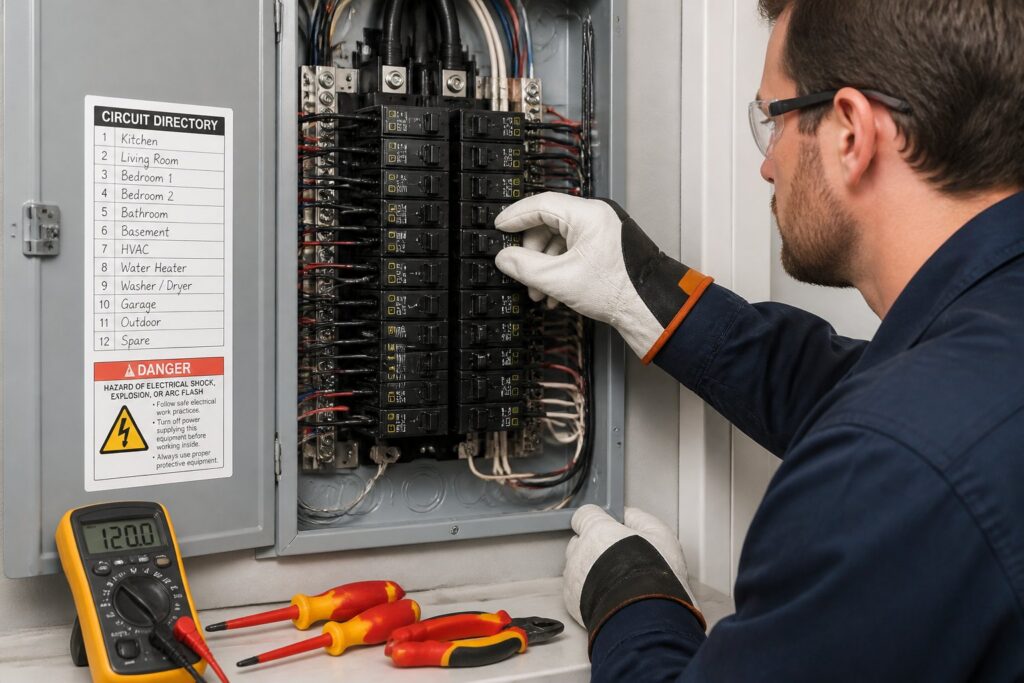
Heavy electrical use can put real stress on a home or business circuit, especially when too many high-wattage devices run at the same time. If you’re curious about how to reduce strain on high-demand circuits, the safest way is to balance the load, keep an eye out for warning signs, and make smart upgrades before things get dicey.
This stuff really matters day-to-day. A kitchen full of gadgets, an HVAC system roaring to life during a blazing Texas afternoon, or a workshop buzzing with power tools—these can push a circuit way closer to its limit than you’d think. It’s not just about avoiding tripped breakers; it’s about keeping your wiring, outlets, and gear safe and working, period.
If you’re seeing flickering lights, warm outlets, or breakers that keep tripping, don’t shrug it off. A licensed electrician can help you figure out what’s going on and suggest the right fix, whether you’re in Austin, Round Rock, Cedar Park, Lakeway, Dripping Springs, or anywhere else in Central Texas.
What Overloaded Circuits Actually Mean
An overloaded circuit happens when you ask for more power than the circuit was built to handle. Most home circuits are set up with clear limits, so when you plug too much into one line, the wires end up carrying more current than they should.
How High-Demand Loads Build Up Over Time
High-demand loads can sneak up on you. Maybe you start with a few gadgets, then add a microwave, coffee maker, and toaster on the same kitchen circuit, or a printer and space heater in a home office. At first, everything seems fine—until suddenly, during peak use, it’s just too much.
Why Repeated Tripping Should Not Be Ignored
A breaker that trips once is probably just doing its job. But if it keeps happening, something’s wrong—maybe too much load, a weak breaker, or a wiring issue. Resetting it over and over without fixing the real problem can create heat, wear things out, and raise the risk of damage.
Common Sources Of Heavy Electrical Load
Some equipment draws more power than you might expect, and those demands add up fast. In homes and businesses, appliances that heat, cool, or run motors for a long time usually cause the biggest strain.
Kitchen And Laundry Equipment
Kitchen appliances can use a lot of power in a hurry. Microwaves, air fryers, coffee makers, dishwashers, washers, and dryers all put a heavy load on circuits—especially if you run several at once. I’ve seen plenty of overloaded kitchen circuits where countertop appliances share outlets never meant for that much action.
HVAC Systems And Space Heaters
Heating and cooling gear puts steady pressure on your system. Space heaters are classic overload culprits—they draw a ton of power from one outlet and shouldn’t share a circuit with anything else heavy. In Texas, a cooling system running full blast on a hot day can push old wiring to the edge.
EV Chargers, Generators, And Workshop Tools
EV chargers, generator hookups, and power tools all need some planning. These can easily outpace what a standard circuit can take, especially in garages and workshops where you keep adding stuff. Dedicated circuits make all the difference between smooth sailing and constant shutdowns.
Commercial Equipment And Lighting Loads
Offices, shops, retail spaces—they pile up computers, printers, lighting, point-of-sale gear, and racks of equipment on single circuits. Even just lighting can become a headache if too many fixtures run off too few circuits. A smart load layout keeps things running steady and avoids those annoying trips.
Warning Signs Inside The Home Or Building
Your electrical system usually drops hints before things get serious. Pay attention to heat, weird noises, flickering lights, or any breaker that acts up more than once.
Warm Outlets, Buzzing Sounds, And Burning Odors
If outlets, switches, or breaker covers feel warm, that’s not normal. Buzzing or burning smells? That’s a big red flag—could mean loose connections, damaged wires, or a circuit that’s just carrying too much. Don’t wait around if you notice these.
Dimming Lights And Inconsistent Performance
When lights dim as an appliance starts, or devices lose power during normal use, your circuit’s probably overloaded. Fans slowing down, electronics glitching, appliances not running at full strength—those are all signs the voltage is dropping when demand spikes.
Breaker Trips Versus Hidden Wiring Stress
A tripped breaker is obvious, but hidden wiring stress? Not so much. Wires in your walls can overheat long before anything shuts off, especially if connections are loose or old. That’s why you shouldn’t just reset a breaker and move on if it keeps tripping.
Practical Ways To Lower Demand
You don’t always need a big overhaul—just use power more wisely and spread out heavy loads. Small tweaks in how you plug in and run stuff can really help.
Redistributing Appliances Across Dedicated Circuits
Move high-demand appliances so they don’t share a circuit. Keep space heaters, microwaves, coffee makers, and similar gear apart, and don’t stack heavy tools on one outlet strip. Dedicated circuits are the way to go for anything that runs a lot or draws serious power.
Upgrading To Energy-Efficient Lighting And Devices
LED lighting uses less power and puts out less heat. Swapping out old appliances and office gear for efficient models also eases the load. It’s good for reliability and can chip away at your energy bill, too.
Using Smart Home Controls To Manage Peak Usage
Smart thermostats, timers, and automated switches help you avoid running everything at once. If you’ve got EV chargers or smart home setups, scheduling charging or heating cycles can take the edge off peak demand. For businesses, timed controls can keep unnecessary loads in check during busy hours.
Replacing Worn Outlets, Switches, And Connections
Loose or worn outlets and switches make overload problems worse. If a plug wiggles, a switch crackles, or an outlet looks rough, it’s probably time to swap it out. Clean, tight connections let the circuit carry power more safely.
When Electrical Upgrades Make Sense
Sometimes, moving appliances around just isn’t enough. If your needs keep growing, upgrades can protect your system and make everyday use less stressful.
Panel Upgrades For Growing Power Needs
A panel upgrade is worth it when your home or building just can’t keep up anymore. This happens a lot in older Central Texas places that now have more appliances, EV chargers, smart gadgets, or extra living space. A stronger panel keeps up with modern demand and eases the strain.
Dedicated Lines For Large Appliances And Equipment
Big appliances work best on their own circuits—think HVAC units, ovens, dryers, EV chargers, sump pumps, and workshop tools. Dedicated lines cut down on overload risk and help each device do its job right.
Whole-Home Surge Protection And System Reliability
Surge protection won’t stop overloads, but it shields sensitive electronics and boosts system reliability. It’s a smart move if you’ve got pricey appliances, a home office, or lots of connected devices. Many folks add surge protection alongside other electrical maintenance just to keep things running smoother.
Wiring Improvements In Older Central Texas Properties
Older homes in Westlake, Bee Cave, Lakeway, Georgetown, Liberty Hill—lots of them still have wiring that just wasn’t built for today’s demands. If you’re dealing with frequent breaker trips, warm circuits, or outdated outlets, wiring improvements might be what you need long-term. It also makes things safer if you’re remodeling or adding new equipment.
When To Call A Licensed Electrician
Some problems you can handle by changing your habits, but others need a pro. If you’re not sure whether it’s just an overload or something deeper, better to call a licensed electrician.
Troubleshooting Persistent Load Problems
If a breaker keeps tripping even after you lighten the load, the problem could be deeper than just where things are plugged in. An electrician can check breakers, wiring, outlets, and all your gear to find the real culprit. That’s the safest way to protect your place and avoid repeat headaches.
Safety Inspections Before Remodels Or New Installations
Before you remodel a kitchen, install an EV charger, set up a generator, or upgrade a workshop, a safety inspection can save you a lot of trouble. It’ll tell you if your system can handle the new load. Lots of folks also do this before adding ceiling fans, new lights, or smart home controls.
Service Considerations For Austin-Area Homes And Businesses
Homes and businesses around Austin are always adding new systems and devices, which means changing power needs. A licensed electrician can help plan upgrades for places in Round Rock, Cedar Park, Hutto, Kyle, Leander, and nearby. If you want safe, practical advice, a local pro can help you pick the right fix without the guesswork.
Frequently Asked Questions
What are the most common signs that a circuit is overloaded?
Frequent breaker trips, dimming lights, warm outlets, buzzing, and burning smells are big clues. You might also notice devices shutting off or acting weird when several high-wattage things run at once.
How can I figure out which appliances are drawing the most power on one circuit?
Try unplugging or turning off everything on that circuit, then add devices back one at a time. Heaters, microwaves, dryers, EV chargers, and power tools usually pull the most juice.
What are some easy ways to redistribute loads across different circuits in my home?
Move countertop appliances to different outlets, don’t run space heaters with other heavy gear, and spread office equipment across rooms if you can. If trips keep happening, you might need a pro to check your circuit layout.
When should I add a dedicated circuit for a high-power appliance?
Add one if an appliance runs a lot, draws a ton of power, or trips the breaker when used with other stuff. That’s typical for EV chargers, HVAC gear, fridges, washers, dryers, and workshop tools.
What should I do right away if a breaker keeps tripping under heavy use?
Turn off and unplug everything on that circuit. Let the breaker cool, then reset it once. If it trips again, stop using that circuit and call a licensed electrician to check it out.
How can I prevent overloads when running multiple high-wattage devices at the same time?
Try not to run all your high-wattage devices at once—if you can help it, space them out across different circuits. Honestly, smart timers and energy-efficient gear make a real difference, and setting up dedicated lines for the big stuff can take a lot of pressure off your system. Sometimes, just a bit of planning saves you a headache later.