
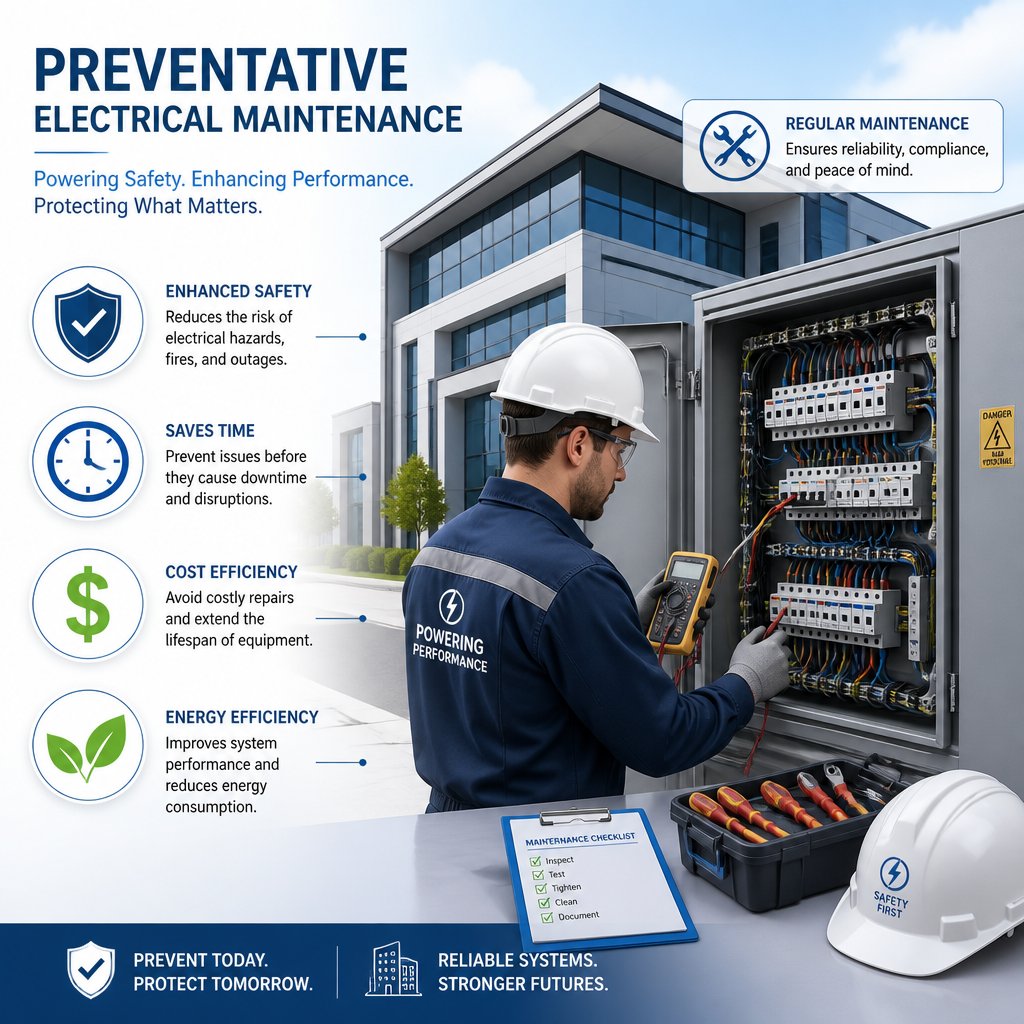
There’s almost nothing more annoying than an electrical problem popping up when you least need it. A breaker trips during a hectic workday, lights start flickering right before guests arrive, or maybe you notice a warm outlet out of nowhere. By scheduling preventative electrical maintenance, you can spot those problems early and keep your property safer, steadier, and just… less stressful to manage.
Regular maintenance helps you reduce fire risks, avoid surprise outages, control repair costs, and stretch the life of the electrical parts you use every day. That matters whether you own a home in Austin, manage a retail space in Georgetown, or run a growing property in Cedar Park, Round Rock, or anywhere else in Central Texas.
You really want to deal with electrical issues before they turn into interruptions, not after. A licensed electrician can inspect your system, spot wear, and suggest practical upgrades that fit your property. If you’re hoping for peace of mind and a safer setup, don’t wait until the warning signs get too obvious.
Why Proactive Electrical Care Matters
Taking care of your electrical system before something fails just makes sense. It keeps everything working the way it should and helps protect the people, equipment, and property that rely on steady power.
Reducing Everyday Safety Risks
Loose connections, worn wiring, overloaded circuits, and old panels can all turn into hazards if ignored. During routine visits, an electrician can catch heat buildup, damaged insulation, and other problems before they become dangerous.
Preventing Unexpected Power Disruptions
A system that’s checked regularly is less likely to surprise you with outages, tripped breakers, or dead outlets. That’s important in homes, offices, shops, and rentals where even a short power loss can throw off your whole day.
Protecting Long-Term Property Value
Electrical problems can quietly chip away at your property’s value and appeal. Keeping panels, wiring, lighting, and safety devices in shape means easier inspections, fewer emergencies, and better long-term performance.
How Routine Service Saves Money Over Time
Preventative care usually costs less than emergency work because you have time to tackle small issues before they get out of hand. It also helps your system run more efficiently, which can cut down on waste and ease the strain on key components.
Catching Small Issues Before They Become Major Repairs
A loose wire, worn breaker, or weak outlet might seem minor. But left alone, those issues can turn into bigger, pricier repairs—especially if damage spreads to other parts of the system.
Improving Energy Efficiency Across Key Systems
If your system’s overloaded or outdated, it’ll waste energy. Routine service helps cut that waste and can boost performance for lighting, appliances, office gear, and other connected devices.
Extending The Life Of Panels, Wiring, And Devices
Electrical parts last longer when someone inspects, cleans, tightens, and corrects them before wear gets bad. That can help you put off expensive replacements for panels, devices, and other equipment that still have life left.
Areas Commonly Checked During Maintenance Visits
A solid maintenance visit covers both safety and performance. The electrician should review the main control points of your system, plus the devices and equipment you use most.
Panels, breakers, and wiring paths usually show the first signs of trouble. The visit might also include lighting, outlets, backup power, and newer stuff like smart controls or EV chargers.
Panels, Breakers, And Circuit Load Review
Your panel is the heart of the system, so it needs close attention. An electrician will check breaker condition, test circuit load, and look for signs your panel is nearing capacity.
Outlets, Switches, And Wiring Connections
Loose outlets, broken switches, and weak wiring connections can cause flickering, heat, or on-and-off power. These parts get checked closely because they’re used daily and wear out faster than you’d think.
Lighting, Ceiling Fans, And Energy-Efficient Upgrades
Lighting and ceiling fans can buzz, act uneven, or blow bulbs often as they age. Maintenance is a good time to ask about energy-saving lighting upgrades that might improve comfort and lower utility bills.
Surge Protection, Generators, And Backup Readiness
Surge protection and backup systems need regular checks, especially in places hit by storms. An electrician can confirm your surge protection works and that generator hookups or backup gear are ready to go.
Smart Home Systems And EV Charger Performance
Smart home controls and EV chargers make life easier, but they need proper electrical support. Routine service helps make sure these devices are installed safely and run within your system’s capacity.
Key Advantages For Homes And Commercial Buildings
Homes and commercial spaces have different electrical needs, but both benefit from the same basic idea: take care of the system before it lets you down. Regular service helps you avoid headaches, keep people safe, and keep things running.
Residential Peace Of Mind For Busy Households
At home, electrical issues can disrupt your routine fast. Preventative maintenance lets you feel more confident about the safety of your panel, outlets, lighting, and appliances—especially in older homes or ones with recent upgrades.
Operational Reliability For Offices And Retail Spaces
Commercial spaces need steady power for lighting, registers, computers, displays, and security equipment. Preventative service helps cut downtime and keeps daily operations smoother for offices, shops, and service businesses around Central Texas.
Support For Growth, Renovations, And Added Electrical Demand
If you’re adding a room, upgrading a kitchen, installing new equipment, or planning for an EV charger, your electrical system has to keep up. Maintenance helps you spot if panel upgrades, wiring work, or load balancing should happen before adding new demand.
Warning Signs That Maintenance Should Not Be Delayed
Some signs really shouldn’t wait. If you notice changes in how your electrical system behaves, it’s smart to schedule a professional visit before things get worse.
Frequent Breaker Trips Or Flickering Lights
Breakers that trip a lot are usually trying to tell you something’s off. Flickering lights can mean loose wiring, overloaded circuits, or a failing connection that needs a look.
Warm Outlets, Burning Smells, Or Buzzing Sounds
Don’t ignore these signs. Warm outlets, burning smells, or buzzing from a panel or switch can mean unsafe conditions that need immediate troubleshooting.
Aging Equipment And Recent Equipment Additions
Older panels, outlets, and wiring are more likely to need service—especially if you’ve had renovations or added appliances. If you’ve installed new HVAC, a hot tub, a server, or an EV charger, your system might need a check to handle the extra load.
Choosing The Right Schedule And Service Partner
The best maintenance schedule depends on your system’s age, how much power you use, and what kind of property you have. A good service partner will help pick the right timing and explain your system’s needs in plain language.
When Annual Or Seasonal Inspections Make Sense
Many properties do fine with yearly inspections, while others need checks before heavy-use seasons or after big changes. Homes with older wiring, busy commercial buildings, and properties with backup systems usually need more frequent attention.
Why Local Experience In Central Texas Conditions Helps
Central Texas heat, storms, and fast growth all impact electrical systems. An electrician who works in Austin, Spicewood, Bee Cave, Lakeway, Dripping Springs, Georgetown, Leander, Round Rock, Cedar Park, Kyle, Liberty Hill, Westlake, Hutto, and nearby areas will know the local wear patterns that matter.
When To Call A Licensed Electrician Instead Of Troubleshooting Alone
If you’re seeing repeated breaker trips, heat, sparks, burning smells, or partial power loss, stop and call a licensed electrician. Trying to troubleshoot live electrical problems yourself can make things worse and increase the safety risk.
Frequently Asked Questions
How can regular electrical maintenance help prevent unexpected outages?
Regular maintenance lets you catch loose connections, overloaded circuits, failing breakers, and worn parts before they fail. That means you’re less likely to lose power suddenly at home or work.
What safety risks can preventative electrical maintenance reduce in a home or business?
It can lower risks of overheating, electrical fires, shocks, and damaged equipment. Maintenance also helps spot unsafe wiring, bad outlets, and panels under too much stress.
How does planned electrical maintenance affect long-term repair costs?
Planned service usually costs less than emergency repairs since it tackles small problems early. It can also delay bigger replacements by keeping panels, wiring, and devices in better shape for longer.
How often should electrical systems be inspected and maintained to stay reliable?
A lot of properties do well with annual inspections, but some need seasonal checks or more frequent service. Older homes, busy commercial spaces, and places with high electrical demand might need a tighter schedule.
What signs suggest it’s time to schedule an electrical preventative maintenance visit?
Frequent breaker trips, flickering lights, warm outlets, burning smells, buzzing, and aging equipment are all strong indicators. If you’ve added new equipment or upgraded part of the property, it’s a smart move to book a maintenance visit.
How can preventative maintenance improve energy efficiency and equipment performance?
Preventative maintenance cuts down on wasted power from overloaded or struggling circuits. When you keep up with it, lighting, panels, and devices tend to run more smoothly. That usually means the whole system works better—and honestly, who doesn’t want fewer headaches with their equipment?