
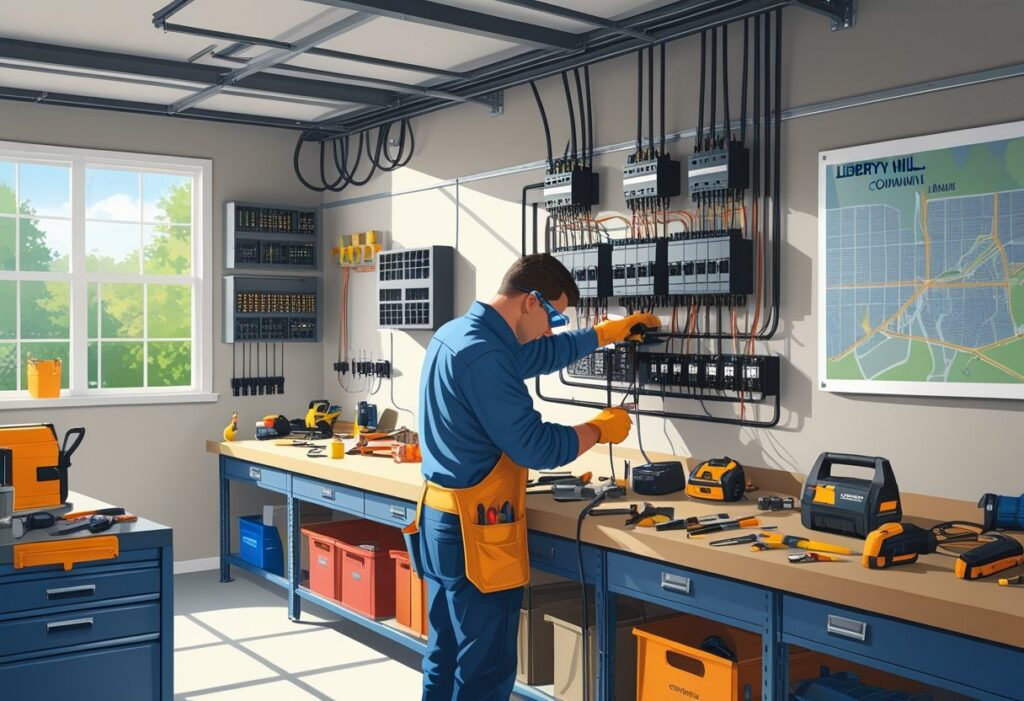
Dreaming of a garage workshop in Liberty Hill that just works—no flickering lights, no tripped breakers, and no sketchy outlets? You’ll need a solid plan for wiring, outlets, lighting, EV charging, and safety so your space fits your projects and your peace of mind.
Let’s walk through what matters most for code, safety, and a few smart upgrades that’ll save you headaches down the road. Magnify Electric’s licensed electricians handle everything from Lutron smart lighting to EV charging stations, panel upgrades, surge protectors, and generator hookups for homes and businesses across Liberty Hill and Central Texas.
If you’d rather call in the pros, Magnify Electric offers expert service for fixture swaps, commercial lighting, safety inspections, wiring, troubleshooting, and even emergency help. Let’s get into planning, safety, and when it’s time to pick up the phone.
Overview of Garage Workshop Electrical Wiring in Liberty Hill
You want an electrical setup that’s safe, up to code, and ready for tools, EV chargers, and whatever else you dream up. Here’s what you should know about rules, wiring basics, and permits in Liberty Hill.
Local Electrical Codes and Regulations
Liberty Hill follows the Texas-adopted National Electrical Code (NEC), enforced by Williamson County and local inspectors. You’ll need dedicated circuits for heavy tools, GFCI protection for garage outlets, and tamper-resistant receptacles where they’re required. Always match your wire gauge to your breaker size—12‑gauge for 20‑amp, 10‑gauge for 30‑amp, you get the idea.
If you’re running power outdoors or to a detached garage, you’ll probably need conduit, weatherproof boxes, and the right burial depth for underground wires. Lighting and switch locations have to meet clearance and access rules. Inspectors check grounding, panel labeling, and safe panel load distribution.
Typical Garage Electrical Needs
Most garage workshops end up with a mix of 20‑amp circuits for tools and lighting, plus dedicated lines for big stuff like table saws, air compressors, or an EV charger. You’ll probably want a 240V circuit if you’re charging an EV or running a welder. Outlets along benches and walls—spaced by code—make life easier and cut down on extension cords.
Lighting? Go for bright LEDs, some recessed task lights, maybe even smart controls if you’re into that. Surge protection and smoke/CO₂ detectors are smart safety moves. If you’re adding an EV charger, expect a site check to see if your panel can handle it.
Permits and Professional Requirements
You’ll need to pull permits for new circuits, panel upgrades, and any significant rewiring in Liberty Hill. Inspectors will look for safe grounding, right breaker sizes, and GFCI/AFCI protection. Skipping permits can mean fines or headaches if you sell your home.
Licensed electricians know the local codes and can save you a lot of trouble. Magnify Electric’s team handles everything from panel upgrades and EV charger installs to smart home systems and safety inspections throughout Liberty Hill and nearby areas. They’re also ready for quick fixes or bigger commercial jobs.
Planning Your Garage Workshop Wiring
Think about what you actually use in your garage. How much power do your tools need? Where do you want outlets and switches? Are you adding heavy tools, lighting, EV charging, or smart gadgets now—or later?
Assessing Power Requirements
Start with a list of every tool and device you’ll use—motors, compressors, welders, chargers, lights, heaters. Check the amps or watts on each nameplate. Add up your running and peak loads to get your total demand.
Some tools—big motors, EV chargers—need dedicated circuits, usually 20–50 amps. Smaller tools and outlets can share 15–20 amp circuits, just use GFCI where needed.
Take a look at your main panel. If you’re getting close to maxing it out, plan on a panel upgrade or a subpanel for the garage. It’s not worth risking tripped breakers or sketchy wiring.
Designing a Safe Electrical Layout
Put outlets where you’ll use them: every 6–12 feet along benches and walls, near tool stations, at doorways. Mount them at a comfortable height. If you’ve got overhead tools or a hoist, add ceiling outlets.
Use dedicated circuits for big stationary tools. Keep portable tool circuits separate. Install GFCI outlets in damp spots and AFCI protection for branch circuits if code calls for it. Label every circuit in the panel so you’re not guessing later.
Run wiring in conduit or protected cable rated for garages. Use metal or PVC conduit when it’ll be exposed, and follow code for buried or exterior runs. Keep lighting circuits separate from heavy tool circuits—no one wants the lights to dim every time a saw kicks on.
Future-Proofing for Expansion
Leave yourself some room to grow. Add empty conduit runs and leave space in the panel for a couple more breakers. Install a 240V-ready spot if you might want an EV charger or bigger machines someday.
If you’re thinking about upgrades, go with larger gauge feeders and a subpanel. Smart controls—like Lutron systems or automated lighting—are easier to add now than later, but you can always integrate them with minimal rewiring.
For major changes, just call the pros. Magnify Electric’s team handles panel upgrades, EV charger installs, smart wiring, surge protectors, and more in Liberty Hill and across Central Texas. They cover everything from simple fixture swaps to full electrical upgrades and emergency calls.
Essential Electrical Components for Garage Workshops
A garage needs a solid electrical backbone to run tools, power EV chargers, and keep work areas bright. Focus on panel capacity, proper wiring, and the right outlets and lighting to avoid overloads or unsafe connections.
Service Panels and Subpanels
A properly sized main service panel keeps your home safe. Check your panel’s rating—100A, 200A, whatever—to see if it can handle extra circuits for a workshop or EV charger. If the main panel’s full or far from the garage, a subpanel in the garage usually makes life easier.
A subpanel gives you dedicated breakers for 240V gear, multiple 20A tool circuits, and lighting without stressing the main. Use the right feeder cable and install a main breaker or disconnect as code requires. Grounding and bonding have to meet NEC rules to keep things safe.
Magnify Electric handles panel upgrades, subpanel installs, and troubleshooting for homes and businesses in Liberty Hill and Central Texas. They’ll let you know if you need a panel upgrade, new breakers, or just better load balance.
Wiring Methods and Materials
Pick wiring that matches your load and environment. Use 12-gauge copper for 20A circuits, 10-gauge for 30A or heavy tools. For 240V equipment and EV chargers, 6- or 8-gauge copper might be needed, depending on amperage. Run cable in conduit when it’s exposed or could get banged up.
GFCI protection is a must for garage outlets. Some branch circuits may need AFCI protection by code. Label every circuit in the panel. Use junction boxes for splices and secure all connections with proper connectors and covers to dodge overheating and corrosion.
Magnify Electric’s team does wiring, outlet installs, surge protectors, and generator hookups. You get code-compliant work with the right wire, conduit, grounding, and protection for safe, durable circuits.
Outlet and Lighting Options
Plan outlets around your tool layout, benches, and charging spots. Install multiple 20A circuits for power tools and dedicate a 240V circuit for big machines or an EV charger. Space general outlets every 6–12 feet along walls by benches—no one likes hunting for an extension cord.
Use GFCI outlets anywhere that might get wet. Go for bright, efficient LED shop lights and task lighting over benches. Recessed lighting works for general illumination, and automated or Lutron smart controls let you set timers or motion-activated lights. Hardwired smoke and CO₂ detectors are a must for safety.
Magnify Electric installs EV charging outlets, recessed and outdoor lighting, smart home lighting, and all kinds of outlets. Their electricians handle everything from fixture swaps to full lighting and charging installs across Central Texas.
Safety Best Practices for Electrical Wiring
Stick to the basics: proper grounding, right breaker sizing, and fire-safe installs. Bring in licensed electricians for big jobs and test everything before you plug in.
Grounding and GFCI Protection
Grounding gives stray current a safe path to earth. Make sure metal boxes, conduit, and appliance chassis connect to the grounding conductor. Use 8 AWG or larger grounding conductors where code says so; follow local rules for branch-circuit grounding sizes.
Install GFCI outlets in the garage, unfinished basements, and anywhere near water. Test GFCIs monthly with the test button. In workshops with metal benches and tools, use GFCI-protected circuits at outlets and on the subpanel feeding the area.
Bond gas lines and water pipes if code requires it, so you don’t get weird voltage differences. Label all GFCI and grounded circuits in the panel for easy troubleshooting.
Overcurrent Protection and Breakers
Pick breakers that match your conductor and load. Pair 12 AWG with 20A breakers, and don’t oversize or you risk overheating and fires.
Keep your heavy loads—EV chargers, air compressors, welders—on their own circuits. If you use multi-wire branch circuits, share neutrals only with a tied double-pole breaker for safety.
AFCIs are worth considering for workshop circuits; they help stop fires from arcing faults and are required by code in lots of places. Keep your panel directory up to date and swap out worn breakers. Don’t mess with tape or makeshift fixes.
Fire Safety Considerations
Keep wiring neat and protected. Run cables inside conduit or behind walls when possible. Staple cable within the right distance of boxes and avoid sharp bends that can damage insulation.
Use proper box fill and cover plates—no exposed conductors. Install smoke and CO₂ detectors on always-on circuits or with battery backup. Put detectors near the workshop entry and any nearby sleeping areas.
Don’t overload outlets or extension cords. Use properly rated cords for tools and power strips with built-in overcurrent protection. For bigger projects, get a licensed electrician for a safety inspection and consider whole-home surge protection to keep your gear safe.
Magnify Electric’s licensed electricians handle installs, inspections, and repairs for homes and businesses in Liberty Hill and Central Texas. You can call on them for panel upgrades, EV chargers, smart wiring, outdoor lighting, surge protectors, generator hookups, and emergencies.
Energy Efficiency and Smart Technology Upgrades
You can cut energy costs and make your garage workshop easier to use by choosing efficient lighting and smart controls. Go for durable LED fixtures, motion sensors, and automation that suit your habits and the tools you actually use.
LED Lighting Solutions
Switching to LED fixtures gives you brighter, more focused light with less energy use. Go for a 4000K to 5000K color temperature if you want true color rendering while working on paint, wiring, or any detailed projects.
Try layering your lighting: overhead LED shop lights for general coverage, adjustable task lights over benches, and under-cabinet strips for tool racks. High CRI (90+) fixtures help colors look right and make flaws easier to spot. If your garage gets dirty or damp, make sure you’re picking moisture- and dust-rated fixtures.
LEDs last longer than fluorescents, so you won’t be swapping bulbs as often. With good placement, you’ll cut down on shadows and improve safety around power tools and workbenches.
Smart Controls and Automation
Add smart switches, dimmers, and occupancy sensors for convenience and energy savings. Set up motion sensors to kick lights on when you walk in and off after a set time, so you’re not leaving them on by mistake.
If you want scene control and schedules, Lutron smart home systems or similar platforms work well. Tie smart controls into a dedicated circuit for big tools, or hook them up to outlets for charging bench tools or an EV charger. Timers on heaters and fans make sure they only run when you need them.
Whole-home surge protectors, smoke and CO₂ detectors, and automated safety alerts help protect your equipment and prevent loss. Magnify Electric’s licensed electricians handle installations, wiring, panel upgrades, and smart home integrations across Liberty Hill and Central Texas, from Austin to Marble Falls and nearby areas. We offer expert residential and commercial work, emergency support, and full-service upgrades.
Professional vs. DIY Electrical Wiring in Liberty Hill
It’s important to know when you need a licensed electrician and what qualifications they should have. This can help you avoid safety risks, failed inspections, and surprise costs.
When to Hire a Licensed Electrician
If your garage workshop needs a new dedicated circuit, panel upgrade, or EV charger, you’ll want a licensed electrician. These jobs involve working at the panel, calculating load, and installing breakers—mistakes here can cause shocks or fires.
Call a pro for generator hookups, whole-home surge protectors, or when you’re adding multiple outlets and lights that need new wiring. Also, if your project needs to pass a permit inspection, or you notice flickering lights, burning smells, or breakers that keep tripping, don’t mess around—bring in an expert.
Magnify Electric’s licensed electricians handle emergency repairs, full upgrades, and smart home integrations. They follow local code, pull permits as needed, and provide documented inspections so your work meets Liberty Hill rules and insurance requirements.
Required Qualifications for Electrical Work
Licensed electricians need a state or local license plus hours of apprenticeship and ongoing education. In Texas, that usually means a journeyman or master electrician credential, along with training on code updates and safety standards.
Permitted work needs the right permits and inspections. A licensed electrician knows which permits you’ll need for outlet additions, garage subpanels, or EV charger installs. They carry liability insurance and can give you receipts or inspection reports for resale or insurance claims.
Magnify Electric employs licensed, insured electricians who have experience with residential and commercial projects across Central Texas. Our team installs lighting, panels, EV chargers, smart home systems, and more, always keeping safety and code compliance in mind.
Maintenance and Troubleshooting Tips
Keep your garage wiring safe with regular visual checks and by testing key devices. Fix loose connections, replace worn outlets or cords, and call a pro if something keeps tripping or feels hot.
Routine Inspection Guidelines
Check outlets, switches, and cords every 3–6 months. Look for cracked plates, loose screws, frayed cords, or any discoloration around receptacles. Test GFCI and AFCI devices by pressing their test buttons—they should trip and reset smoothly.
If your tools act up, measure outlet voltage with a multimeter. After turning the breaker off, tighten any loose terminal screws in junction boxes. Keep a clear path to the main panel and label circuits so you can isolate problems quickly.
Schedule a yearly safety inspection with a licensed electrician. At Magnify Electric, we handle everything from outlet services and panel upgrades to surge protectors and portable generator hookups, so you’ll get thorough checks and fixes.
Signs of Electrical Problems
Watch out for warm or hot outlets, burning smells, or visible sparking—shut these down and call for repair right away. Breakers that trip over and over, flickering lights when you start a tool, or buzzing from fixtures can mean overloaded circuits or failing breakers.
If lights dim or fluctuate, especially when a motor starts up, that could mean voltage drop or undersized wiring for heavy equipment. Loose or gritty-feeling switches often mean worn contacts. Smoke or CO₂ alarm faults need quick attention; we install and test smoke and CO₂ detectors during service calls.
See any of these signs? Turn off the affected circuit and get help. Magnify Electric serves Liberty Hill and nearby Central Texas areas with emergency support, smart home integrations, EV chargers, commercial lighting, and troubleshooting for homes and businesses.
Resources and Support for Liberty Hill Homeowners
If you need help with garage workshop wiring, start with a licensed electrician. Magnify Electric’s team offers expert service for homeowners and businesses, from simple outlet installs to full panel upgrades and emergency repairs.
You can call to schedule a safety inspection or book work for automated lighting, ceiling fans, light switches, recessed lighting, and lighting installations. We also handle Lutron smart home systems, EV charging outlets and wall-mounted chargers, and portable generator hookups.
For safety devices, we install smoke and CO₂ detectors and whole-home surge protectors. For entertainment and workspace needs, we do TV installation, outlet services, and wiring for tools and equipment. Troubleshooting and electrical repair services cover faults, overloaded circuits, and intermittent problems.
Commercial clients get lighting solutions, panel upgrades, and routine maintenance. The team also offers smart home integrations and emergency electrical support when you need fast responses.
Use this quick checklist when you call: 1) Describe the work (outlets, chargers, lighting). 2) Note the panel size and age if you know it. 3) Mention any recent tripping or flickering. 4) Tell us if you need permits or inspections.
We serve Spicewood, Austin, Bee Cave, Lakeway, Dripping Springs, Georgetown, Leander, Round Rock, Kyle, Cedar Park, Liberty Hill, Westlake, The Hills, Briarcliff, Horseshoe Bay, Sunset Valley, Hutto, and nearby Central Texas communities.
Frequently Asked Questions
Here’s where you’ll find info about wiring rules, code checks in Liberty Hill, layout planning, DIY vs pro work, safety steps, and how much amperage your tools might need. We also explain what our licensed electricians can do for homes and businesses in Central Texas.
What are the typical requirements for electrical wiring in a garage workshop?
You need GFCI-protected outlets anywhere water or dampness might show up.
Receptacles along workbench walls should be close enough so no point is more than 6 feet from an outlet. Ceiling fixtures need proper junctions and boxes.
Heavy tools like table saws and air compressors usually get their own dedicated circuits.
Lighting should be bright and even; use dedicated lighting circuits or separate switches for task and general lighting.
How can I ensure my garage workshop wiring is up to code in Liberty Hill?
Check the latest National Electrical Code (NEC) and Liberty Hill’s local amendments.
Pull permits for new circuits or big changes—inspections catch mistakes and keep your property insurance valid.
If you’re not sure, hire a licensed electrician for plan reviews and to pull permits.
Magnify Electric’s licensed electricians can check code compliance, get permits, and do inspections across Liberty Hill and nearby Central Texas communities.
What is the best way to plan the electrical layout for a garage workshop?
Map out tool locations, lighting, and fixed equipment like EV chargers.
Label each tool with its voltage and amp draw to decide what needs a dedicated circuit or a multi-outlet run.
Put outlets at bench height, and add ceiling or wall boxes for overhead lighting.
Think ahead—include spare circuits and conduit runs so upgrades are easier down the road.
Can I do my own electrical work in my garage workshop, or should I hire a professional?
You can handle minor stuff like replacing switches or fixtures if you follow code, shut off power, and know basic wiring.
But if you’re adding circuits, changing panel wiring, or need permits, let a licensed electrician handle it.
Hiring a pro lowers safety risks and avoids inspection headaches.
Magnify Electric takes care of everything from simple fixture swaps to panel upgrades, smart home installs, and emergency support for homes and businesses in Central Texas.
What are the safety considerations when wiring a garage workshop?
Always turn off power at the breaker and double-check with a tester before touching wires.
Use GFCI protection for outlets and AFCI breakers where code requires.
Protect wiring in conduit or raceways anywhere it might get hit by tools or vehicles.
Install smoke and CO₂ detectors and whole-home surge protectors to keep people and equipment safe.
How much amperage do I need for running power tools in my garage workshop?
Small hand tools—think drills and sanders—usually pull somewhere between 5 and 15 amps. You can run a few of these together on a 20-amp circuit without much worry.
Once you start adding bigger stuff like a table saw, dust collector, or maybe a welder, you’re looking at 20 to 30 amps, sometimes even a dedicated 240V line.
Figure out what you’ll actually use at the same time. That’ll help you decide what size panel and breakers make sense. Planning to charge an EV, run a big air compressor, or use a welder? You’ll want to add 240V circuits—and honestly, you might be looking at a panel upgrade, too.