
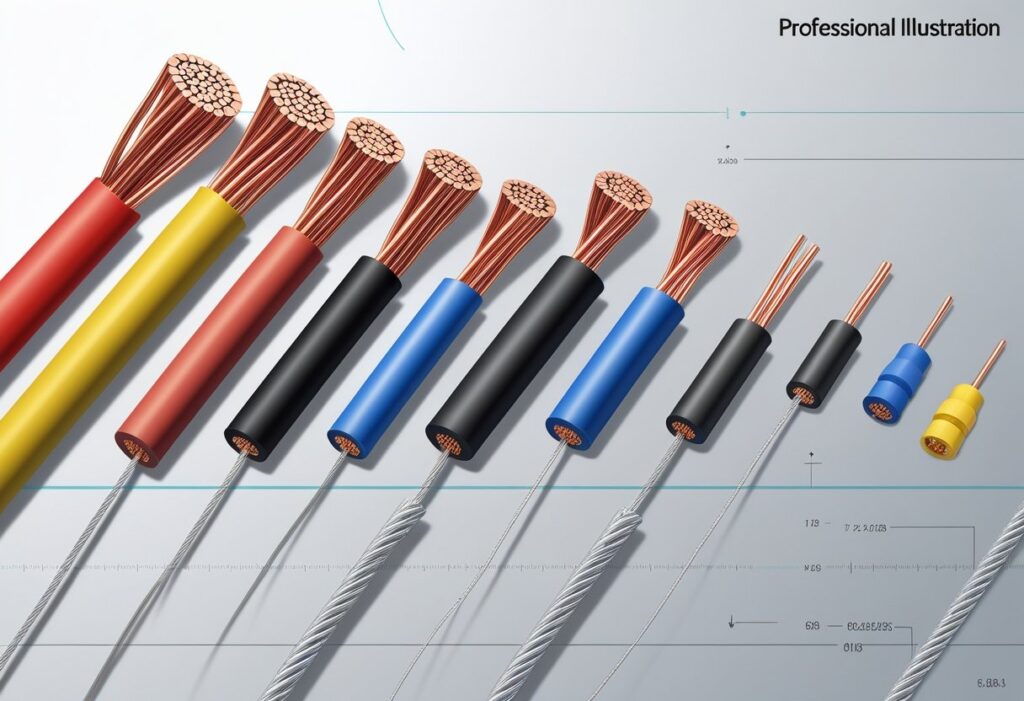
When working with electrical systems, understanding wire gauge compatibility is essential for safety and performance. Choosing the correct wire gauge ensures that your electrical installations run efficiently and reduces the risk of overheating or electrical failure. This guide will break down the key principles of wire gauges, the importance of matching them to your circuit’s amperage, and how you can make informed decisions for your projects.
At Magnify Electric, we know that whether you’re dealing with a simple lighting change or a more complex electrical installation, having the right wire gauge is crucial. Our team of licensed electricians is equipped to assist you with all your electrical needs, ensuring compliance with safety standards. By relying on our expertise, you can navigate the complexities of wire gauge compatibility with ease and confidence.
Understanding the relationship between different wire sizes and their corresponding amperage ratings can save you time and money in the long run. You’ll discover how using the correct gauge can impact the performance of your residential or commercial electrical work. With the right knowledge, you can ensure a safe and efficient electrical system tailored to your needs.
Understanding Wire Gauge Compatibility
Wire gauge compatibility is crucial for ensuring the safety and efficiency of electrical systems. Understanding wire gauge and the American Wire Gauge (AWG) system helps you select the right wires for your projects and prevents potential hazards.
What Is Wire Gauge?
Wire gauge refers to the standardized system for measuring the diameter of electrical wires. The American Wire Gauge (AWG) is one of the most widely used systems in North America.
In this system, a smaller AWG number indicates a thicker wire. For example, 10 AWG wire is thicker than 20 AWG wire. This thickness affects how much electrical current a wire can safely carry.
It’s essential to select the correct gauge to meet your electrical requirements. Using the wrong wire gauge can lead to overheating, equipment damage, or even fire hazards.
How AWG Determines Compatibility
AWG determines compatibility based on wire thickness, which has a direct impact on electrical capacity. Thicker wires (lower AWG numbers) can carry more current without overheating.
For example, a 12 AWG wire can safely handle up to 20 amps, while a 14 AWG wire may only support 15 amps. Understanding this is vital when planning your electrical systems.
When choosing wires, consider both the AWG size and the current requirements of your devices. This practice ensures that your electrical setup operates efficiently and safely.
Wire Size Versus Gauge Wire
Wire size refers to the physical dimensions of the wire, while gauge wire refers specifically to the measurement system used to categorize those dimensions. In essence, gauge designations provide a standard for wire sizes.
Using the correct wire size is essential for achieving optimal performance in both residential and commercial installations. If you install a wire that is too small (higher AWG number), the electrical flow may exceed its capacity, causing potential hazards.
At Magnify Electric, our licensed electricians can guide you in selecting the appropriate wire size for your electrical projects. From simple lighting upgrades to more complex installations, we ensure that your wiring meets all safety standards and operational needs.
Key Factors Influencing Wire Gauge Compatibility
When selecting the appropriate wire gauge, several critical factors must be considered to ensure optimal performance and safety. Key aspects include voltage and amperage requirements, differences in materials like copper and aluminum, and the significance of resistance and diameter.
Voltage and Amperage Requirements
Your project’s voltage and amperage specifications are fundamental in determining the suitable wire gauge. Higher voltage levels typically require thicker wires to minimize resistance and prevent overheating.
Amperage ratings indicate how much current a wire can safely handle. For instance, if your circuit carries a high amperage, a lower gauge number is necessary. Ignoring these ratings can lead to wire failure or even fire hazards. Always consult standard wire gauge charts to find the right gauge for your needs.
Materials: Copper vs. Aluminum
The choice between copper and aluminum wire impacts compatibility concerning wire gauge. Copper wire is known for its excellent conductivity, allowing it to carry more current with less resistance. This efficiency means that a smaller gauge of copper can often be used compared to aluminum for the same application.
Aluminum wire, while generally less expensive, has higher resistance and requires a larger gauge to handle the same current. This difference can affect installation costs and the overall efficiency of electrical systems. If you’re unsure about which material suits your project, consider consulting Magnify Electric for guidance.
Resistance and Diameter Considerations
Resistance is a primary factor when assessing wire gauge compatibility. Thinner wires naturally have higher resistance, which can result in voltage drop across long distances. This can lead to equipment malfunction or inefficiency.
Larger diameter wires have lower resistance and are better suited for lengthy paths or high-power applications. When determining the necessary diameter, consider the total length of the run and the expected load. With the right specifications, you can ensure a safe and efficient electrical system for both residential and commercial applications. Let Magnify Electric assist you with these crucial decisions for your electrical projects.
Practical Applications of Wire Gauge Compatibility
Understanding wire gauge compatibility is crucial for ensuring safety and efficiency in electrical systems. Properly selecting wire gauge can prevent overheating and ensure that your electrical installations function smoothly for a variety of applications.
Selecting the Right Wire for Electrical Currents
When selecting wire for electrical currents, factors such as amperage, voltage, and distance play essential roles. For example, 20 AWG wire is suitable for low-power applications, while 12 AWG wire is typically used for circuits carrying higher loads.
Use the American Wire Gauge (AWG) system to determine the appropriate wire size based on the current it will carry. The chart below illustrates wire sizes and their typical ampacity:
| Wire Gauge | Ampacity (Aluminum) | Ampacity (Copper) |
|---|---|---|
| 14 AWG | 15 Amps | 20 Amps |
| 12 AWG | 20 Amps | 25 Amps |
| 10 AWG | 30 Amps | 35 Amps |
Choosing the right wire ensures optimal performance and reduces the risk of electrical hazards.
Wire Gauge in Receptacles and Ranges
Wire gauge compatibility is vital when connecting receptacles and ranges. For standard outlets in residential applications, 14 AWG is the minimum wire size for 15-amp circuits, while 12 AWG is required for 20-amp receptacles.
Ranges may demand heavier wiring due to higher energy requirements. Most electric ranges require 6 AWG wire for optimal power delivery. If your installations involve multiple appliances on a single circuit, consult a licensed electrician to verify compatibility. Magnify Electric provides expertise in determining the correct wire gauge for all receptacles and appliance needs.
Using Connectors and Circuit Breakers
Select connectors that match the wire gauge you’re using to ensure secure and safe connections. Incompatible connectors can lead to poor conductivity and increased resistance, resulting in overheating.
Circuit breakers should also correspond to the wire gauge used in the circuit. For example, a 15-amp breaker is suitable for 14 AWG wire, while a 20-amp breaker should pair with 12 AWG wire. Ensuring this alignment enhances safety and performance. By relying on a professional team like Magnify Electric, you can obtain tailored solutions for your electrical systems, ensuring robust and compliant setups.
Wire Gauge Types and Compatibility Charts
Understanding wire gauge types is crucial for ensuring safety and efficiency in electrical applications. Different gauges serve various purposes, impacting the current-carrying capacity and overall performance of electrical systems.
Solid Wire and Its Use Cases
Solid wire consists of a single, solid strand of conductor material. It is known for its durability and reliability, making it ideal for indoor applications. You’ll often find solid wire used in residential wiring for lighting and outlets. Its rigidity helps maintain its shape, providing ease in installation.
In contrast, solid wire can be less flexible than stranded wire, which might limit its use in tight spaces or complex layouts. Common gauges for solid wire include 14, 16, and 18 AWG, suitable for different amperage needs.
For extensive electrical work, consider turning to Magnify Electric. Our licensed electricians excel in both residential and commercial projects, guaranteeing that your wiring is safe and compliant.
Understanding the Wire Gauge Chart
The wire gauge chart is an essential tool for determining compatible wire sizes based on amperage demands. This chart indicates how many amps each wire gauge can safely carry. For instance, 4-gauge wire can handle a significant load compared to higher gauges.
Here’s a simplified excerpt from a wire gauge chart:
| Wire Gauge | Amperage Capacity |
|---|---|
| 4 Gauge | 85 Amps |
| 8 Gauge | 50 Amps |
| 12 Gauge | 20 Amps |
Using the correct gauge is vital for preventing overheating and ensuring optimal performance. Keep this chart on hand when selecting wires for your projects.
Comparing 4-Gauge, 8-Gauge, and 12 Gauge Wires
When comparing 4-gauge, 8-gauge, and 12-gauge wires, recognizing their applications and limitations is vital.
- 4-Gauge Wire: This wire can carry up to 85 amps, making it suitable for heavy-duty applications like sub-panel feeds.
- 8-Gauge Wire: With a capacity of 50 amps, this wire works well for large appliances and tools, often used in workshop settings.
- 12-Gauge Wire: Designed for lighter loads, this gauge supports 20 amps and is perfect for standard lighting and outlet circuits.
Choosing the right gauge wire ensures safety and efficiency. Trust Magnify Electric to assist with your electrical needs and ensure that every aspect of your wiring is performed expertly.
Safety and Regulatory Considerations for Wire Gauge Compatibility
When it comes to wire gauge compatibility, safety considerations involve understanding ampacity and amperage ratings, as well as the role of fuses in preventing electrical failures. Ensuring that your electrical system adheres to these factors is crucial for both residential and commercial applications.
Ampacity and Amperage Ratings
Ampacity refers to the maximum amount of electric current a wire can safely carry without overheating. This measurement is critical for preventing fire hazards and equipment damage.
Amperage ratings are linked to the wire gauge, indicating the current a specific wire size can handle. As wire gauge decreases, the diameter increases, allowing for higher amperage.
For example, a 14-gauge wire may support 15 amps, while a 12-gauge wire can accommodate up to 20 amps. It’s important to match your wire’s gauge to the circuit’s requirements. If in doubt, consult with professionals at Magnify Electric for reliable recommendations tailored to your electrical needs.
Fuses and Their Role in Compatibility
Fuses protect electrical systems by breaking the circuit when current exceeds safe levels. Choosing the right fuse for your circuit is essential to ensure that the wire gauge and amperage are compatible.
If a circuit is overloaded, the fuse will blow, preventing damage to wiring and connected devices. Installing a fuse with the correct amperage rating is critical. For example, using a 15-amp fuse on a circuit wired with 14-gauge wire is generally acceptable, but using a higher rating could lead to overheating and potential fire risks.
Magnify Electric’s licensed electricians can help you select the appropriate fuses and ensure your wiring meets safety standards.
Frequently Asked Questions
Understanding wire gauge compatibility is essential for safe and effective electrical projects. This section addresses common questions about selecting the right wire gauge, its ampacity, conversions, and considerations for connecting wires of different sizes.
How do I determine the appropriate wire gauge for specific amperage?
To determine the correct wire gauge, start by referring to a wire gauge chart. This chart correlates wire sizes with their maximum recommended amperage. For typical household circuits, 14-gauge wire is suitable for 15 amps, while 12-gauge is used for 20 amps.
What is the relationship between wire gauge and maximum ampacity?
Wire gauge is inversely related to ampacity; as the gauge number decreases, the wire’s ability to carry current increases. For instance, a 10-gauge wire has a higher ampacity than a 14-gauge wire. Choosing the correct gauge ensures safe operation of the electrical system.
How can I convert wire gauge measurements to millimeters?
You can convert wire gauge measurements to millimeters using a wire gauge conversion chart. For example, 12-gauge wire has a diameter of approximately 2.05 mm. Knowing this conversion can help when selecting wire for specific applications that require metric measurements.
What should be considered when connecting wires of different gauges?
When connecting wires of different gauges, consider the ampacity of the smaller gauge wire. The connection may become a weak point, potentially creating a fire hazard. Additionally, ensure that the connectors used are rated for the smaller gauge to prevent overheating.
Can a number 8 gauge wire safely conduct 50 amps of current?
Yes, a number 8 gauge wire can safely carry up to 50 amps, depending on the installation conditions. It’s vital to factor in ambient temperature and wire insulation type, as these elements can affect performance. Always consult local electrical codes for specific requirements.
What is the process for calculating the necessary wire size for a given electrical load?
To calculate the required wire size, start by determining the total current draw of your electrical load in amps. Use a wire gauge chart to find the corresponding gauge that can handle this current safely. Consider factors such as distance and temperature for more precise calculations.
For all your wire and electrical needs, trust Magnify Electric. Our licensed electricians provide comprehensive residential and commercial services, offering expertise from basic lighting changes to complex electrical installations.