
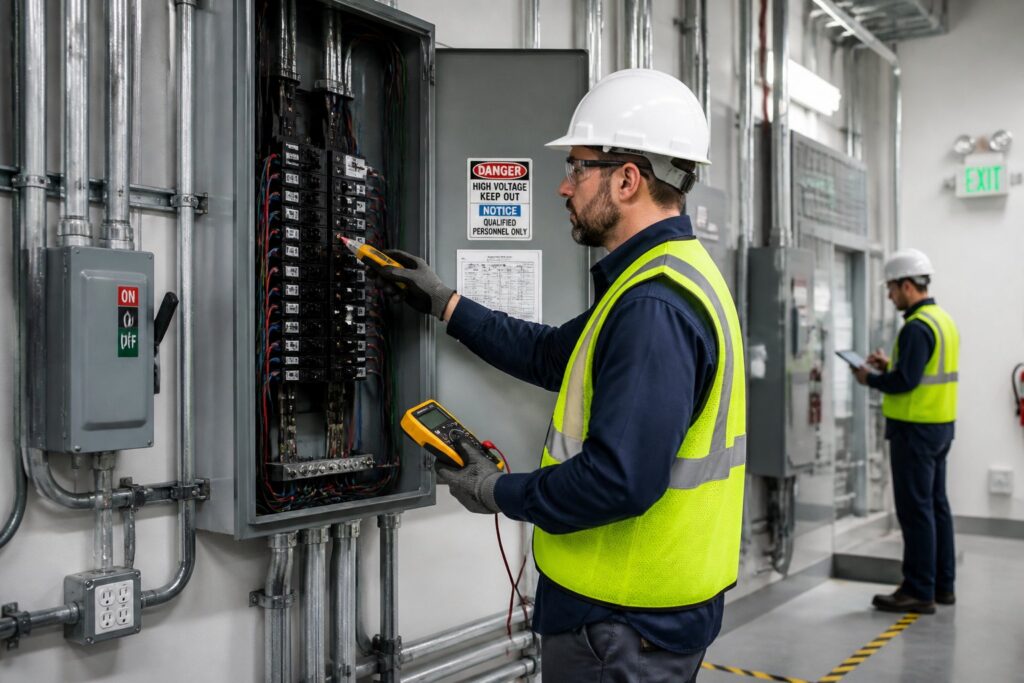
If you’re about to schedule a commercial electrical inspection, it’s worth knowing what actually happens during the process. After all, this isn’t just a box to check off—your safety, uptime, and compliance all ride on it. Usually, a licensed electrician will go through your system, looking for hazards, wear, and code issues. The idea is to spot problems before they can mess with your business.
A thorough inspection tells you which parts of your electrical setup are solid, which ones need work, and what you ought to plan for next. That way, you can actually protect your people, equipment, and the day-to-day grind.
Whether you manage a storefront, office, warehouse, or some quirky mixed-use space, the inspection usually covers the same main areas. Sure, building layouts and power needs differ, but the basics don’t change much. Expect a mix of visual review, testing, and some written findings to help you make decisions that actually make sense.
Purpose of a Commercial Inspection
A commercial electrical inspection isn’t just a quick peek at some outlets and the main panel. It’s a structured look at the parts of your system that keep the lights on and the work flowing.
The big goals? Cut risk, confirm you’re up to code, and make sure your building stays reliable. Doesn’t matter if you’re running a tiny office or a sprawling facility—those things always matter.
Safety Risk Reduction
Spotting risky conditions comes first. A good electrician checks for loose wires, heat damage, worn insulation, and overloaded gear.
Little issues often show up long before anything actually fails. Catching them early can save you from a nasty shutdown later.
Code Compliance Verification
Your system has to meet current safety rules and whatever the local code says. The inspection checks if your panels, wiring, grounding, and devices line up with those requirements.
This comes up during routine maintenance, tenant turnover, or if you’re selling the place. It’s also a good way to avoid failed permits and expensive rework.
Operational Reliability Goals
You need reliable power to keep your building running. Inspections help you spot weak links that could cause tripped breakers, flickering lights, or random equipment shutoffs.
This is even more important if you’ve got sensitive electronics, refrigeration, security systems, or production equipment. A stable setup just makes business smoother.
Core Systems an Electrician Checks
When the electrician starts the inspection, they’ll follow the power trail through your building and focus on the parts that matter most for safety and performance. Usually, they start at the main service and work through branch circuits, devices, and any special systems.
They’ll pay close attention to equipment that handles heavy loads, gets used all the time, or is tied to life-safety. Those are the spots where hidden problems like to lurk.
Service Panels and Circuit Breakers
The main panel is always a first stop. The electrician checks for clear labeling, breaker condition, overheating signs, rust, and any evidence of old repairs.
Breaker size and how crowded the panel is matter too. If things are crammed or messy, that’s a red flag for future headaches.
Wiring Methods and Connections
They’ll check wiring for damage, wear, loose ends, and code issues. This might include looking inside raceways, junction boxes, cable runs, and connection points you probably never think about.
Loose or bad connections can heat up and cause voltage drops. Sometimes, these problems stay hidden until something finally gives.
Lighting, Controls, and Emergency Fixtures
Lighting gets checked for function, condition, and proper operation. That means regular fixtures, switches, sensors, timers, and emergency lighting.
Exit signs and emergency lights are a big deal. If they fail during an outage, that’s a safety and code problem you don’t want.
Common Problems Found on Site
Inspections often dig up issues you’d never notice during a normal workday. Power might seem fine, but the system could still have weak spots.
The usual culprits? Load problems, damaged parts, and grounding concerns. Any of these can mess with safety or reliability.
Overloaded Circuits
Overloaded circuits pop up when too many things pull power from the same branch. That’ll trip breakers, heat up wires, and make equipment act weird.
In commercial spaces, this often happens after new tenants or equipment changes. A circuit that worked last year might not cut it now.
Damaged Components
Broken covers, loose outlets, scorched devices, and damaged conduit show up all the time. Even tiny visible flaws can mean bigger problems inside the system.
Physical damage also ups the risk of shock or arcing. If something looks worn, the electrician will usually check nearby parts too.
Improper Grounding and Bonding
Grounding and bonding keep fault current away from people and equipment. If they’re done wrong, you’ve got a bigger shock risk and more chance of equipment damage.
This is a common find in older buildings or places that have seen a lot of DIY upgrades. You really want this checked carefully.
How the Inspection Process Works
Usually, the process starts with a walk-through, then moves to testing and documenting what’s found. The idea is to be thorough so the electrician can confirm what’s working and what needs fixing.
You’ll get a report that separates urgent hazards from stuff that can wait. That helps you plan repairs and budget without too many surprises.
Visual Assessment
First up is a close look at visible electrical equipment. The electrician checks panels, outlets, fixtures, cords, labels, and any wiring you can actually see for damage or stress.
This step often catches the obvious stuff right away—burn marks, missing covers, bad labeling, that kind of thing.
Targeted Testing
After the visual sweep, they’ll test circuits, breakers, voltage, grounding, and whatever devices seem questionable. The exact tests depend on your building and what the electrician suspects.
Testing shows if a problem is just cosmetic or something that actually affects how things run.
Documentation and Findings
A solid report lists what got checked, what was found, and what you should do next. Photos and priority levels help you sort out what’s urgent and what can wait.
If you’ve ever read a clear service report, you know how handy that is. It takes the guesswork out of what to fix first.
What Happens After the Report
Once you’ve got the report, it’s time to act. What you do next depends on how risky the issues are, code stuff, equipment condition, and how much you rely on those systems.
Use the findings to plan repairs, upgrades, and future maintenance. That’s how you keep the same problems from coming back.
Priority Repairs
Fix the stuff that threatens safety or reliability first. That could mean overheated gear, busted breakers, damaged wiring, or dead emergency lights.
Jumping on these early can help you avoid outages or code violations down the road.
Upgrade Recommendations
Some findings are less about emergencies and more about making things better. Think panel upgrades, more circuits, improved lighting controls, or smarter load management.
These upgrades can help your business grow and keep your system from getting overloaded.
Ongoing Maintenance Planning
One inspection is good, but regular follow-ups are what keep things running smoothly. Use the report to set up a maintenance schedule for more checks, tests, and repairs.
Catching small changes early is the practical way to keep your business humming.
Frequently Asked Questions
What does an inspector typically check during a commercial electrical inspection?
They’ll look at service panels, breakers, wiring, outlets, lighting, emergency fixtures, grounding, and anything that shows damage or wear. The main goal is to catch safety issues, code violations, and equipment problems that could interrupt your business.
How should a business prepare the site before an electrical inspection takes place?
Make sure electrical rooms, panels, and key work areas are easy to get to. Clear storage away from panels, pull together any repair records, and have someone on site who knows where critical equipment is.
What are the most common issues that can cause a commercial electrical inspection to fail?
The big ones: exposed or damaged wiring, overloaded circuits, missing panel labels, failed emergency lighting, bad grounding, and code mistakes from old renovations. Loose connections and signs of overheating can also turn up serious problems.
How much does a commercial electrical inspection usually cost, and what affects the price?
It depends on how big your building is, how complex the system is, how easy it is to access equipment, and how much testing is needed. A small office will cost less than a big industrial site, especially if you’ve got special systems that need extra attention.
How long does a commercial electrical inspection usually take for a typical building?
Most inspections take a few hours, but bigger or more complicated buildings can take much longer. It really comes down to how many panels, circuits, fixtures, and special systems need to be checked.
What documents, permits, or records should be available during the inspection?
Gather up your past inspection reports, repair records, panel schedules, permit history, and any electrical drawings or plans you’ve got lying around. These records make it easier for the electrician to spot what’s changed and what might still need fixing.
If you’re looking for a team that can handle everything—simple fixture swaps, big electrical upgrades, commercial lighting, safety checks, smart home setups, or even emergency help—Magnify Electric is worth considering for Residential and Commercial Electrical Work. Our licensed electricians serve Spicewood, Austin, Bee Cave, Lakeway, Dripping Springs, Georgetown, Leander, Round Rock, Kyle, Cedar Park, Liberty Hill, Westlake, The Hills, Briarcliff, Horseshoe Bay, Sunset Valley, Hutto, and a bunch of other Central Texas communities. We cover all sorts of services: automated lighting, ceiling fans, light switches, Lutron smart home systems, EV charging outlets and wall-mounted chargers, outdoor lighting installation, outlet services, recessed lighting, TV setups, whole-home surge protectors, wiring, panel upgrades and repairs, troubleshooting, portable generator hookups, smoke and CO₂ detectors, and plenty of other electrical improvements for homes and businesses.