
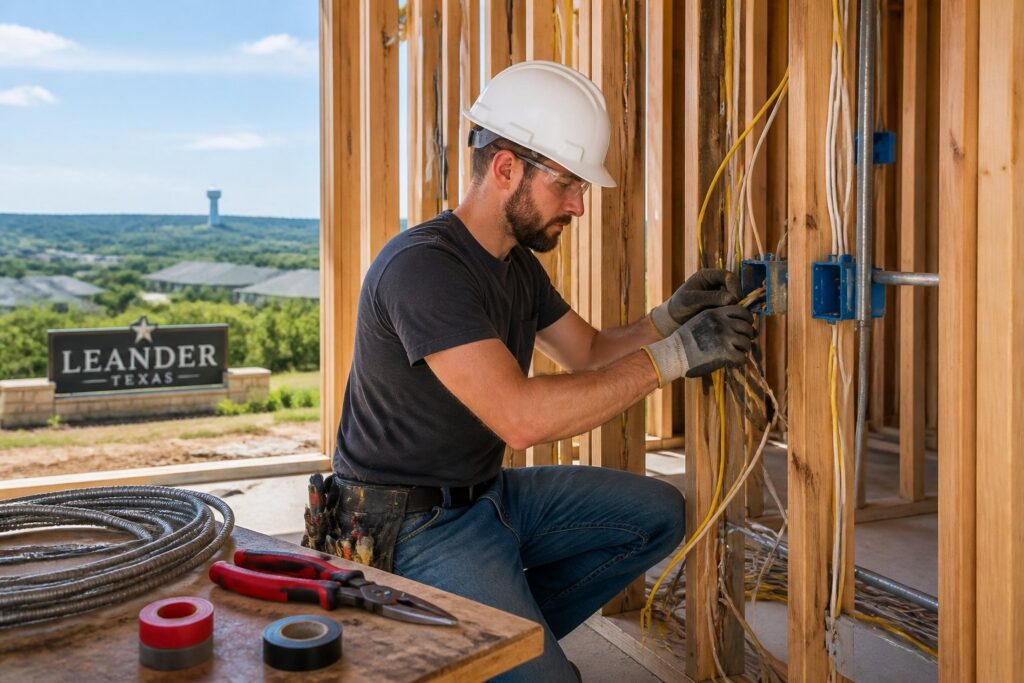
Planning new construction wiring in Leander, TX can feel overwhelming, but you can get a safe, code-compliant system that fits your lifestyle and budget. Magnify Electric’s licensed electricians design and install everything from basic outlets and ceiling fans to Lutron smart home systems, EV charging outlets, whole-home surge protectors, and commercial lighting, so your new build works exactly how you want it.
Here’s what you’ll need to know: planning your electrical layout, picking wiring and fixtures, understanding costs and safety, and finding the right electrician. Our crew serves Leander and the Central Texas area—Austin, Cedar Park, Georgetown, and Round Rock—handling everything from simple fixture swaps to panel upgrades, generator hookups, and emergency repairs.
You can count on us for automated lighting, recessed lighting, outdoor lighting, TV installation, smoke and CO₂ detectors, troubleshooting, and smart-home integrations. With a clear plan and pro installation, your new home or business should get reliable power without headaches.
Overview of New Construction Wiring in Leander TX
New construction wiring covers planning, rough-in wiring, fixtures, safety devices, and final testing. You’ll want a plan that fits your outlet, lighting, and appliance needs, follows local codes, and uses licensed electricians.
What Is New Construction Wiring?
New construction wiring means installing electrical systems during a build or a major renovation. Electricians run cables, set up circuits, install the main panel, and put in boxes for outlets, switches, and fixtures before the walls close up.
You’ll pick where outlets, switches, and lights go based on how you’ll use the room. Kitchens, laundry rooms, and HVAC units need their own dedicated circuits. Wiring also includes grounding, GFCI and AFCI protection, and conduit if needed.
Plans usually show the circuit layout, panel capacity, and device locations. If you plan well, you’ll cut down on change orders and make future upgrades—like adding an EV charger or smart-home device—much easier.
Benefits of Professional Electrical Installation
When you hire licensed electricians, you get safety, code compliance, and systems that just work. The pros size panels right, balance loads, and add the right protections to cut down on fire and shock risks.
They’ll help you pick wiring that fits your future needs—dedicated circuits for EV chargers, extra outlets for a home office, that sort of thing. They also test and document the system, which helps with inspections and even resale down the line.
Magnify Electric’s licensed electricians handle both residential and commercial projects. We do everything from recessed lighting and panel upgrades to EV charging outlets, surge protection, and Lutron smart home systems. Serving Leander and Central Texas, we tackle simple fixes, full upgrades, and emergency support.
Leander TX Electrical Code Requirements
Leander uses the Texas State Electrical Code and the National Electrical Code (NEC), with some local tweaks. Key rules: AFCI protection in bedrooms and living areas, GFCI protection in kitchens, baths, garages, and outdoor circuits, and proper panel labeling.
Outlet spacing matters: usually every 12 feet along living area walls, and specific counter receptacles in kitchens. Ovens, dryers, HVAC, and big appliances need dedicated circuits. Smoke and CO₂ detectors have to be hardwired with battery backup as required.
Most wiring work needs a permit and inspection. Licensed electricians make sure permits get pulled and inspections pass. If you’re not sure where to start, Magnify Electric’s team helps with planning, installation, or upgrades across Leander, Cedar Park, Round Rock, Georgetown, Austin, and nearby towns.
Planning Your New Construction Electrical System
Plan your system around how you’ll use each room, how many big appliances you’ll have, and where smart devices will live. Think ahead about future needs like EV charging and automation so you don’t have to tear up walls later.
Assessing Power Needs
Start by listing major appliances and their amp ratings: HVAC, oven, dryer, water heater, EV charger, and any subpanels. Add up running and peak loads to figure out your main panel size—most new homes need 200A, but bigger homes or EV-ready builds might need 300A or a subpanel.
Include dedicated circuits for heat pumps, ranges, EV chargers. Leave some room—at least two 20A general-purpose circuits per bedroom, plus extras for home offices and workshops.
A licensed electrician should do the load calculations and check local code. Magnify Electric’s licensed electricians can handle accurate load plans and panel recommendations for residential and commercial projects in Central Texas.
Designing Outlet and Switch Placement
Put outlets where you’ll actually use them: every 12 feet along living area walls, within 2 feet of doorways, and at desk height in home offices. Add counter-level outlets in kitchens and separate circuits for garbage disposals and dishwashers.
Plan switches near room entries, and at both ends of long hallways or stairs. Set up dedicated spots for smart hubs, routers, and automation controllers—make sure there’s an outlet and maybe Ethernet there.
Use recessed outlets for TVs and surge-protected media cabinets. For outdoors, pick GFCI outlets and weatherproof covers. Have your electrician map out outlets and switches on the floor plan before drywall—changing it mid-build is a pain.
Choosing Energy-Efficient Solutions
Pick LED recessed cans, dimmers, and motion sensors to keep lighting costs down. Programmable thermostats and smart zoning help cut HVAC runtime. Lutron systems work with smart platforms and can save energy through scheduling and occupancy sensing.
Go for ENERGY STAR appliances and high-efficiency HVAC to lower your overall load. Whole-home surge protectors help protect electronics and prevent early failures.
If you want EV charging, choose a Level 2 outlet or wall charger that supports smart load management. Ask your electrician about incentive programs and rebates in Leander and nearby cities to help with costs. Magnify Electric installs energy-efficient systems and can suggest options that fit your budget and needs.
Types of Wiring for New Homes in Leander
Pick wiring that matches your budget, safety needs, and smart-home plans. Get the right materials and pre-wiring up front so you don’t pay more to fix it later.
Copper vs. Aluminum Wiring
Copper is the go-to for most new homes. It conducts electricity better, resists corrosion, and handles heat reliably. That means fewer loose connections and lower fire risk over time.
Aluminum wiring costs less but needs special connectors and anti-oxidant treatment. If you use aluminum for service feeders or big runs, make sure connectors are rated for aluminum-to-copper transitions. Bad connections can overheat and fail.
Your electrician should size conductors for breaker ratings and local code. That means the right gauge for 20A, 15A, and bigger circuits like ranges or dryers. Ask about grounding and bonding to meet Leander and Texas codes.
Smart Home Pre-Wiring Options
Pre-wiring saves hassle and money if you add smart tech later. Run CAT6 or better for solid internet to home offices, media rooms, and smart hubs. Use separate runs for security cameras and doorbell transformers.
Install dedicated 20A circuits or 30A/40A for EV chargers and big appliances. Pre-wire for smart switches, automated lighting, and motorized shades—make sure there’s a neutral wire in each switch box. Leave extra conduit or pull strings for future cable runs.
Think about circuits for whole-home surge protection, a central hub, and Lutron or other smart controls. Magnify Electric’s licensed electricians handle smart pre-wiring and integrations, from Lutron systems to automated lighting and EV charging.
Low-Voltage and Specialty Wiring
Low-voltage wiring covers doorbells, thermostats, security, audio, and landscape lighting. Run these in separate paths and keep them away from high-voltage lines to avoid interference. Label ends and leave slack for upgrades.
For home theaters or audio, plan coax and multiple CAT runs to the media wall and attic. Use shielded cable for long runs and outdoor cameras. For outdoor lighting and pumps, run GFCI-protected circuits and weatherproof connectors.
Specialty wiring covers HVAC controls, backup generator hookups, and EV wall chargers. These need the right breaker size, subpanels, and sometimes permits. Our team serves Leander and nearby areas—handling fixture swaps, full wiring, panel upgrades, and emergency support—making sure installations meet code and work as expected.
Process of Electrical Installation in New Builds
You’ll see inspections before wires go in, a timeline with staged work, and final testing. The crew follows code, installs wiring and fixtures, and checks every circuit for safety and function.
Pre-Wiring Inspections
Before wires run, local code and site checks happen. An inspector or your electrician verifies load calculations, panel location, and conduit routes. This step also checks planned outlet locations, dedicated appliance circuits, and any special wiring like home automation or EV charging.
Marking plans on framing saves time. Electricians locate junction boxes, lighting placements, and low-voltage paths for security or data. If you want Lutron smart home wiring or a special circuit for a wall-mounted EV charger, now’s the time to note it.
Permits get pulled at this point. Your electrician schedules rough-in inspections so framing and plumbing won’t block access later. Fixing mistakes after drywall isn’t fun, so this step helps avoid rework.
Installation Timeline and Key Phases
Rough-in wiring comes first, after framing and before insulation. The crew runs NM cable or conduit, installs boxes, and ties circuits to the service panel. Expect this to take a few days for a typical home, longer for bigger projects.
After that, insulation and drywall go in. Then electricians return for trim-out: installing switches, outlets, lighting, and smart-home devices. Panel connections, breakers, and any subpanels get wrapped up here.
Coordinate appliance and specialty installs. Schedule EV charger wiring, surge protector installs, and generator hookups to line up with appliance delivery and HVAC work. Good scheduling helps avoid delays and keeps inspections on track.
Final Electrical Testing and Approval
Once trim-out wraps up, your electrician tests everything. They check continuity, polarity, grounding, and GFCI/AFCI function. Each circuit gets tested under load if possible, and devices like smoke and CO₂ detectors are checked for correct wiring and placement.
A final inspection from the city or county checks code compliance. The inspector reviews panel labeling, breaker sizes, and grounding. Once approved, you can turn on the power.
Magnify Electric’s licensed electricians handle each phase with careful testing and documentation. You’ll get solid installation and prompt inspection scheduling, whether you need recessed lighting, TV installation, panel upgrades, or commercial lighting in Leander and Central Texas.
Choosing an Electrician for New Construction Wiring in Leander TX
Pick an electrician who knows code, communicates well, and can handle both simple and complex wiring for homes and businesses in Central Texas.
Qualities to Look For
Look for electricians who show up on time, explain things in plain language, and keep a clean job site. Find teams with steady experience in new construction, panel upgrades, and whole-home wiring.
Choose contractors who provide clear written bids with line-item costs for labor, materials, and permits. That makes comparing quotes easier and cuts down on surprises.
Prefer crews who use modern tools and follow local code. Trust electricians who can show references and photos of recent jobs in Leander, Cedar Park, or Round Rock.
Check that the crew can install EV charging outlets, Lutron smart systems, recessed lighting, outdoor lighting—anything you plan to add.
Questions to Ask Before Hiring
Ask how many new-construction projects they finished in Leander or nearby cities over the past year. Request a sample timeline for rough-in, inspections, and final hookup.
See if they provide written estimates, guaranteed start and finish dates, and clear change-order procedures. Confirm if they handle permit pulls and coordinate inspections.
Ask which electricians on your job actually hold Texas licenses and how they manage any subcontracted work. Check the warranty length on labor and parts, and whether they offer emergency support after the job wraps up.
See if they can wire for smart home gear, EV chargers, whole-home surge protectors, or portable generator hookups you might want later.
Importance of Licensing and Insurance
Make sure the electrician holds a Texas electrical license and any local registration needed for Leander and nearby cities. Licensing means they know the codes and have safety training.
Check that the contractor carries general liability insurance and worker’s comp that covers on-site injuries. Always ask for certificates before work starts.
Ask for proof they pull permits and pass municipal inspections. Permits and inspections protect you from unsafe wiring, denied insurance claims, and headaches if you sell later.
Magnify Electric meets licensing and insurance standards. We serve residential and commercial customers across Central Texas, with licensed electricians handling everything from light switches and ceiling fans to panel upgrades and commercial lighting.
Cost Factors for New Construction Wiring
Materials, labor, and financing all shape your final price. Choices like copper versus aluminum wiring, the amperage of your service panel, and any smart-home gear you want will change costs more than square footage alone.
Material Selection Influence
Your wiring type and device choices affect both upfront and long-term costs. Copper wiring costs more than aluminum but lasts longer and resists corrosion—most modern homes use copper. PVC conduit, metal conduit, or armored cable all have different price tags and install quirks.
Smart-home gear bumps up material costs. Adding Lutron dimmers, smart switches, or integrated lighting controls means you’ll need compatible wiring and extra modules. EV charging outlets or wall-mounted chargers use heavier-gauge wires and sometimes a dedicated subpanel, which adds to both materials and labor.
Fixtures matter too. Recessed cans, outdoor-rated fixtures, and whole-home surge protectors add parts and may require extra circuits. Ask for line-item estimates so you can compare costs for wire gauges, panels, breakers, and smart system components.
Labor and Permit Fees
Labor rates in Central Texas vary by license level and how tricky the job is. Standard outlet and switch installs go faster than multi-room automated lighting or commercial lighting that needs careful layout.
Panel upgrades or 200-amp service installs need licensed electricians and sometimes utility coordination. Permit fees in Leander and nearby towns vary; expect separate costs for permits and inspections. Complicated layouts, multi-story framing, or tough attic access run up labor hours.
Emergency work, after-hours calls, or expedited permits will raise prices. Get a written scope with hourly rates, permit costs, and estimated crew hours so you can plan and compare bids.
Potential Financing Options
You can pay upfront, use a contractor’s financing plan, or tap home-improvement loans. Many homeowners use low-interest personal loans or a home equity line of credit for bigger jobs like whole-home wiring or panel upgrades.
Some electricians offer in-house financing or partner plans that spread payments out. Check interest rates, total costs, and any early-payoff fees before signing. For smaller jobs, lots of companies take credit cards, which might offer rewards but can get expensive if you don’t pay them off quickly.
Ask your electrician about phasing the project. You can tackle safety-related work like smoke/CO₂ detectors and surge protection now, then add smart-home systems later to spread out the cost.
Magnify Electric’s licensed electricians handle residential and commercial projects across Central Texas, including automated lighting, ceiling fans, Lutron smart home systems, EV charging outlets, outdoor lighting, recessed lighting, surge protectors, panel upgrades, portable generator hookups, and more. We serve Spicewood, Austin, Bee Cave, Lakeway, Dripping Springs, Georgetown, Leander, Round Rock, Kyle, Cedar Park, Liberty Hill, Westlake, The Hills, Briarcliff, Horseshoe Bay, Sunset Valley, Hutto, and nearby communities.
Safety Considerations for New Electrical Installations
Focus on code compliance, panel and surge protection, and planning for future circuits and loads. Prioritize grounding, proper breaker sizing, and leaving space for EV chargers or smart-home gear to avoid expensive rework.
Meeting National and Local Codes
You’ve got to follow the National Electrical Code (NEC) and Leander/Travis/Williamson County rules for wiring methods, outlet spacing, and smoke/CO₂ detector placement. Use the right wire gauge for each circuit: 14 AWG for 15A, 12 AWG for 20A, and 10 AWG for 30A appliances. Label circuits at the panel and install arc-fault (AFCI) and ground-fault (GFCI) protection where code requires—bedrooms, kitchens, bathrooms, garages, and outdoor outlets usually need them.
Get permits and inspections before drywall goes up so inspectors can check box placement, conduit runs, and grounding. Keep copies of plans and permits on-site. If you hire pros, pick licensed electricians who can pull permits and pass inspections.
Surge Protection and Electrical Panel Safety
Install whole-home surge protectors at the main panel to guard appliances, smart devices, and your EV charger from voltage spikes. Use a surge protector with a proper joule rating and fast clamping voltage. For sensitive gear like Lutron smart-home hubs or home theater systems, add dedicated surge suppression.
Keep at least 30 inches wide and 36 inches deep of clear space around your electrical panel, with a dedicated 120/240V disconnect nearby. Replace panels that show rust, overheating, or trip often. You might need a panel upgrade for EV chargers, whole-home surge units, or new 240V appliances. Magnify Electric’s licensed electricians handle panel upgrades, surge protector installs, and breaker replacements to keep your system safe and up to code.
Planning for Future Expansions
Think ahead about future loads like EV charging, solar inverters, HVAC upgrades, or more smart-home automation. Add extra conduits, spare circuits, and a bigger neutral/ground buss where possible to save on future labor and drywall mess. Place blank knockout panels or consider an extra subpanel near spots likely to need more power.
Document circuit layouts and leave labeled spare spaces in the panel for easy future additions. Plan outlet and switch locations for flexible layouts and future lighting upgrades, like recessed cans or automated dimmers. If you expect commercial lighting upgrades or bigger motor loads, talk with a licensed electrician now to size service equipment and protection correctly.
Sustainable and Energy-Saving Wiring Solutions
You’ll cut energy use and future-proof your home or business with efficient lighting and solar-ready wiring. The right choices lower bills, reduce maintenance, and make adding solar or smart systems easier later.
LED Lighting Installations
LEDs use way less electricity than incandescents or CFLs and last a lot longer. When planning new construction in Leander, put LED-ready circuits where you’ll use them most—kitchens, living areas, commercial workspaces. Use dedicated dimmable circuits for dining or conference rooms to save power and make bulbs last.
Choose fixtures and recessed cans made for LED to avoid heat and compatibility headaches. Pair LEDs with smart controls like timers, motion sensors, or Lutron systems to prevent wasted light. For recessed lighting, use IC-rated housings and keep insulation clear to help your attic stay efficient.
Magnify Electric’s licensed electricians install LED fixtures, recessed lighting, automated lighting, dimmers, and smart controls for homes and businesses. You’ll get expert placement, right circuit sizing, and efficient layouts that cut energy use and maintenance over time.
Solar-Ready Wiring
Solar-ready wiring makes future PV installation cheaper and less disruptive. Run a dedicated conduit from your roof array area to the main panel and plan extra panel capacity for solar inverters or batteries. Use 2-inch conduit and pull strings so you can add bigger wires or microinverter cables later.
Put the inverter close to the main service panel to shorten runs and reduce voltage drop. Install a labeled shutoff and leave space in the panel for a solar breaker to meet code and utility rules. Consider pre-wiring for battery backup and a subpanel for critical loads like fridges, medical gear, or must-have circuits.
Our team covers Leander and nearby Central Texas communities, handling panel upgrades, surge protectors, portable generator hookups, EV charging outlets, and wall-mounted chargers. You’ll get licensed electricians who map panels, install conduit and breakers right, and leave your place ready for solar with minimal hassle later.
Maintaining Your New Construction Wiring
Keep your wiring safe and reliable with a few regular checks and timely professional inspections. Focus on clear labeling, testing safety devices, and watching for signs of wear to avoid outages and hazards.
Routine Electrical Maintenance Tips
Test your smoke and CO₂ detectors monthly and swap batteries at least once a year. Check GFCI and AFCI outlets by hitting their test and reset buttons every 3–6 months.
Watch for loose cover plates, warm outlets, flickering lights, or buzzing switches—these can mean loose connections or overloaded circuits.
Keep a clear panel directory. Label each breaker with its circuit and update it after any changes. Tighten panel screws and check for rust or moisture during seasonal checks.
Clean around outdoor fixtures and clear debris from vents and outdoor outlets. For outdoor lighting and landscape transformers, check seals and weatherproofing once a year.
Have a licensed electrician install or inspect EV chargers, surge protectors, and smart home wiring. Magnify Electric’s licensed electricians handle these systems, plus automated lighting, Lutron setups, recessed lighting, and panel upgrades across Central Texas.
When to Schedule Inspections
Book an inspection after any major remodel, addition, or if you add high-load appliances like EV chargers or a new electric range. These changes might need new circuits or a panel upgrade.
Also, schedule an inspection if you see repeated breaker trips, burning smells, scorch marks, or persistent dimming when big appliances start up. Those are warning signs of overloaded or failing wiring.
Plan a full inspection every 3–5 years for older systems and every 5–10 years for new construction to catch slow-developing issues. For commercial properties, inspect more often based on usage and local codes.
If you need emergency support, upgrades, or smart home integration, our team covers Spicewood, Austin, Bee Cave, Lakeway, Dripping Springs, Georgetown, Leander, Round Rock, Kyle, Cedar Park, Liberty Hill, Westlake, The Hills, Briarcliff, Horseshoe Bay, Sunset Valley, Hutto, and nearby Central Texas communities. Magnify Electric is a practical choice—our licensed electricians handle troubleshooting, repairs, lighting installs, EV charging outlets, generator hookups, and complete upgrades for homes and businesses.
Frequently Asked Questions
Here are some practical answers about hiring a contractor, local code needs, common costs, safety steps, and who can handle your new construction wiring in Leander. Expect guidance on permits, modern wiring options, safety checks, and local service areas.
What should I consider when choosing an electrical contractor for my new home?
Check for a valid Texas electrical license and current insurance. Ask for references and examples of recent new construction projects.
Confirm the contractor understands local inspection processes and can pull permits. Make sure they provide a written scope, timeline, and honest pricing.
If you’ve got mixed-use needs, pick a team with both residential and commercial experience. That helps when you need complex panels, lighting controls, or EV charger installs.
Magnify Electric is a solid local option—our licensed electricians handle automated lighting, EV chargers, smart home systems, panel upgrades, surge protection, and more for homes and businesses.
Are there specific electrical codes for new construction in Leander?
Absolutely. Leander sticks to the Texas-adopted National Electrical Code (NEC) and adds a few local twists. These rules cover things like wiring methods, grounding, AFCIs/GFCIs, and panel setups.
Inspections come at a few big moments: rough-in, panel set, final. Usually, your contractor lines up inspections and fixes code issues before anyone closes up the walls.
Permits? Yep, you’ll need them for new wiring, panel swaps, or any major electrical changes. Best to check with the city inspector if you’re unsure—rules can shift.
What are the latest trends in electrical wiring for modern homes?
Smart home systems and integrated lighting controls are everywhere now. Lutron and similar setups let you automate lights, set scenes, and maybe save a little on your energy bill.
EV charging circuits and dedicated EV outlets are quickly becoming standard in new builds. Builders often add whole-home surge protectors and extra outlets—especially for home offices (who doesn’t need more plugs these days?).
LED recessed lighting and energy-efficient fixtures help cut down on electrical load. More folks are asking for bigger panels, just in case they want to add something down the line.
How do I ensure that my new construction wiring is safe and up to code?
Start by hiring licensed electricians who know NEC and the local add-ons. Insist on written permits, inspection receipts, and a clear wiring plan you can actually understand.
Stick with AFCIs, GFCIs, solid grounding, and breakers that are sized right. Don’t skip testing smoke and CO₂ detectors—they should be on their own circuits or wherever code says.
Always schedule a final electrical inspection. It’s smart to walk through the job with the inspector or electrician and check panel labeling and device locations together.
Can you recommend any local electricians with new construction wiring expertise?
Look for a licensed, insured crew with real new-construction experience in Central Texas. You want folks who know their way around multi-stage inspections and can work with builders.
Magnify Electric works in Leander and the surrounding area—full wiring, panel upgrades, smart home installs, EV chargers, outdoor lighting, and emergency calls. They’ve done it all.
Whoever you hire, ask for job photos, permit records, and recent client contacts. It’s worth a little homework upfront.
What is the average cost range for new construction electrical work in Leander?
Honestly, it depends. Home size, how tricky the layout is, and which features you want all play a part. Wiring a small house with basic needs? That’s going to cost less than a big place loaded with smart tech and an EV charger.
If you’re adding things like multiple circuits, subpanels, Lutron controls, or whole-home surge protection, just know those extras bump up the price. Labor, materials, and whatever the city wants for permits—those add up too.
Definitely get at least three bids, and make sure they spell out exactly what’s included. Compare the details, not just the bottom line. That way, you’re less likely to get hit with last-minute costs if you decide on upgrades.
You can always reach out to Magnify Electric for a detailed quote and a full project breakdown. They handle new construction wiring all over Spicewood, Austin, Bee Cave, Lakeway, Dripping Springs, Georgetown, Leander, Round Rock, Kyle, Cedar Park, Liberty Hill, Westlake, The Hills, Briarcliff, Horseshoe Bay, Sunset Valley, Hutto, and a bunch of other Central Texas spots.