
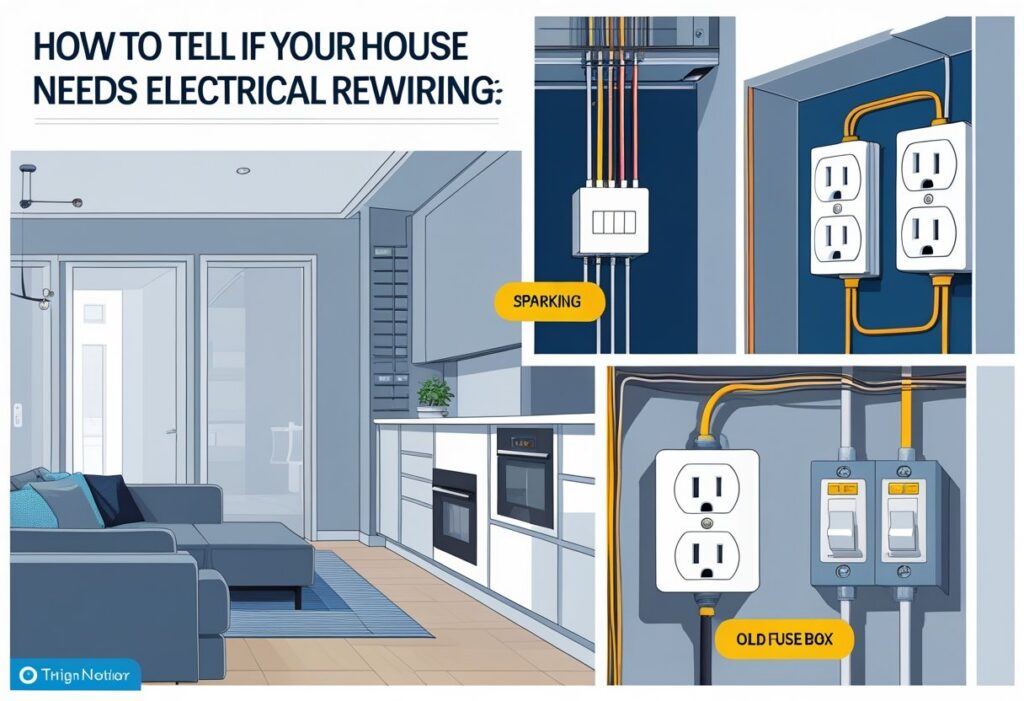
Knowing when your house needs electrical rewiring can help keep you and your family safe. If you notice frequent power outages, flickering lights, or outlets that feel warm to the touch, these are strong signs your wiring might be outdated or damaged.
Older homes often have wiring that no longer meets today’s safety standards. You might also find your breakers trip often or see discolored outlets and walls near electrical points.
These issues often mean your electrical system struggles to handle modern appliances and electronics. Checking for these problems early can prevent hazards like electrical fires or shocks.
Signs Your House May Need Electrical Rewiring
Your home’s electrical system shows clear signs when it needs attention. Pay close attention to how your lights behave, how often your circuit breaker trips, unusual noises, or strange smells near outlets.
These signs point to potential wiring problems that shouldn’t be ignored.
Frequent Circuit Breaker Trips
If your circuit breaker trips more often than usual, your wiring might be overloaded or faulty. The breaker cuts power when it detects a problem to prevent fires.
Frequent trips usually happen because too many devices are plugged in at once, or the wiring is old and can’t safely handle the electricity flow. If you reset the breaker and it trips again quickly, you should get your wiring checked by a professional.
Ignoring this can cause sparks or damage to your appliances. Keeping your circuit breakers stable is key to home safety.
Flickering or Dimming Lights
Lights that flicker or dim for no clear reason often mean you have loose or damaged wiring. This happens when connections are weak or circuits are overloaded.
If you notice this when you use multiple appliances, your electrical system is likely struggling to handle the load. Flickering can also occur if the wiring is worn out or if outlets are not secure.
This issue should be inspected soon to avoid risks like electrical fires or further damage to your home’s electrical setup.
Buzzing Sounds or Burning Smells
Buzzing noises around outlets or switches, and burning smells, are warning signs that something is wrong with your wiring. Buzzing usually means there’s a loose connection or damaged wire creating electrical arcing.
Burning smells could mean wires are overheating, which is very dangerous. If you notice these signs, turn off electricity to the affected area and call an electrician immediately.
These are urgent signals that your home needs a wiring check or upgrade.
Discolored or Warm Outlets
Outlets that show discoloration, such as dark marks or scorch spots, are signs of overheating or electrical faults. Warm or hot outlets when you touch them are also a red flag.
This can happen because of poor wiring connections or too much current flowing through the outlet. These problems can cause serious damage or even fire.
Avoid using these outlets until a professional can inspect and fix them safely.
Safety Risks of Outdated Electrical Wiring
Old wiring can cause serious problems in your home’s electrical system. It may not handle today’s electrical needs and could put your safety at risk.
Fire Hazards
Outdated wiring can overheat, which raises the risk of electrical fires. Wires with damaged insulation or worn-out connections create sparks or heat near flammable materials.
You might notice scorch marks, a burning smell, or flickering lights, which can mean your wiring is unsafe. These signs show that wires are struggling to carry power properly.
Electrical fires often start in hidden places, so spotting early warning signs is important. If your wiring is old, it may not meet modern safety rules, making fires more likely.
Shocks and Short Circuits
Old wiring often has cracks or exposed wires that increase the chance of electric shock. You could get a shock when you touch switches, outlets, or appliances.
Short circuits happen when bare wires touch each other or metal objects. This causes power surges that trip breakers or damage devices.
Frequent breaker trips or buzzing sounds near outlets also signal wiring problems. Never ignore shocks or short circuits.
They are clear signs your wiring needs inspection or replacement to avoid injury or damage.
Overloaded Circuits
Older electrical systems weren’t designed for many devices running at once. Too many appliances plugged into one circuit can cause it to overload.
An overloaded circuit can cause breakers to trip often or outlets to feel warm. You might see dimming lights when you use several devices at the same time.
This overload stresses your wiring and increases fire risk. Upgrading wiring ensures your circuits can handle modern power needs safely.
Aging Electrical Systems: When to Rewire
Older electrical systems can cause safety risks and may not handle today’s energy needs. Knowing when to rewire depends on the age of your home, the type of wiring used, and signs of wear or damage in your electrical system.
Homes Over 40 Years Old
If your home is over 40 years old, it likely has outdated wiring. Older wiring may not support modern appliances and devices, which can lead to frequent breaker trips or flickering lights.
Homes built this long ago might use wiring insulation that breaks down over time. This can cause shorts or even fire risks.
If you notice these signs or haven’t had an electrical inspection in years, a rewiring evaluation is important for safety and performance.
Aluminum Versus Copper Wiring
Aluminum wiring was popular in homes from the 1960s and 1970s because it was cheaper than copper. However, aluminum can expand and contract, causing loose connections and overheating.
If your home has aluminum wiring, you should have the wiring checked by a professional. Fixing or replacing faulty aluminum wiring lowers fire risks and keeps your system reliable.
Knob-and-Tube Wiring
Knob-and-tube wiring is one of the oldest types and was common before the 1940s. It uses ceramic knobs to support wires and tubes to protect them in walls or ceilings.
This type of wiring often lacks a ground wire, which is important for safety with modern devices. Over time, its insulation can wear out, increasing fire hazards.
If your home still has knob-and-tube wiring, rewiring is usually needed to meet today’s safety standards.
Visual Clues and Home Inspection Tips
When checking your home’s electrical system, focus on signs like worn wiring, aging electrical panels, and outlet covers that show damage or modifications. These clues can help you spot issues before they become bigger problems.
Old or Damaged Wiring
Look for wiring that appears brittle, cracked, or frayed. Old wiring, especially knob-and-tube or aluminum wiring, can be unsafe and may not handle modern electrical loads.
If you see exposed wires or wires that look charred or melted, it’s a serious warning. Touching or moving old wiring can be risky, so avoid doing that yourself.
Instead, have a professional inspect any suspect wiring. Regular visual checks can help catch these problems early and keep your home safer.
Outdated Electrical Panels
Your electrical panel controls power flow to your home. Panels with rust, burns, or that feel warm to the touch often need attention.
If your panel looks old or uses fuses instead of circuit breakers, it’s time to consider an upgrade. Frequent breaker trips or flickering lights can also signal panel issues.
An outdated panel might not support your current electrical needs and can be a fire risk. Getting a licensed electrician to inspect or upgrade the panel is a smart step.
Painted or Cracked Outlet Covers
Painted-over outlets or switches might hide wiring problems. This practice can cause overheating because it blocks ventilation.
Cracked or broken outlet covers are also risky. They may expose wires or cause sparks.
Check all your outlet covers and switches. If you find paint on them or see cracks, replace the covers or call an electrician.
Keeping covers intact helps prevent shocks and fires, making your home safer to live in.
Upgrading Convenience and Efficiency
Making updates to your electrical system can improve how your home functions every day. These upgrades help you avoid problems like overloaded circuits and make sure your power can handle modern appliances safely.
Adding Extra Outlets
If you have few outlets, you might use multiple power strips or extension cords. This can be dangerous and messy.
Adding extra outlets helps spread the power load and gives you places to plug in devices without crowding one area. When adding outlets, make sure your wiring can handle the extra load.
Older homes often need rewiring to support more outlets safely. It’s important to work with a licensed electrician who can check your system and install outlets where you need them most.
Think about where you use devices the most—kitchens, living rooms, and home offices usually need more outlets. Adding outlets in these areas makes your home more convenient and keeps your circuits from becoming overloaded.
Supporting Modern Appliances
Modern appliances use more power than older ones. If your wiring is old, it may not handle the wattage of devices like smart TVs, air conditioners, or dishwashers well.
This can cause flickering lights, tripped breakers, or worse. Upgrading your wiring and electrical panel helps your home safely support these appliances.
Check the wattage ratings of your devices and compare them to what your current system can provide. You may need a higher voltage or more amperage to meet these needs.
Rewiring also improves energy efficiency. Newer wires reduce energy loss, so your appliances work better.
This makes your home more comfortable and safe while avoiding unnecessary power outages or hazards.
Consulting a Licensed Electrician
When you notice signs of old or faulty wiring, the best step is to call a licensed electrician. They have the training and tools to safely check your electrical system.
A professional electrician can spot issues you might miss. They use methods like visual inspections and testing devices to find damaged wires or outdated components.
Here are some things you can expect when working with an electrician:
- A clear explanation of problems found
- Recommendations for repairs or upgrades
- Estimated costs and timelines for the work
You should never try major electrical work on your own. Even small mistakes can be dangerous.
Licensed electricians follow safety rules and local codes to keep everything up to standard. If you are unsure about any electrical issue, it’s better to get advice early.
With professional help, your home’s wiring will be reliable and safe for years to come.
Planning for Rewiring: What to Expect
Rewiring your home is a big task. Knowing what to expect can help you feel more prepared.
The cost depends on several things like the age of your home, how much wiring needs to be replaced, and where you live. Older homes often need more work, which can make the job take longer.
During rewiring, electricians will check your current electrical system. They will replace old wires and outlets, and may install a new breaker box if needed.
Sometimes, electricians need to open parts of your walls or ceilings to access the wiring. This can cause some disruption in your home.
Here’s a simple rundown of the rewiring process:
| Step | What Happens |
|---|---|
| Inspection | Electricians assess your wiring |
| Planning | They make a plan for work and safety |
| Work Begins | Old wires are removed and replaced |
| Testing | New wiring is tested for safety |
You may need to get a permit before starting. This depends on your local rules.
A permit helps make sure the work meets safety standards. Your electrician can help you with this.
Be ready for some noise and inconvenience during rewiring. The process can take a few days to a few weeks, depending on your home’s size.
Frequently Asked Questions
Knowing the key warning signs and what a rewiring project involves can help you decide if your home needs electrical updates. You’ll also learn how often wiring should be checked, the risks of old systems, and ways to ease the cost of rewiring.
What are common signs that indicate my home might need electrical rewiring?
You might notice flickering or dimming lights. Frequent circuit breaker trips or outlets that feel warm are also signs.
These can mean your wiring is old or overloaded. Outdated wiring may not handle modern electrical loads safely.
Can outdated wiring systems like knob and tube be dangerous?
Yes, knob and tube wiring lacks grounding. Over time, it can become brittle.
This type of wiring increases the risk of electrical fires and shock hazards. It’s safer to replace it, especially if your home has had any electrical updates since it was installed.
What does a full house rewire usually involve?
A full rewire means replacing old wiring, outlets, and switches. Sometimes, the electrician will also replace the electrical panel.
The electrician pulls new wires through walls and ceilings. The process can take a few days to weeks, depending on your home’s size and condition.
How often should residential wiring be updated or inspected for safety?
It is a good idea to have your wiring inspected every 10 years or if you notice any warning signs. Older homes or those with many electrical devices may need updates more often.
Regular checks help keep your system safe and working well.
Could I be eligible for any programs that assist with the cost of rewiring my home?
Some local governments or utility companies offer grants or low-cost loans to help with electrical upgrades. Check with your city or energy provider to see if any programs are available.
Licensed electricians can also guide you on possible financial assistance.
Are there any warning signals that my electrical system is overloaded and may require attention?
Overloaded systems often cause breakers to trip repeatedly. Lights may flicker when you run multiple devices.
You might smell burning near outlets. You may also see scorch marks.