
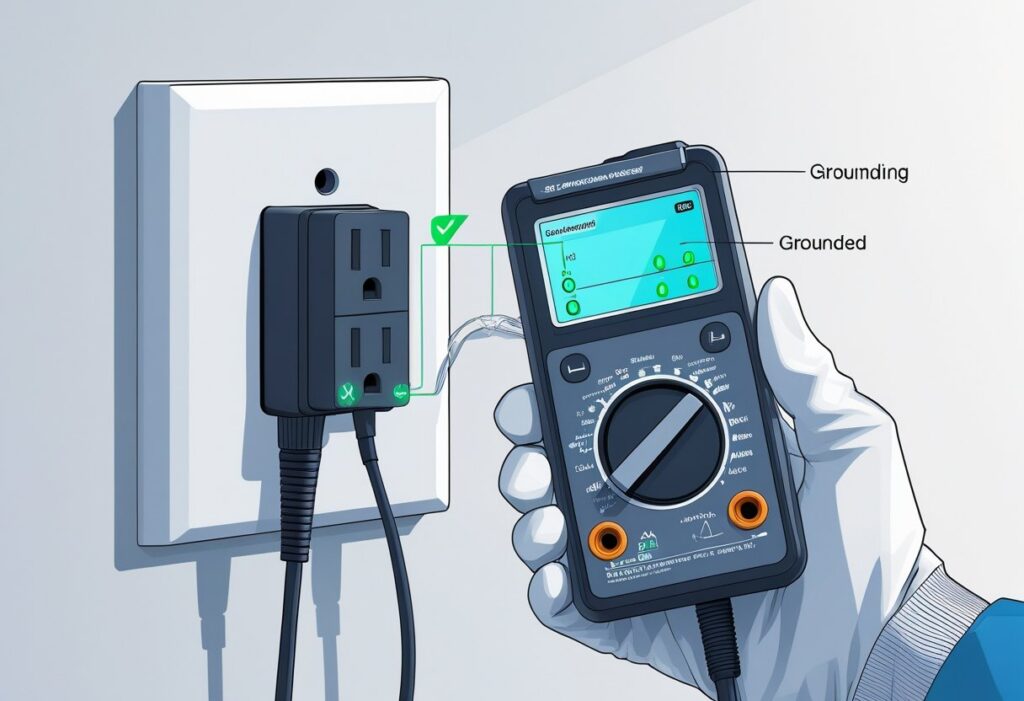
Knowing if an outlet is grounded is important for safety in your home. A grounded outlet has three holes: two for power and one for the ground.
The easiest way to tell if your outlet is grounded is to use a multimeter or an outlet tester that can check for a proper ground connection.
If you don’t have testing tools, look for a three-prong outlet instead of a two-prong one. Many newer homes have grounded outlets, but older ones might not.
Being sure about grounding helps protect you from electrical shocks and keeps your devices safe. By checking your outlets, you take a simple step toward a safer home.
What Does a Grounded Outlet Mean?
A grounded outlet has a special wire that helps protect you and your devices from electrical problems. This wire safely directs extra electricity away from the outlet, which helps prevent shocks and fires.
Understanding grounding will help you know why it matters for your home’s safety.
Purpose of Electrical Grounding
Electrical grounding gives electricity a safe path to follow if something goes wrong in your electrical system. If there is a fault, like a broken wire or a short circuit, the extra electricity flows through the ground wire instead of through you or your devices.
This prevents shocks and damage. Grounding also helps keep the electrical system stable by reducing the chances of electrical surges.
How Grounding Protects Your Home
Grounding makes your home safer by lowering the risk of electrical shocks and fires. When electricity follows the ground wire, it stops dangerous currents from passing through metal parts of appliances or other surfaces you might touch.
This reduces the chance that you’ll get shocked when using electrical devices. A grounded outlet also helps protect electrical equipment from damage during power surges or lightning strikes by sending extra electricity safely into the earth.
Differences Between Grounded and Ungrounded Outlets
Grounded outlets have three holes: two for power and one for the ground wire. Ungrounded outlets have only two holes for power.
Without grounding, devices with metal parts may become unsafe during faults because electricity has no safe way to leave. This puts you at risk for shocks.
Grounded outlets usually work with three-prong plugs, while ungrounded outlets only accept two-prong plugs. Some homes still have ungrounded outlets, especially older ones.
In those cases, special breakers like GFCI can offer some protection, even if the outlet itself lacks grounding.
Why It’s Important to Check If an Outlet Is Grounded
Knowing whether your outlet is grounded helps you keep your home safe, avoid electrical problems, and meet important rules. Grounding connects electrical parts to the earth, which can stop shocks and damage.
Safety Benefits
A grounded outlet reduces the risk of electrical shock. When there is a fault, such as a short circuit, the electric current safely flows to the ground instead of through you.
This is especially important in places where you use water, like kitchens and bathrooms. Grounded outlets also protect your devices.
Without proper grounding, appliances can get damaged by sudden electrical surges. Checking your outlet’s grounding status helps make sure you and your family stay safe each day.
Preventing Electrical Hazards
Ungrounded outlets can cause dangerous situations like sparks, fires, or short circuits. Electrical faults can travel to metal surfaces on devices, making them unsafe to touch.
When an outlet is grounded correctly, it stops these faults from becoming serious hazards. Regularly checking if your outlets are grounded allows you to spot issues early.
If you find an outlet is not grounded, you can fix or replace it to cut down risks. This simple check protects your home and prevents costly repairs.
Compliance with Electrical Codes
Most local laws and the National Electrical Code (NEC) require outlets to be grounded, especially in new homes or major renovations. Grounding helps meet these legal standards, which exist to ensure safety and reliability.
If your outlets aren’t grounded, you could face fines or problems during home inspections. Being sure your outlets meet code means you’re doing your part to keep your home legally up to date and safe from electrical hazards.
Visual Signs an Outlet May Be Grounded
You can often tell if an outlet is grounded just by looking at it carefully. Certain features like the shape of the slots and special labels give clues about grounding.
These details help you spot outlets that are safer and up to modern electrical standards.
Recognizing Grounding Slots
A grounded outlet usually has three slots instead of two. The third slot is round or U-shaped and sits below the two vertical slots.
This extra slot is the grounding slot. If your outlet only has two slots, it probably isn’t grounded.
Older homes often have these simpler outlets without grounding. Make sure to notice if the grounding slot looks larger or differently shaped.
This slot connects to the ground wire, which helps protect you by directing extra electricity safely into the earth. In some cases, outlets might have a small hole below the main slots.
This hole is the grounding slot, even if it’s not easy to spot at first.
Indicator Labels or Markings
Look closely for labels or markings near the outlet. Some outlets have “GFCI” or “Test” and “Reset” buttons, which suggest special safety features related to grounding.
Outlets with markings like “G” or “Grounded” confirm they are connected properly to the ground wire. These labels are usually stamped on the faceplate or printed around the slots.
You might also see stickers or tags placed by electricians that say “Grounded” or “Tested.” These signs mean the outlet has been checked for proper grounding.
If there are no marks, or if the outlet looks old without any labels, it’s safer to test it with a tool to be sure if it’s grounded or not.
Tools Needed to Test for Grounded Outlets
To check if your outlet is grounded, you’ll want to use the right tools. Some tools help detect voltage without contact, while others measure electrical connections directly.
There are simple plug-in testers that show grounding status quickly and devices like multimeters for more detailed checks.
Non-Contact Voltage Testers
A non-contact voltage tester is a simple tool you can hold near an outlet to see if electricity is present. It lights up or beeps when it detects voltage.
This tool helps you know if the outlet is live without touching wires. However, these testers do not tell you if the outlet is grounded.
They only detect voltage. Use them first to make sure the outlet is powered before doing other tests.
They are small, easy to carry, and safe since you don’t need to touch internal parts.
Multimeters
A multimeter is a more advanced tool that measures voltage, continuity, and resistance. You use it by inserting probes into the outlet slots or wiring.
With a multimeter, you can check if the ground wire is connected properly by testing for a continuous path to the ground. To test grounding, set your multimeter to the continuity mode.
Touch one probe to the ground slot and the other to a known grounded object, like a metal pipe or grounding rod. If it beeps or shows near zero resistance, the outlet is grounded.
Multimeters are very accurate but require some knowledge to use safely. Always turn off the power before testing wiring directly to avoid shocks.
Outlet Testers
Outlet testers, also called plug-in testers, are the easiest way to check grounding. You just plug the device into the outlet and look at the lights on its face.
Different combinations of lights tell you if the outlet is grounded, has reversed wiring, or other issues. Many outlet testers use colors or blinking patterns to show their results.
They often come with a chart on the tester explaining what each light means. This tool is cheap and fast, perfect if you want a quick check without technical skills.
If the tester shows no ground or wiring problems, it’s a good sign. But if it flags issues, you might need professional help to fix the wiring safely.
Step-By-Step Methods to Check If an Outlet Is Grounded
You can check if an outlet is grounded by using simple tools like a circuit tester or a multimeter. These tools help you see if the electrical system is wired safely and correctly.
Knowing how to interpret the test results is important to understand what your tools are telling you.
Using a Circuit Tester
A circuit tester is one of the easiest tools to check if an outlet is grounded. You start by plugging the tester into the outlet.
Most testers have indicator lights that show if the outlet is wired properly. Look for a green light or specific light combination on the tester.
This usually means the outlet is grounded correctly. If the lights show a different pattern or no lights at all, the outlet might not be grounded or there could be wiring issues.
Make sure to buy a tester that specifically checks for grounding. These are often called outlet testers with grounding feature.
They are affordable and straightforward to use for most homeowners.
Testing with a Multimeter
Using a multimeter gives you a more precise measurement of grounding. To do this, first set your multimeter to measure voltage or continuity.
Insert one probe into the outlet’s hot slot (usually the smaller slot) and the other into the ground slot (the round or U-shaped hole). If you get a voltage reading between 100 and 130 volts, the outlet is likely grounded.
You can also test continuity by placing one probe on the ground slot and the other on a known ground point, like a metal water pipe or grounding rod. A beep or low resistance reading means there is grounding.
When using a multimeter, always be careful and ensure the power is on for voltage checks but off if you plan to check wiring connections.
Interpreting Test Results
If your circuit tester shows the correct light pattern, then your outlet is grounded and safe to use. Lights indicating open ground or no ground mean the outlet is not properly grounded.
With a multimeter, a voltage reading between hot and ground confirms grounding. Low or no voltage means a lack of grounding or possible wiring problems.
For continuity tests, a beep or near-zero resistance verifies that the ground circuit is connected and working. If your tests show no ground, avoid using devices that require grounding.
Consider calling a licensed electrician to fix the wiring and make your outlet safe.
What to Do If Your Outlet Is Not Grounded
If you find out your outlet is not grounded, you need to take steps to keep yourself and your home safe. This involves handling the situation carefully and, most importantly, getting professional help when needed.
Safety Precautions to Take
Avoid plugging in appliances that have metal cases or need grounding for safety. These devices rely on a grounded outlet to prevent shock.
Use GFCI outlets as a temporary measure. They can protect against ground faults even without a grounding wire, but remember, they do not provide a true ground connection.
Don’t try to add your own grounding wire if you don’t know what you’re doing. A poor ground can be more dangerous than no ground.
Avoid using extension cords or power strips that require grounding on ungrounded outlets. This increases the risk of electrical shock or damage.
Consulting a Licensed Electrician
Call a licensed electrician to inspect your electrical system. They have the tools and experience to test your wiring safely and correctly.
An electrician can run a proper ground wire from the outlet to your home’s grounding system, like a grounding rod, if needed. They can also upgrade your outlets to safer options, such as installing GFCI outlets correctly or replacing old wiring.
Trying to fix grounding issues yourself can lead to mistakes, which might cause electrical shocks or fires. A professional will follow local codes and safety standards.
Upgrading and Repairing Ungrounded Outlets
If your outlet is not grounded, you’ll want to fix it correctly to keep your home safe and meet important safety rules. There are specific laws to follow, and several ways you can upgrade ungrounded outlets.
Knowing your options will help you choose the best solution.
Legal Requirements for Repairs
Electric codes require outlets to be grounded in most homes built after the 1960s. When repairing or upgrading, you must follow local building codes and the National Electrical Code (NEC).
If you replace a two-prong outlet with a three-prong one, your circuit must have a proper ground wire. Simply changing the outlet without grounding it is not allowed by law.
Permits or inspections may be needed when updating outlets, especially if you add new wiring. Hiring a licensed electrician is often required to ensure the work meets safety standards and passes inspection.
Following these rules protects you from electrical hazards and helps when you sell your home later.
Options for Upgrading
You can upgrade ungrounded outlets in different ways depending on your home’s wiring.
Add Ground Wiring – This is the safest and most thorough solution. A professional runs a ground wire to your outlet box and connects it to the system ground.
Install GFCI Outlets – Ground Fault Circuit Interrupters (GFCI) protect against shocks even without a ground wire. They must be labeled “No Equipment Ground.” GFCIs offer better safety than no ground at all.
Use Grounding Adapters – These are temporary fixes that connect the outlet’s ground to a nearby grounded screw. This is not a long-term solution and does not comply with code.
When upgrading, consider tamper-resistant outlets for child safety. Always check with a professional electrician to pick the right method for your home.
Common Myths About Grounded Outlets
People often have wrong ideas about outlets and grounding. Some believe that two-prong plugs are unsafe or that adapters can fix grounding issues easily.
Misconceptions About Two-Prong Plugs
Many think all two-prong outlets are dangerous because they lack a ground wire. But that’s not always true.
Two-prong outlets can be safe if the appliances you use don’t require grounding. Older homes often have two-prong outlets because grounding wasn’t always required.
Just because an outlet doesn’t have a ground doesn’t mean it’s faulty. However, some devices need grounding to work safely.
If you use those devices with two-prong outlets, it could increase shock risk. You can test these outlets with a receptacle tester to see if they are grounded.
If they’re not, you may want to upgrade those outlets in certain areas to GFCI outlets for added protection.
Limitations of Adapters
You might see adapters designed to convert two-prong outlets into three-prong ones. These adapters often include a metal tab or wire to attach to a screw for grounding.
However, this method doesn’t add a true ground. Using these adapters can give a false sense of security.
Without a proper ground wire in your home’s wiring, the adapter can’t provide the protection grounding is meant to offer. If you use an adapter, never rely on it as a permanent fix.
The best solution is to have a licensed electrician upgrade your outlets and wiring to meet safety standards. Adapters are only a temporary step and won’t fully protect you from electrical faults.
Frequently Asked Questions
Knowing if your outlet is grounded can help you stay safe and protect your devices. There are a few simple ways to check using tools like multimeters or outlet testers.
You can also learn what it means when an outlet is properly grounded.
What are the steps to check for a grounded outlet using a multimeter?
First, set your multimeter to the AC voltage setting. Insert one probe into the hot slot (shorter slot) and the other into the ground slot (round hole).
If you get a voltage reading close to your home’s standard voltage (usually around 120 volts), the outlet is grounded. No or very low voltage means it might not be grounded.
Can you verify an outlet’s grounding without using a multimeter?
Yes, you can use a plug-in outlet tester. These devices have lights that show if the outlet is grounded correctly.
They are simple to use. Just plug the tester into the outlet and read the light pattern.
If the lights don’t match a correct pattern, the outlet might not be grounded.
Is it true that all three-prong outlets are properly grounded?
No. Three-prong outlets might look grounded but aren’t always connected to a ground wire.
Older homes sometimes have three-prong outlets without proper grounding wires. This can create safety risks.
How does an outlet tester work to determine grounding?
An outlet tester sends a small current through the outlet’s wiring to check for the correct connections. It looks for proper wiring between the hot, neutral, and ground slots.
If the ground is missing or wired wrong, the tester’s lights will show it.
What’s the process to test if an outlet box is grounded?
You can test the outlet box by placing one multimeter probe on the metal outlet box and the other in the hot slot. If the box is grounded, you’ll get a voltage reading.
No reading means the box is likely not grounded.
What does it mean when an outlet is properly grounded?
A properly grounded outlet has a path that safely carries unwanted electricity to the earth.
This protects you from shocks and keeps your electrical devices safe from surges or faults.