
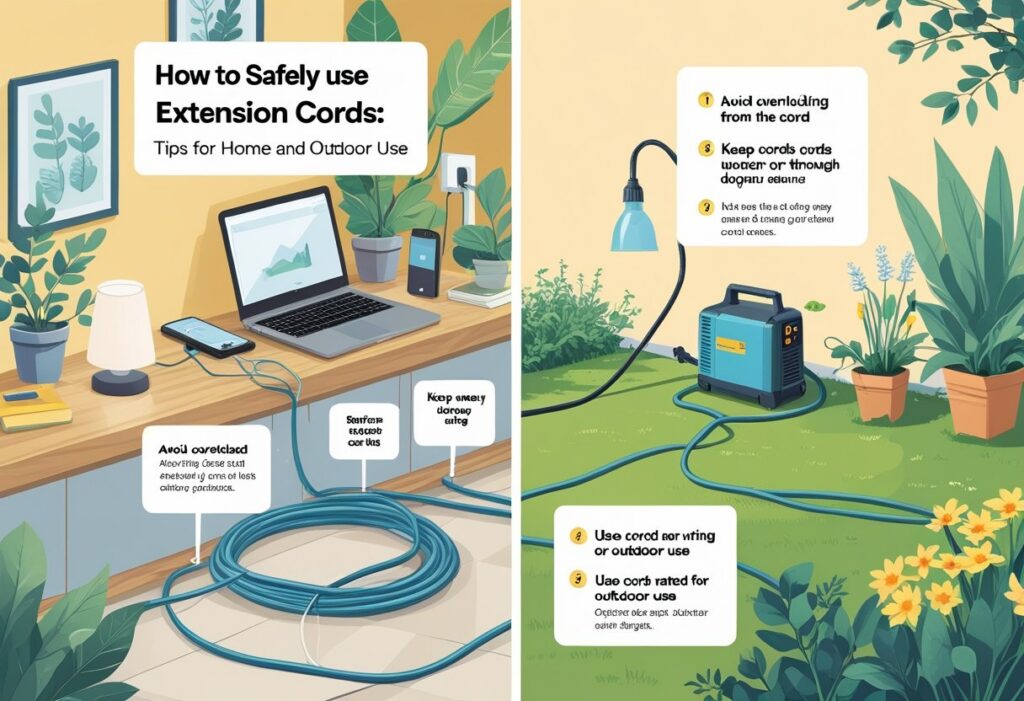
Extension cords can be a real lifesaver when outlets are just too far away. But let’s be honest, they come with risks—electric shocks, fires, and all sorts of headaches if you don’t use them right. To keep things safe, you’ve got to check your cords often, avoid overloading, and pick the right cord for your needs.
Always look over cords for wear and never plug in too many things at once. Extension cords aren’t meant to be a permanent fix—if you need more outlets, it’s smarter to have them added the right way. The folks at Magnify Electric can help you boost your electrical capacity safely and make sure everything meets code.
Magnify Electric handles everything from quick repairs to big electrical projects. If you want peace of mind about your space, you can count on them.
Understanding Extension Cord Safety
Staying safe with extension cords starts with knowing the risks, picking the right cord, and making sure it’s up to the job. Paying attention here can save you a lot of trouble down the road.
Common Electrical Hazards
Extension cords can shock you, start fires, or fry your stuff if you use them wrong. One big red flag? Cracked or frayed cords, or wires poking out. Those can cause shocks or short circuits.
If you overload a cord by plugging in too many things, it can heat up and catch fire. If a cord feels warm, that’s a warning sign—either too much current or bad wiring. Too much current and damaged wiring are both trouble.
Don’t let cords get wet, and never use indoor cords outside. Always unplug by grabbing the plug, not yanking the cord, or you’ll just make things worse.
Recognizing Approved Safety Ratings
Before plugging in, check for safety ratings from groups like UL or ETL. If you see those labels, the cord passed some tough tests.
Make sure you spot the cord’s max load or amperage. If your devices need more juice than the cord can handle, you’ll risk overheating. Cords with grounding prongs are a safer bet, especially for metal appliances or tools.
Check if the cord says it’s for indoor or outdoor use. Using the right kind protects your stuff and helps you avoid electrical messes.
Importance of Cord Quality
A good extension cord isn’t just about price—it’s about safety and how long it’ll last. Cheap cords often have thin wires or weak insulation and break down fast.
Thicker cords with lower gauge numbers can safely handle more electricity. For example, a 14-gauge cord is tougher than a 16-gauge one. Using long cords for heavy tools? Not a great idea—the voltage drop can hurt your equipment.
Magnify Electric has quality cords and advice for whatever you need. Their licensed electricians will help you set things up right, so you can power your tools and appliances without worry.
Choosing the Right Extension Cord
Getting the right extension cord means figuring out what type you need, what length works, and how much power it can handle. These details matter if you want to avoid overheating or electrical hazards.
Matching Cord Type to Your Needs
Extension cords come in different flavors. For indoors, lightweight cords with thinner insulation are fine for lamps or small gadgets. Outdoor cords? They’ve got thicker jackets to handle weather and rough use.
Look for labels like “SJTW” or “SJEOW” for outdoor cords—they’re built tougher. Some cords come with surge protection, which is nice if you care about your devices. Never use indoor cords outside—it’s just asking for trouble.
Selecting the Correct Length
A cord that’s too short will get stretched and damaged. Too long, and you risk voltage drop, so your device might not work right.
Go for the shortest cord that still reaches comfortably. Don’t chain cords together if you can help it—long setups can overheat. Always check cords for damage before plugging in. If you’re not sure, Magnify Electric can help you figure out the safest choice.
Understanding Amp Ratings and Wattage
Each cord lists how many amps it can handle. Make sure the total draw from your devices stays below that number. Overloading leads to overheating and possible fires.
To check, add up the wattage of your devices, then divide by the voltage (usually 120V). For example, a 600-watt device needs 5 amps (600 ÷ 120 = 5). Pick a cord with a higher amp rating than that.
Heavy-duty cords are best for power tools or running multiple things. If you’re unsure, just ask a licensed electrician at Magnify Electric for help.
Proper Usage Guidelines
Staying safe with extension cords is all about knowing how much power you’re pulling, where you put the cords, and picking the right type for your situation. These habits help you avoid fires, shocks, and broken devices.
Avoiding Overloading Circuits
Don’t plug a bunch of gadgets into one extension cord or power strip. Every cord has a max amp rating—check it, then add up the amps for everything you want to plug in.
If you go over the limit, you risk overheating and fire. Never daisy-chain cords (plugging one into another)—it just ups the chance of overload. If you need more outlets, have an electrician install them instead of relying on extra cords.
Safe Placement and Arrangement
Keep cords in open, dry spaces where they won’t get stepped on or crushed. Don’t run them under rugs, carpets, or furniture—heat can build up fast and that’s dangerous.
Look for cuts, frays, or busted plugs. Replace damaged cords right away. Keep cords flat and untangled to prevent tripping. If cords need to cross walkways outside, plan ahead to avoid accidents.
Indoor Versus Outdoor Extension Cords
Only use cords rated for outdoor use outside. Outdoor cords have extra insulation for water, sun, and temperature swings. Indoor cords can get unsafe fast if you use them outside.
Check the label—outdoor cords say “for outdoor use” or have a “W” on the jacket. If you’re not sure which cord to use, or need new outlets, Magnify Electric’s electricians can help. They’re pros at keeping your space safe and powered up.
Inspection and Maintenance Tips
Keeping cords in good shape means checking them regularly and treating them right. Catching problems early and knowing when to toss a cord goes a long way.
Checking for Damage Before Use
Always look over cords before plugging them in. Watch for cracks, cuts, or worn spots on the outside. Exposed wires or frays? Don’t use that cord—it’s not worth the risk.
Check the plug and outlet ends too. Bent or broken prongs, or loose connections, mean it’s time for a new cord. If you’ve used a cord outside, look for water damage or rust. Never use indoor cords outside.
If you spot damage, just replace the cord. Using a bad one is asking for trouble.
Routine Cleaning Procedures
Dust and dirt collect on cords, especially at the plugs. Wipe them with a dry cloth—skip the water or sprays, since moisture can cause short circuits or shocks.
For outdoor cords, keep plug and socket covers dry and clear of debris. A soft brush can help with stubborn dust.
Cleaning helps cords last longer and lets you catch problems early.
When to Replace Your Cord
Knowing when to toss a cord is important. If you see cuts, cracks, or loose parts, throw it out. Don’t try to fix it unless you really know what you’re doing.
Even if a cord looks fine, old age can mess with the wiring inside. If you use cords a lot or outside, check them more often and think about replacing them every few years.
Magnify Electric’s electricians can help you pick the right cords and check your setup for safety. They know their stuff when it comes to home and business electrical work.
Storage and Organization Solutions
Storing cords right keeps them untangled and safe. A little effort here makes life easier and helps your cords last.
Tangle-Free Storage Methods
To avoid tangles, wrap cords in loose loops, not tight coils. Use Velcro straps, twist ties, or reusable wraps to keep things together.
If you use cords all the time, a cord reel or spool is handy. Hanging cords on hooks or pegs in the garage works too.
Label cords with tape and a marker so you know what’s what without unrolling everything. Store cords in a dry spot that’s easy to get to.
Preventing Damage During Storage
Don’t bend cords sharply or crush them—they’ll wear out faster. Damaged insulation is a real hazard.
Keep cords off the floor to avoid water, dirt, or critters. Use plastic bins or sealed containers if you store cords somewhere damp.
Check cords now and then for cracks or frays. If you spot wear and tear, just replace the cord.
Magnify Electric can help you sort out any wiring issues and suggest safe upgrades. They’re a solid choice for both home and business electrical needs.
Using Extension Cords Around Children and Pets
If you’ve got kids or pets, you need to be extra careful with extension cords. Tripping, chewing, unplugging—these are real risks. The goal is to keep cords out of reach and secure.
Creating a Safe Environment
Put cords where kids can’t grab or trip over them. Run cords behind furniture or along walls, using clips or covers. Don’t leave cords loose on the floor, especially in play areas.
Cover unused outlets so little fingers can’t poke inside. Unplug cords when you’re not using them to avoid overheating or shocks.
Check cords for fraying or cracks and replace them right away if you see any. Remember, extension cords are for temporary fixes, not long-term setups.
Pet-Proofing Electrical Setups
Pets love to chew on cords, which is bad news. Use protective covers or tubing to keep cords safe. You can spray pet-safe bitter stuff on cables too.
Hide cords or keep them up high where pets can’t get at them. Don’t run cords under rugs or furniture—chewing damage can go unnoticed.
Magnify Electric can install extra outlets or safer wiring so you don’t have to rely on extension cords. They’re ready to help you make your place safer for everyone.
Environmental Considerations
Being smart about extension cords means thinking about where and how you use them. Things like moisture and temperature really matter. A few simple steps can keep you and your gear safe.
Safe Use in Wet or Damp Locations
You really shouldn’t use a regular extension cord in wet or damp areas. Water and electricity just don’t mix—short circuits, shocks, all that dangerous stuff. If you have to use an extension cord outside or near water, pick one that’s actually rated for outdoor use and has solid insulation.
Check for cords labeled “GFCI” or those with built-in ground fault circuit interrupters. These devices will cut power fast if something goes wrong, which helps keep you safer.
Try to keep all your connections up off the ground and away from puddles. Throwing down a rubber or plastic mat under your plugs isn’t a bad idea for extra peace of mind. And if you notice a damaged cord or exposed wires, definitely don’t use it near water.
Protecting Cords from Extreme Temperatures
Extreme temps can mess up your extension cords. Don’t leave cords baking in the sun or anywhere near heaters—heat can melt the insulation and make things risky.
When it’s freezing, cords get stiff and can crack if you bend or stretch them. If you’re not using them, bring them inside during the winter so they stay flexible.
If you know you’ll be working outside in tough weather, look for cords that are rated for those conditions. They’re just built tougher and hold up a lot better.
Magnify Electric can help you pick out the right cords and set up safe electrical solutions for your home or business. Our licensed electricians handle everything from fixing lights to tackling big power projects. Honestly, we’re a solid choice for any electrical work you’ve got.
Eco-Friendly Disposal and Recycling
When your extension cords are worn out, don’t just toss them in the trash. They’ve got plastic and metal parts that aren’t great for the environment.
Check for local recycling centers that take electrical cords—lots of places have special programs for recycling this kind of stuff. It keeps harmful materials out of landfills, which just makes sense.
Before you recycle, see if you can separate any metal bits or check for damage. It makes things a little easier for the recycling folks.
Not sure where to start? Magnify Electric can help you figure out what to do with old cords. Our electricians know how to handle electrical waste safely for homes and businesses.
Keep your home and business safe, and do your part for the planet by recycling your old extension cords. Magnify Electric’s always ready to help with safe, eco-friendly electrical solutions.
Frequently Asked Questions
Staying safe with extension cords means knowing your power limits, checking your cords, and watching out for things like overheating or tripping hazards. Asking the right questions can help you avoid mistakes and keep things running smoothly.
What are the best practices for plugging multiple devices into an extension cord?
Don’t plug in more devices than the cord can handle. Always check the amp rating and keep high-power stuff like heaters or microwaves on separate cords. Spread things out across outlets if you can—it’s just safer that way.
How can I tell if an extension cord is suitable for outdoor use?
Look for labels like “outdoor” or “weather-resistant.” Those cords have thicker insulation and can handle moisture and rougher conditions. Indoor cords just aren’t built for outside and can cause shocks or fires if you push your luck.
Are there any tips for preventing overheating of extension cords with high-power appliances?
Don’t run cords under rugs or jam them into tight spots where heat gets trapped. Use a cord with the right gauge—big appliances need thicker wires. If the cord feels hot or you notice a weird smell, unplug it right away.
What should I check for when inspecting an extension cord for safe usage?
Look for cracks, fraying, or any exposed wires. Make sure the plug fits tight in the outlet. Damaged prongs or loose connections are a no-go—they just up your risk for shocks or fires.
Can extension cords be plugged into each other, and if not, why?
Nope, don’t do it. Plugging extension cords into each other (daisy-chaining) can overload your circuit and cause overheating. It’s just asking for electrical fires or fried devices.
What’s the safest way to manage long extension cords to prevent tripping hazards?
Try running cords along the wall, and secure them with cord covers or even a bit of tape—whatever keeps them out of the way. Coil up any extra length, but don’t wind it too tightly or you’ll risk damaging the cord. If you’re tired of dealing with cords altogether, you could always have Magnify Electric’s licensed electricians put in extra outlets for you. That’s a much cleaner fix, honestly.