
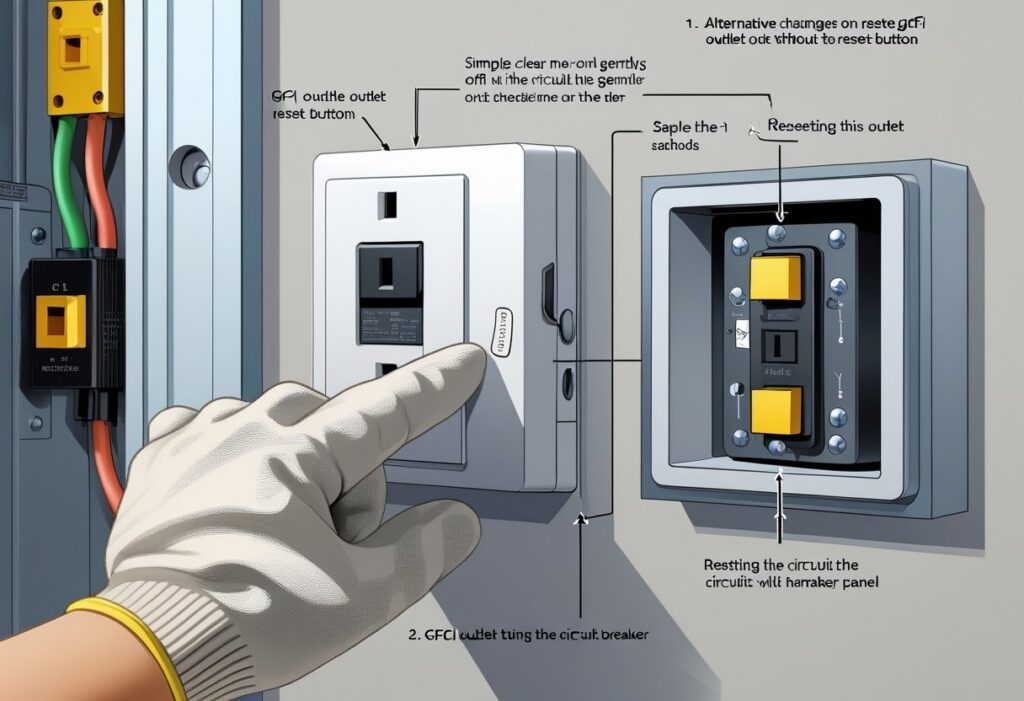
If your GFCI outlet doesn’t have a reset button, you might wonder how to reset it safely. You can usually reset the outlet by turning the breaker off and then back on at your electrical panel.
This step restores power and resets the GFCI’s protection.
Sometimes, outlets without a visible reset button are part of a circuit controlled by a breaker or a separate test/reset device nearby. Knowing how to find and reset your GFCI this way can help you get your power back without hassle or risk.
Understanding GFCI Outlets
GFCI outlets protect you from electrical shocks, especially where water is present. Knowing what they are, the types you might find, and why they trip will help you handle them safely.
What Is a GFCI Outlet
A GFCI (Ground Fault Circuit Interrupter) outlet detects tiny electrical leaks. These leaks happen when electricity moves outside the normal path, which can cause shocks.
When the GFCI senses this, it quickly shuts off power to prevent injury. You’ll often find GFCI outlets in kitchens, bathrooms, and outdoors.
They monitor electricity flow and cut the power if they sense problems. This action helps stop accidents before they happen and makes your home safer.
Common Types of GFCI Outlets
You might see several types of GFCI outlets:
- Receptacle GFCIs: These look like normal outlets but have two buttons—Test and Reset—to check and restore power.
- Circuit Breaker GFCIs: Built into your main electrical panel, they protect an entire circuit.
- Portable GFCIs: These plug into an outlet and protect an appliance or device temporarily.
Each type quickly detects electrical faults and cuts power to stop shocks.
Why GFCI Outlets Trip
A GFCI trips when it finds a ground fault—a small electrical current traveling where it shouldn’t, like through water or a person. This trips the outlet to stop potential shocks.
Common causes include water contacting the outlet or device, damaged wiring or appliances, and electrical surges or faults in the circuit.
If your GFCI trips often, it might mean there’s a real problem. Checking the cause helps keep you safe.
Resetting a GFCI Outlet Without a Button
If your GFCI outlet doesn’t have a reset button, you still have ways to restore power safely. You might need to identify the type of outlet, check your circuit breaker, or use remote reset options if available.
These methods depend on your specific setup.
Identifying Buttonless GFCI Outlets
Some GFCI outlets do not have visible test or reset buttons. These outlets often serve as part of a larger system or are built into breaker panels.
Look for labels or markings like “GFCI Protected” on the outlet face or nearby. Sometimes, the reset function is handled at a different location, such as a circuit breaker or a remote switch.
If you don’t see buttons but suspect the outlet is GFCI-protected, check your home’s electrical panel or consult your outlet’s manual to confirm the reset method.
Checking Circuit Breaker Panels
If your GFCI outlet doesn’t have a reset button, you can reset it at the circuit breaker panel. Look for a breaker labeled “GFCI,” “GF,” or one that controls the room with the outlet.
The breaker may be tripped and in a middle or off position. To reset, switch the breaker fully off, then turn it back on.
This can restore power to the outlet. Always use caution when working in your breaker panel.
If unsure, consider getting help from a professional.
Using Remote Reset Features
Some modern homes have GFCIs that reset remotely, either through smart home systems or dedicated reset switches. Check if your home has smart breakers or remote controls linked to your GFCI outlets.
Using a mobile app or wall-mounted remote, you may be able to reset the outlet without touching the box or breaker. This option requires compatible devices and may need initial setup.
Troubleshooting Steps If Reset Fails
If your GFCI outlet won’t reset, there may be a deeper issue. Check if power is reaching the outlet, make sure the wiring is secure, and see if any other devices or breakers are causing the problem.
Each of these steps can help you find the cause.
Confirming Power Supply
First, check if power is coming to the outlet. Use a voltage tester or multimeter to see if the outlet is getting electricity.
If the outlet shows no power, check your main circuit breaker panel to see if any breakers have tripped. Sometimes a breaker controlling the outlet has flipped off, cutting power.
Make sure the breaker is fully switched on if you find it off. If power still doesn’t reach the outlet, you may have a problem elsewhere in your home’s wiring.
Inspecting Outlet Wiring
Next, turn off power to the outlet at the breaker. Remove the outlet cover to look inside.
Check all wire connections. Look for loose screws or damaged wires, which can stop the outlet from working.
If wires seem worn or disconnected, tighten or re-secure them. If you’re uncomfortable doing this, call a licensed electrician to avoid risk.
Testing for Other Tripped Devices
Sometimes other GFCI outlets or breakers on the same circuit trip and block power to your outlet. Check for other GFCIs nearby, like in the bathroom or kitchen.
Press their reset buttons to restore power. Also, look for any other breakers that might have tripped in your breaker box.
Resetting these can restore electricity.
Safety Precautions for GFCI Outlets
Before you work on a GFCI outlet, protect yourself and your home from electrical hazards. Know how to keep safe and when to cut off power to avoid accidents.
Ensuring Personal Safety
Always use insulated tools when handling any electrical parts. Wear rubber-soled shoes and avoid standing on wet floors.
These keep you safe from shocks that can happen if you touch live wires. Never touch exposed wires or metal parts inside the outlet box.
Even if the outlet seems off, some wires may still carry electricity. If you feel unsure or notice damage like burn marks or a cracked outlet, stop immediately.
Call a licensed electrician to avoid injury or fire risks.
When to Turn Off Main Power
If the GFCI outlet has no reset button or keeps tripping, you need to cut the power from the main breaker. This prevents any electric current from flowing through the circuit you are working on.
Turning off power at the breaker box will protect you while inspecting or replacing the outlet. Check the breaker panel for a label or test the breakers one by one if needed.
Never rely just on unplugging devices or turning off switches near the outlet. Power can still flow through wiring hidden behind walls.
Always confirm the power is off with a voltage tester before touching any wires. This step keeps you safe while working.
When to Seek Professional Help
If you can’t reset your GFCI outlet because the reset button is missing, damaged, or not working, call a professional. Fixing electrical issues without the right skills can be unsafe.
Call an electrician if your GFCI outlet trips often or won’t reset even after you follow basic steps. This could mean there is a wiring problem, a ground fault, or a more serious electrical issue.
If you notice burning smells, sparks, or flickering lights near your outlet, stop using it and get help. These are warning signs that need quick professional attention.
You should seek help if:
- The outlet won’t reset or is physically damaged
- There are frequent or sudden trips without clear reasons
- You see signs of burning, sparks, or unusual smells
- The wiring connected to the outlet is outdated or worn
A licensed electrician can inspect your outlet safely. They will test the wiring and replace or repair the GFCI if needed.
Getting expert help can prevent bigger problems or possible hazards in your home.
Preventive Maintenance for GFCI Outlets
Keep your GFCI outlets working properly by checking them often and watching for problems. Test them regularly to make sure they reset correctly.
It’s also important to notice any signs that the outlet might be failing before it causes bigger issues.
Routine Outlet Testing
Test your GFCI outlet at least once a month. Press the test button on the outlet.
This should cause the power to shut off immediately. Next, press the reset button to restore power.
If the outlet doesn’t cut power or won’t reset, it may need replacement. Keep your testing regular to catch faults early.
Signs of GFCI Outlet Malfunction
Watch for these signs that your GFCI might be failing:
- The outlet trips too often or resets on its own.
- The reset or test buttons don’t respond.
- Your devices don’t get power even when the outlet looks fine.
- The outlet housing is cracked, worn, or discolored.
If you notice any of these, the outlet might be worn out or damaged. Replace a malfunctioning GFCI outlet quickly to keep your home safe.
Frequently Asked Questions
Many GFCI outlets have reset buttons, but not all do. Sometimes you need other ways to restore power if the reset button is missing, stuck, or not working.
What are the steps to troubleshoot a GFCI outlet if the reset button seems to be missing?
First, check the outlet closely; some GFCI outlets may have hidden or recessed buttons. If you don’t see a reset button, check other nearby outlets or the breaker panel.
Try turning off the circuit breaker to the outlet and then turning it back on to reset the power. If this doesn’t work, the GFCI device might need replacement.
Can you restore power to an outdoor GFCI outlet that doesn’t have a reset button?
If it doesn’t have a reset button, try turning off the related circuit breaker and then back on. This often resets the outlet.
Make sure the outlet is dry and free from damage before trying this. If power doesn’t return, the outlet may be faulty and need a professional check.
Is it possible to manually reset an RV GFCI outlet that lacks a reset button?
Most RV GFCI outlets have a reset button, but some might not. If yours doesn’t, reset the breaker connected to the GFCI circuit at the RV panel.
If resetting the breaker doesn’t fix it, test the outlet with a GFCI tester or have an electrician inspect it.
What should I do if my GFCI outlet’s reset button won’t push in?
The reset button might be stuck due to dirt, damage, or wear. Try pressing it firmly but gently.
If it still won’t move, cut power at the breaker and inspect the outlet. Replace the outlet if it is damaged or more than 10 years old.
Do GFCI outlets always come with a reset switch, and if not, how do you reset them?
Most GFCI outlets have “test” and “reset” buttons on the front.
Some GFCI devices, such as breakers inside a panel, do not have these buttons.
To reset those without buttons, flip the breaker off and then back on.
Are there alternative methods to reset a GFCI without using the reset button?
Yes. You can turn off the power at the circuit breaker and then turn it back on to reset many GFCI outlets.
Sometimes, unplugging devices from the outlet before resetting helps avoid immediate trips after reset. If these steps don’t work, the outlet may be faulty or need professional attention.