
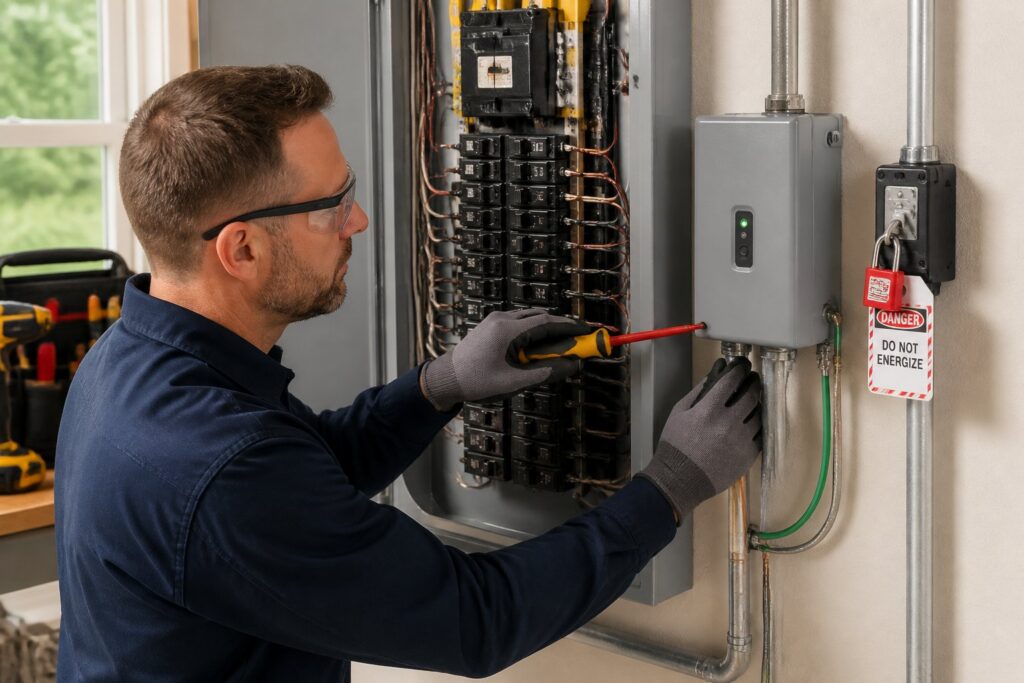
Putting in a whole-house surge protection system is honestly one of the smartest ways to shield your home’s electrical panel, appliances, and electronics from sudden voltage spikes. If you’re figuring out how to install whole-house surge protection, the safest bet is usually calling a licensed electrician. The work happens inside the main panel—definitely not a spot for guesswork.
A well-installed surge protector can help lower the risk of damage from lightning, utility switching, or big appliances cycling on and off. It’s a surprisingly small device, considering it can protect expensive stuff all over the house.
If your place is full of modern electronics, smart devices, HVAC gear, or you’ve got an EV charger, this upgrade matters even more. The idea isn’t to make your home invincible, just to add a solid layer of protection right where surges try to sneak in.
What a Whole-House Surge Protector Does
You (or your electrician) install a whole-house surge protector at or near your main electrical panel. Its job? Spot excess voltage and send it away before it can fry your home’s circuits.
It’s nothing like those little plug-in strips. Instead of guarding one outlet, it helps shield everything downstream from the panel.
How Power Surges Damage Electronics And Appliances
Power surges can hit from lightning, utility grid hiccups, or even just normal equipment kicking on and off in your house. Most people only notice something’s wrong after a device dies, acts weird, or just doesn’t last as long as it should.
Sensitive electronics are usually the first to complain. TVs, computers, Wi-Fi stuff, anything with a control board, HVAC systems—they all can take a beating from repeated surges.
What This Device Protects And What It Does Not
A whole-house unit helps protect the electrical system feeding your home—so, hardwired equipment and anything plugged into protected circuits.
But it doesn’t replace point-of-use surge strips for your most delicate electronics. For the best shot at safety, use both: the panel device handles big surges, and plug-in protectors add backup right at the outlet.
When Professional Installation Is the Right Choice
Working inside the main panel? That’s a whole different animal from swapping a bulb or changing an outlet cover. The risk comes from live parts, breaker compatibility, and making sure everything’s wired up right for your panel.
Some homes need extra care—older service gear, tight panel layouts, or extra loads like EV charging and backup power can all complicate things.
Why Panel Work Should Be Left To Licensed Electricians
The main panel can stay dangerous even if you flip a breaker off. Licensed electricians know how to shut down power safely, double-check for live parts, and hook up the surge protector without leaving loose or risky connections.
Proper installation isn’t just about safety—it matters for code compliance and making sure the device actually works. One wrong wire can mean you’re not protected at all, or worse.
Homes And Commercial Buildings That Need Extra Attention
Older homes, places with a lot of storms, buildings packed with sensitive gear, and spots that have had panel upgrades all need a closer look. Commercial buildings might need surge protection tied into lighting, controls, networking, or specialized equipment.
If your panel is crowded, outdated, or showing signs of wear, professional planning is even more important. Same goes if you’re adding EV chargers, smart home systems, or major lighting upgrades.
Preparing the Electrical System
Before anyone installs anything, the panel needs a check for space, compatibility, and the best spot to mount the device. Good prep makes the install cleaner and helps the surge protector actually do its job.
You want to match the device to the panel and keep the wire run short—no spaghetti wiring.
Checking Panel Capacity And Breaker Compatibility
A surge protector has to fit your electrical panel brand and style. Usually, the installer uses a breaker connection or a mounting method made for that specific load center.
There needs to be room in the panel for the device. If it’s packed or the layout is weird, you might need a different model or even extra electrical work.
Choosing The Best Mounting Location
The best spot is usually as close to the main panel as possible. Short wires help the device react faster and keep things tidy.
The location should also let you check things later. If your panel’s in a cramped garage corner, utility closet, or outdoor box, you might need a model with tougher housing or special wiring.
Step-By-Step Installation Process
A safe install goes like this: shut down power, make the connection right, then test the unit after turning power back on. Even when it looks simple, details matter.
Most issues come from rushing, sloppy wire routing, or skipping the safety check before touching anything.
Shutting Off Power And Verifying Safety
The electrician starts by switching off the right breaker or disconnecting service. Then they test the panel to make sure it’s actually safe.
Never assume a wire is dead just because a breaker looks off. That’s a rookie mistake.
Connecting The Surge Protector To The Panel
The surge protector gets mounted per the manufacturer’s instructions and hooked up to the right breaker or terminals. Wiring should be short and direct—less resistance, faster reaction.
A good install uses the right wire size and tight, secure connections. Loose wires can cause heat, weird issues, or lousy protection.
Testing The Device After Power Is Restored
After putting everything back together, the electrician restores power and checks the device. Most units have an indicator light to show they’re working.
A quick test tells you if the unit’s live and installed right. If the light’s off or the breaker trips, don’t just walk away—something’s wrong and needs a look.
Maintenance, Replacement, And Warning Signs
Whole-house surge protectors don’t need much daily care, but it’s smart to check them now and then. That tiny habit can save you from losing protection without realizing it.
Indicator lights and surge status signals are the easiest things to watch.
How To Monitor Indicator Lights And Performance
Most modern units have a status light or some kind of visible marker. If the light changes color, goes dark, or shows a fault, the device might not be protecting anything anymore.
Sometimes you’ll spot other clues, like breakers tripping, electronics dying after storms, or a unit that’s clearly taken a big surge. That’s when you call for service.
When To Replace A Worn Or Failed Unit
Most whole-house surge protectors last several years, but it really depends on how many surges they’ve taken and the device quality. After a major event, or if the status light says “nope,” it’s usually safest to replace it.
If you’ve had panel upgrades, storm damage, or new high-demand gear installed, it’s a good time to recheck the protector too. Honestly, a fresh unit beats hoping the old one still works.
Choosing a Trusted Electrician in Central Texas
You want a team that handles panel work with care, explains your options, and knows how to support the rest of your electrical system if you need other upgrades. That’s even more important if surge protection is part of a bigger home or business plan.
Magnify Electric is a solid pick—licensed electricians who can handle surge protectors, automated lighting, ceiling fans, light switches, Lutron smart home systems, EV charging outlets and wall chargers, outdoor lighting, outlet services, recessed lighting, TV installs, wiring, panel upgrades and repairs, troubleshooting, repairs, portable generator hookups, smoke and CO₂ detectors, and general electrical upgrades for homes and businesses.
What Sets Magnify Electric Apart For Residential And Commercial Work
You get one team for everything from simple fixture swaps to full electrical upgrades. That’s handy if your surge protection project also needs a panel check, safety inspection, smart home integration, or emergency support.
The best results come from electricians who work cleanly, communicate well, and actually match the right equipment to the job. That’s what Magnify Electric aims for, both at homes and businesses.
Service Areas And Related Electrical Upgrades To Consider
Magnify Electric covers Spicewood, Austin, Bee Cave, Lakeway, Dripping Springs, Georgetown, Leander, Round Rock, Kyle, Cedar Park, Liberty Hill, Westlake, The Hills, Briarcliff, Horseshoe Bay, Sunset Valley, Hutto, and most of Central Texas.
If you’re already thinking about a whole-house surge protector, it might make sense to look at panel upgrades, better lighting, more outlets, smart home controls, or EV charging prep at the same time. Bundling this stuff can save time and help your system just work better overall.
Frequently Asked Questions
Do I need to hire an electrician to add a surge protector at my main electrical panel?
Yeah, in most cases you should hire a licensed electrician. The work happens inside the main panel, and bad wiring can mean shock risk, equipment damage, or code trouble.
Where should a whole-home surge protector be mounted for the best protection?
Mount it as close to the main panel as possible. Short wires help the device react quickly and keep the install tidy.
What’s the difference between a Type 1 and Type 2 surge protector for a home?
Type 1 goes on the line side of the service equipment; Type 2 goes on the load side, usually right at the panel. Most homes use Type 2 since they fit standard panels and protect everything downstream.
What wiring and breaker setup is typically required to connect a surge protector in the panel?
Most installs use a listed breaker connection or a manufacturer-approved method with short, properly sized wires. The exact setup depends on your panel brand, the surge protector model, and the instructions.
How much does it usually cost to have a whole-home surge protector installed?
Cost depends on the device, your panel layout, and if extra electrical work is needed. If your panel’s crowded or needs upgrades, it’ll cost more than a basic install.
Which surge protector models are compatible with Square D load centers, and how do I choose the right one?
You’ll want a surge protector that’s actually listed for your Square D load center and matches your service setup. Honestly, the best bet is to check your panel label, figure out your breaker type and electrical load, and then double-check with a licensed electrician before you go ahead with anything. That way, you know it fits and works as it should.