Installing dimmer switches is a straightforward way to take control of your lighting and set the mood in any space. To install dimmer switches safely, always turn off power at the breaker, use compatible dimmers and bulbs, and follow the right wiring steps. That’s how you avoid flickering, buzzing, or worse—electrical hazards.
If you’re not sure about any part of the process, or just want some peace of mind, Magnify Electric’s licensed electricians are ready to help. We handle everything from lighting upgrades to new outlets and fixtures—residential or commercial, doesn’t matter.
We’ve got the experience to make sure your dimmer switch installation is safe, efficient, and up to code. With Magnify Electric, you get support at every step.
Understanding Dimmer Switches
Dimmer switches let you control how bright your lights are, which means you can set the vibe exactly how you want. Knowing the types, how they function, and which bulbs they work with helps you pick the right one and skip headaches like flickering or overheating.
Types of Dimmer Switches
You’ve got a few main choices:
- Rotary dimmers: Twist the knob to adjust brightness.
- Slide dimmers: Slide a lever up or down.
- Touch dimmers: Tap or touch a panel—pretty modern.
- Digital dimmers: Use buttons or remotes, sometimes with smart features.
Some are for single-pole setups (one switch per light), others are three-way or four-way so you can control lights from different spots.
Pick based on your wiring and how you want to manage your lighting.
How Dimmer Switches Work
Dimmer switches reduce the electricity flowing to your bulb by “phase-cutting”—basically, they chop up the electric current a bit.
Lowering the current dims the light instead of shutting it off. This saves energy and helps your bulbs last longer.
If your dimmer or bulbs aren’t compatible, you might get flickering or buzzing. Always check the wattage rating—too many lights on one dimmer can overheat it and make it fail.
LED Compatibility Considerations
LED bulbs use way less power than old-school bulbs, so not all dimmers play nice with them. An incompatible dimmer can make LEDs flicker, buzz, or just not dim right (more on that here).
Look for “LED compatible” dimmers—they’re made for those lower loads. Matching dimmers and bulbs from the same brand can help too, honestly.
If you’re switching to LED with dimmers, Magnify Electric can help you pick and install the right ones to avoid flicker or overheating. We’ll make sure your lighting works smoothly with all your LED fixtures.
Tools and Materials Needed
Before you dive in, grab the right gear. You’ll want safety equipment, solid tools for wiring, and a dimmer switch that fits your setup.
Essential Safety Equipment
Safety first, always. Use a voltage tester to make sure the power’s really off before you touch anything. It’s a must-have.
Put on insulated gloves to keep your hands safe from any surprise currents. Safety glasses aren’t a bad idea either—nobody wants sparks in their eyes.
Work in a well-lit, dry spot. Standing on a rubber mat gives a little extra protection, too.
Recommended Tools for Installation
The right tools make this job so much easier. You’ll want a flathead and Phillips screwdriver for opening up the switch boxes and tightening things down.
Wire strippers are key for removing insulation without nicking the wires. Needle-nose pliers help bend and connect wires neatly.
Keep some wire nuts handy for connections. A flashlight or headlamp is super useful if you’re working in a dim corner.
Magnify Electric’s licensed electricians use these tools every day to get the job done right.
Choosing the Right Dimmer Switch
Make sure your dimmer matches your lighting and wiring. For LED bulbs, only use dimmers designed for LEDs—otherwise, you’ll get flickers or annoying buzzing.
If you’ve got a 3-way switch (lights controlled from more than one spot), pick a dimmer that works with that setup.
Check the dimmer’s wattage rating so you don’t overload it. If you’re not sure, Magnify Electric can help you pick the right one for your space.
Safety Precautions Before Installation
Before you start, focus on safety. Turn off the power, check for live wires, and carefully remove the old switch. Each step needs your attention if you want a smooth, accident-free installation.
Shutting Off Power
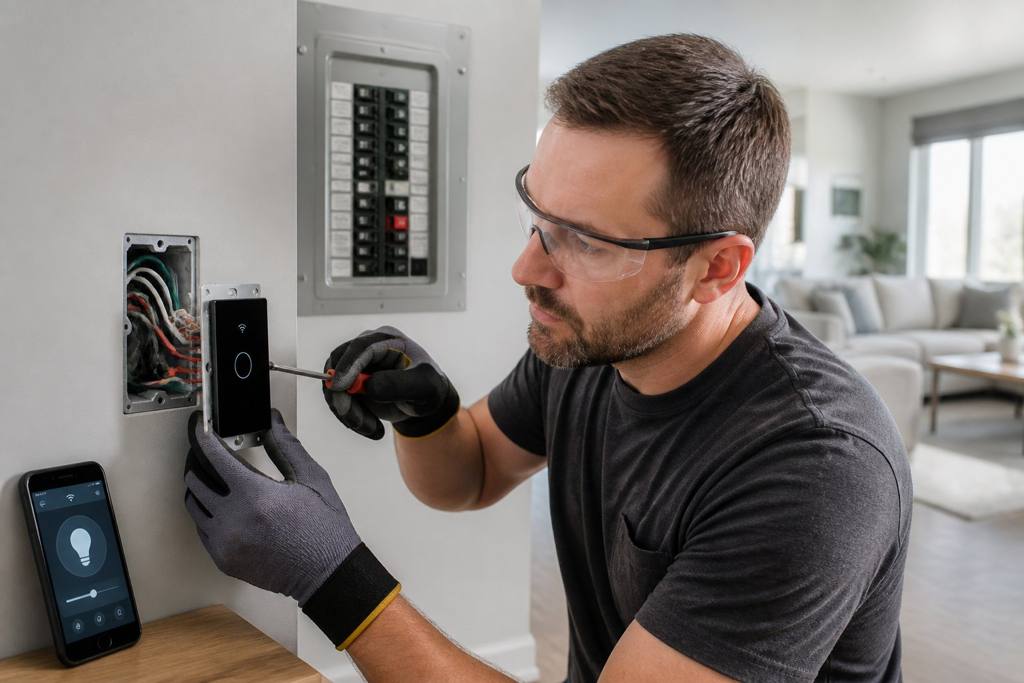
First thing: turn off the power at your breaker panel. Find the breaker for the lighting circuit you’re working on and flip it to “off.” Double-check—the light shouldn’t turn on.
Don’t just use the wall switch; always shut off power at the breaker.
Testing for Live Wires
After the breaker’s off, test the wires with a non-contact voltage tester or multimeter. Hold it near each wire in the box.
If you get a signal, the wire’s still live—don’t touch it. Go back, shut off power again, and retest until you’re sure it’s safe.
Removing Existing Switch Safely
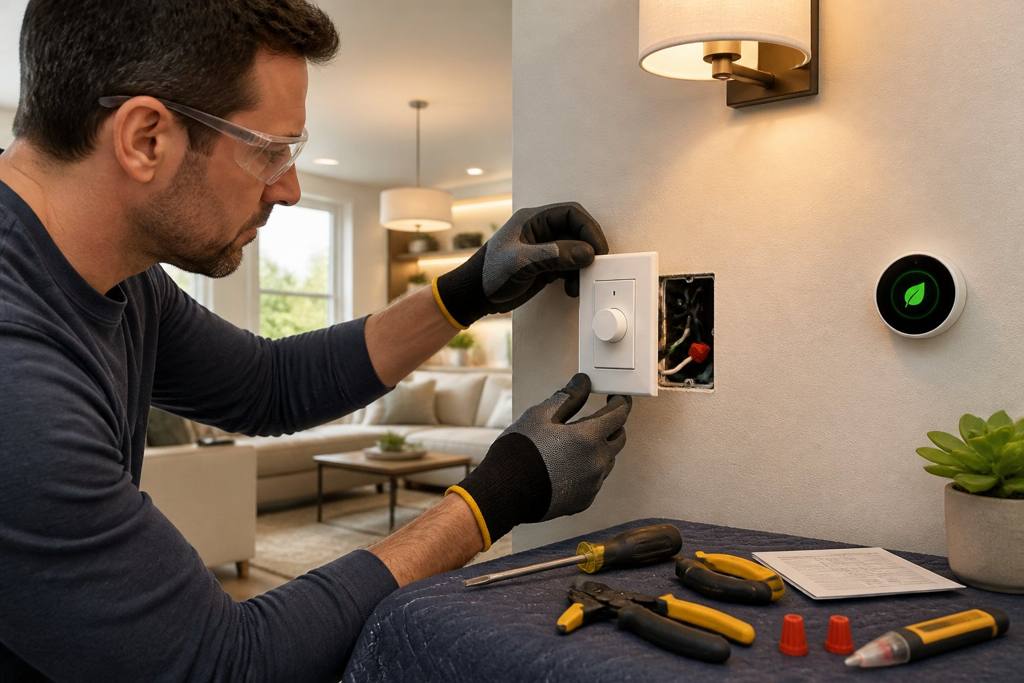
Double-check the power’s off. Use a screwdriver to remove the cover plate—don’t rush, you don’t want to crack anything.
Unscrew the switch and gently pull it out to see the wiring. Take note of which wires go where; a quick phone pic can help for reference later. Don’t yank on the wires.
If you get stuck or feel uneasy, Magnify Electric’s licensed electricians are just a call away. We handle everything from simple swaps to complex jobs, so you don’t have to sweat it.
Step-by-Step Guide to Installing Dimmer Switches
Installing a dimmer switch takes careful wiring, solid mounting, and a little attention to detail. Let’s walk through it.
Wiring the Dimmer Switch
Power’s off, right? Good. Double-check with your voltage tester.
Remove the old switch, unscrew it, and pull it out. You’ll usually see a common wire, maybe traveler wires, and sometimes a ground.
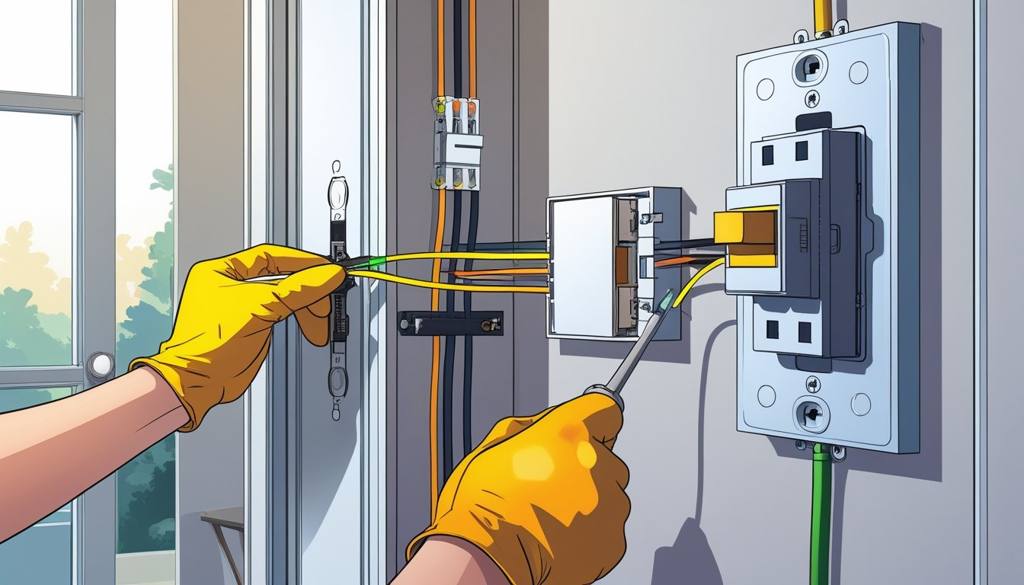
Connect the dimmer’s wires to the matching ones in the wall: the common wire (usually black) to black, travelers to the other switch wires, and ground to green or bare copper.
Use wire nuts to secure everything. Wrap with electrical tape for a little extra peace of mind. If your house has a two-wire setup and no ground, it’s worth checking with an electrician before you go further.
Securing the Switch in the Wall Box
Gently push the wired dimmer back into the box. Don’t force it—pinched or loose wires can cause headaches later.
Line up the switch with the mounting holes and use the supplied screws. Snug is good, but don’t go overboard or you’ll crack something.
Make sure the switch sits flush against the wall, no gaps.
Attaching the Cover Plate
Pick a cover plate that fits your style or matches the switch. Don’t paint it—it just makes things messy.
Place the plate over the switch and screw it in evenly, so it sits flat.
Restore power at the breaker and test your dimmer. If you get flickers or it feels hot, it’s time to call Magnify Electric for a professional look.
Testing and Troubleshooting
Once you’ve installed the dimmer, check the power, test the dimmer, and fix any weirdness like flickering or loose connections.
Powering the Circuit Safely
Before you start, power’s off at the breaker—non-negotiable. Use your voltage tester to make sure the wires are dead.
Once you’re done wiring, flip the breaker back on. If you see sparks or smell burning, kill the power fast. That means something’s not right.
Make sure the dimmer is grounded. No ground wire in your old house? You probably want a pro to check things out.
Checking Dimmer Function
With the power on, try the dimmer. The lights should brighten and dim smoothly, no flicker or buzz.
If there’s flickering, check that the dimmer and bulbs are compatible. For LEDs, only use dimmable bulbs and a dimmer made for LEDs.
If it’s not working or flickers, double-check every wiring connection. Loose wires are often the culprit.
Resolving Common Installation Issues
Flickering and buzzing usually mean you’ve got the wrong bulbs or a bad connection. Sometimes, it’s voltage fluctuations in your electrical supply (more troubleshooting here).
Make sure your dimmer is rated for the total wattage of your lights. Too much load can make it fail or act up.
If you’re stuck, Magnify Electric’s electricians can troubleshoot and fix issues, whether it’s your home or business.
Finishing Touches and Best Practices
After your dimmer’s in, take a few extra steps to make sure it works well and stays safe. You might want to adjust the dimmer settings, label the switch for clarity, and tidy up your workspace. Little things like these make living with your new dimmer a lot easier.
Adjusting Dimmer Settings
Once you’ve got your dimmer switch in place, you’ll want to tweak the settings to fit your space. Most dimmers let you set a low-level light to keep things from flickering when you turn them down.
Turn the dimmer’s adjustment dial slowly until you find that sweet spot—where the lights don’t flicker or make weird buzzing sounds. If your dimmer has presets or memory, set them up for your usual routines.
If you’re not sure how to get your dimmer just right, Magnify Electric’s team is happy to walk you through it. We’ll make sure your system works smoothly and safely.
Labeling the Switch
Labeling your new dimmer switch saves everyone a lot of guessing. Write clear labels like “Living Room Lights” or “Conference Room Dimmer” so folks know what’s what.
Stick on a removable label or a small sticker right on the plate. It really cuts down on confusion, especially if you have a bunch of dimmers close together.
In a business, labeling makes it easier for staff to use the lights properly—no more guessing, and it helps save energy too.
Cleaning Up After Installation
Once you’ve finished wiring and testing, give the area a good cleanup. Toss out any leftover wires, packaging, or dust so nothing gets in the way.
Check that the screws on the switch plate are snug but not cranked down so hard that the plate cracks. Make sure the dimmer sits firmly in the box.
If you’d rather not deal with the mess, Magnify Electric can handle everything from start to finish. Our licensed electricians clean up after themselves so your space stays tidy and safe.
When to Consult a Licensed Electrician
If you’re not confident about any step in installing a dimmer, it’s smart to call a licensed electrician. Electrical work isn’t something you want to mess up—mistakes can lead to shocks or even fire. Your safety really does come first.
If your wiring looks old, or you’re dealing with a bunch of circuits, a pro can take care of it without hassle. Sometimes, local rules require a licensed electrician for certain jobs anyway. It’s not just red tape—it keeps things up to code and safe.
Magnify Electric’s team handles both homes and businesses. We can swap out dimmer switches, add outlets, or tackle whatever electrical issue you’re facing. Our electricians make sure your system runs right and stays safe.
You should call an electrician if you notice:
- Lights that flicker or dim after you install the dimmer
- Confusion with wiring or unclear instructions
- Not having the right tools or experience for electrical work
Getting help from someone who knows what they’re doing can save you a lot of time—and money. Don’t be shy about reaching out to Magnify Electric when you need advice or a hand.
Frequently Asked Questions
Knowing how to handle wires, match the right dimmer to your bulbs, and follow safety basics makes installing dimmer switches a lot easier. Getting familiar with different switch types and wiring setups helps your dimmer work the way it should.
What are the steps to safely replace a standard light switch with a dimmer switch?
First, turn off the power at the breaker—don’t skip this. Take off the switch cover and unscrew the old switch. Carefully disconnect the wires.
Connect the new dimmer switch wires as shown in the instructions. Secure the switch, put the cover back on, and turn the power back on. Test the dimmer to see if it works.
Is it necessary to hire an electrician for installing a dimmer switch, or can I do it myself?
If you’re comfortable with basic wiring and safety, you can probably handle installing a dimmer. But if you feel unsure or nervous about it, calling a professional is the safer bet.
Magnify Electric’s licensed electricians offer reliable service for any electrical job. We make sure your installation is done right and safe, whether it’s at home or work.
How do I connect a dimmer switch when there are multiple wires involved?
If you see three or more wires, you’re probably dealing with a three-way switch. You’ll need to identify the common wire, travelers, and ground before connecting.
Follow the wiring diagrams closely, or just call a pro. Mixing up wires can cause problems or even damage your system.
Can dimmer switches work with LED light fixtures, and if so, how?
Yes, they can—but you need the right dimmer. Using a regular dimmer with LEDs might cause flickering or buzzing.
Pick a dimmer labeled “LED compatible” or made for LEDs. That way, you avoid annoying issues.
What safety precautions should I take when installing a dimmer switch?
Always shut off the breaker before you start. Use a voltage tester to double-check that the power’s off.
Don’t touch wires with bare hands, and wear insulated gloves if you have them. Double-check all your connections before you turn the power back on.
Are there different wiring procedures for installing a single-pole and a 3-way dimmer switch?
Absolutely. With a single-pole dimmer switch, you’re just controlling one light from one spot—fewer wires, pretty straightforward. A 3-way dimmer lets you control the same lights from two different places, so it’s a bit more involved and needs extra wiring.
It’s honestly easy to mix these up, so double-check you’ve got the right dimmer type before you start. If you’re unsure or things get confusing, Magnify Electric can handle any switch install safely.