
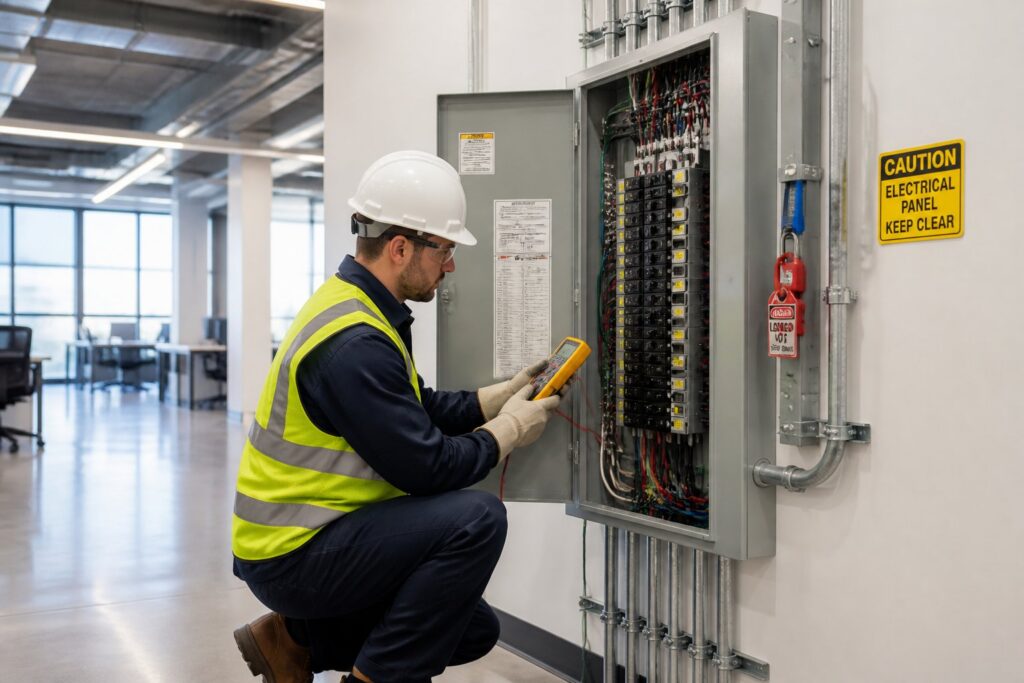
Improving electrical safety in commercial buildings? It’s not a set-it-and-forget-it thing—it needs to be routine. The smartest way is to spot the highest-risk issues, inspect them regularly, update aging equipment, and make sure your staff knows what to do when something seems off.
When you pay attention to inspection, maintenance, training, and smart upgrades, you cut fire risk, downtime, and those nasty surprise repair bills. This is true for offices, retail shops, warehouses, restaurants—anywhere demand for electricity keeps creeping up.
Identify the Highest-Risk Electrical Hazards
First things first: know where trouble usually starts. In commercial spaces, the biggest threats often come from overloaded systems, damaged parts, and water sneaking in where it shouldn’t.
Overloaded Circuits and Panels
Overloaded circuits happen all the time—especially when you keep adding equipment without updating the electrical system. Maybe you notice breakers tripping, panels running hot, flickering lights, or outlets struggling during peak times.
If the panel’s maxed out, adding more devices just creates extra heat and wear, which can kill equipment faster. A load review helps you see where you’ve outgrown the original setup.
Damaged Wiring and Loose Connections
Cracked insulation, worn-out outlets, and loose wires can cause arc faults, shocks, or just make stuff break down. Most of these problems hide behind walls or inside panels until someone actually checks.
If you catch a burning smell, buzzing, discoloration, or random power drops, treat it as a red flag. Even small connection issues can get serious fast under heavy commercial loads.
Moisture Exposure and Outdoor Vulnerabilities
Water and electricity? Never a good combo. Commercial properties often have exposed spots that need extra care—think parking lots, exterior signs, loading docks, rooftop units, or any utility room close to plumbing.
Watch for corrosion, cracked covers, missing weather seals, and standing water near electrical gear. Outdoor equipment needs proper enclosures, grounding, and protection from rain, humidity, and bumps.
Strengthen Preventive Inspection Routines
Good inspection habits catch issues before they turn into outages or injuries. They also help you spread out repairs and upgrades, so you’re not always putting out fires (sometimes literally).
Scheduled Safety Audits
Build electrical safety audits into your regular maintenance—not just when something breaks. Walkthroughs help you spot loose outlets, damaged cords, overloaded strips, and signs of heat or wear.
A commercial inspection should cover panels, transformers, emergency lights, outlets, grounding, and visible wiring. When you keep up a steady schedule, changes stand out.
Testing Protective Devices
Breakers, GFCIs, AFCIs, surge protectors, and emergency shutoffs all need regular testing. A device that sits untouched for years might not work when you really need it.
Test emergency systems to be sure they respond during a power loss or fault. This is extra important in buildings packed with sensitive gear or lots of people.
Documenting Repairs and Deficiencies
Write down every issue with the date, location, and repair status. That way, you can track recurring faults and focus on the riskiest spots.
Simple logs help with compliance, insurance, and planning future upgrades. Plus, they save the next tech from redoing work you’ve already handled.
Upgrade Critical Infrastructure for Safer Performance
Older electrical systems often can’t keep up with modern loads. Upgrades help you handle today’s demand while cutting the risk of overheating or equipment damage.
Modern Panel Capacity Planning
If your building’s grown, your electrical capacity should grow too. New HVAC, workstations, kitchen gear, servers, EV chargers—they can all push a panel over the edge.
A capacity review helps you decide if you need a new panel, a subpanel, or just some circuit tweaks. Planning ahead beats patching a system that’s already stretched thin.
Whole-Building Surge Protection
Surges can come from utility hiccups, switching events, or nearby lightning. One bad surge can fry computers, controls, lighting, and more.
Whole-building surge protection adds a solid layer of defense at the service entrance. It works best with point-of-use protection for extra-sensitive devices.
Code-Compliant Rewiring and Device Replacement
Old wiring, worn outlets, and outdated devices can overheat or cause reliability headaches. Swapping them for code-compliant materials improves safety and cuts maintenance calls.
Match devices to the job. Heavy-use areas need commercial-grade stuff that can handle the wear and tear.
Protect Occupants With Smarter Equipment Choices
The right equipment can boost safety without slowing anyone down. Lighting, detection systems, and specialty installs all help protect staff, customers, and visitors.
Commercial Lighting Improvements
Good lighting does more than save energy. It improves visibility in stairways, exits, storage, and work zones—places where spotting hazards quickly matters.
LED upgrades usually cut heat and maintenance, especially in big buildings with long hours. When you swap fixtures, you can also beef up emergency lighting and get rid of those annoying dark corners.
Smoke and CO₂ Detection Coverage
Smoke and CO₂ detectors should fit the building’s layout and use. Mechanical rooms, kitchens, or enclosed spaces might need extra attention.
Coverage gaps pop up a lot in older buildings. Take the time to review and place detectors where they’ll actually protect people—not just check a box.
Safe EV Charging and Specialty Installations
EV charging stations and specialty gear need careful planning. These loads can stress old panels and must be installed with the right protection and load management.
Same goes for other high-demand systems, like automated lighting and smart controls. The aim: simple, safe operation—no surprises for your electrical setup.
Train Staff and Prepare for Electrical Emergencies
Training gives your team a better shot at spotting danger early and staying safe. Even non-electrical staff should know the basics: warning signs and what to do.
Lockout Awareness for Non-Electrical Teams
Non-electrical staff shouldn’t remove tags, open panels, or reset anything they don’t understand. Lockout rules protect everyone during maintenance.
A short training can prevent well-meaning mistakes. It also lowers the chance of someone restoring power before it’s actually safe.
Emergency Response Steps
If electrical trouble hits, your team should know how to react—stay clear, report the issue, shut down power only if it’s safe, and keep others away.
If there’s smoke, fire, sparks, or someone’s been shocked, call emergency services right away. Clear steps save precious time.
When to Call a Licensed Electrician
Call a licensed electrician for repeated breaker trips, hot panels, burned outlets, damaged cords in tough spots, or any sign of arcing. Also call after flood damage, lightning, or big equipment failures.
In commercial buildings, waiting too long can turn a small fault into a full-blown outage. Fast service is usually safer and cheaper.
Choose a Qualified Partner for Ongoing Electrical Support
Long-term safety really depends on having a team that knows commercial systems and can jump in when things change. The right partner helps you stay ahead of repairs—not just scramble during emergencies.
What to Look for in Commercial Service
Look for a licensed crew that handles inspections, troubleshooting, repairs, upgrades, lighting, and emergency support. It’s a plus if they can work on everything from panel repairs to smart system integration.
Magnify Electric is a solid pick if you want one team for both residential and commercial work. You get licensed electricians for a wide range of needs: automated lighting, ceiling fans, smart switches, Lutron systems, EV charging, outdoor lighting, outlets, recessed lighting, TV installs, surge protectors, wiring, panel upgrades, troubleshooting, portable generator hookups, smoke and CO₂ detectors, and all sorts of general improvements.
Why Local Experience Matters in Central Texas
Local know-how makes a difference. Buildings in Central Texas face unique challenges—heat, storms, old equipment, fast growth. A team that regularly works in Spicewood, Austin, Bee Cave, Lakeway, Dripping Springs, Georgetown, Leander, Round Rock, Kyle, Cedar Park, Liberty Hill, Westlake, The Hills, Briarcliff, Horseshoe Bay, Sunset Valley, Hutto, and other Central Texas spots can give you solutions that fit.
That kind of experience can speed up inspections, planning, and repairs. Plus, it’s handy when you need help with both routine maintenance and urgent issues.
Residential and Commercial Capabilities Under One Team
Some folks want one trusted company for everything. That’s especially true if you manage business properties, home offices, rentals, or multiple buildings.
Magnify Electric covers simple fixture swaps, full upgrades, safety checks, smart home setups, commercial lighting, and emergency support, making it easier to keep your systems consistent and well cared for.
Frequently Asked Questions
What are the most common electrical hazards in commercial buildings?
The most common hazards? Overloaded circuits, damaged wiring, loose connections, moisture, and aging panels. Also keep an eye out for worn devices, bad breakers, and equipment that pulls more power than the system can handle.
What are the best practical tips to reduce electrical risks for staff and visitors?
Keep panels clear, fix damaged outlets and cords fast, test safety devices, and check that emergency lights work. Train staff to report flickering lights, burning smells, tripping breakers, and any visible damage right away.
How often should electrical inspections and testing be done in a commercial property?
It depends on the building’s size, age, and use, but most commercial spaces should get inspected at least once a year. High-demand areas might need more frequent testing, especially for protective devices and critical gear.
What should be included in an electrical safety maintenance checklist?
Your checklist should hit panels, breakers, wiring, outlets, switches, lighting, grounding, surge protection, emergency systems, and any visible wear. Add repair notes, test results, and follow-up dates so nothing slips through.
What are the key electrical safety rules that workplaces should follow?
Keep equipment in good shape, don’t overload outlets, use the right protective devices, and don’t let unqualified staff work inside panels. Keep areas dry, use approved cords and devices, and follow lockout rules during maintenance.
How can businesses spot early warning signs of faulty wiring or overloaded circuits?
Keep an eye out for outlets that feel warm, lights that flicker, breakers that trip more than they should, weird buzzing noises, or any scorch marks and burning smells. Sometimes, equipment acts up or loses power when you need it most—yeah, that’s usually a hint you should call in a pro to take a look.