
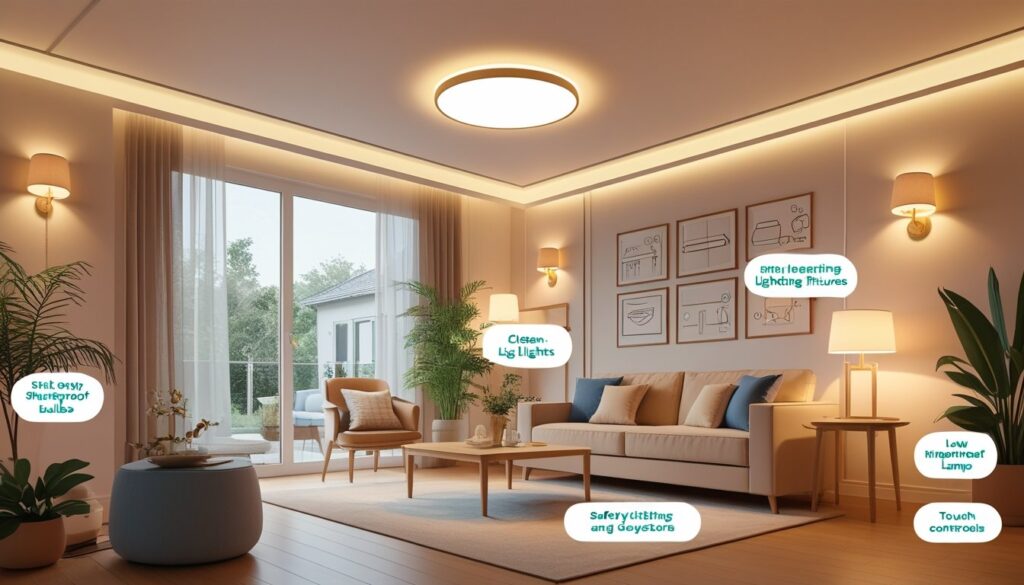
Choosing safe lighting for your home isn’t just about style—it’s about keeping your family and property protected. The safest lighting options use energy-efficient technology like LED bulbs and are installed correctly to prevent electrical hazards. You’ll save money on energy bills and lower your risk of fire or electrical shock.
When selecting lighting, think about how and where the lights will be used. Outdoor lights need to be weatherproof and right for your space, while indoor lights should fit the room’s size and function. Using the right materials and proper installation methods is key to keeping your home safe and making sure everything works as it should.
If you’re not confident about installation or want to upgrade your lighting, Magnify Electric’s licensed electricians can help. We handle everything from simple fixture swaps to big electrical projects for homes and businesses. Our team makes sure your lighting is safe and set up just the way you want.
Understanding Lighting Safety Standards
When you pick lighting for your home, knowing about safety standards can help you avoid risks like shocks or fire. Spotting proper certifications and learning what safety marks really mean lets you make smarter, safer choices.
Importance of Certifications
Certifications mean a lighting product has passed certain safety tests. These look for electrical hazards, check heat resistance, and test durability. Buying certified lights lowers your chance of dealing with faulty wiring or dangerous materials.
Look for labels from trusted organizations that test and approve lighting. These marks mean experts have checked the product. Without them, you might end up with something that fails during normal use.
At Magnify Electric, we always suggest choosing lights with recognized certifications. It’s just a smarter way to keep your home and family out of trouble.
UL vs. CE Markings
UL (Underwriters Laboratories) and CE (Conformité Européenne) are two common safety marks. UL is big in the U.S. and focuses on strict electrical safety tests. CE is required in Europe and covers safety, health, and environmental rules.
If your lights are UL listed, they’ve passed detailed safety checks for American homes. CE marked products meet EU rules but might not hit every U.S. standard.
When shopping in the U.S., go for UL markings if you want the best assurance. Some products have both, but it’s smart to double-check they actually meet local codes.
How to Identify Safe Products
When you’re picking lighting, check the packaging and product info closely. Here’s what you want:
- Certification labels like UL or ETL.
- Clear voltage and wattage limits.
- Manufacturer’s name and contact details.
- Instructions and warnings for safe installation.
- Materials that feel sturdy, not flimsy or cheap.
Skip anything with missing labels, sketchy packaging, or unclear info.
If you want peace of mind, Magnify Electric’s licensed electricians can help you pick and install safe lighting for your home or business. Our team handles everything from fixture swaps to full electrical setups, making sure every job meets current safety standards.
Types of Safe Lighting Options
Safe lighting means thinking about heat, energy use, and how each type fits your home’s electrical system. Some lights use less power and stay cooler, while others need more caution to avoid burns or flickering. Knowing the ups and downs helps you choose what works best for each room.
LED Safety Advantages
LED lights are a solid pick for safety and energy savings. They run at much lower temps than older bulbs, so there’s less fire risk and a lower chance of burns for kids or pets. LEDs use less electricity, so you’ll notice a difference in your bills without losing brightness.
They last ages—up to 25,000 hours or more—so you’re not constantly swapping bulbs and risking electrical problems with worn-out ones. LEDs also put out very little UV light, which is easier on your skin and home furnishings.
Since they come in all shapes and sizes, you can find LEDs for nearly any fixture. If you want help upgrading safely, Magnify Electric’s electricians can walk you through the best LED solutions for your needs.
Halogen Light Considerations
Halogen bulbs are bright and crisp, making them popular for task or accent lighting. But they get really hot—seriously, don’t touch—so there’s a higher risk of burns or fire if they’re near flammable stuff like curtains or paper.
If you go with halogen, use fixtures built to handle the heat, and keep bulbs away from anything that might catch fire. Some halogen bulbs need special dimmers to avoid flicker or other issues.
They also use more energy than LEDs, so your bills can creep up. Honestly, for most spots where heat is a concern, Magnify Electric suggests going with something safer and cooler.
Fluorescent Lighting Risks
Fluorescent lights, including CFLs, save energy but bring a few safety headaches. They contain a bit of mercury, which is toxic, so broken bulbs need careful cleanup to avoid exposure.
Old or faulty ballasts can make these lights flicker or buzz, leading to headaches or eye strain. Some folks are sensitive to the UV they emit, too.
When working with fluorescents, use well-maintained gear and toss damaged bulbs. If electrical work isn’t your thing, Magnify Electric’s crew can help you handle these safely at home or work.
Selecting the Right Fixtures for Each Room
Picking the right fixtures means thinking about how each room is used and what safety needs matter. You want lights that match the room’s purpose, fit the space, and keep your family safe. Pay attention to moisture, electrical load, and features that suit everyone in your household.
Bathroom and Wet Area Guidelines
Bathrooms and wet areas need lighting that can handle moisture without causing electrical risks. Look for fixtures rated for damp or wet spots—these are usually marked “IP rated.” They keep water out and lower the chance of shocks.
Use sealed or enclosed covers, and avoid exposed bulbs near showers or sinks. Ground Fault Circuit Interrupter (GFCI) outlets are a must—they cut power quickly if there’s a problem. Also, go for cool-running fixtures or LEDs to avoid burns or heat damage in small, steamy rooms.
Kitchen Lighting Safety
The kitchen’s busy, so you want lighting that’s both bright and safe. Pick fixtures with shields or covers to guard bulbs from splashes and steam. Make sure work areas like counters and stoves have clear, direct light to help prevent accidents.
Skip fixtures with fragile parts that might break. Use energy-efficient LEDs for less heat and longer life. Your kitchen lights should be on circuits that can handle the load—this is where professional help from Magnify Electric comes in handy. We make sure your kitchen is well-lit and up to code.
Children’s Room Considerations
For kids’ rooms, safety and durability come first. Choose fixtures that are sturdy and don’t have small pieces that could break off. Avoid lights that get really hot or have long cords kids might trip on or tug.
Use soft, warm bulbs for a gentle vibe that won’t strain young eyes. Night lights with low wattage and auto shut-off features are nice, too. Keep switches and plugs out of reach or use outlet covers to prevent accidents. If you’re on the fence, Magnify Electric can help you choose safe, kid-friendly lighting.
Electrical Safety Precautions
When you’re choosing lighting for your home, focus on safe installation, avoid overloading circuits, and keep your fixtures in good shape. These steps help you dodge shocks, fires, and expensive repairs down the road.
Proper Installation Techniques
Always shut off power at the breaker before touching any fixture. Use a voltage tester to double-check wires aren’t live. Follow the manufacturer’s instructions, and make sure all wiring connections are tight and insulated.
Not sure about wiring or fitting a fixture? Call a licensed electrician. Magnify Electric’s team can make sure everything meets local safety codes, so you don’t have to worry.
Use the right tools and materials. Wire nuts should fit snugly, and the box needs to support the fixture’s weight. Don’t just twist wires together without connectors—loose connections can cause shorts or sparks.
Avoiding Overloading Circuits
A common hazard is plugging too many devices into one circuit. Each circuit has a limit, usually listed on your breaker. Overloading can trip breakers or even cause fires.
Check the wattage of your fixtures and add up the total per circuit. Swap old bulbs for energy-efficient LEDs to cut down the load. If you want to add more lights or outlets, have an electrician from Magnify Electric check your system’s capacity.
Use dedicated circuits for high-power lamps or several fixtures running at once. Avoid relying on extension cords or power strips for permanent lighting.
Maintenance Tips for Long-Term Safety
Check your lighting fixtures every so often for loose parts, frayed wires, or scorch marks. Replace damaged cords and bulbs right away. Dust fixtures to keep them from overheating.
Test switches and dimmers to make sure they work smoothly—no flickering or buzzing. If you notice weird sounds or smells, turn off the power and call a pro.
For outdoor lighting, keep everything dry and protected. Use weatherproof fixtures and covers outside.
Looking after your lights keeps your home safer and helps your electrical system last longer. Magnify Electric is ready to help with repairs or upgrades for worry-free lighting.
Eco-Friendly and Non-Toxic Lighting Choices
Safe lighting means thinking about your health and the environment. You want bulbs that cut down on harmful emissions and skip toxic materials. It’s better for your indoor air and your carbon footprint.
Low-Emission Bulbs
Low-emission bulbs give off less heat and fewer nasty gases than old-school bulbs. LED bulbs are a top pick—they use up to 80% less energy and last way longer. They barely get warm, so they’re safer to touch and less likely to start a fire.
Unlike incandescents, low-emission bulbs don’t waste energy by heating the room. That helps your home stay cooler and lowers your electricity bill. Choosing LEDs or similar bulbs also cuts down on greenhouse gases from energy production.
Mercury-Free Options
Some bulbs, like fluorescents, use mercury, which is toxic if a bulb breaks. To avoid this, pick mercury-free bulbs like LEDs or halogens. These don’t have hazardous chemicals, so you don’t have to stress about spills or toxic waste.
Mercury-free lighting is just safer for your family and the planet. If one breaks, the health risk is way lower. Magnify Electric’s licensed electricians can help you find and install the best mercury-free lighting for your home or business, making things safer and more efficient. Whether you’re upgrading or adding new lights, we’ve got you covered.
Frequently Asked Questions
Choosing safe lighting means picking the right bulbs, thinking about your health, and making sure the lights fit your space. You might also want a few design tips for a home that’s both safe and comfy.
What types of light bulbs are safest for your eyes when lighting your home?
LED bulbs are among the safest for your eyes. They don’t get too hot and flicker less than old-school bulbs, so there’s less strain.
Look for bulbs labeled “warm white” or with a color temperature around 2700K-3000K. That gives you a softer light that’s easier on the eyes. Try to avoid super-bright or harsh blue light, especially in living spaces.
How can one ensure their home lighting is safe for their overall health?
Use a mix of natural and artificial light to keep your body’s rhythm in check. Too much blue or harsh light at night can mess with your sleep.
Adjust the brightness and color of your lights to match the time of day. Dimmer switches are handy—they let you control the brightness and help prevent glare, which can lead to headaches or eye fatigue.
What are some key considerations when creating a lighting layout for your house?
Plan for different types of lighting—task, ambient, and accent. Each one does a job: task lights help you see what you’re doing, ambient lights set the mood, and accent lights highlight features or add a little drama.
Think about where you spend most of your time and what you’re usually up to in those spots. Kitchens and stairways, for example, need plenty of light so you don’t trip or fumble around.
Can you explain the “3 lighting rule” and how it applies to home lighting design?
The “3 lighting rule” is pretty straightforward: use three layers of light in a room—ambient for general brightness, task for focused work, and accent for style or emphasis.
Mixing ceiling lights, lamps, and spotlights gives the space some depth and keeps things from looking flat or gloomy.
What factors should you consider when selecting a lighting style that’s safe and suits your home?
Choose a style that matches your home’s vibe but also keeps safety in mind. Bathrooms, for instance, really need waterproof fixtures—no one wants a shock in the shower.
Check that fixtures are well-made and have proper certifications. It’s tempting to go cheap, but uncertified products just aren’t worth the risk.
What are the “4 C’s” of lighting and how do they impact the safety and aesthetics of home lighting?
The “4 C’s”—Color temperature, Color rendering, Contrast, and Control—shape how lighting feels in your home. Each one plays its own role in comfort and safety.
Color rendering lets you see colors as they really are, which can cut down on eye strain. Contrast makes it easier to spot details. With control, you can tweak the lighting to match whatever you’re doing. When you get these right, your space just feels better and safer.
If you need help with lighting, upgrades, or new fixtures, Magnify Electric has licensed electricians ready to jump in. We handle residential and commercial projects, and honestly, we just like making sure your place looks and works its best. Check out our expert solutions.