
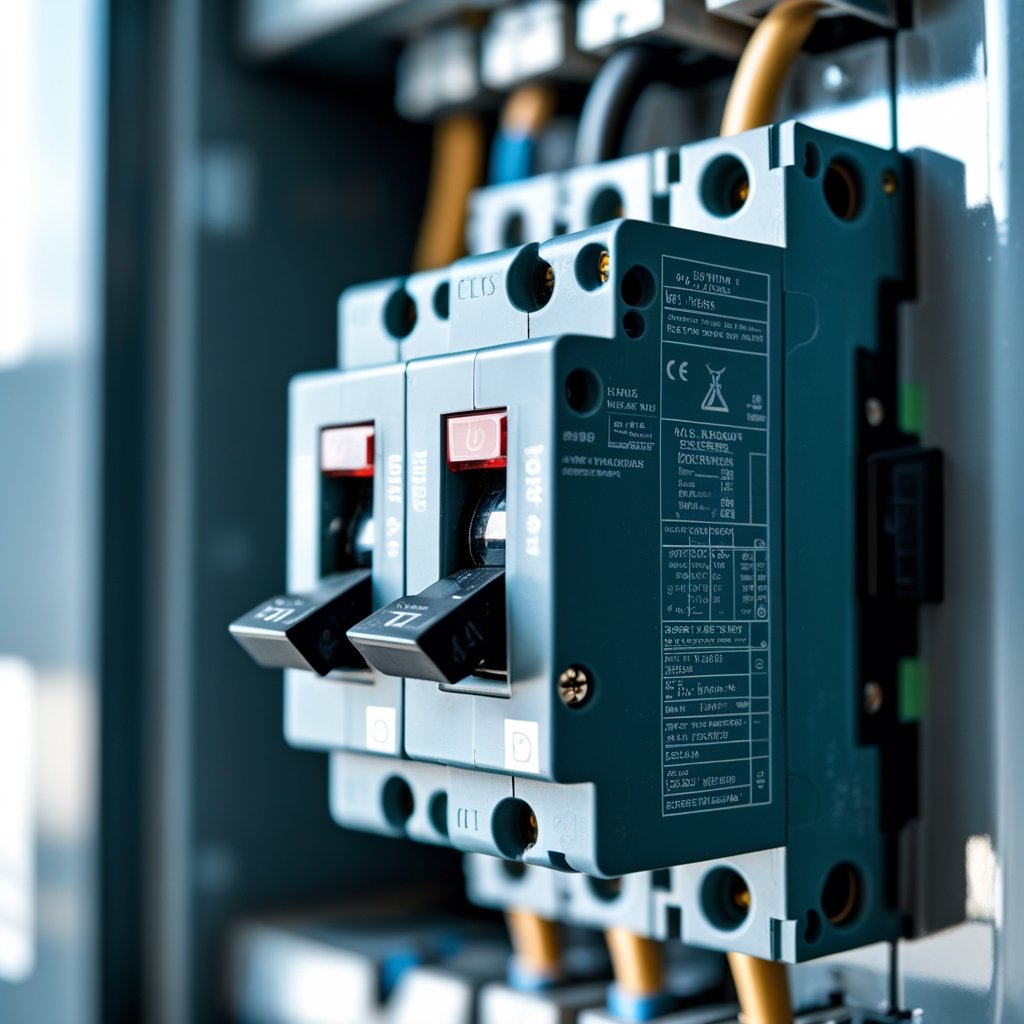
Understanding the difference between an arc fault breaker and a ground fault breaker is key to keeping your home safe. An arc fault breaker protects against sparks and electrical fires caused by damaged or loose wires, while a ground fault breaker prevents electric shocks by stopping current leaks to the ground.
Knowing which one you need can help you avoid accidents and costly repairs. Both breakers play important roles but work in very different ways.
Your ground fault breaker is especially useful near water, like in kitchens or bathrooms. It cuts power quickly if electricity escapes its normal path.
On the other hand, your arc fault breaker focuses on stopping dangerous arcs or sparks inside the wiring. These arcs can easily start fires if not caught.
What Is an Arc Fault Breaker?
An arc fault breaker is a special type of circuit breaker that spots tiny sparks or arcs in your home’s wiring. These sparks often happen when wires are damaged or loose.
The breaker quickly cuts power to stop these sparks from causing fires. It detects dangerous arcs, the types of arcs it catches, and where you should use these breakers.
How Arc Fault Breakers Work
Arc fault breakers watch the electrical current in your wiring closely. They look for unusual sparks, also called arcs, which happen when electricity jumps between wires or gaps.
These arcs can start fires if not stopped quickly. When the breaker senses an arc, it immediately shuts off the power to the circuit.
This fast action helps reduce the risk of electrical fires in your home. Unlike regular breakers that only respond to big problems like short circuits, arc fault breakers catch small dangerous sparks that might not trip other breakers.
Types of Arc Faults Detected
Arc fault breakers can detect two main types of arcs:
- Series arcs happen in one wire when a break or loose connection causes electricity to jump across the gap.
- Parallel arcs occur between two wires that shouldn’t touch, like live and neutral wires making contact.
These breakers sense both kinds of arcs to protect your home better. Not all arcs are dangerous, so the breaker uses smart sensors to avoid shutting off power from harmless sparks, such as those from light switches or motors.
Common Applications
You want arc fault breakers in areas where wiring damage is more likely, such as bedrooms, living rooms, and other general living spaces. Modern building codes often require these breakers for most circuits inside your home.
They are especially useful where people use many appliances or where wiring might be old or hidden in walls.
Using arc fault breakers helps you reduce fire risks caused by faulty or aging wiring.
Understanding Ground Fault Breakers
Ground fault breakers protect you from electric shock by detecting small changes in electrical current. They quickly shut off power when they find an imbalance.
How Ground Fault Breakers Function
A ground fault breaker watches the flow of electricity in a circuit. It senses when electricity leaks away from the normal path.
This usually happens if the current travels through water or a person, which could cause a shock. When the breaker spots this difference, called a ground fault, it shuts off the power right away.
This can happen in less than a second. This fast action stops dangerous shocks before they hurt anyone.
Where Ground Fault Breakers Are Used
You should have ground fault breakers in places where water and electricity meet. These places include kitchens, bathrooms, laundry rooms, and outside areas.
Since water increases the chance of shocks, these breakers are especially important in wet or damp spots. Using them helps reduce the risk of injury or even death from electric shocks in these areas.
Detection Capabilities
Ground fault breakers detect current leakage as small as 4 to 6 milliamps. Even tiny amounts of stray current can harm you.
The breaker compares the current going out with the current coming back. If it doesn’t match, it knows some current is leaking and will cut the power quickly to prevent danger.
This detection differs from other breakers that only stop power from overloads or short circuits. Ground fault breakers are unique in protecting against shock risks.
Key Differences Between Arc Fault and Ground Fault Breakers
Arc fault breakers and ground fault breakers protect your home’s electrical system in very different ways. Knowing how they work and what risks they stop can help you decide where each should be used.
Faults Detected
An arc fault breaker looks for dangerous sparks or arcs caused by damaged or loose wiring. These arcs can create high heat and start electrical fires if left unchecked.
The breaker trips immediately to stop the circuit and prevent a fire. A ground fault breaker detects any current that leaks from a hot wire to the ground.
This usually happens when electricity flows through water or a person, creating a shock hazard. The breaker senses even tiny current differences and shuts off power quickly to protect you.
Electrical Protection Provided
Arc fault breakers mainly protect your home from fire risks caused by faulty electrical connections. They respond to irregular electrical arcs before they ignite nearby materials.
Ground fault breakers protect you directly from electric shock. They monitor the flow of electricity between wires and the ground.
If something causes even a small leak, they cut power immediately to avoid harm.
Use Case Scenarios
You’ll find arc fault breakers mostly in living areas like bedrooms and family rooms. These places have many devices plugged in, increasing the chance of faulty wiring and sparks.
Ground fault breakers are essential near water sources like kitchens, bathrooms, and outdoor outlets. Since water conducts electricity, these breakers provide safety against shock when you use appliances near wet areas.
Installation and Safety Considerations
When you install arc fault and ground fault breakers, you need to think about how the wiring should be done and what rules you must follow. Each part plays a role in making sure your electrical system works right and protects you properly.
Wiring Requirements
For an arc fault circuit interrupter (AFCI), connect the breaker to the circuit’s hot and neutral wires. A separate neutral wire connection is often needed because AFCIs monitor both wires for irregular arcs.
Ground fault circuit interrupters (GFCIs) also require proper connections to work. Connect the load wires correctly to protect downstream outlets or devices.
These breakers monitor electrical current flow between hot and neutral wires, tripping quickly if they sense a ground fault. Using the right wire size and following the breaker’s instructions is important for both types.
Incorrect wiring can cause nuisance trips or prevent the breaker from working at all.
Code Compliance
You must follow local electrical codes when installing these breakers. The National Electrical Code (NEC) requires AFCIs in many living areas, such as bedrooms, to reduce fire risks from arc faults.
GFCIs are often required near water sources like kitchens, bathrooms, and outdoor outlets to prevent electric shocks. Make sure you check the latest NEC updates because rules change over time.
Your breaker type and location must match code demands. Licensed electricians usually help with this to ensure your installation is safe and legal.
Safety Benefits
Arc fault breakers help stop fires before they start by detecting tiny sparks inside wires. This is important in walls or ceilings where fires might go unnoticed early on.
Installing AFCIs reduces the chance of electrical fires caused by damaged or old wiring. Ground fault breakers protect you from electric shocks.
They turn off the power quickly if current leaks to the ground, especially in wet areas. This is key to avoiding serious injury.
Using both AFCI and GFCI breakers in your home gives you layered protection. Proper installation lets you enjoy safer electrical systems every day.
Troubleshooting Common Issues
When your breaker keeps tripping or doesn’t work right, knowing what to check first can save time and frustration. Problems often come from false trips or wiring mistakes.
Understanding these can help you fix the issue or decide when to call a professional.
Identifying Nuisance Tripping
If your arc fault or ground fault breaker trips often without a clear reason, it might be nuisance tripping. This happens when the breaker is too sensitive or reacts to harmless electrical signals.
Look for common causes like faulty appliances, loose connections, or older wiring. Sometimes, a device plugged into the circuit causes the breaker to trip.
You can unplug devices one by one to find the problem. If the breaker constantly trips with no devices connected, the wiring could be damaged or the breaker itself might be faulty.
Testing the breaker with a multimeter or replacing it could be necessary.
Resolving Installation Problems
Incorrect installation is a major cause of breaker issues. Make sure the breaker is the right type for your system: an AFCI breaker for arc fault protection or a GFCI breaker for ground fault.
Check that all wires are securely connected to the breaker terminals. Loose or reversed wires can cause the breaker to trip or not work at all.
If you install a GFCI breaker, ensure it protects the entire circuit, not just an outlet. This helps detect faults anywhere on the line.
Always turn off power before checking connections. If you’re unsure about the installation, it’s safer to get a licensed electrician to help.
Choosing the Right Breaker for Your Needs
When picking a breaker, think about what you want to protect. Different breakers guard against different problems.
Arc Fault Circuit Interrupters (AFCIs) protect your home from fires caused by electrical arcs. These arcs happen when wires are damaged or connections are loose.
If you want to reduce fire risk, AFCIs are a smart choice. Ground Fault Circuit Interrupters (GFCIs) protect you from electrical shock.
They work by cutting power quickly if they detect electricity leaking to the ground. GFCIs are best for places where water and electricity mix, like kitchens, bathrooms, and outdoor spots.
Choose a breaker that matches the amperage needs of your circuit. Using the wrong size can cause overloads or damage your electrical system.
Here’s a quick guide:
| Breaker Type | Main Protection | Best Location |
|---|---|---|
| AFCI | Prevents electrical fires | Bedrooms, living rooms |
| GFCI | Prevents electrical shock | Bathrooms, kitchens, outdoors |
| Standard | Protects from overload | General circuits |
Always check your breaker panel and electrical codes to make sure you use the right breaker. This keeps your home safe and your power running smoothly.
Frequently Asked Questions
What are the key differences in wiring between arc fault breakers and ground fault breakers?
Arc fault breakers monitor for electrical arcs and need both the hot and neutral wires connected to them. This helps detect any electrical sparks.
Ground fault breakers detect current leakage to the ground. They also connect to the hot and neutral lines but focus on differences between them that signal leakage.
In which locations are the use of arc-fault or ground fault breakers mandated by code?
AFCI breakers are required in most living areas like bedrooms and living rooms, where electrical fires are a risk.
GFCI breakers must be installed in places with water presence, such as kitchens, bathrooms, garages, and outdoor outlets to prevent shock.
What might cause an arc fault or ground fault breaker to trip frequently?
Loose or damaged wiring can cause these breakers to trip often. If there are frequent trips, check your wiring connections and the condition of devices on the circuit.
How do AFCI, GFCI, and CAFCI breakers vary in protection?
AFCI breakers protect against electrical arcs that could start fires.
GFCI breakers protect you from electric shock caused by current leaking to ground.
CAFCI breakers combine both protections. They guard against arcs and ground faults.
When is it appropriate to choose AFCI breakers over GFCI in specific rooms, like a kitchen?
In kitchens, you need GFCI breakers near water sources to protect against shock.
AFCI breakers are also required for the kitchen’s general circuits to reduce fire hazards.
Is it necessary to install both GFCI and AFCI protection in a household circuit?
Yes, some circuits need both protections for shock and fire safety.
You can use combo breakers (CAFCI) that provide both protections in one device.