
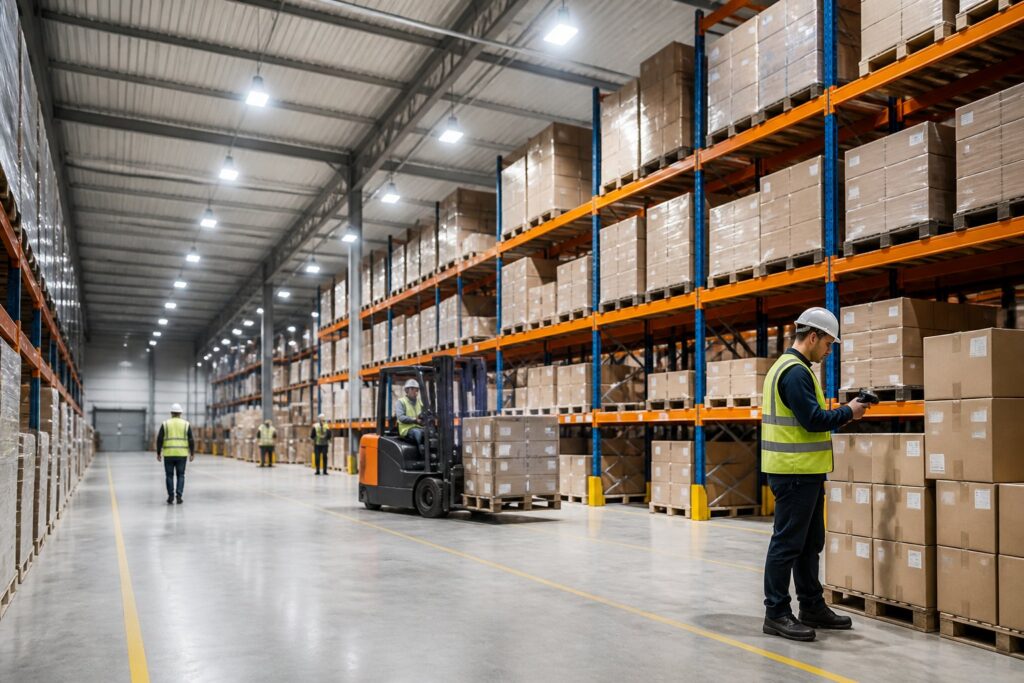
Upgrading your warehouse lighting can boost safety, accuracy, and lower your operating costs. But it’s not just about tossing in brighter bulbs. The real trick is matching lighting to each area, using smarter controls, and planning the job so your team can keep working.
Once you figure out how to upgrade lighting in warehouses properly, you’ll cut dark corners, reduce maintenance headaches, and make things safer for everyone. A smart upgrade also helps you use less energy and makes daily tasks—like picking, packing, loading, and checking inventory—a whole lot easier.
Assess Current Lighting Conditions
A solid upgrade starts with a clear look at what you’ve already got. You’ll want to spot weak lighting, wasted energy, and those spots where glare or shadows slow people down.
Measure Light Levels and Coverage
Take a walk through your warehouse during normal hours and check light levels in aisles, storage racks, docks, packing spots, and walkways. Notice ceiling heights, fixture spacing, and where things just feel off—some areas might be blinding, others just too dim.
If you’re dealing with high ceilings or open zones, a few well-placed readings can tell you a lot. The goal isn’t just “more light”—it’s getting even coverage where people actually need it.
Identify Safety and Productivity Gaps
Look for spots where folks slow down, make mistakes, or just avoid because they can’t see well. Stairways, loading docks, corners, and shelf ends are usually trouble spots.
Bad lighting can hide labels, pallet edges, spills, and obstacles. If your team’s squinting or grabbing flashlights to get the job done, it’s time for a change.
Choose the Right Fixture Types
The “right” fixture depends on ceiling height, layout, and what’s happening in each area. Big open spaces need broad, efficient lighting, while packing and detail work need focused task lights.
LED High Bays for Open Storage Areas
LED high bay fixtures are ideal for large bays with tall ceilings. They spread light across aisles and open floors, making them a go-to for retrofits.
LED high bays also last longer, so you won’t be dragging out lifts for bulb changes as often. That’s a win, especially when fixtures are way up there.
Task Lighting for Packing and Workstations
Packing tables and shipping stations need more focused light than the rest of the building. Task lighting cuts shadows and helps with reading labels, scanning, and order checks.
Add adjustable fixtures or extra lights where people need them. A mix of general and task lighting usually works better than a one-size-fits-all approach.
Improve Controls and Automation
Lighting controls make a real difference in energy use and everyday convenience. Instead of blasting every fixture at full power all day, you can match light levels to who’s there, what time it is, and how much daylight you’ve got.
Occupancy Sensors and Daylight Harvesting
Occupancy sensors turn lights on when someone walks in and off when nobody’s around. In low-traffic spots like storage aisles, this can save a chunk of energy.
Daylight harvesting uses sunlight from skylights or windows and dims fixtures when there’s enough natural light. In warehouses with big roof openings, you can keep things bright without wasting electricity.
Zoned Switching for Operational Flexibility
Zoned switching lets you control different parts of the warehouse separately. You can keep docks bright during shipping, dim unused storage, or just light up active work zones after hours.
This setup gives you more control as shifts and demand change. Plus, it’s easier to tweak things later without rewiring the whole building.
Plan for Electrical Capacity and Compliance
Before you start swapping fixtures, check if your electrical system can handle the upgrade. A lighting project should improve performance without overloading anything or causing code issues.
Circuit Loading and Panel Considerations
LED systems usually use less power than older lights, which is great. Still, review your panel capacity, circuit load, and wiring condition before making changes.
If your warehouse has older wiring, a lighting upgrade might be a good time to fix weak spots. That could mean panel upgrades, circuit balancing, or replacing damaged wiring.
Code Requirements and Emergency Lighting
Warehouse lighting has to meet local and national codes, including emergency exit lights. Check that fixtures don’t block safety routes, sprinklers, or building access.
If you’ve got compliance worries, a licensed electrician can help you steer clear of delays or failed inspections. Test your emergency lighting during the upgrade—don’t leave it for later.
Reduce Downtime During Installation
A warehouse lighting project should fit your schedule, not the other way around. Careful planning keeps orders moving while you upgrade.
Phased Retrofit Scheduling
A phased retrofit lets you replace lighting in sections, not all at once. Start with high-priority zones—docks, main aisles, or areas that run longest.
This reduces disruption and lets you test results before moving on. You can also tweak fixture spacing or controls if something’s off in the first section.
Maintenance Access and Fixture Placement
Install new fixtures where you can reach them for future maintenance. If you make access easier now, you’ll save time later when something needs service.
Try to avoid spots that make cleaning, loading, or rack changes harder. Good layout supports both lighting and warehouse workflow.
Work With Qualified Electrical Professionals
A warehouse lighting upgrade touches power, safety, workflow, and compliance. Working with a qualified electrical team helps you avoid mistakes that can slow the job or cause long-term headaches.
What to Look for in a Commercial Electrical Team
Pick a team with real commercial and industrial experience—not just folks who do houses. You want licensed electricians who can handle fixture swaps, troubleshooting, safety checks, panel upgrades, and smart lighting controls.
Magnify Electric is a solid pick for Residential and Commercial Electrical Work. They handle everything from simple fixture changes to full upgrades, smart home systems, emergency support, automated lighting, ceiling fans, switches, Lutron controls, EV charging, outdoor lighting, outlets, recessed lighting, TV installs, surge protectors, wiring, panel work, troubleshooting, generator hookups, smoke and CO₂ detectors, and general electrical improvements for homes and businesses.
Long-Term Service, Repairs, and Expansion Support
Your lighting system should be easy to maintain and ready for future changes. Pick a team that’ll come back for repairs, add controls, expand coverage, or help as your layout evolves.
Magnify Electric serves customers in Spicewood, Austin, Bee Cave, Lakeway, Dripping Springs, Georgetown, Leander, Round Rock, Kyle, Cedar Park, Liberty Hill, Westlake, The Hills, Briarcliff, Horseshoe Bay, Sunset Valley, Hutto, and throughout Central Texas. If you need ongoing support, having a local crew makes scheduling and service much easier.
Frequently Asked Questions
Which lighting options work best for large warehouse spaces and high ceilings?
LED high bay fixtures usually work best for big spaces with tall ceilings—they give strong, even light over wide areas. For detail work, add task lighting at packing stations or inspection tables.
How can I calculate the right brightness levels for each area of my warehouse?
Measure current light in aisles, docks, storage, and workstations, then compare those numbers to what each task needs. Fine work usually needs more focused light than general storage, so one brightness level rarely fits all.
What energy and cost savings can I expect from switching to LED fixtures?
Most warehouses see energy and maintenance costs drop after switching to LEDs, since they use less power and last longer. Your exact savings depend on hours of use, current fixtures, and whether you add controls like sensors or dimmers.
How do I choose the right beam angle and fixture spacing to avoid dark spots?
Beam angle depends on ceiling height, aisle width, and fixture spacing. A good layout spreads light evenly—no hot spots, shadows, or dim stripes between rows.
What lighting controls like motion sensors or daylight sensors are worth adding?
Occupancy sensors are great for low-traffic zones. Daylight harvesting works if you’ve got skylights or strong sunlight. Zoned switching helps too, since you can light only the areas that are active during each shift.
How can I plan an installation to minimize downtime and keep operations running smoothly?
Try breaking the warehouse upgrade into phases, tackling the most important sections first. Honestly, scheduling work during shift changes, off-hours, or regular maintenance windows can make a big difference. That way, your team can keep things moving while the retrofit’s happening in the background.