
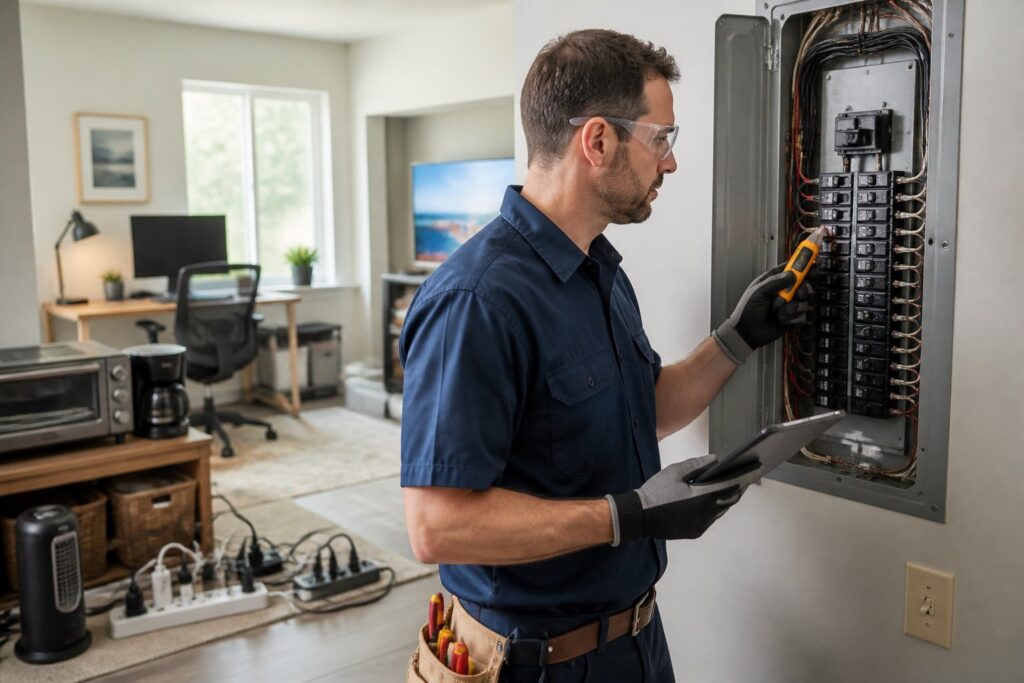
If you’re wondering about signs your home needs additional circuits, a few clues jump out: tripped breakers, dimming lights, warm outlets, and a house that leans too hard on power strips. Usually, these are red flags that your electrical system’s working harder than it was ever supposed to.
Adding circuits isn’t just about making life easier—it’s about safety. Spreading out the electrical load across more branch lines matters, especially in older houses, busy kitchens, or rooms packed with gadgets and appliances.
If you keep running into electrical headaches, it’s smart to have a licensed electrician take a look. They can tell you if you need new circuits, a panel update, or maybe both. Sometimes, a small upgrade now saves you a world of trouble down the road.
What Additional Circuits Actually Do
Adding circuits gives your home more spots to send power, so you’re not piling too many things onto one line. That way, appliances and outlets aren’t fighting each other for juice.
How Dedicated Branches Reduce Overload Risk
A dedicated branch circuit handles just one appliance or one area, with its own path back to the panel. That setup means big appliances don’t have to share with lights or small devices.
You’ll probably notice fewer nuisance trips, steadier power, and less strain on your wiring. Plus, it’s easier to figure out what’s wrong when only one spot acts up.
Why Modern Electrical Demand Outpaces Older Layouts
Older homes just weren’t built for all the electronics and appliances we use today. Think about it: TVs, computers, chargers, kitchen gadgets, smart stuff—the original wiring never saw it coming.
That’s why you might see trouble after a remodel, new furniture, or adding appliances. The house looks the same, but what you’re plugging in has changed everything.
Everyday Warning Signals Inside the House
You’ll spot the most obvious signs during your daily routine. If your system groans whenever you run basic appliances, your circuits might be maxed out.
Frequently Tripped Breakers
If you find yourself resetting the same breaker over and over, that circuit’s probably overloaded. Breakers trip to keep you safe, so if it keeps happening, don’t just shrug it off.
Appliances like microwaves, toasters, space heaters, vacuums, or hair dryers can overload a line if they’re all on together. If it’s a pattern, it’s time to split things up.
Dimming or Flickering Lights During Appliance Use
If your lights dim when you nuke something in the microwave or flicker when the AC kicks on, that’s a clue the circuit’s overloaded. Heavy demand can drop the voltage.
A little dimming once in a while isn’t the end of the world, but if it’s regular or obvious, don’t ignore it. Lights should stay pretty steady, even when you’re using big appliances.
Warm Outlets, Switch Plates, or Panels
Outlets and switch plates shouldn’t feel warm. Heat usually means loose connections, too much load, or stressed wiring.
If you catch a burning smell, see scorch marks, or notice a hot electrical panel, call in a pro right away. Those are the kind of problems you don’t wait out.
Rooms and Equipment That Often Need More Capacity
Certain rooms just use more power, plain and simple. These are usually where adding more circuits makes a noticeable difference.
Kitchens With High-Wattage Appliances
Kitchens are tricky because you might run several high-wattage appliances at once. Microwaves, air fryers, coffee makers, dishwashers, garbage disposals, and fridges can all push a basic circuit to its limit.
If you’re always unplugging one thing to use another, that’s a pretty good sign your kitchen needs more electrical muscle. Dedicated circuits for certain appliances can make everything run smoother.
Garages and Driveways With EV Charging Plans
Garages aren’t just for cars anymore. These days, you might have tools, freezers, door openers, and even an electric vehicle charger out there.
If you’re thinking about adding an EV charging outlet or wall charger, you’ll probably need more circuits or a bigger electrical review. It’s even more important if your garage powers lights, tools, or outdoor gear, too.
Home Offices, Media Walls, and Workshop Areas
Home offices can run computers, monitors, routers, and printers all day long. Media walls stack up gaming systems, sound gear, streaming boxes, and big TVs.
Workshops? They’re in a league of their own. Saws, compressors, chargers—they all draw real power, so dedicated circuits and a better layout help a ton.
Safety and Performance Risks of Leaving Capacity Unchanged
If your electrical system stays packed, it’s not just inconvenient. Over time, it can become a real safety and reliability issue.
Hidden Strain on Wiring and Connections
Overloaded circuits can build up heat inside wires and at connections. You won’t always see the damage right away, which makes it easy to miss.
That kind of stress wears out outlets, breakers, and wire joints faster than you’d expect. Keep adding load without adding circuits, and you’re just asking for trouble.
Reduced Reliability for Sensitive Electronics
Computers, smart home stuff, routers, and TVs can go haywire if the power isn’t steady. You might see random shutdowns, weak performance, or devices that reset for no good reason.
Extra circuits let you separate sensitive electronics from noisy, high-demand appliances. That usually means things run smoother and you get fewer weird interruptions.
When to Schedule a Professional Evaluation
Honestly, it’s best to get an electrical evaluation before your system starts failing all the time. If you’re changing how you use your house, your electrical setup should change too.
Planning Renovations, Additions, or Smart Upgrades
Before you remodel, add a room, or do a big upgrade, have your electrical checked out. New lighting, tech, EV chargers, or appliances all might need extra circuits.
It’s also smart if you’re adding smart home features, automated lights, or more outdoor power. A licensed electrician can let you know if your panel can handle it or if you’ll need an upgrade.
Older Panels and Homes With Repeated Electrical Problems
Older homes often have panels and wiring that were fine years ago, but now they’re struggling. If you’re dealing with frequent breaker trips, flickering lights, or not enough outlets, it’s time for a real review.
Magnify Electric is a solid choice for Residential and Commercial Electrical Work. Our licensed electricians handle everything from simple fixture swaps to full upgrades, safety inspections, smart home setups, and emergency support. We serve Spicewood, Austin, Bee Cave, Lakeway, Dripping Springs, Georgetown, Leander, Round Rock, Kyle, Cedar Park, Liberty Hill, Westlake, The Hills, Briarcliff, Horseshoe Bay, Sunset Valley, Hutto, and nearby Central Texas spots.
Frequently Asked Questions
Why do my circuit breakers keep tripping when I use everyday appliances?
Usually, one circuit’s just carrying too much. If normal stuff like cooking, vacuuming, or running a space heater keeps tripping the breaker, you probably need better load distribution or extra circuits.
What does it mean if my lights dim or flicker when I turn on something like a microwave or AC?
That’s often a sign the circuit’s straining or the voltage drops when a big appliance kicks on. A tiny, quick change isn’t a big deal, but if it happens a lot, it’s time to have someone check things out.
Is it normal for outlets or switches to feel warm or smell like something is burning?
Nope, not normal at all. Warm surfaces, a burnt smell, or discoloration can mean loose wires, overload, or a bad connection. Call an electrician right away.
How can I tell if I’m using too many extension cords or power strips in one room?
If you’re relying on them because there aren’t enough outlets, that’s a sign your room could use more circuits or outlets. Power strips shouldn’t be used to run several big appliances at once.
What warning signs suggest my home’s wiring can’t handle new appliances or renovations?
Frequent breaker trips, flickering lights, not enough outlets, warm electrical parts, and a packed panel are all warning signs. These problems can pop up before you even add new appliances, so a pre-project evaluation is a good idea.
When should I call an electrician to add more circuits for a kitchen, garage, or home office?
It’s best to call an electrician before you install anything that draws a lot of power. If you already know you’ll be using high-demand equipment in the space, don’t wait. A licensed electrician handles things like new outlets, recessed lighting, TV installs, surge protectors, wiring, panel upgrades, troubleshooting, generator hookups, smoke and CO₂ detectors, and EV charging setups—including wall-mounted chargers.