
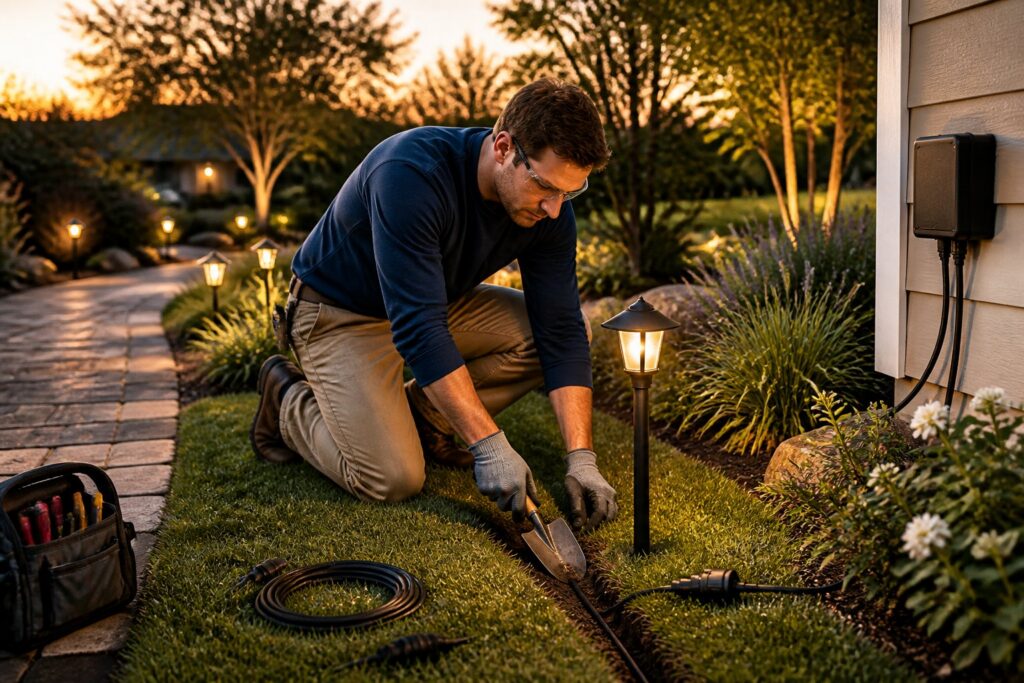
You can figure out how to install landscape lighting safely by focusing on planning, outdoor-rated materials, and careful electrical work before you ever flip the switch. A good setup does more than make your yard look better. It helps you avoid shocks, overloaded circuits, damaged cables, and tripping hazards.
The safest installs start with a clear layout, low-voltage equipment, and testing before you bury or hide anything. If you slow down and follow some basic electrical safety steps, you’ll end up with results that look clean and work reliably.
Plan the Layout Before Digging
A safe lighting job starts on paper, not in the ground. When you map the system first, you dodge fixtures in risky spots and cut down on rework later.
Identify Walkways, Steps, and Focal Points
Walk your property at night and spot the places that really need light. Paths, stairs, driveways, porch edges, and any uneven ground where someone could trip should be your main focus.
Mark focal points like trees, entry columns, garden beds, and textured walls. These help you build a balanced design without going overboard on fixtures.
Map Transformer and Power Source Locations
Put the transformer near a GFCI-protected outdoor outlet in a spot that stays dry and easy to reach. Steer clear of places where sprinklers, roof runoff, or thick plants could soak it or block you from getting to it.
Leave enough room for future service. If you need to swap timers, replace a fixture, or add a new run, you’ll thank yourself for keeping the transformer accessible.
Choose Fixtures and Materials Rated for Outdoor Use
Outdoor lighting has to handle rain, heat, cold, and soil contact. That’s why you should pick parts made for exterior use, not just indoor parts with a weatherproof label slapped on.
Select Low-Voltage Components for Residential Yards
For most homes, low-voltage systems make the most sense. They use a transformer to step household power down to a safer level, which cuts the risk during installation and everyday use.
Go with LED fixtures if you can. They use less power, run cooler, and usually outlast older lamp types.
Use Weather-Resistant Cable, Connectors, and Housings
Direct-burial cable and outdoor-rated connectors designed for wet locations are the way to go. Regular wire nuts and indoor junction parts just don’t hold up in yards.
Double-check that each housing is sealed against moisture and built for landscape use. Spending a few extra minutes on rated materials now can save you a lot of hassle with corrosion or flickering later.
Follow Core Electrical Safety Practices
Even low-voltage work deserves careful habits. Treat every connection with the same attention you’d give any other outdoor electrical project.
Shut Off Power and Verify Circuits
Turn off power at the breaker before you touch any wiring. Always verify that the circuit is actually off with a tester—switches and labels can be wrong.
If you’re using an existing outdoor outlet, check that it’s GFCI protected and actually working. That protection matters a lot in wet outdoor spaces.
Prevent Overloading and Voltage Drop
Don’t connect more fixtures than the transformer can handle. Add up the wattage of all lights and stay within the transformer’s listed capacity.
Long cable runs can cause voltage drop, making lights look dim or uneven. Shorter runs, the right wire gauge, and well-planned zones keep brightness consistent across the yard.
Install Wiring and Fixtures With Proper Protection
Protecting the cable matters as much as choosing the right fixtures. Even a neat-looking system can fail early if the wiring gets exposed or poorly supported.
Bury Cable at Safe Depths and Avoid Damage Risks
Bury low-voltage cable shallow enough for service, but deep enough to avoid damage from tools, edging, and foot traffic. Usually, a trench a few inches deep works for low-voltage runs, but always follow the cable and fixture instructions for your system.
Keep cable away from sharp stones, shovel paths, and spots where roots or mulch work could disturb it. If you have to cross a walkway, use a sleeve or conduit for extra protection.
Keep Connections Dry, Secure, and Accessible
Make every splice with outdoor-rated connectors and put them where water won’t pool. A connection that sits in wet soil will probably corrode and fail.
Don’t bury every joint too deep. You want a setup that’s protected but still reachable later for maintenance or troubleshooting.
Test Performance and Make Safe Adjustments
Testing before final cleanup saves time and helps catch hidden problems. I always check the system at dusk, when the beam pattern and shadows are easier to judge.
Check Beam Placement, Glare, and Trip Hazards
Look at each light from the angles people will actually see it. Make sure path lights cover the walking surface, not your eyes, and that spotlights don’t create harsh glare or blind spots.
Walk the area after dark and check for cords, raised fixtures, or uneven ground. If a light creates a trip risk, move it before you wrap up the install.
Inspect Timers, Controls, and Smart Features
Set timers and smart controls so the system turns on and off at the right times without you having to fuss with it every day. If you use app-based controls or smart home integration, make sure each scene or schedule actually works.
Test dimming, zoning, and motion settings before you cover wires or mulch around fixtures. It’s a lot easier to tweak things now than after the layout is final.
Know When to Call a Licensed Electrician
Some landscape lighting jobs are fine for a careful homeowner. Others involve code issues, higher-voltage wiring, or system upgrades that really need a licensed pro.
Recognize Situations That Require Code Expertise
Call a licensed electrician if your project needs new circuits, panel changes, trenching near other utilities, or work tied to permanent outdoor power. If you’re unsure about GFCI protection, load calculations, or local permit rules, it’s better to get help.
Outdoor electrical work can get complicated fast when it connects to your home’s wiring. One mistake can affect safety, performance, and compliance.
Choose Professional Help for Upgrades and Complex Projects
For bigger jobs, Magnify Electric is a solid choice. Our licensed electricians handle residential and commercial electrical work with care—from outdoor lighting installation and smart home integrations to panel upgrades, troubleshooting, and emergency support. We also help with automated lighting, ceiling fans, light switches, Lutron smart home systems, EV charging outlets and wall-mounted chargers, outlet services, recessed lighting, TV installation, whole-home surge protectors, wiring, lighting installs, portable generator hookups, smoke and CO₂ detectors, and general electrical improvements for homes and businesses.
We serve Spicewood, Austin, Bee Cave, Lakeway, Dripping Springs, Georgetown, Leander, Round Rock, Kyle, Cedar Park, Liberty Hill, Westlake, The Hills, Briarcliff, Horseshoe Bay, Sunset Valley, Hutto, and the surrounding Central Texas communities.
Frequently Asked Questions
Can I install outdoor landscape lights myself, or should I hire an electrician?
You can usually install a simple low-voltage system yourself if you follow the manufacturer’s instructions and keep the work basic. If the project involves new wiring, a panel change, or code questions, hire an electrician so the system is safe and compliant.
What voltage and type of transformer do I need for my outdoor lighting setup?
Most residential landscape lighting systems use low voltage, usually 12 volts, because they’re safer and easier to manage. Choose a transformer with enough capacity for the total wattage of your lights, and leave some room for future additions.
How do I wire low-voltage landscape lights correctly to avoid overload and dimming?
Group fixtures into runs that stay within the transformer’s wattage rating, and use the right cable size for the length of the run. Keep connections tight, use outdoor-rated splices, and avoid sending too many fixtures down one long line, which can cause dimming.
How deep should I bury outdoor lighting cables to prevent damage and trip hazards?
For many low-voltage systems, a shallow burial depth of a few inches is common, but you should follow your product instructions and local rules. The goal is to protect the cable from edging, shovels, and foot traffic while still allowing access for repairs.
What are the most common mistakes people make when installing outdoor lighting?
People often use indoor-rated parts, overload the transformer, make poor splices, or place lights where they create glare or trip hazards. Skipping the test phase is another big one—it can hide problems until after the yard is finished.
How do I mount and run lighting for areas with concrete, like patios or walkways?
When you’re dealing with concrete, it’s usually best to run cable along the edge if you can. If you have to get the cable underneath, go with approved sleeves or conduit—no shortcuts here. Anchoring fixtures near concrete? Grab hardware that’s built for the outdoors, and steer clear of drilling or putting wiring anywhere it might crack, shift, or trap water. It’s a bit of a balancing act, honestly, but worth the effort for a clean, safe setup.