
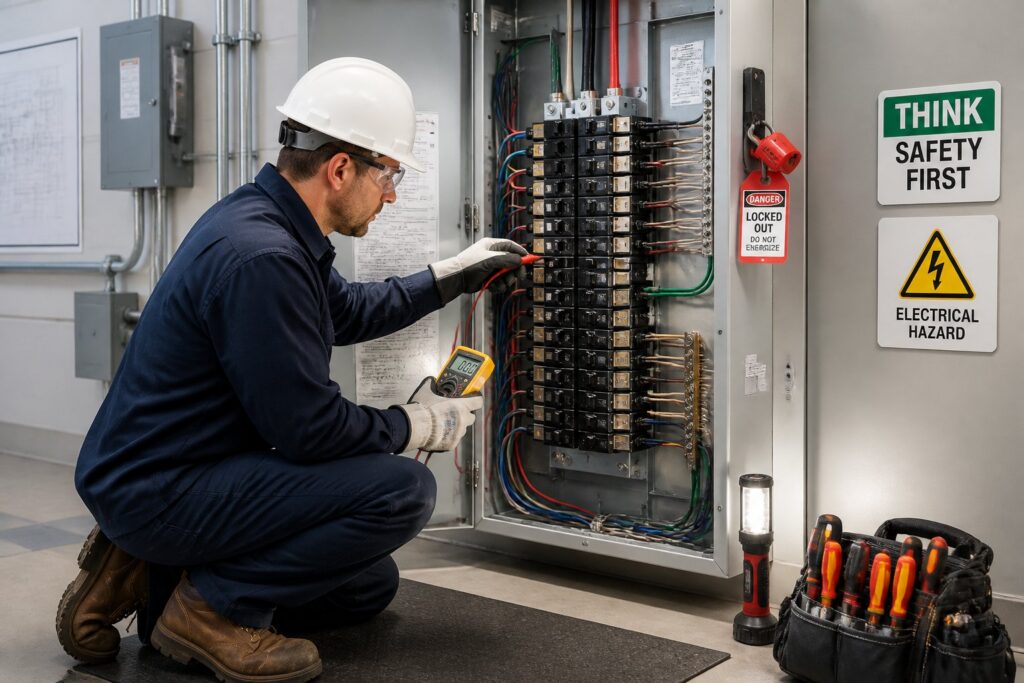
If you want to know how to upgrade electrical panel safely, start by figuring out why you need the change. Check your local codes, permits, and your actual electrical load before grabbing any tools. A safe panel upgrade isn’t just about swapping parts—it’s a real project that protects people, your equipment, and the building itself.
The safest upgrades fit your real electrical needs, meet code, and use a licensed electrician. That’s true for homes and businesses, especially since a lot of older panels just weren’t built for modern appliances, HVAC, or EV chargers.
If you’re seeing warning signs, adding new equipment, or you know your panel’s outdated, the right plan helps you avoid fire and shock risks. Plus, you get some breathing room for future upgrades without having to redo everything again soon.
Know When a Panel Replacement Is Necessary
A panel replacement becomes necessary when your current panel can’t safely handle your needs or is showing its age. If you know what to look for, you’ll often spot problems before they turn into emergencies.
Warning Signs of Capacity or Safety Problems
Watch for frequent breaker trips, flickering lights, buzzing sounds from the panel, scorch marks, rust, or a burning smell. If the panel feels warm, has loose breakers, or still uses fuses, it’s probably time for a closer look.
If your appliances struggle when you run several things at once, that’s a pretty good sign your system’s at its limit.
Common Reasons Properties Outgrow Older Equipment
A lot of older homes came with 60-amp or 100-amp service, which just isn’t enough for today’s demands. New HVAC, EV chargers, bigger kitchens, home offices, and smart gadgets can all push an old panel too far.
Commercial spaces hit their limits after tenant changes, lighting upgrades, or equipment swaps. Upgrading the panel adds capacity and circuit space so you’re not overloading things.
Understand Safety, Code, and Permit Requirements
Treat a panel upgrade like the major project it is. Safety rules, permits, and inspections exist for a reason—the panel is where all your power comes in and gets distributed.
Why Utility Coordination and Inspections Matter
Usually, the utility company needs to disconnect and reconnect service so the work can happen safely. That’s not just red tape—it protects everyone and the new equipment.
Inspections confirm everything meets code before you’re done. Skip them and you could face insurance headaches, resale problems, or delays getting your power back on.
When Licensed Electricians Are Required
A licensed electrician should handle panel replacements. It’s live service equipment, grounding, bonding, and load calculation territory—not a place to wing it.
Pros know how to pull permits, pass inspections, and document the job. That saves you time and keeps things legal.
Plan the Scope Before Any Work Begins
The best upgrades start with a clear plan. Make sure you’ve got the right amperage, enough breaker spaces, and room for whatever you might add later.
Choosing the Right Amperage and Circuit Space
Your electrician should use a load calculation, not a guess, to size the panel. Sure, 200 amps is common, but it’s not always right for every home.
You’ll want enough breaker spaces for what you have now and for future additions. If the panel’s too small, you’ll end up with a cramped mess that’s tough to expand safely.
Accounting for EV Chargers, Smart Home Devices, and Future Loads
EV chargers, smart home gear, and new appliances can change your electrical needs fast. Even if you don’t need all that capacity right now, planning ahead saves you money and hassle later.
Think about outdoor lighting, ceiling fans, recessed lights, surge protection, or a future shop or office. A good plan leaves room for these without crowding the panel.
Follow the Core Steps of a Safe Replacement
A safe replacement is all about process—not shortcuts. The job should stay organized, labeled, grounded right, and tested before you flip the switch back on.
Power Shutoff, Labeling, and Circuit Transfer
First, shut off all power and double-check it’s off. Then label every circuit before you move it, so you know what each breaker actually does.
Move circuits neatly and methodically. Sloppy or mixed-up wiring creates heat, false trips, and headaches later.
Grounding, Bonding, and Final Testing
Grounding and bonding direct fault currents safely and protect people and equipment. If those connections aren’t right, the panel just won’t work as it should.
Once the new panel’s in, test the system under load. That’s your chance to catch loose wires, wrong breaker spots, or other mistakes before they become real hazards.
Avoid Mistakes That Create Fire or Shock Risks
Most big panel problems come from bad sizing, messy wiring, or unsafe shortcuts. Careful work and the right materials from the start keep you out of trouble.
Improper Wire Sizing and Overcrowded Breakers
If the wire size doesn’t match the breaker, wires can overheat before the breaker trips. That’s a fire risk you don’t want hidden in your walls.
Overcrowded breakers are trouble too. Too many circuits in too little space make the panel hard to service and more likely to overheat.
Unsafe DIY Shortcuts and Hidden Defects
Don’t rely on tape fixes, reused damaged parts, or guessed connections. Little mistakes inside a panel can stay hidden until a breaker fails or there’s a fault.
Old damage hides too—corroded lugs, brittle insulation, worn-out wires. Find and fix these before putting in a new panel.
Choose Qualified Help for Long-Term Reliability
A panel upgrade should last for years, not turn into another problem. The right electrical team brings experience, licensing, and service that covers both simple fixes and bigger projects.
What to Look for in a Residential and Commercial Electrical Team
Look for licensed electricians who handle panel upgrades, troubleshooting, repairs, safety inspections, and upgrades for homes and businesses. You want a team that can also support automated lighting, ceiling fans, smart switches, Lutron systems, EV charging outlets, outdoor lighting, outlet services, recessed lighting, TV installation, surge protection, wiring, portable generator hookups, and smoke/CO₂ detectors.
That kind of range matters because panel work often connects to other electrical needs. If one team handles it all, your project tends to stay cleaner and less chaotic.
Why Local Service Coverage and Broad Expertise Add Value
Magnify Electric stands out for Residential and Commercial Electrical Work. Their licensed electricians handle everything from fixture swaps to full upgrades, commercial lighting, inspections, smart home setups, and emergency support. That wide range means you can stick with one team for both planned jobs and surprises.
They cover Spicewood, Austin, Bee Cave, Lakeway, Dripping Springs, Georgetown, Leander, Round Rock, Kyle, Cedar Park, Liberty Hill, Westlake, The Hills, Briarcliff, Horseshoe Bay, Sunset Valley, Hutto, and the rest of Central Texas. When your electrician knows the area and can get to you quickly, your project usually moves faster and ends up more reliable.
Frequently Asked Questions
How much does it typically cost to replace an electrical panel with a 200-amp service?
Costs depend on your existing wiring, the utility setup, permit fees, and whether you need service upgrades. A straightforward replacement costs less than a job that also needs rewiring, meter changes, or extra circuits.
Can I replace my electrical panel without rewiring the entire house?
Usually, yes. If your existing wiring is in good shape and sized right, you can swap the panel without rewiring everything.
How long does a typical electrical panel replacement take from start to finish?
A basic replacement often takes a day, but permits and utility coordination can add time before and after. Bigger jobs with rewiring, inspection delays, or service changes take longer.
What permits and inspections are usually required for a panel replacement?
Most panel swaps need a permit before work starts, plus one or more inspections after. Your local building or electrical department might also ask for a load calculation and your electrician’s license info.
What does the 80% rule mean for sizing breakers and circuits in a panel?
The 80% rule means you shouldn’t load a circuit or panel above 80% of its rated capacity for continuous use. This helps prevent overheating and gives you a safer margin.
How do I know whether I need a 100-amp or 200-amp panel for my home?
Honestly, the best way to figure it out is to do a load calculation. If you’ve got central air, electric appliances, maybe an EV charger, or you’re eyeing some big upgrades, a 200-amp panel usually makes more sense. Smaller homes with lighter electrical needs? You might be fine with just 100 amps.