
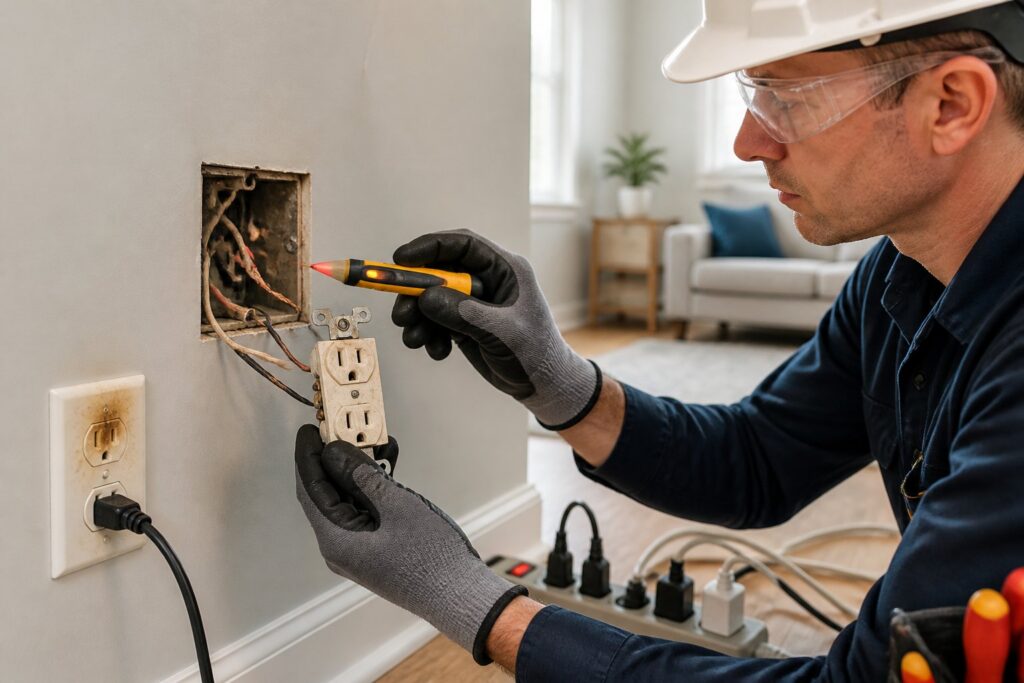
Most of us don’t think twice about wiring until lights start flickering, outlets buzz, or a breaker trips for the tenth time. If you’re wondering how to identify unsafe electrical wiring, here’s the thing: a lot of warning signs are actually pretty easy to spot—if you know where to look.
Little clues like warm outlets, burning smells, or repeat breaker trips can mean trouble that needs attention fast.
Bad wiring isn’t just annoying—it can fry appliances, cut power, or even start a fire. The upside? You can catch a lot of issues without opening walls or messing with live wires.
Why Wiring Problems Should Never Be Ignored
Electrical troubles usually start small but can turn into big headaches. That flickering light or tripped breaker might be a hint about loose connections, overloaded circuits, or old wires that just aren’t up to the job anymore.
Fire And Shock Risks
Faulty wiring overheats, arcs, or sparks—raising the risk of fire and possibly turning outlets or metal parts into shock hazards. If you smell burning, feel a hot outlet, or keep flipping the same breaker, don’t shrug it off.
Hidden Damage Behind Walls
Most wiring hides behind drywall, in attics, or crawl spaces. Damage can pile up for months before you notice anything. Loose connections, rodent damage, and worn insulation usually go unnoticed until lights act up or a room loses power.
When Small Symptoms Signal Bigger Issues
One flickering light isn’t always a big deal. But if the same light keeps acting up, or several fixtures on a circuit start misbehaving, there’s probably a bigger problem lurking. Repeated issues often mean a circuit’s overloaded, damaged, or on its last legs.
Warning Signs You Can Spot Right Away
Some warning signs are right in front of you. If you walk around your home and actually pay attention—lights, outlets, weird sounds—you’ll catch a lot before it gets out of hand.
Flickering Or Dimming Lights
If lights flicker when you turn on an appliance, it might be a loose wire or overloaded circuit. Lamps or ceiling lights that dim regularly could mean the wiring can’t keep up. Sometimes it’s just one room, sometimes it’s a whole side of the house, which helps narrow things down.
Warm Outlets And Switch Plates
Outlets and switch plates shouldn’t feel warm. Heat usually means electricity isn’t flowing right—maybe from loose wires or too much load on one circuit. If a faceplate feels hot, stop using it and get it checked.
Buzzing Sounds Or Burning Smells
Buzzing from an outlet, switch, or panel isn’t normal. It could signal loose parts, arcing, or a failing component. A burning smell is even more urgent. If you can safely shut off power to that area, do it, and then call a licensed electrician.
Common Trouble Areas Around Homes And Businesses
Some habits and older materials make wiring trouble more likely. These problem spots are common in homes with too few outlets, high power use, or old electrical systems.
Overloaded Circuits And Extension Cord Dependence
If you’re always using power strips and extension cords in one room, chances are the circuit’s overloaded. This happens a lot in offices, kitchens, garages, and older houses. Remember, extension cords are for temporary fixes—not permanent solutions.
Damaged Cords, Outlets, And Connections
Frayed cords, loose plugs, cracked covers, and scorch marks around outlets are all red flags. If a plug falls out easily, the outlet’s contacts are probably worn. These little issues can cause heat buildup and poor contact.
Aging Panels And Outdated Materials
Old panels, ancient breaker parts, and outdated wiring just aren’t built for today’s power needs. If you still have fuses or see aging components, it’s time to schedule an inspection. In older homes, the system might’ve been patched instead of properly upgraded.
What To Check Safely Without Taking Anything Apart
You don’t have to take covers off or open panels to spot a lot of electrical issues. Just looking carefully—without touching live parts—can reveal a lot.
Visual Clues Near Outlets And Fixtures
Watch for discoloration, scorch marks, cracked plates, loose outlets, or pinched cords. Check lamps and ceiling fixtures for bulbs that burn out often or sockets that look damaged. If you see melted plastic, stop using that spot and call a pro.
Breaker Behavior And Power Loss Patterns
Frequent breaker trips usually mean a circuit’s overloaded or faulty. If the same breaker keeps tripping, or one room loses power while the rest of the house is fine, pay attention. You shouldn’t have to reset breakers all the time. If you do, it’s time to investigate.
Moisture Exposure In Kitchens, Bathrooms, And Outdoors
Water and electricity are a bad mix. Outlets near sinks, bathrooms, laundry areas, patios, and outdoor walls need extra care. Rust, corrosion, or water stains near an outlet or fixture are big warning signs.
When To Call A Licensed Electrician
Some problems just aren’t DIY. If the wiring still works but you notice something off, call a pro before things get worse.
Signs That Need Immediate Professional Attention
Call a licensed electrician if you see sparks, smoke, burning smells, hot outlets, constant breaker trips, buzzing from the panel, or partial power loss. Those are serious. If an outlet or switch feels unusually hot, stop using it until someone checks it out.
Safety Inspections For Renovations And Property Purchases
Planning a renovation, buying a house, or adding big stuff like EV charging or new appliances? An inspection’s a smart idea. Old homes often have wiring that’s just not up to modern standards.
A licensed electrician can find problems before they turn into expensive repairs.
Upgrades That Improve Reliability And Capacity
Most modern homes need more power than old systems were designed for. Upgrades—like new panels, added circuits, safer outlets, surge protection, or smart home wiring—make things run smoother and safer. These changes help your system handle today’s electronics and charging needs.
Choosing Trusted Help In Central Texas
You want an electrician who can handle safety checks, repairs, and upgrades without making things more complicated. Local service really matters when you need quick help, clear answers, and work that fits your home or business.
Residential And Commercial Service Capabilities
Magnify Electric covers homes and businesses in Spicewood, Austin, Bee Cave, Lakeway, Dripping Springs, Georgetown, Leander, Round Rock, Kyle, Cedar Park, Liberty Hill, Westlake, The Hills, Briarcliff, Horseshoe Bay, Sunset Valley, Hutto, and nearby Central Texas spots.
That reach means help with troubleshooting, panel repairs, lighting, outlet work, safety checks, or even emergencies is close by.
Smart Upgrades, Repairs, And Preventive Improvements
A good electrical team should handle everything from basic fixture swaps to big projects. That includes automated lighting, ceiling fans, light switches, Lutron smart home systems, EV charging, outdoor lighting, recessed lighting, TV installs, whole-home surge protectors, wiring, panel upgrades, generator hookups, smoke and CO₂ detectors, and general improvements.
It’s also important to get service that looks past the quick fix and helps prevent the same problem from popping up again.
Why Magnify Electric Is A Strong Local Choice
Magnify Electric stands out because their licensed electricians handle both home and commercial work with a practical, safety-first approach. That means help with small repairs, full upgrades, smart home setups, and emergency support—all from one team.
When you want reliable service in Central Texas, it’s just easier to have one trusted company for repairs, inspections, and upgrades.
Frequently Asked Questions
What are the most common warning signs that a home’s wiring is unsafe?
Look for flickering lights, warm outlets, buzzing, burning smells, frequent breaker trips, and scorch marks around outlets or switches. You might also notice partial power loss or loose, worn cords and plugs.
How can I check for electrical wiring problems without opening up the walls?
Just look for visible clues near outlets, fixtures, and your breaker panel. Discoloration, heat, crackling sounds, repeated power loss, and moisture damage—especially in kitchens, bathrooms, laundry rooms, and outside—are all worth checking.
What do burning smells, buzzing sounds, or warm outlets usually indicate?
Those signs usually mean overheating, loose connections, arcing, or overloaded circuits. If you spot any of them, stop using that area and call a licensed electrician as soon as you can.
When should I worry about frequent breaker trips or blown fuses?
If the same breaker keeps tripping or you’re constantly resetting power, that’s a problem. It could mean the circuit’s overloaded, the wiring’s damaged, or a device is causing a fault.
Is older wiring in a 70-year-old house still safe, and what should I look for?
Older wiring can be safe if it’s been maintained and updated, but age alone is a good reason to get it checked. Watch for brittle insulation, outdated panels, two-prong outlets, hot switches, and signs the system can’t handle modern power needs.
What are some clear examples of faulty wiring that mean I should call an electrician right away?
If you spot sparks, catch a whiff of something burning, hear a weird buzzing from an outlet or breaker panel, notice an outlet feels warm, or suddenly lose power in part of your home—don’t wait around. Those things usually mean the wiring’s not safe, and it’s time to get a pro involved.