
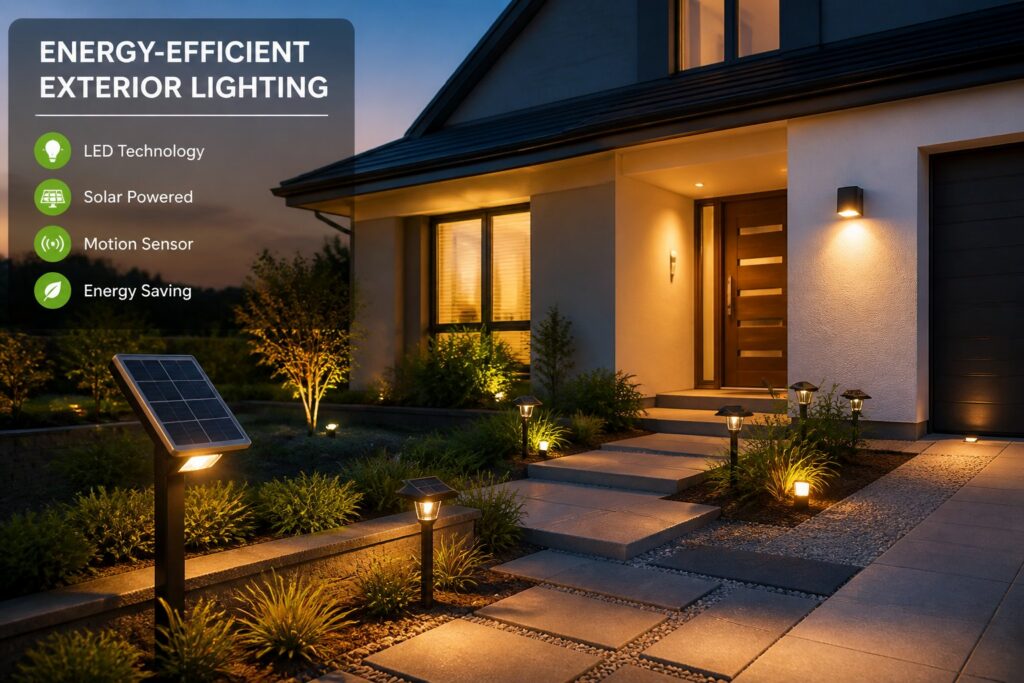
Outdoor lighting should do more than just look good after dark. The right fixtures help you move safely, protect entry points, and lower energy use all at once. If you’re trying to figure out how to select energy-efficient exterior lighting, start by thinking about what each light needs to do. Then, pick fixtures, controls, and brightness that fit that purpose.
Matching the right light to the right spot, using LEDs, controls, and weather-ready fixtures that actually fit your property, goes a long way. It helps you avoid glare, cut down on maintenance, and keeps your home or business well lit where it counts.
In Central Texas—Austin, Lakeway, Round Rock, Cedar Park, Dripping Springs—you also need lighting that can handle heat, storms, and long run times. If you’re not sure where to start, a trusted electrician can help you plan things out before you buy.
Start With The Purpose Of Each Outdoor Light
Don’t jump to fixture style first. Figure out what you need each light to do. Security, safety, accent lighting, and commercial visibility all need different brightness, beam spreads, and controls.
Security Around Doors, Garages, And Perimeters
For doors, garages, and the edges of your property, you want reliable light that makes faces, locks, and movement easy to see. Bright LED flood lights, sconces, and wall packs work if you aim them right and pair them with motion sensors or photocells. Too much light just creates glare—so aim for clear visibility, not a harsh wash.
Safety Along Walkways, Steps, And Driveways
Walkways and steps need lower, even light to help prevent trips. Path lights, step lights, and well-placed bollards guide people without shining in their eyes. On long driveways, spaced lighting usually beats a few super-bright fixtures.
Accent Lighting For Landscaping And Architecture
Accent lighting should highlight trees, stonework, columns, or texture without overpowering everything else. Smaller fixtures with narrow beams often do the job. Using less light in the right places usually looks better and saves energy.
Functional Needs For Commercial Entries And Parking Areas
Commercial entries and parking lots need coverage, safety, and durability. Here, you might want pole-mounted lighting, wall packs, or smart controls to match business hours. For offices, retail, and multifamily properties, efficient lighting supports safety and keeps costs down.
Choose The Right Fixture Type For The Space
Pick fixture types that fit the area, mounting surface, and control you want. The wrong style can waste energy, cast shadows, or leave important spots too dim.
Wall Packs, Sconces, And Flood Lights
Wall packs spread light broadly—great for commercial walls, side yards, or service areas. Sconces look good at home entrances and storefronts. Flood lights work for security, but aim them carefully so they don’t shine into windows or bother the neighbors.
Path Lights, Step Lights, And Bollards
Path and step lights are smart where people walk a lot and need gentle, targeted light. Bollards work for bigger paths, shared spaces, or business campuses. You usually want just enough light to guide people—not to light up the whole yard.
Post Lights And Pole-Mounted Options
Post lights and pole-mounted fixtures suit driveways, parking lots, gates, and long property lines. They cover larger areas with fewer fixtures, which can mean less wiring and lower energy use. But placement is key—bad spacing leaves dark gaps or wasted overlap.
Dark-Sky-Friendly Designs That Reduce Glare
Dark-sky-friendly fixtures direct light downward and limit spill. That makes your place easier on the eyes and more efficient. In spots like Westlake, Bee Cave, or Liberty Hill, this style keeps light where you need it instead of sending it skyward or into your neighbor’s yard.
Compare Efficiency Features That Affect Energy Use
Big efficiency gains come from the light source, the controls, and how well the fixture does its job. A well-chosen LED with simple automation saves more than a fancy fixture with the wrong output.
LED Performance And Lumens Per Watt
LEDs are the clear winners for most exterior lighting—they use less power and last longer than old bulbs. When you compare products, check lumens per watt. That tells you how much light you get for the energy used. It matters more than wattage alone.
Color Temperature For Comfort And Visibility
Color temperature affects how the light feels. Around homes, most folks like a warm white look for porches and patios. Cooler tones help visibility in work areas or parking lots. Go too cool and the light gets harsh—so pick a tone that fits the space and mood.
Motion Sensors, Photocells, And Timers
Motion sensors keep lights off until you need them—handy near entries, garages, and side yards. Photocells turn lights on at dusk and off at dawn, while timers let you control run time more closely. These simple tools help cut down on wasted hours.
Smart Controls For Scheduling And Monitoring
Smart controls are nice for bigger homes, retail sites, and managed properties. You can schedule lights, dim them during slow hours, and monitor usage from one place. That makes it easier to save energy and plan maintenance.
Match Brightness And Coverage Without Overlighting
More light isn’t always better. The right setup gives enough visibility for the job and keeps glare, shadows, and wasted spill in check.
How Much Light Different Areas Actually Need
A porch might only need a little light, but a parking area or loading zone needs much more. Walkways, steps, and landscape features usually do better with lower output, while security spots need brighter, focused coverage. Matching light level to the task is a simple way to save energy.
Beam Spread, Mounting Height, And Fixture Placement
Wide beams cover big areas from one fixture. Narrow beams are better for accents or long throws. Mounting height matters—a light too high spreads too far, one too low creates harsh hot spots.
Avoiding Hot Spots, Shadows, And Light Trespass
Hot spots happen when one area gets blasted while the rest stays dark. Shadows can hide trip hazards, and light trespass annoys neighbors or spills into windows. Careful aiming and better placement usually fix these issues—throwing more lights at the problem rarely helps.
Look For Durability, Weather Resistance, And Electrical Safety
Outdoor lighting needs to survive heat, rain, dust, and humidity. In Central Texas, that means picking fixtures and wiring that hold up season after season without turning into a maintenance headache.
Wet-Rated And Damp-Rated Fixture Requirements
Wet-rated fixtures are built for direct rain. Damp-rated ones are for covered spots with moisture in the air. That difference matters on uncovered patios, gates, and exposed walls. Using the wrong rating shortens fixture life and can cause safety problems.
Corrosion Resistance For Central Texas Conditions
Central Texas heat and moisture are tough on metal finishes, screws, and seals. You don’t get coastal-style corrosion, but the sun, storms, and mineral buildup still wear things down. Sturdy finishes and sealed housings are worth it for places like Kyle, Georgetown, and Hutto.
Wiring, Voltage, And Circuit Capacity Considerations
Low-voltage systems are usually easier for landscape lighting. Line-voltage systems might be better for bigger security or commercial setups. Either way, wiring has to be sized right and protected for outdoors. If you’re adding several fixtures, check the circuit before you load it up.
When An Electrical Inspection Or Panel Upgrade May Be Needed
If your lighting plan adds new circuits, smart controls, an EV charger nearby, or other upgrades, the panel may need a review. Flickering, frequent breaker trips, or old equipment are all signs you should get an inspection. A pro can spot grounding or wiring issues before they turn serious.
Calculate Long-Term Value Before You Buy
The lowest price tag isn’t always the best deal. Good exterior lighting should save you money over time—less energy, fewer replacements, and lower maintenance.
Upfront Cost Versus Operating Savings
LED fixtures and smart controls might cost more upfront, but they usually pay off with lower bills. That matters for homeowners and businesses. When you compare options, think in years—not just up-front cost.
Maintenance Needs And Lamp Replacement Cycles
Lights that need frequent bulb changes get expensive, especially on tall poles or awkward walls. Longer-life LEDs cut down on labor and hassle. That’s a big plus for businesses that want to avoid dark spots from delayed maintenance.
Rebates, Commercial Efficiency Goals, And Property ROI
Some utility and rebate programs apply to efficient outdoor lighting, especially on commercial projects. For businesses, better lighting can support safety and boost curb appeal. A well-lit property just feels more welcoming and cared for.
Signs It Is Time To Replace Older Outdoor Lighting
If your fixtures use outdated bulbs, run hot, flicker, or leave dark patches, it’s probably time to upgrade. Rust, yellowed lenses, and failing seals are other signs. Upgrading old lights is often easier than patching them together again.
Know When Professional Installation Makes Sense
Some lighting projects are simple. Others need new wiring, load planning, or code checks. That’s where a pro can save you time and prevent headaches.
Projects That Are Simple Upgrades Versus New Wiring Jobs
Swapping a bulb or a similar fixture is pretty simple if the wiring is good. Adding new lights, running circuits to a driveway, or installing smart controls usually takes more planning. The bigger the change, the more sense it makes to call a licensed electrician.
Common Selection Mistakes Property Owners Make
Some mistakes pop up all the time—like picking fixtures that are way too bright, ignoring weather ratings, or skipping motion controls. Another big one: buying lights that look great in the store but don’t fit the mounting height or coverage you actually need. These mistakes waste power and still leave dark spots.
Why Local Code Knowledge Matters In Central Texas
Local code and permit needs vary by project and property type. That’s true for homes, offices, retail, and multifamily buildings across Central Texas. A local electrician who works in Austin, Spicewood, Lakeway, Round Rock, and nearby towns can help you stay safe, efficient, and compliant.
Frequently Asked Questions
What are the most energy-efficient options for lighting a porch, patio, or driveway?
For most porches and patios, LED sconces, path lights, or dimmable fixtures with a warm color tone work well. For driveways, LED flood lights or post lights with motion sensors or photocells usually give the best mix of visibility and efficiency.
How do I choose the right LED bulb brightness (lumens) and color temperature for outdoor areas?
Start with what you need the light to do, then pick lumens based on that instead of guessing by wattage. Warm white feels comfortable for living spaces, while a slightly brighter or cooler tone can help in work zones, but very bright light can cause glare.
Which outdoor light fixtures work best with LED bulbs for long-term energy savings?
Fixtures made for LED use—sealed wall packs, sconces, flood lights, and rated path or step lights—tend to work best. Look for fixtures that handle heat well and allow easy lamp or module swaps if needed.
What bulb size and base type do I need for my porch light or lamp post fixture?
Check the fixture label or pull the old bulb to match the base and size before you buy. Most use medium screw bases, but some decorative fixtures use smaller or specialty bases. Matching up first avoids returns and wiring surprises.
How can I pick outdoor lighting that attracts fewer bugs while still providing good visibility?
Go for warmer color temperatures—cool blue-white light draws more insects. Keeping fixtures shielded, aimed well, and not brighter than needed also helps cut down on bugs around doors and patios.
What are some simple rule-of-thumb guidelines for spacing and placement of outdoor lights?
Put lights where folks actually need to see—think entrances, steps, the edges of paths, or anywhere the ground changes height. Don’t cram them too close together; you want to avoid that harsh glare where beams overlap. Honestly, it’s smart to try out your layout at night first. Walk around, tweak the angles a bit, and see how it feels before you lock it all in.