
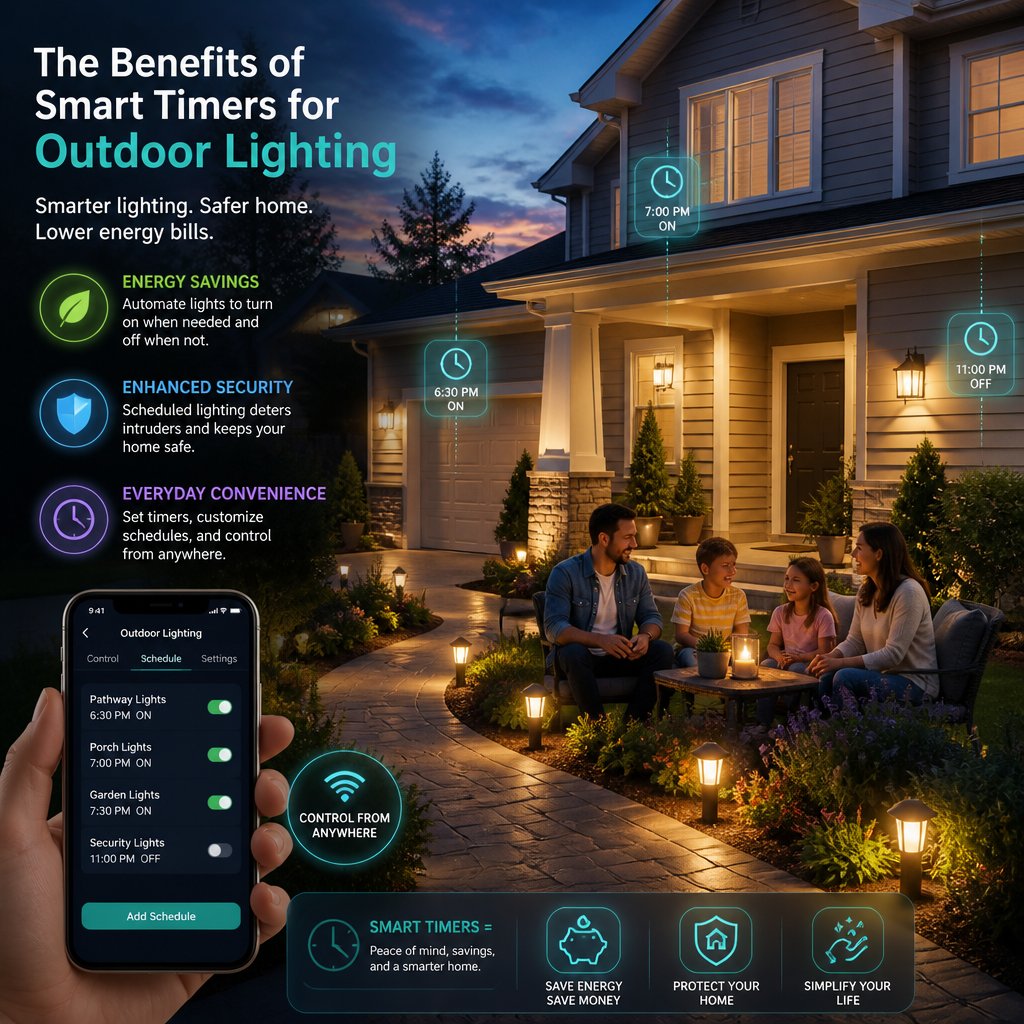
Outdoor lighting just works better when it comes on at the right time, stays on only as long as needed, and fits how you actually use your property. Smart timers make all that easier—they automate schedules, keep things consistent, and save you from having to remember every switch.
The biggest benefits of adding smart timers to outdoor lighting are simple: you save time, cut waste, and your home or business feels safer after dark. That’s true whether you’re lighting a driveway in Cedar Park, a patio in Lakeway, or a storefront in Austin.
A well-set timer gives your outdoor lighting a more polished feel. Instead of lights left on too long or switched on too late, your system moves with dusk, sunrise, and your daily rhythm. If you’re not sure what setup fits your place, it never hurts to ask an electrician—or even take some quiet time to think it through if it’s a bigger decision.
How Smart Timers Improve Everyday Outdoor Lighting
Smart timers take outdoor lighting off your mental checklist. They keep your lights on a steady schedule, but with way more flexibility than a basic wall switch.
Automatic Scheduling For Consistent Operation
A smart timer can turn porch lights, path lights, and landscape fixtures on at the same time every evening. That kind of consistency is useful when your schedule is all over the place—your lighting still works like clockwork.
This is honestly one of the easiest upgrades for anyone tired of playing the “did I turn that off?” game. Businesses can keep entry areas lit before opening and after closing, without depending on staff to remember.
Better Convenience For Busy Households And Properties
If your evenings are packed, smart timers are one less thing to worry about. No need to walk outside at dusk or check every fixture before bed.
That convenience is a real help for bigger homes, rental properties, or commercial buildings with lots of lighting zones. It’s also great when you’re traveling—your outdoor lights stay on schedule, even if you’re miles away.
More Control Than Manual Switches
Manual switches give you two options: on or off. Smart timers let you set schedules, tweak runtimes, and adjust lighting for different seasons or events.
That extra control is gold for Central Texas, where sunset times jump around through the year. It’s also handy for landscape lighting, holiday displays, and security lighting that needs a more precise pattern.
Energy Savings And Lower Operating Costs
Smart timers help outdoor lights run only when you need them, which cuts wasted electricity. Over time, that lowers bills and puts less wear on fixtures and bulbs.
Reducing Wasted Runtime Overnight And During Daylight
A lot of outdoor lights stay on way longer than needed, especially when someone forgets to turn them off in the morning. Timers fix that by shutting lights down automatically.
This matters most for fixtures that would otherwise burn all night or run through daylight hours. For many homes and businesses, it’s one of the fastest ways to trim energy use.
Supporting Energy-Efficient Lighting Upgrades
Smart timers pair especially well with LED fixtures, which already use less power than old-school bulbs. When those lights also run on a schedule, you get double the benefit.
In Central Texas, we usually suggest adding timers when you’re swapping in LEDs during lighting installation or maintenance. It’s a practical upgrade that doesn’t mess with the look of your place.
Long-Term Value For Homes And Commercial Properties
The savings might seem small at first, but they really add up over months and years. Timers also help cut down on the strain from lights running longer than needed.
For homeowners, that means better value from patio, driveway, and security lighting. For businesses, it can support lower operating costs across parking areas, building exteriors, and signage.
Safety And Security Advantages
Outdoor lighting isn’t just about looks—it’s also about how safe your place feels after dark. Smart timers keep key areas visible when you need them and help avoid those dark spots from missed switches.
Improved Visibility Around Walkways And Entry Points
Timers make sure lights come on before people are walking up steps, crossing driveways, or heading to side doors. That extra visibility helps cut down on trips and makes guests feel more comfortable.
This is especially useful for homes with uneven walkways or businesses with evening traffic. A steady lighting schedule also makes it easier to spot movement near doors, garages, and side yards.
Occupied Appearance When You Are Away
A well-programmed lighting pattern can make your property look active even when you’re out of town. That can discourage easy targets and create a more lived-in feel.
Some smart systems let you set different schedules for different nights, so the lighting doesn’t get too predictable. That kind of subtle variation is handy for homes, offices, and vacation properties.
Fewer Risks From Forgetting To Turn Lights On Or Off
It’s easy to forget exterior lights during a hectic day. Smart timers take that off your plate by handling the schedule automatically.
That helps avoid coming home to a dark entry or leaving landscape lights on all night. It also supports safer daily routines for families, employees, and visitors.
Integration With Modern Electrical Systems
Smart timers fit right into newer electrical setups, especially when outdoor lighting is part of a bigger smart home or energy upgrade plan. The right match still depends on your fixtures, wiring, and electrical capacity.
Pairing With Smart Home Systems And Outdoor Controls
Many smart timers connect with home apps, voice assistants, or outdoor control systems. That gives you a central spot to manage lights, schedules, and scenes.
For busy households and property managers, this kind of control really simplifies things. It also works well with motion sensors, security systems, and other automation.
Compatibility With LED Fixtures, Switches, And Wiring Improvements
Most modern outdoor timer setups work well with LED fixtures, but compatibility still matters. The timer, switch, and wiring all need to match the load and purpose of the circuit.
If you’re already upgrading switches, outlets, or outdoor wiring, it’s smart to add a timer as part of the broader plan. That’s often the best time to check for worn parts or outdated controls.
When Panel Capacity And Circuit Condition Matter
A timer won’t fix an overloaded circuit or a weak panel. If your outdoor lighting keeps tripping breakers, flickers, or acts up, the real issue might be bigger than the timer.
That’s when electrical troubleshooting is important. An electrician can check panel capacity, circuit condition, and wiring health before recommending the right timer.
Best Uses Around Central Texas Properties
Smart timers are handy for all sorts of properties in Central Texas, from family homes to small businesses. The right schedule and fixture setup can boost both curb appeal and daily function.
Residential Applications For Patios, Driveways, And Landscape Lighting
In neighborhoods like Austin, Bee Cave, Lakeway, and Dripping Springs, timers are great for porch lights, path lights, and backyard spaces. They keep patios usable after dark and make driveways easier to navigate.
Landscape lighting is another strong use case—it often looks best when it comes on at dusk and shuts off later in the evening. That gives your yard a clean, finished look without extra hassle.
Commercial Uses For Parking Areas, Building Exteriors, And Signage
Businesses in Round Rock, Georgetown, Leander, Cedar Park, and nearby spots use timers for parking lot lights, storefront signs, and exterior wall lighting. This keeps the property visible when staff aren’t around and makes opening and closing smoother.
For commercial sites, timer settings can pair with security lighting or occupancy controls. That can improve both safety and energy use without much extra complexity.
Seasonal Timing Adjustments For Austin Area Conditions
Sunset shifts enough through the year that fixed schedules get out of sync. Smart timers make it easier to adjust for longer summer evenings and earlier winter sunsets in the Austin area.
That flexibility is also useful for holiday lights, especially when you want your display to come on at the right time without running all night. Seasonal changes are much easier when you can update the system in just a few taps.
Common Installation Mistakes And When To Call A Professional
A smart timer only helps if you install and program it correctly. The most common problems? Picking the wrong device, skipping weather protection, or ignoring electrical issues that really need checking first.
Choosing The Wrong Timer Type Or Load Rating
Some timers are made for plug-in use, others need to be hardwired. If the timer type doesn’t match the fixture or circuit, you’ll run into problems.
Load rating matters too. A timer that’s too small for your lights can fail early or act up, especially on bigger outdoor runs.
Overlooking Weather Exposure And Surge Protection
Outdoor gear needs more than just basic convenience. It should be rated for wet locations and protected from the heat, rain, and sun Central Texas throws at it.
Surge protection is smart too, especially for outdoor systems that might take a hit during storms. That can save both the timer and your lighting from damage.
Why Electrical Troubleshooting And Safe Installation Matter
If you’ve got old wiring, damaged outlets, loose switches, or breaker issues, a timer install isn’t the place to wing it. Safe installation depends on knowing what the circuit can handle and whether repairs are needed first.
A licensed electrician can test the system, make wiring improvements if needed, and install the timer so it lasts. That’s especially important for commercial properties and any outdoor lighting tied to a bigger electrical upgrade.
Frequently Asked Questions
How do smart timers help reduce energy use for outdoor lights?
Smart timers cut energy use by turning lights off automatically when you don’t need them. That keeps outdoor fixtures from running all night or during daylight, which saves electricity.
Can I add a smart timer to my existing outdoor lighting without rewiring?
Often, yes. Plug-in timers or smart outdoor plugs can work with some existing fixtures, while hardwired systems might need a switch swap or wiring updates.
What features should I look for in a weatherproof smart timer or smart plug for outdoors?
Look for a weather-resistant rating, a load rating that fits your lighting, and simple scheduling controls. A solid connection, surge protection, and LED support are also good for outdoor use.
Are smart timers reliable for holiday lights and seasonal outdoor decorations?
Yes, smart timers are a practical pick for holiday lights and seasonal displays. They keep the schedule consistent, which makes decorating easier and stops lights from running longer than you want.
How do scheduling and sunset-to-sunrise settings work with outdoor smart timers?
Scheduling lets you pick exact on and off times, while sunset-to-sunrise settings adjust based on daylight. That makes it easy to keep your outdoor lights in sync with the season without fiddling with the settings every week.
Do smart timers improve home security by automating outdoor lighting patterns?
Sure, they help your place look lived-in and keep those entryways bright at set times. Of course, they’re not a substitute for other security measures, but adding that predictable lighting does make things feel a bit safer outside.