
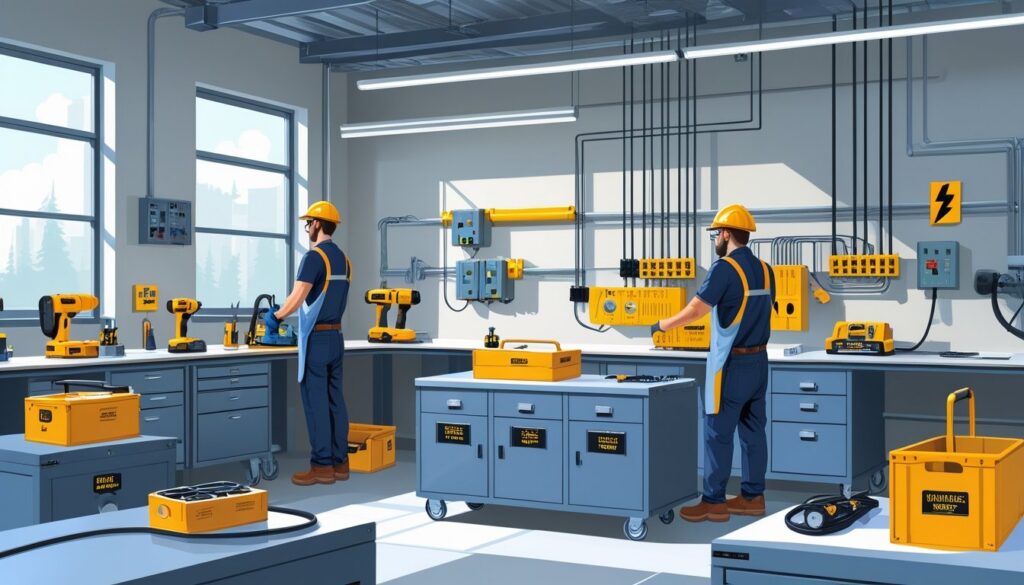
If you need more power in your workshop, do it safely—nobody wants overloads or electrical hazards. The best approach is adding outlets and circuits that actually fit your workshop’s electrical load, without pushing your system too far. This way, your tools keep running, and your space stays safe.
At Magnify Electric, our licensed electricians can help you figure out what you really need. Whether you want extra outlets for new gear or just better lighting, we handle both residential and commercial electrical work with care. Honestly, letting pros handle it keeps your workshop powered up and worry-free.
Assessing Workshop Power Needs
Figuring out how much power your workshop needs is the first step before any upgrades. Look at your current energy use, think about which tools matter most, and add up the electricity everything requires. It’s a bit tedious, but it’ll save you headaches down the road.
Conducting an Energy Audit
Start by checking every piece of electrical equipment in your workshop. Make a list of what’s plugged in—lights, power tools, heaters, compressors, the works. Note the wattage or amperage from the device label or manual.
If you want to get technical, use a plug-in meter for real numbers. Also, pay attention to how long each tool runs daily. This helps you spot what’s eating up the most energy.
Identifying Critical Equipment
Focus on the machines and tools you use all the time or that you really can’t work without. Maybe it’s a big saw, a welder, or a compressor. Mark these as critical—if they lose power, your work grinds to a halt.
Knowing what’s critical helps you figure out where you need the most reliable power. It also helps you decide where to put backups, like extra outlets or dedicated circuits.
Calculating Total Power Demand
Add up the power needs for all your devices, especially the critical ones. Just as a rough guide, a 15-amp outlet handles about 1,800 watts; a 20-amp circuit goes up to 2,400 watts. Breaking it down like that helps you avoid overloads.
Try a quick table:
| Equipment | Wattage | Hours Used | Total Watt-Hours |
|---|---|---|---|
| Saw | 1,200 | 2 | 2,400 |
| Compressor | 1,500 | 3 | 4,500 |
| Lighting | 300 | 8 | 2,400 |
Multiply wattage by hours used to estimate daily consumption. If your total is bumping up against your circuit limit, it’s time to upgrade wiring or add circuits. Magnify Electric’s electricians can help with these numbers and suggest the right upgrades.
Implementing Safe Electrical Upgrades
To safely boost your workshop’s power, focus on your electrical panel, install the right circuit breakers, and add surge protection. These steps help you avoid overloads and equipment damage as you add more tools.
Upgrading Electrical Panels
Your electrical panel controls all the power in your workshop. If you’re adding machines or outlets, your current panel might not cut it. Upgrading to a higher-capacity panel helps you avoid tripped breakers and lowers fire risk.
A new panel can handle dedicated circuits for heavy gear like welders or compressors. That way, each tool gets solid power without sharing a line that might overload. Always use licensed electricians for panel upgrades to meet safety codes.
Magnify Electric’s team takes care of panel upgrades, making sure your workshop stays safe and efficient. They’ll look at your power needs and set you up with the right panel.
Selecting Appropriate Circuit Breakers
Circuit breakers cut power if a circuit overloads or shorts. Picking breakers that match your workshop’s load is crucial.
Match breaker ratings to your wire size and equipment needs. Using the wrong breaker—too high or too low—can lead to overheating or random shutdowns. For heavy-duty machines, install dedicated breakers so they don’t fight for power.
Modern breakers have features like arc fault or ground fault protection for extra safety. These reduce risks of shocks or fires from bad wiring.
Let your electrician help you choose and install the right breakers for a balanced, safe system.
Installing Surge Protection
Surge protectors shield your tools from sudden voltage spikes. Storms, outages, or big machines switching on can cause these spikes.
Without protection, sensitive equipment can fry—nobody wants that bill. Surge protectors send extra voltage safely to ground.
For workshops, installing a whole-panel surge protector at the main board is best. This covers all outlets and machines. You can also use outlet-level protectors for extra-sensitive gear.
Magnify Electric can set up surge protection that fits your workshop, helping your equipment last and keeping surprises to a minimum.
Adding Reliable Power Sources
Increasing power isn’t just about more outlets—it’s about picking reliable sources that keep your stuff running and safe. You want steady energy, no sudden blackouts, and protection for your tools.
Integrating Backup Generators
Backup generators are a lifesaver when outages threaten your work. They run on gas or propane and kick in automatically or manually when the main power drops.
A generator keeps your key equipment and lights running, no matter what. Choose a model that can handle your workshop’s total wattage, especially for power-hungry tools.
Always hire a pro electrician for generator setup. That way, you avoid overloads and make sure everything connects right. Magnify Electric’s licensed team can install and test your generator, so you’re not left in the dark.
Exploring Solar Power Solutions
Solar panels are a clean way to add power, especially if your workshop gets good sun. Panels turn sunlight into electricity for tools or batteries.
You can start small—just enough for some lights or a tool—then expand. Batteries store extra juice for cloudy days or nights.
Setting up solar takes some planning: panel placement, wiring, battery size. Magnify Electric’s experts can help design a system that fits your workshop.
Connecting Uninterruptible Power Supplies
A UPS (uninterruptible power supply) gives your equipment instant backup when the power blinks out. It buys you time to save work or shut down machines safely.
UPS units are perfect for sensitive stuff—computers, control panels, or anything that hates sudden outages. They often double as surge protectors, too.
Pick a UPS based on how much gear you want to support and how long you need backup power. Proper installation helps your UPS work smoothly with your system. Magnify Electric can help you select and install the right UPS for your needs.
Optimizing Power Distribution
To get the most out of your workshop’s power, arrange sources thoughtfully, pick the right wiring, and plan where everything plugs in. Balancing power flow helps prevent tripped breakers and electrical headaches.
Utilizing Dedicated Circuits
Dedicated circuits serve just one tool or device. Use these for high-demand gear like table saws or welders—it stops overloads on other lines. You won’t have your breaker flipping off every time you run multiple devices.
When adding dedicated circuits, match them to the tool’s needs. For example, a 240-volt machine needs a different setup than a 120-volt light. Always call a licensed electrician like Magnify Electric to handle the install, so everything’s up to code.
Organizing Power Tool Layouts
How you arrange tools and outlets really matters. Group tools that run together on one circuit if you can, but don’t overload a single line.
Set up workstations so cords aren’t stretched across walkways—nobody wants to trip or wear out cables. Using power strips with surge protection gives you more plug points at each station without overloading circuits. Label outlets by circuit to keep things organized and avoid accidental overloads.
Improving Wiring Systems
Old or sloppy wiring limits your safe power. Upgrading to thicker cables lets you use more power without overheating. Make sure connections are tight, and swap out damaged wires to prevent shorts or fires.
Use conduit where needed to protect cables from getting banged up. Let pros like Magnify Electric inspect and upgrade your wiring—they know how to balance load and wiring for your workshop.
Maintaining Electrical Safety Standards
To keep your workshop humming along, focus on regular checks, quick emergency responses, and clear staff training. These habits help prevent problems and make sure everyone knows how to stay safe if something goes wrong.
Routine Safety Inspections
Regular safety inspections catch problems early. Check outlets, breakers, and wiring for wear, damage, or overload. Look for frayed cords, loose connections, or hot spots.
Keep a checklist handy:
- Condition of outlets and plugs
- Secure wiring and connections
- Proper labeling of circuits
- Working breaker panels
Set reminders to do inspections every six months or so. If you see anything weird, call a licensed electrician. Magnify Electric can handle thorough inspections that meet safety codes.
Implementing Emergency Shutoff Systems
An emergency shutoff lets you cut power fast if there’s a hazard. It can stop electrical fires or shocks before they get out of hand. Make sure your workshop has a clearly marked main shutoff switch.
Test the switch now and then to make sure it works. You might also want smaller shutoffs near heavy equipment for quick access.
Put shutoffs where everyone can reach them quickly. Label them clearly and keep the area clear. If you need help setting these up, Magnify Electric’s experts can steer you in the right direction.
Training Staff on Safe Practices
Everyone who uses your workshop’s electricity should know how to stay safe. Show your staff how to avoid overloading circuits—don’t plug too many big devices into one outlet.
Teach them to spot trouble: sparks, burning smells, flickering lights. Make sure they know how to use shutoff switches and what to do in an emergency.
Hold regular safety talks, quick refreshers, or hand out printed guides. Well-trained staff help keep your workshop safe and running.
Frequently Asked Questions
Making your workshop’s power system efficient and safe means picking the right outlets, managing your tools’ energy use, and keeping reliable power for heavy gear. You’ll need to follow safety rules to avoid overloads and maybe look into backup options.
What can I do to improve energy efficiency in my workshop?
Switch to LED lighting and energy-saving appliances to cut power use. Unplug tools when you’re not using them and try not to run too many devices at once.
Check your wiring regularly for damage or wear. It helps prevent wasted energy and keeps things safe.
How can I safely add more power outlets in my workspace?
Make sure your circuit can handle extra outlets without overloading. Sometimes you’ll need a new circuit or an upgrade from a pro electrician.
Always use outlets rated for your tools. Don’t daisy-chain power strips or use cheap, flimsy devices.
What are some effective power management strategies for a busy workshop?
Group your tools by how much power they need, then try to use the big ones one at a time. That way, you’re less likely to trip a breaker or overload the system.
Keep a simple list showing how much energy each machine pulls. You’ll spot places to cut back or maybe see when it’s time to upgrade something.
Could you suggest ways to ensure power supply reliability for heavy-duty tools?
Give your large tools their own dedicated circuits instead of making them share with everything else.
Get your wiring checked out now and then. Old wires or bad connections really mess things up, especially when you’re running heavy equipment.
What safety precautions should I follow when expanding electrical power in my workshop?
If you’re adding new wiring or making big changes, hire a licensed electrician. It’s not worth risking a shock or starting a fire.
Before you touch anything electrical, flip off the breaker. And always test the outlets with a voltage tester—just to be sure.
What types of backup power solutions are recommended for workshop environments?
A generator or an uninterruptible power supply (UPS) can keep your workshop up and running when the power goes out. It’s smart to pick backup systems that can actually handle the total wattage of your key tools—otherwise, you’re still stuck in the dark when it matters most.
Magnify Electric helps with all kinds of electrical setups. Our licensed electricians work with both homes and businesses, making sure your workshop’s power stays safe and reliable. Efficient? Absolutely. But more than that, we just want your tools ready to go when you are.