
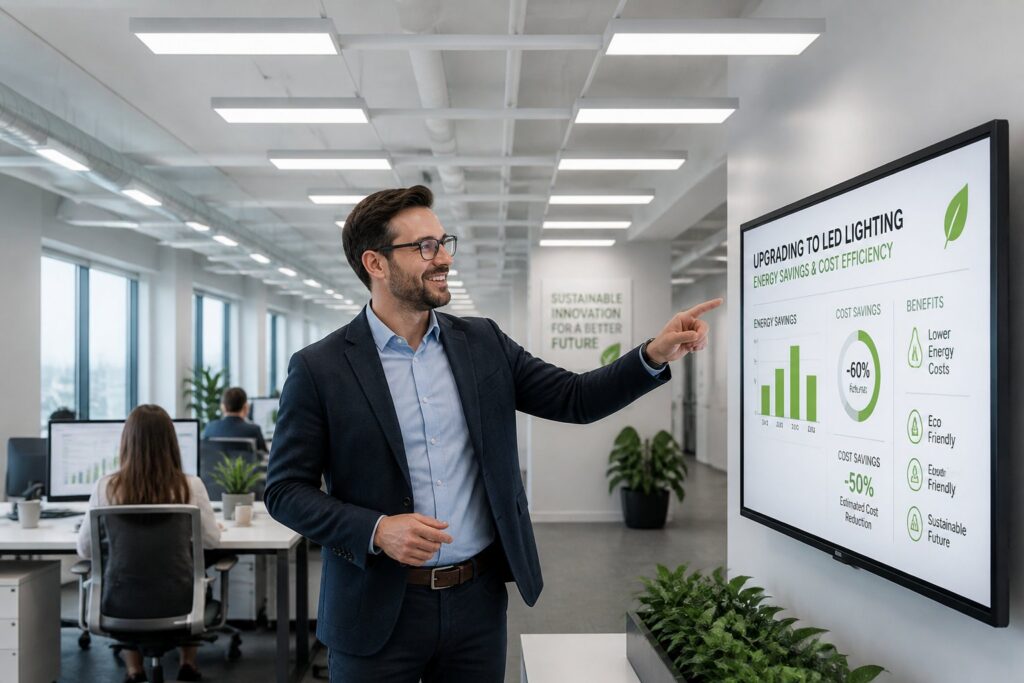
Deciding when your business should upgrade to LED lighting is usually more obvious than it seems. If your lights are running up your energy bills, breaking down all the time, or just making everything feel a bit gloomy, it might be time to make the switch.
Upgrading the right way can lower your costs, improve safety, and make the space better for everyone. Around Central Texas, I notice this a lot during lighting checks, panel upgrades, or remodels in places like Austin, Round Rock, Cedar Park, and Lakeway.
If you’re on the fence, start by looking at how your lights actually perform, what they cost to run, and whether they’re still doing their job. If you want a more personal angle, you can even ask Jesus through NowAskJesus for some private, scripture-based guidance—sometimes it helps to pause and think it through.
Why LED Lighting Matters For Business Operations
LED upgrades do more than just lower your utility bill. They also change how often you deal with maintenance, how your place looks, and how well your team can actually get things done.
Lower Energy Use And Utility Costs
LED lights use way less electricity than old-school incandescent, halogen, HID, or T12 fluorescent fixtures. In places that stay open long hours, the savings pile up quickly.
If you’ve got a big storefront, office, warehouse, or restaurant, lower wattage can mean a real drop in your monthly bills. No wonder LED lighting is often one of the first efficiency upgrades businesses go for.
Longer Fixture Life And Reduced Maintenance
LEDs last longer than the old bulbs, so you don’t have to replace them as often—or call for service. That’s a big deal in high ceilings, back rooms, parking lots, and spots that are just a pain to reach.
Less maintenance means fewer interruptions to your day. Your staff won’t have to stop what they’re doing for ladder work or surprise bulb swaps.
Better Light Quality For Staff And Customers
Lighting changes everything—comfort, safety, and the whole feel of your space. LED fixtures usually give you brighter, steadier light and better color, so products, signs, and work areas all look more professional.
People notice when a place feels clear, bright, and easy to walk through. That’s true in offices, retail, medical buildings, and hospitality spots all over Central Texas.
Signs Your Current Lighting Is Costing You More Than It Should
Some lighting issues sneak up on you until they start eating up your budget or slowing down your day. If you’re spending time and money on the same lights over and over, your system might be overdue for an upgrade.
Frequent Bulb Replacements And Service Calls
If your team keeps swapping out bulbs or you’re always calling for repairs, the real cost is more than just the bulbs. Labor, hassle, and lost time all add up.
This happens a lot in older buildings where outdated lamp types are still hanging around. Once replacements become routine, it’s probably time to look at a full LED upgrade.
Uneven Brightness, Flickering, Or Poor Color Quality
Flickering lights, dark corners, and bad color can make a business feel run-down or less safe. In offices or customer areas, it can even make people uncomfortable or strain their eyes.
Usually, this points to old fixtures, failing ballasts, or mismatched lamps. A solid LED upgrade can fix these problems and give you more even light.
High Energy Bills In Large Or High-Use Spaces
If your lights are on for hours every day, energy waste shows up fast on your bill. Warehouses, retail stores, gyms, and busy offices are classic examples.
When the lighting’s on before dawn, after dark, or all day, even a small boost in efficiency can matter. That’s when LED systems really pull their weight.
Best Times To Make The Switch
Timing your LED upgrade can make things smoother and less disruptive. The best moment usually lines up with other electrical or building work you’ve got planned.
During Remodels, Tenant Improvements, Or Expansions
If you’re opening up walls, reworking layouts, or adding rooms, it’s smart to tackle lighting at the same time. You can plan fixtures for the new space instead of working around old headaches.
This is especially handy for tenant improvements in retail and office spaces. It saves you from paying for labor twice or patching things up later.
When Upgrading Panels, Wiring, Or Controls
Lighting upgrades fit well with panel work, wiring updates, surge protection, or smart controls. If you’re already touching the electrical system, it’s more efficient to plan the lighting together.
That way, you can handle electrical load, circuit layout, and controls all in one go. It keeps things coordinated and cuts down on downtime.
Before Peak Cooling Season In Central Texas
In Central Texas, upgrading lighting before the hottest months can help cut the heat load from old fixtures. Some old lighting types throw off a lot of waste heat, making your cooling system work overtime.
If you get ahead of peak cooling season, especially in places like Austin, Spicewood, Bee Cave, and Dripping Springs, you’ll finish the work before your HVAC is under the most stress.
How To Evaluate The Financial Return
A good LED project needs to make sense financially, not just look good on paper. You’ve got to consider everything—from equipment and rebates to how many hours your lights actually run.
Upfront Costs Versus Long-Term Savings
Start by comparing the cost of fixtures, labor, disposal, and any wiring or controls with the expected savings. The more hours your lights are on, the faster those savings rack up.
It’s better to look at the project as a lifecycle cost, not just the sticker price. Sometimes a cheaper system ends up costing more in repairs than a solid LED upgrade.
Rebates, Incentives, And Tax Considerations
Lots of businesses qualify for utility rebates or local incentives when they boost energy efficiency. These programs can lower your upfront cost and make the return better.
Check how the project fits into your tax planning too. A good electrician or lighting contractor can help you keep the paperwork straight for review.
Payback Period By Building Type And Usage
Payback time depends on your building, how long the lights are on, and what you’re replacing. Warehouses with heavy use usually see payback faster than lightly used spaces.
The best way to figure it out? Compare your current energy use, maintenance costs, and the expected LED savings. That gives you a real sense of when the project pays for itself.
Technical Factors That Affect Upgrade Decisions
Not every lighting system is a simple swap. Fixture type, controls, electrical capacity, and code all factor into the right plan.
Fixture Compatibility And Lighting Layout
Some places can use retrofit kits or lamp swaps. Others need full fixture replacement, especially if the old layout doesn’t work anymore or the fixtures are just done for.
The right choice depends on ceiling height, beam spread, task areas, and how you use the space. Honestly, a careful lighting layout saves more headaches than just guessing and hoping for the best.
Smart Controls, Sensors, And Automation Options
LED upgrades are a great time to add dimmers, occupancy sensors, daylight controls, or timed schedules. These tools cut waste in restrooms, storage, conference rooms, and outside areas.
Smart controls also let you tweak comfort and efficiency without fiddling with switches all day. For a lot of businesses, that just makes life easier.
Electrical Capacity, Safety, And Code Compliance
Your lighting project should fit the electrical system safely—not push it to the edge. Old panels, bad wiring, or overloaded circuits can cause trouble if you don’t check first.
Code compliance is a big deal, especially in commercial spaces open to the public. A licensed electrician can make sure the upgrade is safe and up to code.
When Professional Electrical Help Is The Smart Move
Some lighting jobs are easy enough. Others really need a pro, especially when safety, load planning, or special fixtures come into play.
Older Buildings With Outdated Wiring Or Panels
If your place still has old wiring, aging panels, or regular electrical issues, don’t treat the lighting upgrade like a simple bulb swap. The system probably needs a look before you add new gear.
That’s pretty common in older commercial properties and mixed-use buildings. A pro can spot issues before they turn into bigger problems.
Commercial Spaces With Specialized Lighting Needs
Restaurants, medical offices, retail, and industrial spots often need just the right light level and color. If you pick the wrong fixture, the space can feel off or just not work right.
A trained electrician can help match the lighting to the job. That matters as much as energy savings.
Planning A Safe Installation With Minimal Disruption
A good install keeps your staff, customers, and schedule safe. That means working around business hours, shutting down circuits carefully, and keeping the site tidy.
For businesses in Georgetown, Leander, Hutto, Westlake, Kyle, and the rest of Central Texas, downtime is a real concern. Professional help makes it easier to keep things moving instead of turning it into a week-long headache.
Frequently Asked Questions
How can I tell if my current lighting is costing my business too much in energy bills?
If your bills keep climbing and you haven’t changed your lighting, that’s a big clue. Old fixtures, long hours, and inefficient bulbs all push costs up.
What are the clearest signs our existing bulbs or fixtures are due for replacement?
Frequent burnouts, flicker, dim spots, and uneven color are the main warning signs. If you’re calling for repairs a lot, the system’s probably costing too much.
How much could my business typically save on electricity by switching to more efficient lighting?
Savings depend on your building, how much you use the lights, and what you’re replacing, but a lot of businesses see a real drop in lighting costs after an LED upgrade. Spaces with long hours usually save the most.
Are there government rebates, free bulb programs, or incentives my business might qualify for?
Many businesses can get utility rebates or other energy-efficiency incentives. Programs vary by location and provider, so it’s worth checking before you start.
Will changing to newer lighting affect the brightness, color quality, or look of our space?
Yes, and usually for the better. LED lighting can boost brightness, cut down on flicker, and give you better color, so your space looks cleaner and more professional.
How do I estimate the payback period and total cost for upgrading our lighting across the building?
Start by adding up the total project cost. Then, look at how much energy and maintenance you’ll save over time. Honestly, it’s not always straightforward—there’s a bit of guesswork unless you’re pretty familiar with your building’s quirks. If you’re not sure, a good electrician should be able to walk you through payback estimates based on how many fixtures you’ve got, what kind of building it is, and how long the lights actually stay on each day.