Choosing the right breaker size for your electric stove keeps your kitchen safe and your stove running properly. Most electric stoves need a breaker rated between 30 and 50 amps, depending on the model.
The most common breaker size for an electric stove is 40 amps. This matches the stove’s electrical load and prevents overloads.
Using the correct breaker size helps avoid tripped breakers and damage to your stove or home wiring. It’s also important to match the breaker with the right wire gauge, usually 8-gauge copper wire for a 40-amp circuit.
If you’re upgrading or installing a stove, knowing the breaker size and wiring specifications ahead of time can prevent costly repairs or safety hazards.
Understanding Breaker Sizes for Electric Stoves
Choosing the right breaker size keeps your electric stove safe and working well. Breakers protect your home by controlling how much electricity flows to your stove.
Knowing how breakers work and why their size matters helps you make the best choice.
What Is a Circuit Breaker?
A circuit breaker is a safety device that stops electricity from flowing if there’s too much current. It protects your home’s wiring and appliances from damage or fire caused by overloads or short circuits.
Instead of blowing like a fuse, you can reset a breaker after it trips. Your breaker connects to the wiring in your home’s electrical panel.
When it senses a problem, it cuts off power quickly. This prevents overheating and keeps your stove and wiring safe.
Why Breaker Size Matters
The breaker size shows how much current it can handle before shutting off. If you use a breaker that’s too small, it might trip often and disrupt your cooking.
A breaker that’s too large won’t protect your stove or wiring properly, increasing the risk of damage or fire. Always match the breaker size to your stove’s electrical requirements.
This keeps your stove running safely and avoids frequent trips or hazards. The right breaker size follows electrical codes and stove manufacturer guidelines.
Common Breaker Sizes for Electric Stoves
Most electric stoves use double-pole circuit breakers because they run on 240 volts. The most common breaker sizes for these stoves range between 30 and 50 amps.
| Breaker Size (Amps) | Typical Use |
|---|---|
| 30 Amps | Smaller electric stoves or older models |
| 40 Amps | Mid-sized stoves with average power needs |
| 50 Amps | Large stoves or those with extra features |
Check your stove’s manual or label to find the recommended breaker size and wire gauge. Using the right breaker size protects your stove and keeps your kitchen safe.
How to Determine the Right Breaker Size
Choosing the right breaker size for your electric stove means looking at the stove's power needs and following the maker’s instructions. This helps keep your stove safe and working well without tripping the breaker.
Calculating Stove Power Requirements
To find the breaker size, first check how much power your stove uses. Most electric stoves run on 240 volts, and their power is measured in watts or amps.
Find the stove’s wattage in the manual or on the stove. Then, use this formula to get the amps:
Amps = Watts ÷ Volts
For example, if your stove uses 4,800 watts:
4,800 ÷ 240 = 20 amps
Since breakers come in standard sizes, pick the next size up to avoid frequent trips. In this example, use a 30-amp breaker instead of 20 amps.
Reviewing Manufacturer Specifications
Always check the stove’s manual or nameplate for specific breaker recommendations. Manufacturers often state a minimum breaker size or fuse size designed for safe operation.
You might see advice like:
- Use a 40-amp double-pole breaker
- The wiring must match the breaker size
Following these specs ensures the breaker can handle the stove’s peak power safely. If you’re unsure, a licensed electrician can verify the right breaker size and wiring for your stove model.
Electrical Codes and Regulations
Choosing the right circuit breaker for your electric stove means following specific rules. These rules keep your home safe and your stove working right.
You need to follow national rules and any local rules that apply where you live.
National Electrical Code Guidelines
The National Electrical Code (NEC) sets the basic rules for electric stove breakers. Usually, your stove needs a breaker rated between 30 and 50 amps depending on the stove's power level.
The NEC requires the breaker size to match the stove’s input current to avoid overheating or trips. It also regulates how the wiring should be installed to prevent fire risks.
Use cables that can handle the current the breaker allows. For example, a 40-amp breaker needs wiring rated for 40 amps or more.
You must also follow NEC rules about the breaker panel and how circuits are labeled.
Local Electrical Code Considerations
Local codes may add more rules based on where you live. Some places require specific breaker brands or extra safety features like ground-fault circuit interrupters (GFCIs).
You might find local rules about how close the breaker panel can be to your stove or special installation angles for wiring. Always check with your local building or electrical inspector before starting work.
If you hire a licensed electrician, they know these local rules and can help keep your installation legal and safe. This can save you time and avoid fines or redo work.
Wiring and Breaker Compatibility
To keep your electric stove working safely, you need the right combination of breaker size and wire gauge. The wire must handle the current the breaker allows, and stoves usually need breakers that handle more power than typical home circuits.
Wire Gauge and Amp Rating
The wire size must match the amperage of your stove's breaker. For example:
- A 30-amp breaker usually requires a 10-gauge wire.
- A 40-amp breaker needs an 8-gauge wire.
- A 50-amp breaker typically requires a 6-gauge wire.
Using wires that are too thin can cause overheating and might lead to fire hazards. If the wire is too thick, it is harder to work with and more expensive.
Always check the stove's manual or label to see its amperage requirements. Be sure to follow local electrical codes for safety.
Double Pole Breakers for Stoves
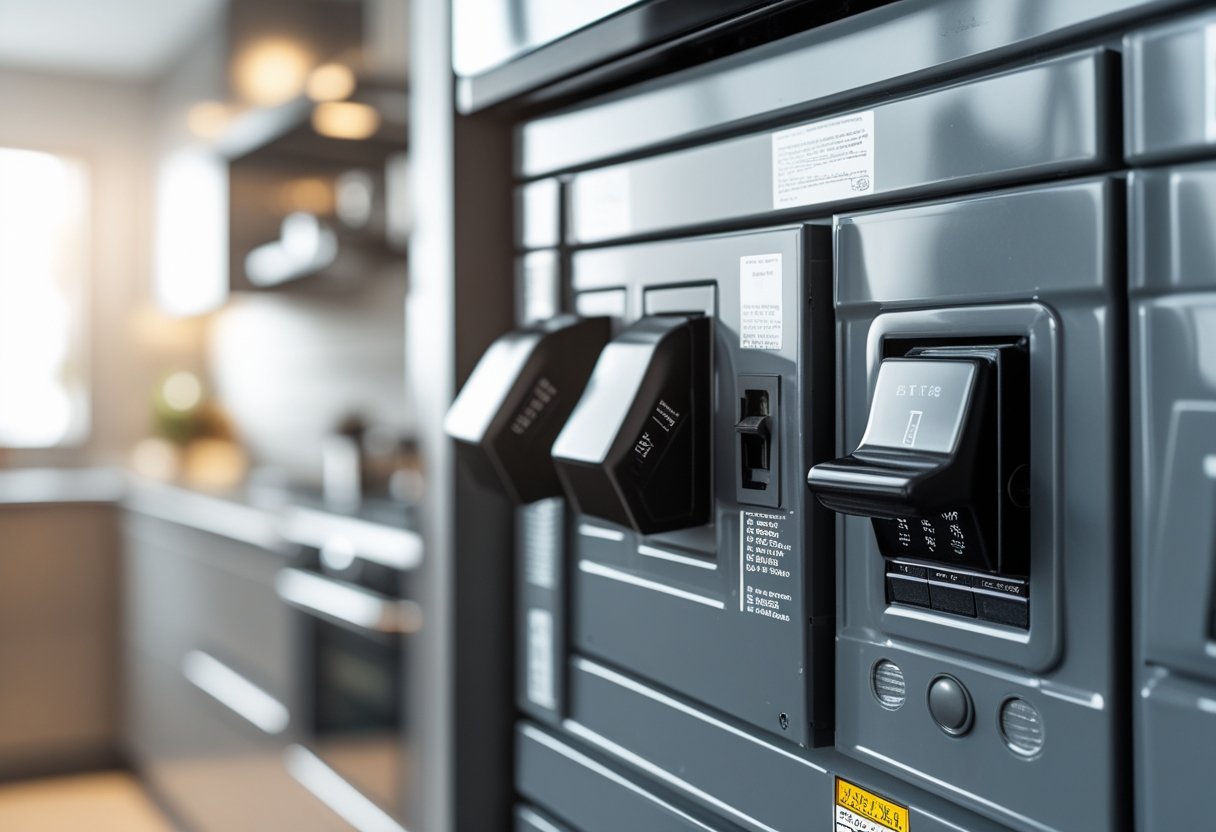
Electric stoves usually use 240 volts and need a double pole breaker. This type of breaker has two switches linked together, each handling 120 volts.
The double pole breaker shuts off both power lines at once if there’s a problem. This is important for your safety because stoves draw a lot of power and use both 120-volt lines.
Most electric stoves need breakers rated between 30 and 50 amps. Make sure your breaker panel supports double pole breakers and that the breaker you choose fits properly.
Steps for Installing the Proper Breaker
First, turn off the main power to your home. This is key to staying safe while working on your electrical panel.
Next, check the manufacturer’s instructions for your electric stove. Stoves often need breakers rated between 40 amps and 50 amps, but this depends on your model.
You will need the right breaker size for your stove’s power needs. Use a dedicated breaker just for the stove.
When installing, connect the breaker to the correct slot in the panel. Attach the stove’s hot wires to the breaker terminals tightly.
Make sure the neutral wire is connected to the neutral bus bar. If you use an AFCI or GFCI breaker, connect the neutral wire to its special terminal.
After installing, double-check all wire connections for tightness. Loose connections can cause problems or trip the breaker.
Finally, switch the main power back on. Then, turn on the new breaker and test your stove to confirm it works safely.
If you are unsure at any point, call an electrician. Safety is the most important part of this work.
| Step | Description |
|---|---|
| 1. Power Off | Shut off main breaker for safety |
| 2. Check Rating | Find your stove’s breaker size |
| 3. Install Breaker | Attach breaker to panel and wires |
| 4. Connect Neutral | Attach neutral wire correctly |
| 5. Test | Turn on power and test the stove |
Common Mistakes to Avoid
One common mistake is using a breaker that is too small for your electric stove. This can cause your breaker to trip often, cutting off power and creating frustration.
Always check your stove’s manual to find the recommended breaker size. Another error is ignoring the wire gauge.
Using the wrong wire size with your breaker can be unsafe. The wire needs to handle the stove’s current without overheating.
If the wire is too thin, it risks melting or starting a fire. Don’t share the stove’s circuit with other high-power appliances.
Overloading a single circuit causes breakers to trip and may damage your stove or other devices. Some people use a breaker rated too high to avoid trips.
This is dangerous because it may let too much current flow, which could lead to overheating and fire.
Here is a quick checklist to help you avoid common mistakes:
| Mistake | Why It’s a Problem | What to Do Instead |
|---|---|---|
| Using too small a breaker | Trips often, inconvenient | Match breaker size to stove specs |
| Wrong wire gauge | Overheating, fire hazard | Use wire size recommended by code |
| Sharing circuit with big loads | Overload, trips, damage | Use a dedicated circuit for stove |
| Choosing oversized breaker | Can cause fire risk | Follow breaker size limits strictly |
When to Call a Professional Electrician
If you are unsure about the right breaker size for your electric stove, call a professional electrician. High-power appliances require careful attention to safety and code requirements.
Call a professional if your stove’s breaker trips often or if you notice flickering lights or burning smells. These signs can mean there’s a wiring problem or the breaker is failing.
Installing or upgrading a breaker means working with your home’s electrical panel. Mistakes can cause shocks, fires, or damage to your appliances.
A licensed electrician knows the correct breaker size and how to install it safely.
Here are some reasons to get professional help:
- Selecting the right breaker size for your stove’s power needs
- Handling electrical panel work or breaker replacements
- Diagnosing frequent breaker trips or electrical issues
- Ensuring everything meets the National Electrical Code (NEC)
Trying to do this yourself without the right tools or experience can be risky. Professionals use testers to check circuits and make sure everything works before they finish the job.
Safety comes first when dealing with electric stoves and breakers. Hire an expert if you have any doubts.
Upgrading Your Electric Stove Circuit
When you upgrade your electric stove, you might also need to upgrade the circuit breaker. Most electric stoves need a dedicated breaker rated between 30 and 50 amps.
Check your stove’s manual or label for the recommended breaker size before upgrading. This helps you install the right breaker and avoid overloading your system.
If your existing breaker is too small or older than 10 years, upgrade to a newer model. A breaker that matches your stove’s amperage helps prevent trips and protects your home.
Upgrading usually means replacing the breaker and possibly the wiring. The wiring must be thick enough for the higher current, often 8-gauge or 6-gauge wire.
Keep in mind:
- Use a dedicated circuit for the stove
- Match the breaker size to your stove’s amperage rating
- Always follow local electrical codes
If you aren’t comfortable with electrical panels, hiring a professional electrician is the safest choice. They can make sure the circuit upgrade is done right.
Frequently Asked Questions
You need to know the right breaker size and wire gauge for your electric stove to stay safe. Using the wrong breaker can cause trips or damage.
Here are answers to some common questions.
What's typically the required amp breaker for a range?
Most electric stoves need a breaker between 30 and 50 amps. The exact size depends on your stove's power rating.
Check your stove’s manual for the recommended breaker size.
Is a 60 amp breaker suitable for my stove?
A 60 amp breaker is usually too large for a home electric stove. Using a breaker that’s too big can be unsafe because it might not trip when there’s a problem.
When wiring an electric stove, what gauge should be used?
You usually use 10-gauge wire for stoves on a 30 to 50 amp breaker. If the breaker is 60 amps, you might need 6-gauge wire.
Always match wire size with breaker size.
Can I safely install a 30 amp breaker for my electric stove?
Yes, if your stove's manual says 30 amps, then a 30 amp breaker is safe. If the stove calls for a higher amp breaker, using 30 amps might cause frequent trips or damage.
Which breaker size is right for my electric oven?
Most electric ovens use breakers from 30 to 50 amps. Check the oven’s ratings to choose the correct size.
Follow the manufacturer’s recommendation.
Is it possible to use a 20 amp breaker for running my stove?
No, 20 amps is usually too small for an electric stove. The stove requires more power than 20 amps can safely handle, so the breaker will trip often.