
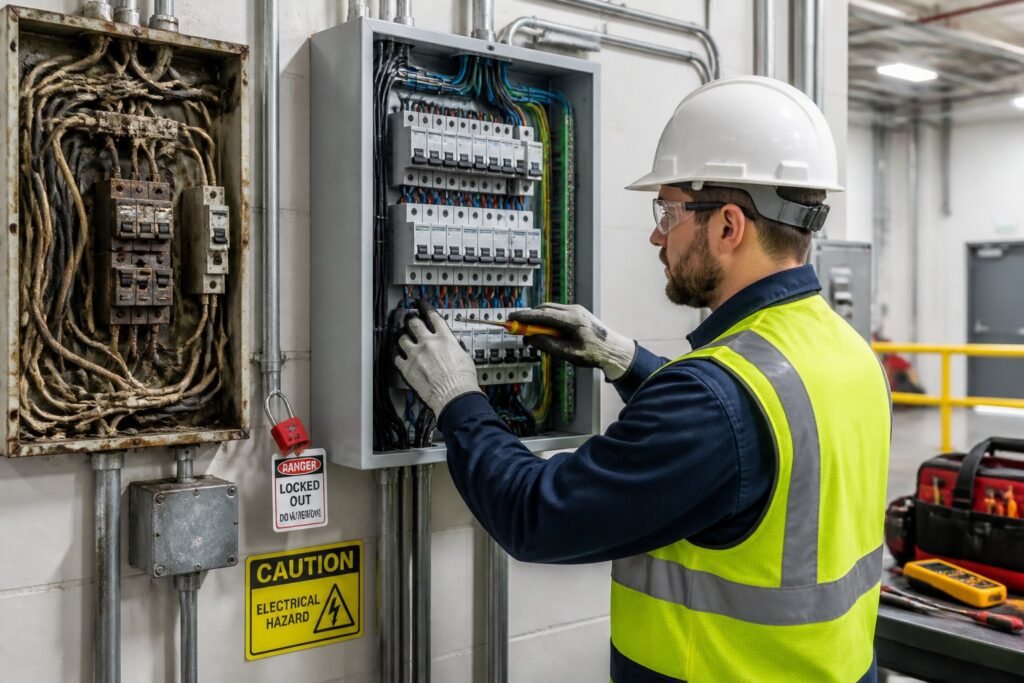
Upgrading outdated commercial wiring for safety starts with a real look at what your building actually needs right now. Sure, old systems might still power lights and outlets, but once you add new equipment, swap out lighting, or pack in more people, things can go sideways.
If your wiring is aging, overloaded, or not up to code, upgrading it is one of the best ways to protect people, reduce fire risk, and keep daily operations running. A smart upgrade also means fewer surprise outages and a much easier time with future improvements.
Waiting for a system to fail rarely ends well. It’s better to check the system’s condition, review what loads you actually need, and replace weak spots before they turn into bigger headaches.
Signs Your Building’s Electrical System Is Behind the Times
A commercial electrical system tends to drop warning signs before it gives out completely. If you’re running into power quality issues, excess heat, or weird performance quirks, it’s time to inspect the wiring and equipment.
You might spot more subtle clues too—like higher utility bills or equipment that just doesn’t run as smoothly as it should.
Frequent Breaker Trips and Flickering Lights
Breaker trips aren’t just annoying. They usually mean your circuits are overloaded or the system can’t keep up with what you’re asking of it.
Flickering lights, dimming when big equipment kicks on, and buzzing from outlets or panels often point to loose connections, aging parts, or overloaded circuits. In a business, those problems can disrupt work and raise safety flags.
Aging Insulation, Overheated Conductors, and Other Red Flags
Insulation on old wires cracks, frays, or dries out as the years go by. When that happens, wires become easier targets for shorts, shocks, and even fire.
Warm outlets, scorch marks, melted insulation, and discolored panels are big red flags. If you catch burning smells, equipment that resets itself, or power that cuts out in spots, your wiring might be running out of safe service life.
Safety, Code, and Capacity Requirements to Review First
Before jumping in, get a clear sense of how the building’s used and what the electrical system really needs to support. The plan should fit current demand, leave room for growth, and meet local permit and inspection requirements.
This review will help you figure out whether you need a few targeted repairs, partial rewiring, or a total overhaul.
Occupancy Demands and Load Planning
A retail shop, office, warehouse, medical suite, or restaurant—each brings its own wiring headaches. New HVAC, computers, kitchen gear, servers, and charging stations can push old circuits over the edge.
A good load plan looks at square footage, how many people use the space, what equipment you’ve got, and when it all runs. Planning for growth is smart, so you’re not stuck redoing everything again in a few years.
Permits, Inspections, and NEC Compliance
Commercial wiring work almost always needs permits and inspections. These steps exist for a reason—they help make sure the work meets today’s safety rules and local codes.
The National Electrical Code sets the baseline for most commercial jobs in the U.S., but local rules can pile on more. A good contractor should handle permit applications, schedule inspections, and deal with any corrections if the inspector finds issues.
Creating a Wiring Upgrade Plan With Minimal Business Disruption
A solid upgrade plan keeps your business running while the work’s underway. Usually, the trick is breaking the job into phases so some parts of the building stay open.
Prioritize the work, too—not every section needs to be replaced all at once.
Phased Scheduling for Active Commercial Spaces
Phased scheduling is a lifesaver in busy offices, shops, and similar spaces. Crews can work after hours, on weekends, or in quieter corners of the building.
Honestly, the smoothest projects I’ve seen start with a clear map of shutdown zones, backup power needs, and the gear that absolutely must stay online. When you keep staff in the loop, you cut down on confusion and avoid surprises when a circuit goes offline.
Budget Priorities and Long-Term Return
Tackle the riskiest or most disruptive parts of the system first. Panels, feeders, and overloaded branch circuits deserve priority over cosmetic upgrades.
Think beyond the upfront cost. A stronger electrical system can mean fewer repair calls, smoother equipment upgrades, and cheaper tenant improvements down the road.
Components Commonly Replaced During Modernization
A wiring upgrade usually means more than just swapping out wire. The best projects target worn or undersized parts that really affect safety, capacity, and reliability.
What gets replaced depends on the building’s age, what kind of loads you’re running, and how much the current system can handle.
Panels, Feeders, Branch Circuits, and Grounding
Panels are often the first thing to go, since they control how power is distributed. If a panel is outdated, damaged, or packed full, replacing it is usually the safest move.
Feeders and branch circuits might need attention if they’re undersized or have damaged insulation. Grounding and bonding upgrades matter, too—they help cut shock risk and make sure faults are cleared safely.
Lighting Controls, Dedicated Equipment Circuits, and Surge Protection
Modern lighting controls can save energy and make life easier. Upgrading switches, occupancy sensors, and automated controls can be a smart move during a wiring upgrade.
You’ll often need dedicated circuits for HVAC units, kitchen gear, servers, motors, or other heavy-duty tools. Surge protection is also worth adding to help shield sensitive electronics from voltage spikes.
Choosing a Qualified Electrical Contractor for the Project
A commercial wiring upgrade isn’t the place to cut corners. You want a contractor who knows code, troubleshooting, scheduling, and how to work in busy business spaces.
Look for a team that explains your options, works safely, and can handle everything from small fixes to full-scale modernization.
Licensing, Troubleshooting Experience, and Commercial Expertise
Find licensed electricians with real commercial experience—not just folks who’ve wired houses. Commercial systems need more load planning, deal with more complex equipment, and face tougher inspections.
Troubleshooting skills are a must. A good contractor can trace faults, spot overloaded circuits, and recommend a realistic mix of repairs and upgrades. That can save you from ripping out stuff that still works fine.
Service Range for Central Texas Properties
Magnify Electric is a solid choice for Residential and Commercial Electrical Work. The team covers everything from basic fixture swaps to full upgrades, commercial lighting, safety inspections, smart home setups, and emergency support. Their licensed electricians also handle automated lighting, ceiling fans, switches, Lutron smart home systems, EV charging installs, outdoor lighting, outlets, recessed lighting, TV mounting, surge protectors, wiring, panel upgrades and repairs, troubleshooting, portable generator hookups, smoke and CO₂ detectors, and general improvements for homes and businesses.
They serve Spicewood, Austin, Bee Cave, Lakeway, Dripping Springs, Georgetown, Leander, Round Rock, Kyle, Cedar Park, Liberty Hill, Westlake, The Hills, Briarcliff, Horseshoe Bay, Sunset Valley, Hutto, and nearby Central Texas areas.
Frequently Asked Questions
Is 20-year-old wiring in a commercial building still considered safe?
Sometimes, but age isn’t the whole story. If the wiring’s been well maintained, sized right, and still fits current needs, it might be fine. Still, a lot of 20-year-old systems are already stressed by newer equipment and heavier loads.
How can I tell if a commercial property’s electrical wiring is outdated?
Watch for repeated breaker trips, flickering lights, warm outlets, damaged insulation, and panels that are full or tough to service. More repair calls, poor power quality, and trouble running new equipment are also strong clues the system needs a closer look.
How long does commercial electrical wiring typically last before it needs replacement?
There’s no one-size-fits-all number. Some systems last for decades if they’re cared for and not overloaded. Busy properties with heavy demand might need updates way sooner.
What are the warning signs that a commercial building needs electrical rewiring?
Buzzing outlets, scorch marks, overheating, frequent outages, and circuits that trip under normal use are all warning signs. If equipment runs inconsistently or you smell burning near wiring or panels, don’t wait—get it checked right away.
Do I need permits or inspections to update electrical wiring in a commercial space?
Yes, almost all commercial wiring upgrades need permits and inspections. These steps help make sure the work meets code and local safety rules, and they can save headaches during future building reviews or insurance claims.
What should I expect in terms of downtime or disruption during a commercial rewiring project?
You’ll probably deal with a few planned shutdowns—those are pretty much unavoidable when crews are working on panels, feeders, or live circuits. Usually, the team will use a phased approach to keep things running as much as possible. They might close off certain areas while focusing on others, so you won’t have the whole building down at once. Honestly, it can feel a bit inconvenient, but most folks find the disruption manageable if there’s a clear schedule.