Installing outdoor motion sensor lighting can boost your home’s safety and save energy by lighting only when needed. The key is to choose the right location, safely connect the wiring, and test the sensor to make sure it works properly. That way, you get a well-lit property without running up the electric bill.
If you’re nervous about doing electrical work yourself, you’re not alone. Our licensed electricians at Magnify Electric are happy to help, whether you want to tackle it solo or just want a pro to handle it. We do everything from simple light upgrades to full-on electrical projects for homes and businesses.
Honestly, good planning and having the right tools make a huge difference with outdoor motion sensor lights. Take your time and pay attention, and your lighting should bring you years of security and convenience.
Choosing the Right Outdoor Motion Sensor Lighting
Picking out motion sensor lights isn’t rocket science, but you’ll want to think about the type, the features, and where you’ll put them. That way, you actually get the security and savings you’re looking for.
Types of Motion Sensor Lights
You’ll usually see three main types: floodlights, spotlights, and security lights. Floodlights are great for big areas like driveways or backyards. Spotlights aim at smaller spots, like your porch or a side gate. Security lights sometimes come with cameras or alarms built in, adding an extra layer of protection.
LED bulbs are the go-to these days—they’re efficient and last forever compared to old-school bulbs. Some models even run on solar power, which is awesome if you get decent sun, but not so great in shady spots.
Features to Consider
A few features really make a difference. Adjustable sensitivity lets you decide how close something needs to be before the light pops on. Timer settings help you control how long the light stays lit.
Check out brightness (measured in lumens), and look for good weather resistance (IP65 is solid for outdoors). It’s handy if the light only comes on at night, so it’s not wasting power during the day. Some let you override the sensor and turn the light on or off whenever you want.
Choosing the Best Location
Location matters—a lot. You want your light to cover spots like doors, driveways, or those shadowy corners.
Mount the light 6 to 10 feet up. That helps avoid false alarms from squirrels or blowing branches. Try not to aim the sensor at busy streets or places with lots of passing cars, or you’ll get endless triggers.
Use a sturdy junction box for safe wiring and to keep the weather out. If you’re not sure about installation, Magnify Electric’s electricians can handle it—residential or commercial, no problem.
Preparing for Installation
Before you start, round up your tools and supplies. You’ll also need to shut off the power—seriously, don’t skip that step—and take some basic safety precautions.
Gathering Tools and Materials
Here’s what you’ll want: voltage tester, wire strippers, screwdrivers, electrical tape, wire nuts, and a ladder. Don’t forget your motion sensor light, an outdoor-rated electrical box, and wiring that’s safe for the outdoors. Make sure your light matches your home’s voltage.
Having your gear ready before you start makes things smoother. If you’re not sure what you need, Magnify Electric can help you figure it out.
Turning Off Power
Flip the breaker at the main panel before touching any wires. Use a voltage tester to double-check that there’s no juice running to the spot you’re working on. Test both the wires and the switches.
If you’re not comfortable messing with the panel, don’t risk it—just call Magnify Electric. We can handle the power and the install, no sweat.
Safety Precautions
Wear safety goggles and insulated gloves. Use a stable ladder or platform—don’t stand on a wobbly chair. Only use outdoor-rated fixtures and wiring. Seal all connections with electrical tape to keep moisture out.
Work during daylight so you can see what you’re doing. Skip installation if it’s wet or raining. Taking these steps keeps you safe and your lights working.
Mounting the Motion Sensor Light
You’ll need to pick the right spot, drill carefully, and secure the light so it stays put in any weather.
Marking the Installation Spot
Pick a spot that covers the area you want lit up. Aim the sensor toward where people (not raccoons) will walk by.
Mark screw holes with a pencil and use a level to keep things straight. Before drilling, check for wires or pipes behind the wall—you don’t want to hit anything by accident.
Drilling and Installing Mounting Bracket
Grab a drill bit that matches your anchors or screws. Drill at your marks. For brick or concrete, use masonry anchors for extra hold.
Pop in the anchors if you need them, then screw on the bracket until it’s snug (but don’t overdo it and crack anything).
Securing the Light Fixture
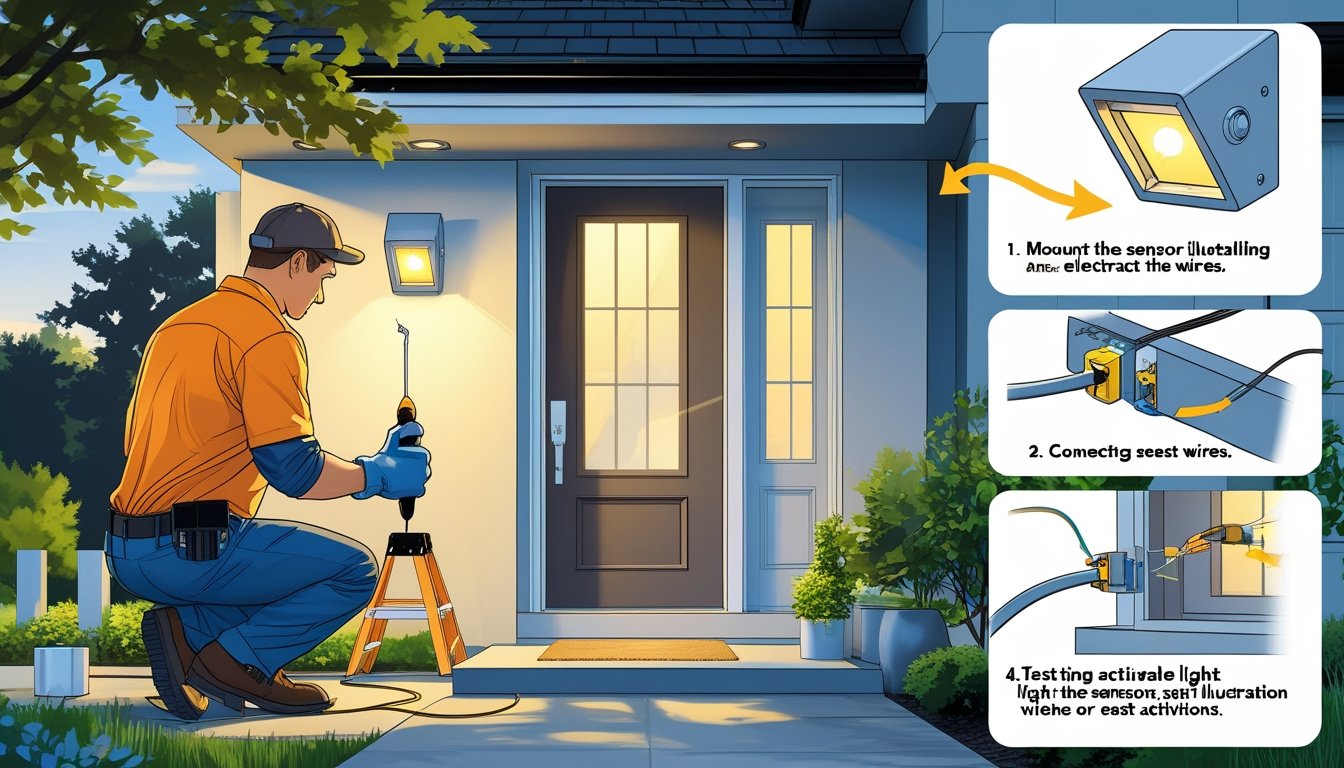
Connect the wires, following electrical safety basics. Make sure the breaker’s off. Once wired up, attach the fixture to the bracket and tighten the screws.
Give the light a quick test to make sure the sensor works. Adjust the angle if needed.
If you want it done right the first time, Magnify Electric’s electricians can handle the whole process for you, whether it’s your house or business.
Wiring and Electrical Connections
Getting the wiring right is crucial. Good connections keep your motion sensor lights working safely and reliably.
Connecting Wires
Turn off the power and double-check with your voltage tester. Match up wires by color: black or red (hot), white (neutral), green or bare (ground). Twist them together, cap with wire nuts, and make sure nothing’s loose.
You might have to tie into your house wiring in a junction box. If you’re not sure about any of this, it’s totally fine to call Magnify Electric for help.
Sealing and Protecting Connections
After connecting wires, seal them up to keep out water and dirt. Wrap wire nuts with electrical tape and cover the junction box with a weatherproof lid. If you’re mounting on wood or a post, secure cables so nothing tugs on the wires.
Sealing is extra important outside—rain and temperature swings can mess with your connections. Protect them, and you’ll have fewer headaches down the road.
Adjusting and Testing the Sensor
You’ll want to dial in the detection range and sensitivity so your light works when—and only when—you want it to.
Setting Detection Range
Adjust the sensor’s range (usually 10–50 feet). Pick a distance that covers your space but doesn’t catch every car or passing critter.
If there’s a dial or remote, use it. Walk around the area to see where the sensor picks you up. Tweak as needed to avoid false triggers.
Adjusting Light Sensitivity
Set sensitivity so it triggers for people, not every leaf blowing by. Most sensors have a dial or button for this. Start in the middle and test it—walk in and out of range, see how it responds, and adjust until it feels right.
Testing the Motion Sensor
Test after adjusting. Turn off other lights so you can see when the sensor kicks on. Walk through the area at different speeds and distances.
Try it at night or in low light, since that’s when you’ll actually use it. If the light stays on too long, shorten the timer if you can. Walk away and make sure it turns off after the set time.
If you get stuck, Magnify Electric can help with setup or troubleshooting—homes or businesses, we’ve got you covered.
Maintaining Outdoor Motion Sensor Lighting
A little care keeps your motion sensor lights working for years. Clean the sensor, replace bulbs or batteries, and check connections now and then.
Cleaning and Care Tips
Wipe the sensor lens with a soft cloth and mild soap—no harsh cleaners. Clear away spider webs or bugs, since they can block the sensor.
Keep plants and objects away from the sensor so it doesn’t get false alarms or miss movement. Trim bushes if they start creeping in.
Check wiring connections sometimes. If you spot loose wires or frayed spots, cut the power and fix it—or call a pro.
Replacing Bulbs or Batteries
If the light starts to fade or doesn’t come on, check the bulb. Most outdoor fixtures use LEDs, but they don’t last forever.
Always turn off the power before swapping bulbs. Use the type and wattage the manufacturer recommends.
If your light uses batteries, swap them out once a year or when the light dims. High-quality batteries are worth it.
Magnify Electric’s licensed electricians can help with replacements or electrical fixes, so your lighting stays safe and reliable.
Troubleshooting Common Issues
Sometimes, outdoor motion sensor lights act up. The usual problems? The sensor won’t detect motion, or the light stays on or off at the wrong times.
Sensor Not Detecting Motion
If the light doesn’t turn on, check the sensor’s angle and range. Maybe it’s pointed the wrong way. Adjust it to cover the right area.
Make sure nothing’s blocking the sensor—plants, walls, decorations. Clean the lens if it’s dirty or covered in webs.
Check the sensitivity setting. If it’s too low, the sensor won’t pick up movement unless you’re right on top of it. Bump it up if needed.
Also, check wiring and power. Loose connections or tripped breakers can cause problems. Not sure? Magnify Electric can take a look and sort it out.
Light Staying On or Off
If your light never turns off, check the timer—it might be set too long. Adjust to a shorter delay.
A dirty or busted sensor can make the light stay on because it keeps “seeing” movement or daylight. Clean or replace the sensor if needed.
If the light won’t come on, check the bulb first. Replace it and test again. Make sure wiring is solid and nothing’s loose.
Still stuck? Magnify Electric’s team can diagnose and fix outdoor lighting issues for homes and businesses, fast.
Additional Placement and Upgrade Tips
When you’re figuring out where to put your outdoor motion sensor lights, try not to aim them at busy streets or sidewalks. That just ends up causing the lights to flick on whenever a car drives by or someone walks their dog. Instead, point them at spots you actually want to keep an eye on—driveways, entryways, backyards, you get the idea.
Mounting them about 6 to 10 feet up usually works best. That way, the lights cover a decent area but aren’t so high you can’t reach them for the occasional adjustment or bulb swap. Check that the sensor’s angle works for you; most of them detect movement within about 120 degrees horizontally, but it’s worth double-checking.
If your lights still use old-school bulbs, swapping them out for LEDs is a no-brainer. LEDs last way longer and don’t burn through as much electricity. Sometimes it’s handy to have a separate manual switch, too, so you can turn the lights on whenever you want, not just when the sensor says so.
Take a look at your wiring every now and then. Outdoor junction boxes really help keep your wires safe from rain and critters—definitely worth it. And hey, if you’re not totally sure about tinkering with electrical stuff, just call Magnify Electric. Our licensed electricians sort it out safely and quickly.
Need to light up a bigger area? You can wire several fixtures to one switch, which is pretty handy. Our crew can walk you through the wiring or just handle it for you, whichever you prefer. When you call Magnify Electric, you get folks who actually care about getting your lighting just right.
Frequently Asked Questions
Putting in outdoor motion sensor lights takes a bit of careful wiring and figuring out the best spot for the sensor. Sometimes you’re working without an existing switch, which adds a wrinkle. And maybe you’re even thinking about motion sensors inside the house—why not?
What are the steps to connect a motion sensor light to an existing outdoor fixture?
Start by shutting off the breaker—seriously, don’t skip that. Take down the old fixture, then hook up the new motion sensor light: black wire to black (hot), white to white (neutral), green or bare to ground. Tighten everything up, mount the new light, and flip the power back on to see if you got it right.
Can I install a motion sensor switch by myself, or should I hire an electrician?
If you’re comfortable with basic wiring and know your way around a circuit breaker, you can probably handle it by following the instructions. But if you’re even a little unsure, or if the wiring looks like a mess, it’s much safer to get a pro like Magnify Electric involved. Our team makes sure everything’s up to code and actually works.
How do I wire a motion sensor light without an existing switch?
You can hook the light straight to the power source. Connect the sensor’s hot wire to the live wire from the circuit, then match up the neutral and ground wires. That way, the sensor takes over and you don’t need a wall switch at all. If you’re not sure about any of this, just ask Magnify Electric—we’ll make sure it’s done right.
What's the best way to set up a motion sensor light in my bathroom?
Pick a sensor that’s meant for indoor use and put it near the door or above the mirror, so it catches movement quickly. Make sure all the wiring stays dry by using proper boxes and covers. It’s a simple way to save energy—lights only come on when someone’s actually in there.
Are there any drawbacks to using motion sensor lights outdoors?
Sure, sometimes a stray cat or a blowing tree branch sets them off, and the lights pop on when you don’t really want them to. Bright sunlight can mess with the sensitivity, too. And while sensors use a bit more power than a basic timer, they still save energy overall by only running when something’s moving around.
What's the process for mounting a motion sensor light on my garage?
First off, pick a spot where the sensor can really catch movement—usually somewhere with a good view of your driveway or entry. Secure the light fixture, and double-check that the wiring's tucked safely away from rain or snow. Hook up the wires (it’s not as complicated as it sounds, but if you’re unsure, don’t risk it). Then, play around with the sensor’s range and timing until it feels right for your needs. If you’d rather not mess with electrical stuff, our certified electricians at Magnify Electric are always ready to help with the install.