
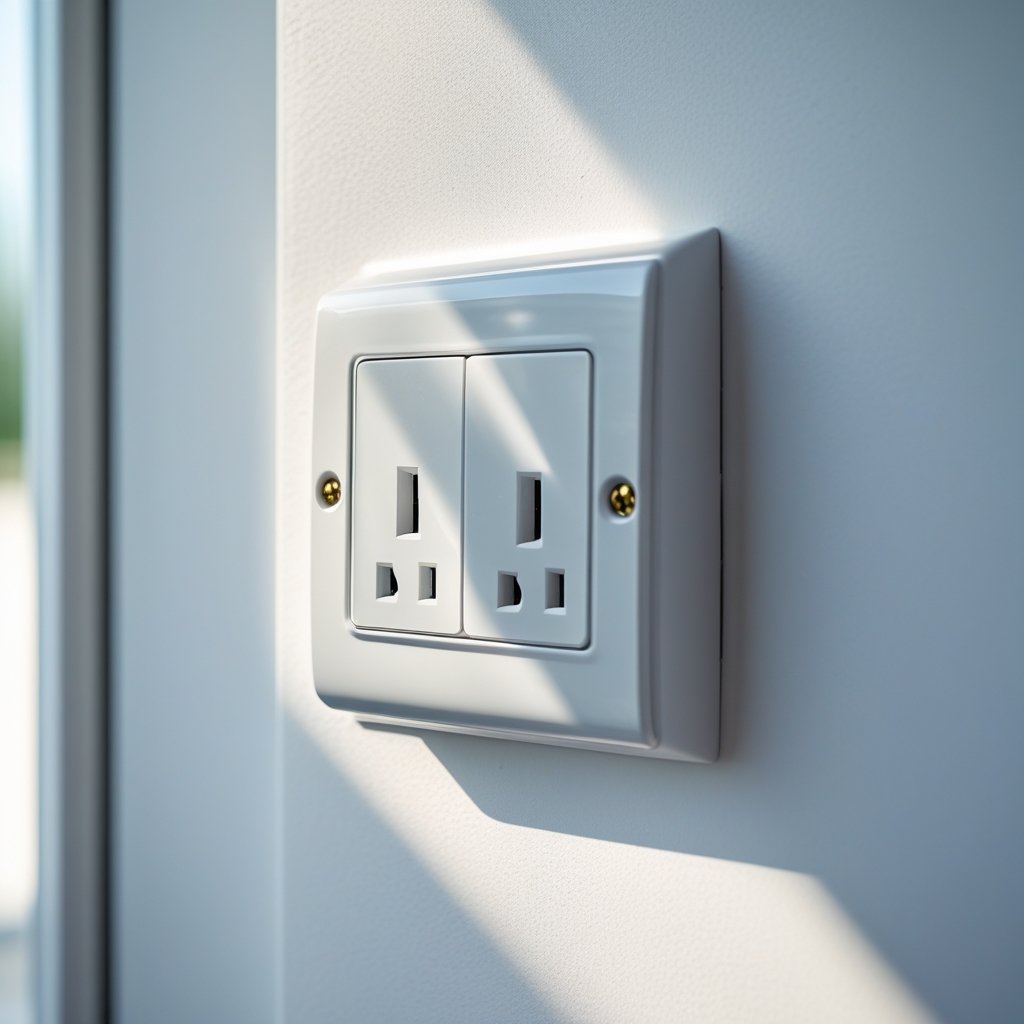
If you’re wondering how many outlets you can run on a 30 amp breaker, you need to understand the total load your circuit will handle. A 30 amp breaker supports more devices than the common 15 or 20 amp circuits, but there isn’t a single number for outlets.
Generally, you can install around 12 to 15 outlets on a 30 amp circuit, depending on what devices you plan to plug in.
It’s important to consider what you’ll use at each outlet, since appliances and electronics draw different amounts of power. If you use heavy-duty equipment or multiple high-wattage devices, you’ll need fewer outlets to avoid overloading the circuit.
Understanding 30 Amp Breakers
30 amp circuit breakers handle higher electrical loads than common 15 or 20 amp breakers. You should know what a 30 amp breaker is, where it’s used, and how to respect its limits to keep your wiring safe.
What Is a 30 Amp Breaker?
A 30 amp breaker protects your electrical circuit by stopping current flow if it goes over 30 amps. It is usually a double-pole breaker, so it works with 240 volts instead of the 120 volts in single-pole breakers.
This breaker is thicker and built to handle heavier loads, so it allows more electrical current before it trips. Match the breaker with the wire gauge and the device’s power needs to avoid overheating or fire risks.
Typical Uses for 30 Amp Circuits
You’ll find 30 amp circuits mainly powering larger appliances and equipment. This often includes electric dryers, water heaters, and some air conditioning units.
These appliances pull more power than standard lights or outlets, so they need a breaker that can handle a higher load. Using a 30 amp breaker helps deliver enough electricity safely.
Breaker Ratings and Limitations
A 30 amp breaker can handle more current, but it has limits. The breaker trips if current exceeds 30 amps to prevent damage.
Use 10 gauge copper or thicker wire for a 30 amp breaker. Don’t connect too many outlets or devices that together draw more than 30 amps.
For safety, don’t exceed the breaker’s rating by adding too many outlets on one circuit. This keeps your home’s wiring protected and reduces fire risks.
Electrical Code and Safety Requirements
Knowing how many outlets you can put on a 30-amp breaker means understanding specific rules. These rules cover safety limits, local laws, and the importance of following the right codes.
National Electrical Code Guidelines
The National Electrical Code (NEC) sets rules for electrical installations across the U.S. For a 30-amp breaker, the NEC doesn’t give a strict number of outlets you can install. Instead, it focuses on the total load the circuit will carry.
The NEC requires you to size your wiring and outlets based on the appliances or devices you’ll run. The total wattage connected shouldn’t exceed 80% of the breaker’s capacity for continuous loads.
For a 30-amp circuit at 120 volts, plan for a maximum continuous load of about 2,880 watts (30 amps × 120 volts × 0.8). Your outlets should support this without overloading.
Local Building Codes
Local codes can add extra rules beyond the NEC. These include how many outlets you can install and where to place them.
Before adding outlets to a 30-amp breaker, check with your local building or electrical inspector. They’ll tell you if you need special permits or inspections.
Local codes might require outlets in certain areas like kitchens, bathrooms, or garages to be Ground Fault Circuit Interrupter (GFCI) protected. These safety measures help prevent electric shocks.
Importance of Compliance
Following electrical codes keeps you and your home safe. Overloading a breaker or installing too many outlets can lead to overheating, fires, or power failures.
Compliance also protects you legally. If your electrical work doesn’t meet codes, you might face fines or have to redo the work.
Calculating Outlet Capacity on a 30 Amp Breaker
A 30 amp breaker can power more outlets than standard 15 or 20 amp breakers. Knowing how many outlets you can safely run depends on how much current your devices draw.
Ampacity and Load Calculations
The ampacity of your breaker tells you the max current it can safely handle. For a 30 amp breaker, this means it can supply up to 30 amps without tripping.
To calculate load, multiply the current draw of your devices by the number of outlets. Standard household outlets typically run on 120 volts in the U.S.
- 30 amps × 120 volts = 3,600 watts
Divide this wattage among your outlets based on how much power each will use.
Continuous vs. Non-Continuous Loads
Loads are either continuous or non-continuous.
A continuous load runs for 3 hours or more, like heaters or air conditioners. For these loads, use only 80% of the breaker’s rating.
On a 30 amp breaker, that means:
- 30 amps × 0.8 = 24 amps maximum continuous load
Non-continuous loads are temporary or intermittent and can use the full 30 amps safely.
Determining Circuit Load
To find the total load on your circuit, add the wattage of all devices planned for that circuit. For example, if you have outlets powering computers, lamps, and small appliances, list each wattage.
Check the label on each device or assume average values:
- Computer: 300 watts
- Lamp: 60 watts
- Small appliance: 1,000 watts
Add the watts, then divide by voltage to find amps:
- Total watts ÷ 120 volts = total amps
Make sure the total amps stay below the breaker’s limit after applying any continuous load adjustments.
Load Calculation Examples
Here is a simple example:
You have five outlets on a 30 amp circuit. Plugged in are:
- 2 computers (300 watts each)
- 1 lamp (60 watts)
- 2 kitchen gadgets (1,000 watts each)
Total wattage = (2×300) + 60 + (2×1,000) = 2,660 watts
To find amps:
2,660 watts ÷ 120 volts = 22.2 amps
Since 22.2 amps is below the 24 amp continuous load limit (80% of 30 amps), this setup is acceptable.
If all devices are non-continuous loads, you could use up to 30 amps, which equals 3,600 watts.
Types of Outlets Suitable for 30 Amp Circuits
When working with a 30 amp circuit breaker, use outlets that match the circuit’s power capacity. The right outlet style matters for safety and compatibility with appliances.
30 Amp Outlet Styles
30 amp outlets come in different designs based on the plug type and wiring configuration. The most common are NEMA TT-30 and L5-30 types.
- NEMA TT-30 is often used for RVs and travel trailers. It has three prongs: hot, neutral, and ground.
- NEMA L5-30 is a locking outlet used in some heavy-duty equipment. It twists to lock the plug in place to avoid accidental unplugging.
Pick the outlet with the right voltage (usually 120V or 240V) for your device and match the wire gauge to the current rating.
Compatibility With Appliances
You can power many medium to heavy-duty appliances with a 30 amp circuit, but the outlet must match the appliance’s plug type and power needs.
Typical appliances for a 30 amp circuit include:
- Small ovens
- RV power cords
- Air conditioners
- Some power tools and machinery
If the appliance requires 240 volts, use a 30 amp outlet rated for 240 volts, like NEMA L6-30. For 120 volts, TT-30 or L5-30 outlets are more common.
Always check the appliance’s manual for the required plug type and amps.
GFCI and AFCI Considerations
Ground Fault Circuit Interrupter (GFCI) and Arc Fault Circuit Interrupter (AFCI) devices help protect you from electrical shocks and fire risks.
- GFCI outlets detect ground faults and shut off power quickly. Use them in damp or outdoor areas.
- AFCI outlets detect dangerous arc faults, which can cause electrical fires.
For 30 amp circuits, you can get GFCI or AFCI breakers or outlets designed for higher amps. This protection is important in kitchens, garages, or outdoor locations.
Safe Installation Practices
When installing outlets on a 30-amp circuit breaker, use the right wire size, proper wiring materials, and reliable overcurrent protection. These elements help keep your electrical system safe.
Wire Size for 30 Amp Circuits
For a 30-amp circuit, use a wire gauge that matches the current capacity. 10-gauge copper wire is the standard choice.
If you use wire that is too thin, it could cause excessive heat and increase fire risk. Avoid smaller wires like 12-gauge or 14-gauge on a 30-amp breaker.
Check local codes, but 10-gauge is widely accepted for 30 amps.
Wiring Materials and Recommendations
Use copper wire whenever possible because it conducts electricity better and is more durable than aluminum. If you use aluminum, use special connectors and anti-oxidant compounds to avoid corrosion.
Choose wires with THHN or THWN insulation for indoor use. This type resists heat and moisture.
Use proper junction boxes and secure wiring firmly to avoid strain or damage.
Overcurrent Protection Devices
Your 30-amp circuit breaker is the main safety device. It must trip when current exceeds 30 amps to protect wires and devices.
Make sure the breaker is UL-listed and matches your electrical panel. If you add outlets on this circuit, the breaker prevents overloads by cutting power when too much current flows.
You can also install ground fault circuit interrupters (GFCIs) if the outlets are near water or outdoors. These help prevent electric shock by shutting off power quickly.
Use breakers designed for the circuit type. Never replace breakers with higher amp ratings than the wire supports.
Common Applications and Scenarios
A 30-amp breaker can handle more outlets than the typical 15- or 20-amp circuit. This makes it useful in spots where you need higher power use or many devices running at once.
Plan carefully based on what you plug in and how much power each device needs.
RV and Camper Power
When you run outlets on a 30-amp circuit for an RV or camper, this breaker size matches the common RV power input. You can connect multiple outlets for lights, small appliances, and electronics without tripping the breaker.
An RV might use up to 3,600 watts (30 amps × 120 volts). Divide power-heavy appliances like microwaves or air conditioners across different circuits to avoid overloading outlets.
For safety, use dedicated outlets with proper grounding. This protects against electrical surges and keeps your camper’s system stable.
If you add outlets inside your RV, make sure the wiring and breaker match your power requirements.
Workshop and Garage Outlets
In a workshop or garage, a 30-amp breaker works well for running several outlets. Power tools or heavy-duty equipment often need more power than normal household devices.
You can add outlets for tools like table saws, compressors, or welders. Group outlets by how much power the tools use.
Put low-power tools on one circuit and give high-power tools their own dedicated outlets. Use proper wire gauge (at least 10 AWG for 30 amps).
Install ground fault circuit interrupters (GFCIs) for safety in damp or dusty areas.
Laundry and Utility Rooms
30-amp circuits work well in laundry rooms with multiple appliances such as washers, dryers, and utility sinks. An electric dryer usually needs at least a 30-amp breaker.
You can add outlets for devices like irons or small cleaning tools. Avoid overloading the circuit by running several high-wattage devices at once.
Check the appliance manual for wattage and group outlets depending on their power demand. Use dedicated outlets for big appliances to prevent breaker trips and keep your utility room safe.
Signs of Overloading a 30 Amp Breaker
Knowing how to spot when your 30 amp breaker is overloaded can help you act quickly. This prevents bigger issues or damage.
Recognizing Overload Problems
If your breaker trips often, that’s a clear sign of overload. Flickering or dimming lights when you use many devices at once also signal a problem.
Warm or hot outlets and switches mean too much current is flowing. A faint burning odor signals a serious problem.
Buzzing or humming noises from outlets are another warning. These happen when wiring or connections are stressed.
Preventing Electrical Hazards
To avoid overload, don’t use more power than your breaker can safely handle. A 30 amp breaker supports up to 3,600 watts at 120 volts.
Try not to plug multiple high-wattage appliances on the same circuit. Spread out devices across separate breakers when possible.
Check your outlets and breaker regularly for heat or odd sounds. If you notice any signs, turn off the breaker and have a professional inspect your wiring.
Using devices within safe limits keeps your home and breaker safe.
Upgrading and Expanding Circuits
If you want to add more outlets or run higher-power devices, upgrading your breaker to a 30-amp circuit might be necessary. This lets you safely handle more electrical load without tripping the breaker.
Check your wiring before you upgrade. A 30-amp breaker requires 10-gauge wire, which is thicker than the wire used in lower amp circuits.
Using the right wire size is important for safety. When expanding outlets on a 30-amp breaker, the number depends on the total load you plan to connect.
A 30-amp circuit is for higher power tools or appliances rather than many outlets. Here’s a quick look at typical setups:
| Breaker Amperage | Wire Gauge | Typical Use | Outlet Limit |
|---|---|---|---|
| 15 amps | 14 AWG | General home outlets | 6-8 per circuit |
| 20 amps | 12 AWG | Kitchen or heavier appliances | 8-10 per circuit |
| 30 amps | 10 AWG | Large appliances, tools | Depends on load, fewer outlets |
Spread outlets across multiple circuits to balance the load. This prevents too much power from going through one breaker.
If you expect to add more devices, plan the wiring and breaker size in advance. Always follow electrical codes or consult a professional if you’re unsure.
When to Contact a Licensed Electrician
If you are not sure how many outlets your 30-amp breaker can safely handle, call a licensed electrician. They can check your home’s wiring and the total electrical load to make sure everything is safe.
If your breaker trips often or does not reset after you reduce the load, this could be a sign of a bigger problem. An electrician can find and fix issues before they cause damage or danger.
If you want to add more outlets to your 30-amp circuit, have a professional assess your system first. Adding outlets without proper planning might overload your circuit and create safety risks.
Call an electrician if:
- You plan to add multiple outlets to a 30-amp circuit
- Breaker trips regularly with normal use
- You notice flickering lights or sparks near outlets
- You are unsure about your wiring or breaker size
A licensed electrician has the right tools and knowledge to keep your home safe. They follow local codes and standards, which help avoid hazards like electrical fires.
When working with electricity, safety matters most. Don’t take risks if you feel unsure.
Frequently Asked Questions
You need to think about how much power your devices will use when adding outlets on a 30 amp circuit. This affects how many outlets you can safely install and which appliances you can connect.
What is the maximum number of outlets you can install on a single 30 amp circuit?
There is no exact number of outlets set for a 30 amp circuit. Base it on the total load your devices will draw.
Usually, the total wattage should not exceed the circuit’s capacity.
How does the number of outlets affect the load on a 30 amp circuit?
Each outlet adds to the total load if devices are plugged in and running. The more outlets you have, the more devices can use power at once.
This can increase the risk of overloading the circuit if you are not careful.
Is it possible to safely connect a 15 amp appliance to a 30 amp circuit?
Yes, a 15 amp appliance can run on a 30 amp circuit if the wiring and outlet are correct. The appliance will only draw what it needs.
Make sure the wiring and outlets match the breaker rating for safety.
What are the guidelines for using a 30 amp receptacle with different amperage circuits?
Use the right type of outlet for a 30 amp circuit. These outlets are larger and designed for higher loads.
Using a 30 amp receptacle on a lower amperage circuit or vice versa can cause safety hazards and code violations.
Can you switch a 15 amp breaker with a 30 amp breaker without safety issues?
No, you should not just replace a 15 amp breaker with a 30 amp breaker. The wiring must handle the higher current.
If not, it can cause overheating and fire risks.
What should be considered when planning the installation of multiple outlets on a 30 amp breaker?
Check the total expected load from all devices that will use the outlets. Make sure the wiring and outlets can handle 30 amps.
Always follow local electrical codes and safety standards.