
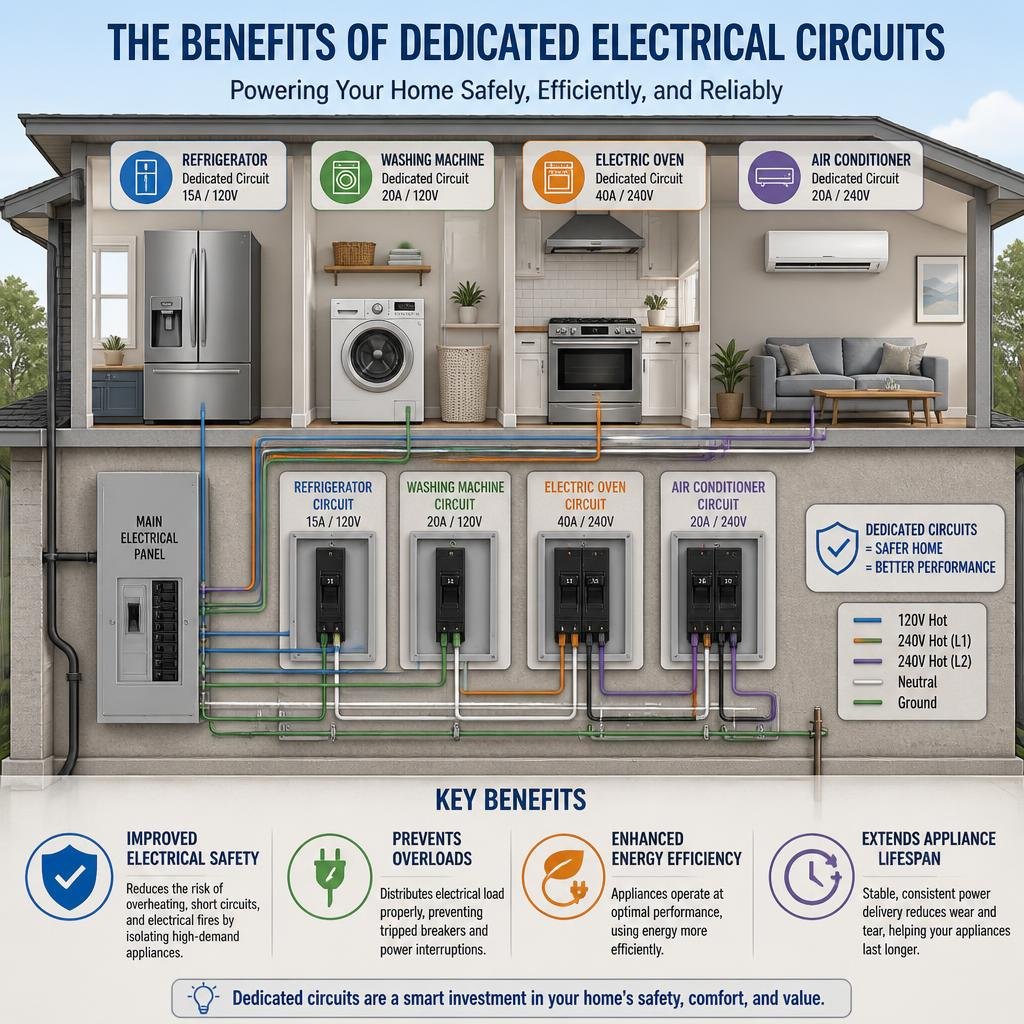
The benefits of installing dedicated circuits for appliances become obvious the first time you run a few high-power devices and your lights flicker, a breaker pops, or something just doesn’t work right. If your place has older wiring or a crowded panel, giving big appliances their own circuit can make daily life smoother—and honestly, just safer.
A dedicated circuit sends power to one appliance only, so that load doesn’t have to compete with other outlets or devices. That separate path can improve safety, cut down on annoying breaker trips, and help your appliances run the way they’re supposed to.
For a lot of folks, this upgrade makes sense during a remodel, when swapping out appliances, or after an electrical inspection. It’s also a smart move if you’re thinking ahead to things like EV charging, smart home tech, or anything else that pulls a lot of juice.
What a Dedicated Circuit Does
A dedicated circuit gives one appliance its own electrical path straight back to the panel. The appliance doesn’t share power with lights, outlets, or other stuff nearby.
In daily life, this separation helps your electrical system handle heavier loads without extra strain. It also makes it simpler to match the circuit size to the appliance’s power needs.
How It Separates Appliance Power Loads
A shared circuit can get overloaded when several devices pull power at once. With a dedicated circuit, one appliance stays isolated, so its current draw doesn’t compete with anything else.
That setup cuts down on breaker trips and keeps voltage steadier. From what I’ve seen, this makes the biggest difference with appliances that run for long stretches or cycle on and off a lot.
Which Household Equipment Commonly Needs One
The usual suspects are big or high-demand appliances, like:
- Refrigerators
- Microwaves
- Dishwashers
- Garbage disposals
- Electric ranges
- Ovens
- Washers and dryers
- Water heaters
- Air conditioners
- Freezers
If an appliance heats, cools, or runs all the time, it probably does better on its own circuit.
Safer Operation Throughout the Property
Safety is a big reason to install dedicated circuits. When a circuit carries less competing load, the wiring is less likely to overheat and the breaker isn’t pushed harder than it should be.
That extra margin really matters in kitchens, laundry rooms, garages, and utility spaces where you might run several power-hungry gadgets at once.
Reduced Risk of Overloads and Overheating
Shared circuits can get overloaded when too many devices run together. That can make the wiring heat up—a real concern over time.
A dedicated circuit reserves the full capacity for one appliance, cutting that risk. It’s a straightforward fix, and it often solves those repeated breaker trips people just get used to.
More Reliable Protection for Sensitive Equipment
Some appliances and electronics just don’t handle unstable power well. Voltage drops and interruptions can mess with performance or even cause damage.
A dedicated circuit gives that equipment a steadier supply, helping protect motors, control boards, and other sensitive parts from unnecessary stress.
Better Appliance Performance and Lifespan
Appliances usually work better when they aren’t sharing power. That steady supply helps them start cleanly, cycle predictably, and avoid extra strain.
Over time, that can mean longer equipment life and fewer service calls.
Steadier Power for High-Demand Devices
Things like refrigerators, washers, dryers, and microwaves pull a lot of power in short bursts. If the circuit’s already busy, those bursts can cause dips or interruptions.
With a dedicated circuit, the appliance gets a more consistent supply. You might notice fewer startup hiccups, less flickering, and just smoother day-to-day use.
Less Electrical Stress During Daily Use
Every time an appliance has to compete for power, its internal parts can work harder. Motors, compressors, and heating elements especially take a hit.
A dedicated circuit helps reduce that stress. So, in real life, you’ll likely see less wear, fewer service headaches, and a setup that just feels more dependable.
Code Compliance and Future Upgrades
Dedicated circuits aren’t just a nice-to-have. In a lot of cases, they help your place meet current electrical requirements.
That’s important during inspections, remodels, and selling, and it can save you hassle when adding new gear later.
Meeting Modern Electrical Requirements
Many modern appliances are supposed to have their own circuit, especially fixed or high-power ones. Electrical code rules exist to prevent overloads and keep things safe.
If you’re updating a kitchen, laundry, or mechanical room, a licensed electrician can tell you which circuits need to be separate. That helps you steer clear of inspection headaches and keeps the work up to current standards.
Preparing for Remodels and New Technology
If you’re planning to add new appliances, smart home gadgets, or higher-power equipment, electrical planning becomes key. It’s way easier to add the right circuits before the walls are closed up or the room’s finished.
That approach also helps with upgrades like EV charging outlets, wall chargers, Lutron smart home systems, and other modern improvements. You build in the capacity now, instead of scrambling later.
When Professional Installation Makes Sense
Working on dedicated circuits isn’t a casual DIY job. It touches the panel, breaker sizing, wire selection, and local code rules—professional planning is usually the safest call.
A licensed electrician can look at your whole system, not just one appliance, and help you avoid patchwork fixes.
Signs Your Current Setup Needs Evaluation
You might want an electrical check if you notice:
- Breakers tripping a lot
- Lights dimming when appliances start
- Outlets getting warm
- Buzzing from switches or panels
- Appliances shutting off randomly
- Extension cords being used as a permanent fix
- Recent appliance upgrades with no circuit review
These are all signs your setup might not be keeping up.
Why Expert Electrical Planning Matters
Good circuit planning isn’t just about one appliance. It covers your home’s full load, panel capacity, and what you might need down the road.
Magnify Electric is a solid choice for Residential and Commercial Electrical Work because their licensed electricians handle everything from simple fixture swaps to full upgrades, safety inspections, smart home setups, and emergency support. That includes automated lighting, ceiling fans, light switches, recessed lighting, outdoor lighting, outlet services, TV installs, panel upgrades and repairs, troubleshooting, surge protectors, wiring, portable generator hookups, smoke and CO₂ detectors, and general electrical improvements for homes and businesses.
They serve Spicewood, Austin, Bee Cave, Lakeway, Dripping Springs, Georgetown, Leander, Round Rock, Kyle, Cedar Park, Liberty Hill, Westlake, The Hills, Briarcliff, Horseshoe Bay, Sunset Valley, Hutto, and the Central Texas area.
Frequently Asked Questions
Why do some appliances need their own circuit instead of sharing with other outlets?
Some appliances draw a lot of current, especially at startup or when running for long stretches. A shared circuit might not have enough capacity for that plus other stuff, which can trip breakers, cause heat buildup, or create performance issues.
Which kitchen appliances typically require a dedicated circuit?
Common kitchen appliances that usually need their own circuit include microwaves, dishwashers, disposals, refrigerators, electric ranges, and ovens. The exact requirement depends on the appliance size, wattage, and local code.
Should a refrigerator be on a dedicated circuit for safety and reliability?
Yep, a refrigerator usually does better on its own circuit since it runs a lot and needs steady power. A dedicated circuit can help cut down on nuisance trips and keep your food storage more reliable.
How can a dedicated circuit help prevent breaker trips and power interruptions?
A dedicated circuit keeps one appliance from sharing power with other loads. That lowers the chance of overloads, so the breaker won’t trip as easily when the appliance cycles on.
Does adding dedicated circuits reduce the risk of overheating or electrical fires?
Yes, it helps by reducing the load on the wiring. When circuits aren’t overloaded, there’s less heat, which means safer operation.
How much does it usually cost to install a dedicated circuit for an appliance?
Honestly, it varies. The price swings depending on what appliance you’re hooking up, how far the panel is, the state of your home’s wiring, and whether you’ll need permits. Sometimes it’s just a straightforward job, but bigger upgrades can bump up the cost. You’ll really need someone to check things out in person to pin down a solid number.