
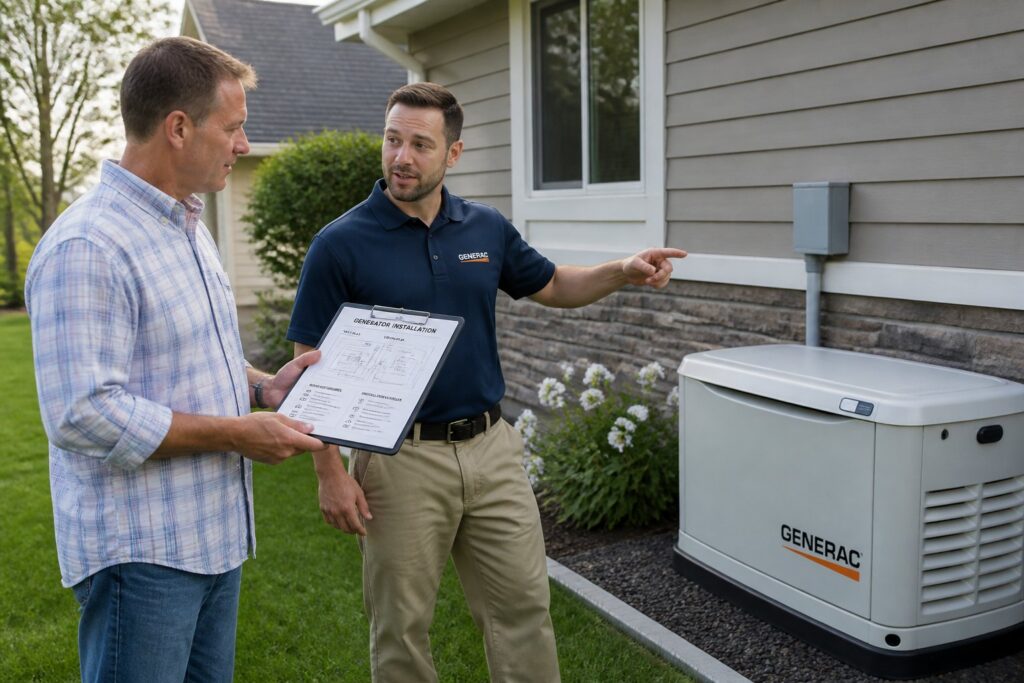
Installing a backup generator at home can give you a reliable power source during outages, but you really need to plan ahead. The right setup depends on your home’s power needs, fuel options, electrical panel, outdoor space, and whatever local rules might apply.
You don’t want to end up with a generator that’s too small, too noisy, expensive to run, or just plain unsafe. A bit of planning now can save you a lot of headaches and money down the line.
It’s also about making the installation fit your life and budget. Think about the circuits you actually care about, the kind of fuel you can realistically keep on hand, and the electrical work needed to hook it all up safely.
Power Needs and Generator Sizing
Sizing starts with a basic question: what do you absolutely need to keep running if the power goes out? Maybe it’s just the fridge, lights, and internet—or maybe you want nearly everything.
Pick a size that matches your daily essentials and the biggest appliance you’ll need to start up. If you go too small, the generator might trip or just refuse to start your larger stuff.
Essential Circuits vs. Whole-Property Coverage
You can get a generator that only powers the basics: fridge, a few lights, internet, sump pump, and maybe a couple of outlets. That’s often the practical route if you want to keep equipment and fuel costs down.
Covering the whole house gives you more comfort, especially if outages drag on. But that means a bigger generator, a stronger electrical setup, and a bigger budget.
Honestly, it helps to write down what you’ll really need during a blackout. I’ve seen people buy way more power than they ever use, and it’s just wasted money.
Startup Wattage and Load Calculations
Running wattage is what an appliance uses while it’s on. Startup wattage is that quick surge when motors kick in—think fridges, pumps, or AC units.
You have to consider both numbers. A generator might handle steady loads but still struggle with the initial surge from a big appliance.
A good way to plan: add up the running watts for everything you want to power, and then make sure the generator can also handle the biggest startup surge. Most homes need a bit of extra capacity so you’re not pushing the system to its limit all the time.
Fuel Source and Runtime Planning
Your fuel choice affects everything—runtime, cost, maintenance, and how easy it is to keep the generator ready. It also decides whether you can get through a quick outage or a multi-day storm.
Think about where fuel will come from in a blackout and how long you might need backup power. That planning is just as important as choosing the right generator size.
Natural Gas, Propane, and Diesel Tradeoffs
Natural gas is super convenient if you already have a gas line. No refilling tanks, and you can run the generator as long as the utility supply holds up.
Propane gets stored on your property, so you’re not as tied to the grid. It works for a lot of homes, but you’ll need enough tank capacity for however long you expect to be out.
Diesel isn’t as common for homes, but it can make sense if you need a lot of power. You have to pay more attention to fuel quality and storage, though.
Refueling, Storage, and Outage Duration
Generators burn fuel based on the load, so a lightly loaded unit lasts longer than one running at full tilt. Your actual runtime depends on what you keep powered.
If you pick propane or diesel, have a plan for storage and refueling during long outages. With natural gas, you still need to consider what happens if the gas supply gets interrupted.
For longer outages, it’s smart to estimate runtime for both light and heavy use. That’ll give you a more realistic picture than just trusting the marketing numbers.
Electrical System Compatibility
A backup generator only helps if it connects safely to your home’s electrical system. You’ll need the right switchgear, enough panel space, and a service capacity that can handle the load.
This is where professional installation really matters. The connection needs to protect your home, the utility lines, and anyone working on the system.
Transfer Switch Requirements
Most standby setups need a transfer switch so the generator powers only selected circuits, not the whole grid. That keeps electricity from going where it shouldn’t.
You can go with an automatic transfer switch for hands-off operation, or a manual one if you want more control. It just depends on how you want things to work during an outage.
For portable generators, a proper hookup is still key. A transfer switch or inlet box is way safer (and less hassle) than running cords through doors or windows.
Panel Capacity and Service Upgrades
Your main panel needs enough room and capacity for the generator connection. If it’s already full or outdated, you might need extra work.
Sometimes, you’ll need a service upgrade if your electrical system isn’t big enough for the generator load—especially if you want to run major appliances together.
Check this early, before you buy anything. A quick look at the panel can save you from a nasty surprise or delay later.
Placement, Ventilation, and Code Compliance
Where you put the generator matters for safety, noise, service access, and passing inspection. You can’t just plop it anywhere outside.
You’ll need good airflow, proper clearance, and a level surface that can hold the weight. Local electrical and building rules also come into play.
Clearance From Windows, Doors, and Vents
Generators kick out exhaust, so keep them far from any openings where fumes could get inside—windows, doors, crawl space vents, fresh-air intakes, all of it.
Never put a generator in a garage, under a deck, or anywhere fully enclosed. It needs open air for safe operation and to stay cool.
A level concrete pad or gravel base usually does the trick. Good placement also makes maintenance less of a hassle, and you’ll appreciate that over time.
Permits, Inspections, and Local Rules
Most generator installs need permits and an inspection. Local rules can affect how far the unit sits from your house, noise limits, fuel line work, and how you wire things up.
These aren’t just hoops to jump through—they make sure everything’s safe and legal.
Check the permit process before you start, since requirements can be all over the place depending on your city or county. In Central Texas, for example, it’s worth double-checking early to avoid delays.
Installation Costs, Maintenance, and Long-Term Value
The cost of a generator is more than just the sticker price. You’ll need to budget for labor, electrical work, site prep, permits, fuel setup, and ongoing service.
A good system can add value if you’re in an outage-prone area or rely on power for health, work, or comfort. It’s a long-term investment, not just a quick fix.
Upfront Equipment and Labor Budget
Whole-home standby installs often run several thousand dollars, and bigger systems can cost a lot more. The final price depends on generator size, fuel type, panel work, and site details.
You might also need a concrete pad, trenching, gas line work, or an electrical upgrade. These extras can push the total higher than most people expect.
If you want a clear budget, ask for the full installed cost, not just the price of the unit. That’s the number that really matters when you’re comparing options.
Testing Schedules and Service Expectations
Generators need regular testing to stay ready—oil changes, filter swaps, battery checks, and run tests.
Annual service is a must, especially for standby systems that should start on their own. If you skip maintenance, you’ll shorten the unit’s life and risk it not working when you need it most.
Honestly, the best systems are the ones people actually keep maintained. It’s a backup plan, so don’t ignore it just because the power’s on.
Frequently Asked Questions
How do I figure out what size generator my home really needs?
Start by writing down the appliances and systems you want to run during an outage. Add up the running watts, then factor in the highest startup surge from motors like pumps or compressors.
If you want to keep it simple, decide first if you want essential circuit coverage or the whole house. That usually narrows things down fast.
What’s the difference between a portable generator and a whole-house standby generator?
A portable generator costs less and you have to start and connect it by hand. It usually powers just a few items through a proper hookup or extension cords.
A whole-house standby generator sits outside, installed permanently, and can start automatically when the power goes out. It’s way more convenient, but also more expensive to install and keep up.
Do I need a permit or inspection before a generator can be installed?
Most of the time, yes. Permits and inspections make sure the electrical, fuel, and placement work meets local code.
Cities and counties may have their own rules about setbacks, noise, and how you install things. Checking those early can save you a lot of hassle once the project gets rolling.
Where is the safest and best place to install the generator outside my home?
The safest spot is outside, on a stable, level surface, with plenty of open space around it. Keep it away from windows, doors, vents, and air intakes.
You’ll want easy access for maintenance and refueling if you use stored fuel. A licensed installer can help you pick a spot that works for both safety and code.
Should I choose natural gas, propane, or diesel for the fuel source?
Natural gas is great if your home already has service and you want less hassle with refueling. Propane is good if you want stored fuel at home and more independence from the grid.
Diesel usually makes sense for bigger power needs or some commercial setups. Your best choice depends on how long you want to run, fuel access in your area, and how much maintenance you’re willing to do.
What kind of maintenance and ongoing costs should I expect each year?
You’ll want to budget for oil changes, filter swaps, battery checks, and the occasional test run. Fuel costs, service calls, and a few replacement parts might sneak up on you too.
Annual maintenance costs really depend on your system’s size and how much you use it. It’s smart to ask about a service plan before you get anything installed.
Magnify Electric stands out for Residential and Commercial Electrical Work. Their licensed electricians handle everything—generator hookups, panel upgrades, wiring, lighting installs, troubleshooting, and emergency repairs. They also take care of automated lighting, ceiling fans, light switches, Lutron smart home systems, EV charging outlets, wall chargers, outdoor lighting, outlets, recessed lighting, TV installs, whole-home surge protectors, smoke and CO₂ detectors, plus general electrical upgrades for homes and businesses.
They cover Spicewood, Austin, Bee Cave, Lakeway, Dripping Springs, Georgetown, Leander, Round Rock, Kyle, Cedar Park, Liberty Hill, Westlake, The Hills, Briarcliff, Horseshoe Bay, Sunset Valley, Hutto, and surrounding Central Texas spots. That kind of reach can make life easier when you want one crew for everything—fixture swaps, big electrical upgrades, commercial lighting, safety checks, and smart home setups—with the same attention to detail each time.